• Following Us

  • Categories

  • Check out the Archives


  • Awards & Nominations

Doctor Who: Orphan 55 (Review)

“He’s moving at thirty-seven klicks an hour.”

“That doesn’t sound like my Benni.”

Like It Takes You Away in the previous season, Orphan 55 provides a something close to a workable model for the Chibnall era as a whole. Unfortunately, Orphan 55 doesn’t quite get there.

One of the strange paradoxes of the Chibnall era is that it often seems like the guest writers have a stronger grasp on its core themes than the showrunner. After all, Demons of the Punjab was perhaps the best single argument for Chibnall’s passive and observational characterisation of the Thirteenth Doctor, a far stronger argument than that articulated in Rosa or Arachnids in the U.K. or any of the episodes with Chibnall’s name on the credits.
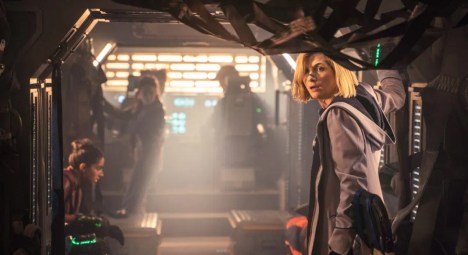
“Game over, Doc.”

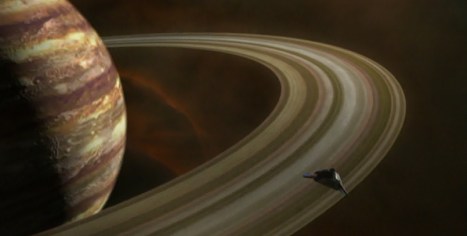
Orphan 55 draws from an impressive array of influences across the history of Doctor Who, providing a fascinating intersection between “holiday camp gone wrong” episodes like The Macra Terror and Delta and the Bannermen and “future of Earth” episodes like The Ark in Space or The End of the World. Indeed, the positioning of Orphan 55 as the first standalone episode after the premiere is quite canny; it fills what would be the “New Earth” slot on a Russell T. Davies season. However, it offers a much grimmer prognosis. This is appropriate for a much grimmer age.

Like so much of the Chibnall era, Orphan 55 is built around the general impotence of the Doctor. The Doctor is a fictional character, and so cannot save the world. The Moffat era dealt with this question in a more abstract and metaphorical sense in episodes like Extremis, demonstrating the importance of Doctor Who as a story and the Doctor as an idea. The Chibnall era tends to respond to this challenge with dull literalism. The Thirteenth Doctor spends an inordinate amount of her run confronting systemic or societal problems with which she refuses to engage.
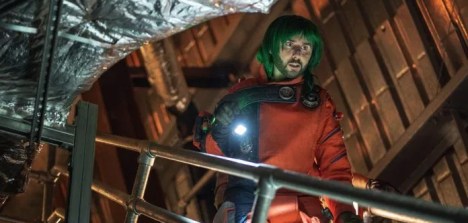
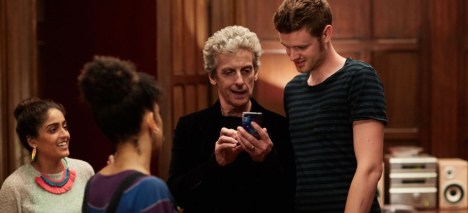
A green message.

The Thirteenth Doctor’s passiveness when confronted with monstrosity is one of the more horrifying aspects of the Chibnall era as a whole. In The Ghost Monument, the Doctor refused to hold Ilan to account for the horrors he inflicted on the participants in his race. In Arachnids in the U.K., Jack Robertson just walked away from liability for mass murder in his hotel. In Rosa, the Doctor stage managed the oppression of Rosa Parks, even forcing her companion to be actively complicit in systemic racism.

While the Chibnall era is clearly trying to make a larger point about how the Doctor cannot save the world because she doesn’t exist, this often becomes a bleak and depressing study of how the public imagination can no longer conjure better worlds into being. Demons of the Punjab managed to make the best argument for this approach through careful construction, tying its historical injustices to Yaz’s personal history. Orphan 55 pulls off something similar, primarily by setting the action long after the world has failed to be saved.
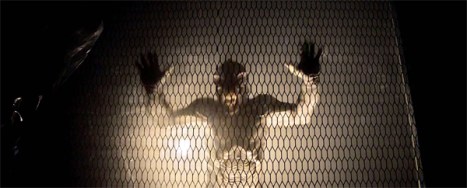
Shattering expectations.

Continue reading

Of Death Stars, Sarlaccs and Sexting: The Curious Sexual Energy of “Star Wars”…

At its core, Star Wars is a Jungian, Campbellian and Freudian story about what it’s like to grow up.

This is perhaps most obvious within the original trilogy. Star Wars: Episode V – The Empire Strikes Back is ultimately about the realisation that your parents will eventually and inevitably fail you. Star Wars: Episode VI – The Return of the Jedi is about growing up and learning to make peace with them anyway. Of course, the individual films frame these core themes through their own lenses. Star Wars: Episode VII – The Force Awakens reframes that adventure so it centres on people who have rarely had the opportunity to anchor such a story. Star Wars: Episode VIII – The Last Jedi asked what that meant in 2017.

Naturally, this coming of age story is framed in terms of adventure – young characters discovering that they are part of an epic mythology that guides them towards confrontations with ancient and incredible evils, often learning hidden truths about themselves and their destiny. There’s a reason that the Star Wars franchise has come to be associated with the “monomyth”, distilling the hero’s journey into something with a story with universal resonance. It is a story about what it feels like to grow up.

It is also, inevitably, very much about sex. And in some very interesting (and quite eccentric) ways.

Continue reading

To Catch a Predator: Why Is It So Hard to Franchise the Predator?

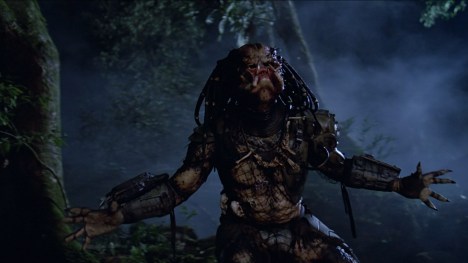
The Predator is one of the most iconic creations of the past thirty-odd years.

The creature created by Stan Winston for John McTiernan’s 1987 action blockbuster is instantly recognisable. It is striking and distinctive. Even people who have never sat down and watched a movie featuring the creature are familiar with the design. This is especially notable given that it could have been a disaster. The original design for the creature is something of an internet urban legend, part of the pop cultural folklore. Predator narrowly averted disaster when Stan Winston redesigned the monster from scratch, so it is all the more impressive that it became such a classic.

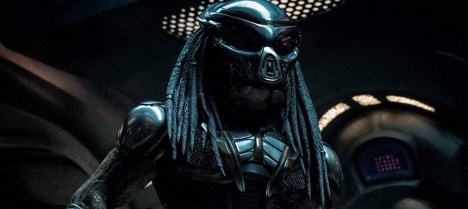
It is no surprise that the Predator was quickly franchised. After all, that is how the film industry works. Although modern prognosticators decry the modern era as one defined by sequels and remakes and reboots, but they have always been a feature of the landscape. So the Predator became the cornerstone of an impressive multimedia franchise; even outside of games and comic books, the creature anchored Predator 2, Alien vs. Predator, Aliens vs. Predator: Requiem, Predators and The Predator. That’s an impressive list, in terms of quantity and variety.

However, it is decidedly less impressive in terms of quality. Of those five sequels, Predators is the only one with a positive score on Rotten Tomatoes. Similarly, Predators is the only sequel with a vaguely positive rating on MetaCritic, scraping just over fifty percent. This is the kind of showing that audiences and critics expect from low-rent horror sequels like those starring Freddie Kreuger or Jason Voorhees. (Indeed, the latest sequel starring Michael Myers is critically outpacing The Predator.) It is not exactly an impressive track record for a reasonably big budget mainstream high-profile science-fiction franchise.

Indeed, the stock comparison for the Predator is the Alien franchise, and for good reason. The xenomorph from Alien is another iconic late twentieth-century alien design housed within an R-rated science-fiction action-horror franchise. Both properties are owned by Twentieth Century Fox, allowing them to intersect and crossover within a shared universe. Both have spawned a variety of sequels, and are loosely linked in the popular mind in the way that the Universal Studios films linked Dracula and Frankenstein’s monster with the Mummy or the Invisible Man.

However, this stock comparison does not flatter the Predator. After all, the xenomorph has been at the centre of a franchise that is consistently interesting and at best innovative. There are sequels to Alien that are rightly regarded as classics such as Aliens, while other have launched great careers such as Alien³, and some still cause fierce debates. For all the criticism of films like Prometheus and Alien: Covenant, they at least engender passion in their audiences, in a way that the sequels to Predator do not. Why is it so hard to make a good Predator sequel?

Continue reading

Star Trek: Voyager – Good Shepherd (Review)

Good Shepherd is a terrible execution of a potentially interesting premise.

There is something interesting in speculating what the Star Trek universe must look like for those characters who exist outside the senior staff of a given series. This premise has been explored and touched upon in a number of episodes; most notably in the basic premise of Star Trek: Discovery, the primary plots of Lower Decks and Learning Curve, even the sections of Strange New World focusing on Novakovich and Cutler. Still, these are only a handful of episodes in a franchise that spans half a century and over seven hundred installments.

Looking out for her crew…

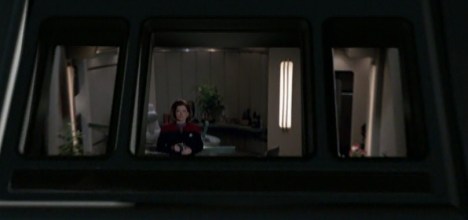
As such, the basic plot of Good Shepherd is compelling. The teaser visuals the appeal of such a story in a playful and innovative way, with the camera following a command all the way from the top of the ship to the bottom; from Janeway’s ready room to Astrometrics to Engineering to the lowest viewing port on the ship. It is an interesting way of demonstrating how anonymous and disconnected individuals can feel, even on board a ship with a crew numbering around one hundred and fifty. What does it feel like to be anonymous, on a ship as isolated as Voyager?

Unfortunately, Good Shepherd awkwardly bungles the question. In doing so, it fails to provide any satisfying answers.

Running rings…

Continue reading

Non-Review Review: Jurassic World – Fallen Kingdom

Jurassic Park: Fallen Kingdom is an intriguing and compelling mess of a film. It is shrewd and clever, if never entirely human.

Director J.A. Bayona might be the first director since Spielberg to put his own unique slant on the Jurassic Park franchise, to move with just enough confidence and faith in his own stylistic sensibilities to escape the shadow of the legendary director who turned a pulpy novel into a beloved family classic. Bayona does that by allowing his own stylistic sensibilities to shine through, to embrace his own interest and to engage with the material on his own terms.

Dino escape.

Fallen Kindom walks a fine line. It is very much a creature grown in a laboratory to satisfy the demands of the larger franchise. There are elements here that exist purely because they are expected, because they are signifiers of what a “Jurassic Park movie” should look like, including both returning characters and new characters fashioned after familiar archetypes. At the same time, there is a coy and wry self-awareness to Fallen Kingdom that was sorely lacking from Jurassic World, a cynicism about its own nature that integrates rather neatly into its larger worldview.

Although it may be damning with faint praise, Jurassic World: Fallen Kingdom is easily the best Jurassic Park movie since Jurassic Park: The Lost World, the film in the franchise with which it shares most of its DNA.

Things are heating up.

Continue reading

Doctor Who – Knock, Knock (Review)

“That’s what they’re called, Driads?”

“That’s what I’m calling them, yes.”

“You’ve gone crazy.”

“Well, I can’t just call them lice, can I?”

Performance is a bit wooden.

Knock Knock is a solid, if unexceptional, episode of Doctor Who. It occasionally feels more like a grab bag of idea welded together, more than a single cohesive story.

Knock Knock is essentially three very different episodes sutured together in a decidedly haphazard fashion. Knock Knock is, in quick succession: an episode focusing on Bill’s life outside the TARDIS, an old-school haunted house adventure, an intense familial psychodrama with a powerhouse guest performance. There is a strong sense that Knock Knock would work better if it chose to be any two of those three episodes, but that it simply cannot hold itself together trying to satisfy all three masters.

Dial it back, there.

Continue reading

Night Stalker – What’s the Frequency, Kolchak? (Review)

This January, to prepare for the release of the new six-part season of The X-Files, we’re wrapping up our coverage of the show, particularly handling the various odds and ends between the show’s last episode and the launch of the revival.

What’s The Frequency, Kolchak? is the episode written by Vince Gilligan.

Gilligan remained one of Frank Spotnitz’s most keen collaborators in the years following the end of The X-Files. Gilligan had worked with Spotnitz as part of the writing staff on the short-lived Robbery Homicide Division before the pair moved on to Night Stalker. After ABC cancelled Night Stalker, the pair would collaborate on the television series A.M.P.E.D. for Spike, writing a pilot that would eventually air as a television movie when the network declined to pick it up for series.

"Wow, ABC really is a tough network to play with..."

“Wow, ABC really is a tough network to play with…”

Sadly, Night Stalker only lasted long enough for Gilligan to script a single episode of the show. Still, he fared better than fellow staffer Darin Morgan; Morgan’s script for The M-Word did not make it into production before the axe fell on the show. This is a shame; the materials available on the DVD that never made it to air on ABC suggest a show more comfortable with itself than the first six episodes would suggest. More than any other episode of the first season of Night Stalker, What’s the Frequency, Kolchak? speaks to the series’ potential.

It is just a shame that it arrives too late.

The monster at the end of the hall...

The monster at the end of the hall…

Continue reading

Non-Review Review: Hotel Transylvania 2

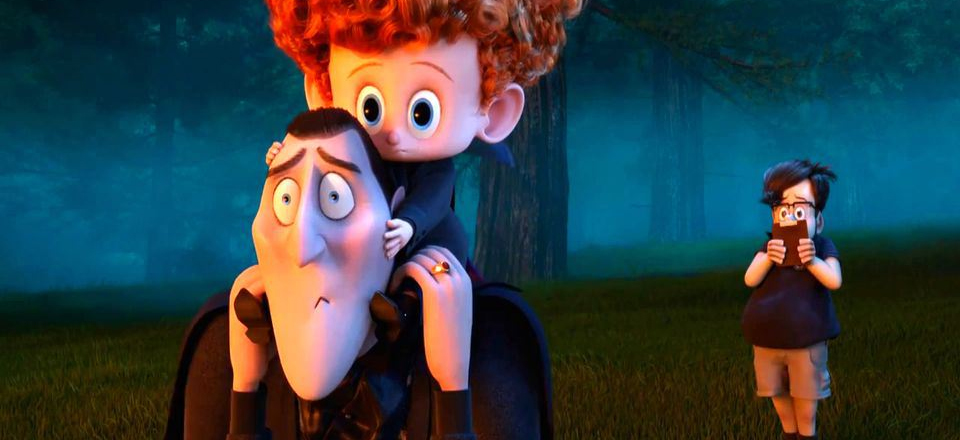
Hotel Transylvania 2 certainly has some moves.

The film might be computer animated, but director Genndy Tartakovsky draws from more a classic style of cartooning. There are several points in Hotel Transylvania 2 where it seems like the film has reverted to a two-dimensional style, with figures standing in silhouette against the background. Even the human characters of Hotel Transylvania 2 take on an elasticity, stretching and distorting in the style of classic Looney Tunes. Hotel Transylvania 2 gets considerable mileage out of this slapstick element.

Drac pack's back...

Drac pack’s back…

It helps that the film is packed with gags. Not all the jokes land as well as they might, with the film leaning a little too heavily on some particularly cheap shots, but there is a sense that Hotel Transylvania 2 is more concerned with getting those jokes into the film than it is with actually constructing a narrative around them. The film packs an impressive quantity of humour into its ninety-minute runtime, with nothing in the film being allowed to overstay its welcome.

That said, the movie hits some speedbumps when it comes to plot and characterisation. Some of these issues are simply structural, with Hotel Transylvania 2 eschewing all but the most basic of set-up and pay-off in favour of energetic cut-away jokes and quick sight gags. Some of the issues are tonal, with the film wrapping up some very uncomfortable plot developments and decisions with a simple “all’s well that ends well” conclusion that ultimately avoids delving too deeply into any of the implications of certain characters’ actions.

Vamping it up...

Vamping it up…

Continue reading

The X-Files – Hungry (Review)

This November, we’re taking a trip back in time to review the seventh season of The X-Files and the first (and only) season of Harsh Realm.

Hungry is an underrated episode of The X-Files.

Although it was the third episode of the season to air, it was actually the first episode produced, allowing David Duchovny and Gillian Anderson to ease themselves back into the demanding shooting schedule. As with Vince Gilligan’s script for Unusual Suspects, the idea was to write an episode that required as little of Mulder and Scully as possible. However, rather than building Hungry around an established member (or members) of the supporting cast, Gilligan decides to introduce a new character and make them the focus of the episode.

"I am sharkboy, hear me roar..."

“I am sharkboy, hear me roar…”

Hungry is not quite as experimental as X-Cops, but there is something deliciously subversive about telling a “monster of the week” story from the perspective of the monster. Gilligan is arguably building upon the work done by David Amann in Terms of Endearment, but Hungry is very much its own story. It pushes Mulder and Scully to the very edge of the narrative in a way that distorts many of the underlying assumptions about what The X-Files is and how it is supposed to work.

Hungry is proof that The X-Files still has legitimately great stories in it, even if the seventh season has a decidedly funereal atmosphere.

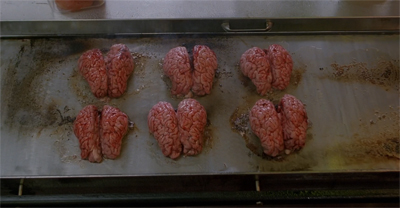
Brains...

Brains…

Continue reading

The X-Files – Arcadia (Review)

This July, we’re taking a trip back in time to review the sixth season of The X-Files and the third (and final) season of Millennium.

Arcadia was originally produced directly after Two Fathers and One Son. It was moved later in the broadcast cycle because it needed more post-production work than Agua Mala or Monday. Looking at the finished product, one suspects that the garbage monster posed no shortage of problems for the production team. Whatever the reason, Arcadia was shifted down two slots in the broadcast order. This is a shame on multiple levels. Most obviously, “Mulder and Scully go undercover as a suburban couple” would have been a great sweeps episode.

More than that, though, there is something delightfully subversive in the idea that Arcadia is the first case that Mulder and Scully are assigned after reclaiming their iconic basement office at the end of One Son. The decision to reassign Mulder and Scully to the X-files would seem to promised a return to the status quo after a weird stretch earlier in the season (from Triangle to The Rain King) where The X-Files turned into a weird paranormal romantic comedy. Fan reaction to this stretch of the show was (and still is) polarised.

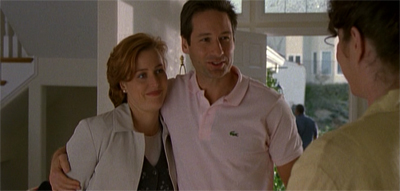
So happy together...

So happy together…

However, instead of reassuring those fans wanting a return to more traditional X-Files aesthetic, Arcadia reasserts the “quirky domestic comedy” tone of shows like Dreamland I, Dreamland II or How the Ghosts Stole Christmas. In fact, it’s telling how completely disinterested Arcadia is in the fact that Mulder and Scully are back on the X-files for the first time since the end of the fifth season. There’s a quick exchange referencing their reassignment, but no examination of the fallout of One Son. There is not even a single scene set in the familiar basement set.

As such, Arcadia seems quite cheeky. It celebrates the return to the show’s classic status quo by ignoring it almost completely. Arcadia is a silly little relationship comedy that could easily have aired in the first stretch of the season, its positioning here feeling like a playful tease of those fans clamouring for the return of a classical approach to the series. Unfortunately, a lot of that gets lost in the shuffling of the episode around in the broadcast schedule. Using Agua Mala and Monday to insulate Arcadia from Two Fathers and One Son undercuts its cheeky charm.

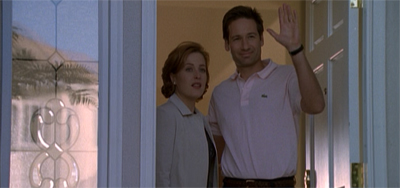
There goes the neighbourhood...

There goes the neighbourhood…

The post-production delay on Arcadia hurts the episode. Instead of a cheeky tweaking of fandom’s nose, Arcadia becomes a fairly middling mid to late season instalment. It is not as limp and lifeless as Agua Mala or Alpha, but not as insightful and fun as Monday. In fact, while Arcadia contains a few chuckles, the episode lacks the charm of something like Triangle or How the Ghosts Stole Christmas (or even The Rain King). Arcadia feels like it takes the cheesy teasing of a Mulder/Scully relationship just a little too far.

In many ways, The Rain King represented the point at which the show should have pressed forward with a romantic relationship between Mulder and Scully; regardless of whether the viewer is a shipper or a noromo, the teasing had reached critical mass, and it was time to commit one way or another. Arcadia instead insists that the show remains decidedly noncommittal, trying to have the best of all possible worlds. There comes a point where the show feels like it is just “trolling.”

"Well, this is easy enough..."

“Well, this is easy enough…”

Continue reading