I published a new In the Frame piece at The Escapist this evening. Because it’s the fifth anniversary of 10 Cloverfield Lane, it seemed like a good opportunity to take a look back at the paranoid and claustrophobic thriller. In particular, 10 Cloverfield Lane arrived on the cusp of a wave of similar movies about characters trapped and suffocated in claustrophobic horror: films as diverse as Quentin Tarantino’s The Hateful Eight, Lenny Abrahamson’s Room, Jeremy Saulnier’s Green Room and even Todd Haynes’ Carol.
Looking at these wave of films in hindsight, they suggest something simmering beneath the surface of American consciousness, a nightmare about characters who find themselves in hostile and oppressive environments and forced to survive as best they can. 10 Cloverfield Lane was perhaps the culmination of this cinematic trend, and galvanises many of those themes into a potent allegory for abuse and survival, ending with the revelation that not all of this monstrosity is trapped behind locked doors.
You can read the piece here, or click the picture below.
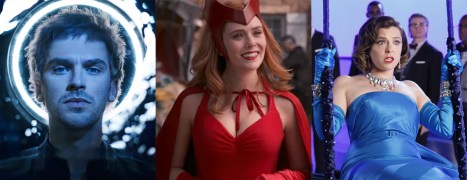
I published a new In the Frame piece at The Escapist this evening. Today marked the release of the WandaVision finale, so it seemed like a good opportunity to take a look at the season as a whole, and where it stands in terms of the modern television landscape.
One of the most striking aspects of the first half of WandaVision‘s first season was the skill and fidelity that the show demonstrated in recreating classic television sitcoms. The show’s basic conceit found the characters journeying through television’s history and hurdling towards the present. Unfortunately, WandaVision stumbled when it hit the present, particularly when compared to two relatively recent shows tackling similar themes and working in similar genres blending fantasy and reality as meditations on trauma and mental health problems: Legion and Crazy Ex-Girlfriend.
You can read the piece here, or click the picture below.
So, as I have mentioned before, I am launching a new video series as a companion piece to In the Frame at The Escapist. The video will typically launch with the Monday article, and be released on the magazine’s YouTube channel the following week. This is kinda cool, because we’re helping relaunch the magazine’s film channel – so if you can throw a subscription our way, it would mean a lot.
This week, we took a look at the strange wonder that was Star Trek VI: The Undiscovered Country, and the fact that it would be impossible to imagine a franchise drawing the shutters down in the same way these days. The Undiscovered Country is not only an explicit rejection of nostalgia, it is also an interrogation of the past, refusing to pull any punches in its look at the original Star Trek. It’s an approach that could never happen today, and popular culture is all the weaker for that.
I published a new In the Frame piece at The Escapist this evening. There’s been a lot of debate recently about the boundaries between “art” and “content”, which can frequently sound like a debate about “high” and “low” culture, so I thought it was worth taking a look at how porous those boundaries can be.
On paper, Mad Max: Fury Road should be a standard franchise film. It’s the fourth film in the Mad Max franchise, serving as a vague sequel or even reboot to one of Australia’s most successful movie franchises. It cost a lot of money. It features a lot of special effects. It has very little dialogue. However, in spire of that, it is arguably as pure an expression of cinema as an artform as has every existed, and demonstrates how elastic and how illusory arguments about “high” and “low” culture truly are.
You can read the piece here, or click the picture below.
So, as I have mentioned before, I am launching a new video series as a companion piece to In the Frame at The Escapist. The video will typically launch with the Monday article, and be released on the magazine’s YouTube channel the following week. This is kinda cool, because we’re helping relaunch the magazine’s film channel – so if you can throw a subscription our way, it would mean a lot.
This week, we took a look at the emergence of the multiverse, which appears to be the future of various shared cinematic and television universe. Why is this idea suddenly so popular? What does it mean? What does it hold for the future?
So, as I have mentioned before, I am launching a new video series as a companion piece to In the Frame at The Escapist. The video will typically launch with the Monday article, and be released on the magazine’s YouTube channel the following week. This is kinda cool, because we’re helping relaunch the magazine’s film channel – so if you can throw a subscription our way, it would mean a lot.
This is a video that I’m particularly proud of, and intimidated by. Promising Young Woman was one of my favourite films of last year, so I was thrilled to get the chance to properly dig into it. I take a look at the way in which the film plays with audience expectations, and its understanding of the way in which it knows the audience will look at it.
So, as I have mentioned before, I am launching a new video series as a companion piece to In the Frame at The Escapist. The video will typically launch with the Monday article, and be released on the magazine’s YouTube channel the following week. This is kinda cool, because we’re helping relaunch the magazine’s film channel – so if you can throw a subscription our way, it would mean a lot.
This week, with rumours that Chris Evans might be returning to the role of Steve Rogers, I took a look at why this would be a bad thing for the Marvel Cinematic Universe, which has the opportunity to push ahead and evolve in a way that the comics never have been.
So, as I have mentioned before, I am launching a new video series as a companion piece to In the Frame at The Escapist. The video will typically launch with the Monday article, and be released on the magazine’s YouTube channel the following week. This is kinda cool, because we’re helping relaunch the magazine’s film channel – so if you can throw a subscription our way, it would mean a lot.
This week, I take a look at the power fantasy of the Marvel Cinematic Universe. With Captain America: Civil War, the MCU becomes a study in power without any responsibility.
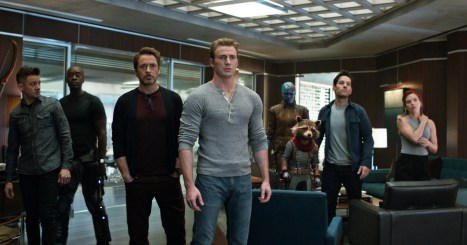
I published a new In the Frame piece at The Escapist this evening. Last week, there were rumours that Chris Evans might be returning to the Marvel Cinematic Universe, following his departure in Avengers: Endgame.
This is interesting, because it potentially undermines one of the more interesting facets of the Marvel Cinematic Universe going forward. Comic books are largely shaped and defined by nostalgia, with beloved characters filling familiar roles in perpetuity, with any major change to the status quo eventually rolling back to the default. In contrast, a cinematic universe operates by different constraints: actors move on, age out and even die. This would force a long-form shared universe to evolve in a way that comics haven’t had to. This is a good thing, as evolution is necessary.
You can read the piece here, or click the picture below.
I published a new In the Frame piece at The Escapist this evening. With WandaVision currently streaming on Disney+, it seemed like an interesting opportunity to look at the show’s use of the language of sitcoms.
In particular, sitcoms have long been a staple genre of American television. However, they don’t just reflect cultural norms, they also project an aspirational ideal. For generations of Americans, the domestic sitcom presented a vision of domestic life that shaped and informed popular consciousness. In WandaVision, those nostalgic fantasies become a trap and a waking nightmare, as characters build themselves a life of seeming domestic bliss dictated by decades of television. Wanda has built herself a cage, treating television as a mirror.
You can read the piece here, or click the picture below.



















 the m0vie blog