• Following Us

  • Categories

  • Check out the Archives


  • Awards & Nominations

Star Trek – Who Mourns For Adonais? (Review)

The first Star Trek pilot, The Cage, was produced in 1964. To celebrate its fiftieth anniversary, this December we are reviewing the second season of the original Star Trek show. You can check out our first season reviews here. Check back daily for the latest review.

In many respects, Who Mourns for Adonais? is a formative episode for Star Trek as a franchise. It’s a show that really informs a lot of the franchise that would follow, even beyond the confines of the original television show. It’s an episode that represents the first clear articulation of a strand of thought that has been bubbling away through the first season of Star Trek and into the second, exploring the religious side of the Star Trek universe and mankind’s place in the cosmos.

The episode is iconic and memorable. It is packed with images that are familiar to even the most casual of fans. “Kirk confronts a Greek god in deep space!” is a catchy premise. “A giant hand grabs the Enterprise and threatens to crush the ship!” is the type of delightfully insane visual that ranks with “Captain Kirk as a Nazi!” or “space Lincoln!” when it comes to Star Trek visuals that stick with people outside the context of the show itself. Coupled with the distillation of those themes, this is a “big” episode.
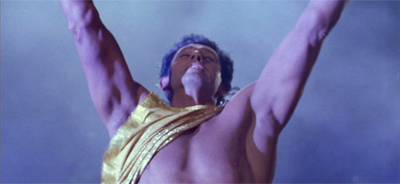
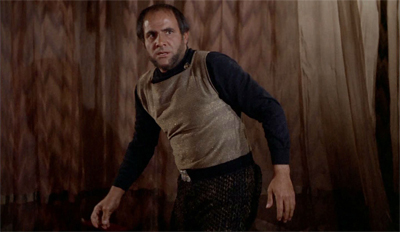
"Jack, I'm flying!"

“Jack, I’m flying!”

Unfortunately, Who Mourns for Adonais? is also a deeply troubling episode. It has problems heaped upon problems. Some of those problems are inherited from the general aesthetic of the show, and are not specific to this episode. However, some of those problems are explicitly articulated here. Who Mourns for Adonais? is an episode that embodies quite a few of the very serious problems that run through the original Star Trek and haunt the franchise for quite some time.

The fact that these problems come baked into an iconic and memorable episode is disappointing.

"Oh, your gods..."

“Oh, your gods…”

Continue reading

Star Trek – Friday’s Child (Review)

The first Star Trek pilot, The Cage, was produced in 1964. To celebrate its fiftieth anniversary, this December we are reviewing the second season of the original Star Trek show. You can check out our first season reviews here. Check back daily for the latest review.

Errand of Mercy was a highlight of the first season. A wry script from producer Gene L. Coon introduced the Klingons as an antagonist for the Federation. Made up to look like space!Mongols, the Klingon Empire was presented as an imperial force hell-bent on expanding its sphere of influence. In case the parallels were a little too subtle, they were locked in a Cold War with the Federation. As such, they were the perfect stand-ins for Communist aggressors trying to undermine American foreign policy.

Of course, Errand of Mercy was brutally cynical in its depiction of the Federation. The episode suggested quite heavily that the Federation was just as imperialist and adversarial as the Klingons. They might couch their foreign policy in friendly language and polite overtures, but their end goals are quite similar. Smaller political entities are nothing but pieces shuffled around a board in a deadly game of chess. Errand of Mercy was not flattering in its portrayal of Kirk, presenting him as little more than a warmonger.

"Damn dirty Klingon!"

“Damn dirty Klingon!”

Errand of Mercy was a massive success. It remains a fan favourite to this day. In some respects, that is due to the introduction of the Klingons, but it is also an exceptional hour of scripted science fiction. So it makes sense that the show would return to the Klingons when it was renewed for a second season. Friday’s Child was the third episode produced during the second season, and returns to quite a few themes hit on by Errand of Mercy. Those themes would recur.

Friday’s Child demonstrates the obvious risks of an episode like Errand of Mercy. It’s an episode that essentially takes the “Klingons as space!Communists” seriously.

We come in peace...

We come in peace…

Continue reading

Star Trek: Deep Space Nine – Facets (Review)

This September and October, we’re taking a look at the jam-packed 1994 to 1995 season of Star Trek, including Star Trek: Deep Space Nine and Star Trek: Voyager. Check back daily for the latest review.

Facets in more than a little muddled. It’s an episode that is all over the place. It’s a script that doesn’t seem to know what it wants to be, leaning in one direction and then another. The episode’s big plot point isn’t dropped until half-way through, and there are any number of points where the script offers a feint towards a plot that never quite develops. As befitting a story called Facets, this is an episode with quite a few different (and often conflicting) sides.

It’s a disjointed little story, and perhaps an effective demonstration of just how much trouble the producers were having with Dax as a character. And yet, despite all this, Facets works surprisingly well. This is likely down to the fact that – like Playing God and arguably Blood Oath before it – it feels like a Dax story that is as interested in the character as it is in the concept.

A little piece of herself...

A little piece of herself…

Continue reading

Putting the “-ess” in “Sexist”: Why Do We Have a Best Actress Award?

The fact that no woman was nominated for Best Director (after Kathryn Bigelow became the first female to win last year) has caused a stir at this year’s Oscars. I’m not an excessively politically correct individual (just read the blog), but I like to think I’m sensitive to issues like that. Presumably the presumptive female directing nominees would have been either Debra Granik for Winter’s Bone or Lisa Cholodenko for The Kids Are All Right, and – to be honest – I don’t think either was better than any of the five existing nominees. The continued snubbing of Christopher Nolan bothers me far more.

As I thought about the complaint more and more, part of me wondered when the gender of an individual becomes important for awards like this – my gut feeling is “never.” The best is the best, why should we handicap or install quotas? Except for the fact that we do have gender quotas for certain awards. This train of thought led me wonder why we still have a Best Actress and a Best Supporting Actress category… And, to cut a long story short, I really couldn’t think of a good reason.

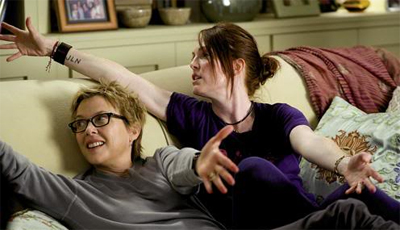
Are we kidding ourselves?

Continue reading

The Walking Dead, Vol. 2 (Hardcover)

Welcome to the m0vie blog’s zombie week! It’s a week of zombie-related movie discussions and reviews as we come up to Halloween, to celebrate the launch of Frank Darbont’s The Walking Dead on AMC on Halloween night. So be sure to check back all week, as we’ll be running posts on the living dead.

I want to like Robert Kirkman’s The Walking Dead. I really do. I love zombies. I love it when writers use horror to explore socially relevent issues. I totally dig the black-and-white style which is clearly intended to evoke the vibe of George Romero horror films. I love that it’s a mainstream comic book property that has broken into popular culture despite not featuring muscle-bound guys and gals with impossible physiques in ridiculous spandex – proof to the masses that comic books can be about more than superheroes. However, as much as I may want to embrace and love The Walking Dead, I just can’t bring myself to.

Grimes and punishment...

Continue reading

Do We Live in the Age of the Forty-Something Leading Lady?

Jennifer Aniston’s romantic comedy The Bounty Hunter may not have quite set the US box office alight last weekend (coming third behind Alice in Wonderland and some film even I’ve never heard of), but she’s still one of Hollywood’s biggest name leading ladies currently on film – and I don’t see that changing. And she’s 41 years old. Sandra Bullock, that darling of the nineties romantic comedy, spent last year reaffirming her golden touch, with the surprising-even-by-the-standards-of-the-genre romantic comedy The Proposal and an Oscar-winning role in The Blind Side. There was also a Razzie-winning role in All About Steve, but she even managed to use that to demonstrate that she is still one of the queens of Hollywood. And she’s 45 years old. Are the attitudes towards women – particularly leading women – changing in Hollywood?

Is Aniston on a winning Streep?

Continue reading

Alice: A Feminist In Wonderland?

Alice in Wonderland opens this weekend, and we were lucky enough to tag along to the Irish premiere. Since we came out of the cinema, we kinda suspected that this would be a polarising film – as the Rotten Tomatoes score seems to demonstrate. However, taking a moment to step back and appreciate the breadth and depth of the critical response, is it possible that we’ve all completely missed the point? Rather than being a fantastically realised gothic fantasy that strays just a little bit closer to The Lord of the Rings rather than its own source material, has Tim Burton produced a uniquely feminist fantasy film?

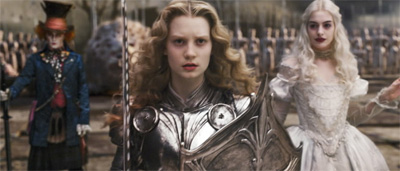
Should feminists be up in arms?

Continue reading

Non-Review Review: The Ugly Truth

Who says sexism is dead? To look at the bulk of the romantic comedy genre, you wouldn’t know it. The subtext of any given mainstream big budget romantic comedy is that guys are stupid and unaware dinosaurs, while women are just the tiniest bit uptight and are neurotic in a mild and endearing manner. The Ugly Truth probably isn’t the worst offender – I felt much worse coming out of 27 Dresses, to be honest – but it is the most recent one I’ve seen.

It's a familiar dance...

Continue reading

The Bechdel Rule – Feminism in Movies

I discovered a really fascinating movie-related concept this week, from my better half, who in turn picked it up from the Irish Times magazine. Basically, it’s The Bechdel Rule. Basically it states that the eponymous author will only watch movies that meet three simple conditions:

It has to have at least two women in it…
… who talk to each other…
.. about something besides a man.

There’s also a suggested corollary (known as the Mo Movie Measure) that the two women must be named characters. I’m dubious about using the test as a measure of quality, but it is interesting to think about how many movies meet that criteria. And which movies don’t.

So, does talking about how crap their lives are because they are oppressed by men count?

So, does talking about how crap their lives are because they are oppressed by men count?

Continue reading