• Following Us

  • Categories

  • Check out the Archives


  • Awards & Nominations

The X-Files – Biogenesis (Review)

This July, we’re taking a trip back in time to review the sixth season of The X-Files and the third (and final) season of Millennium.

‘When Alexan­der saw the breadth of his domain, he wept for there were no more worlds to con­quer.’ Ben­e­fits of a clas­si­cal education.

– Hans Gruber, Die Hard

In hindsight, “ending” the mythology with a two-parter in the middle of the season was always a risky proposition.

Airing Two Fathers and One Son during February Sweeps was a logical decision. Ending the mythology that had been running through the show for five-and-a-half seasons was certain to grab the attention of casual viewers, reeling them in to boast up ratings. The X-Files had always aired mythology two-parters during Sweeps, putting them forward as examples of the best that the series could do and cementing the show’s claim to be “blockbuster television.” Choosing to wrap up the mythology during February Sweeps was just an extension of that approach.

Look what just washed up...

Look what just washed up…

And it worked. Two Fathers earned the second highest Nielsen score of the sixth season, landing just behind The Rain King. Two Fathers was the last time that The X-Files would rate so highly. As such, the decision to “close off” the mythology in the middle of the season was a very shrewd decision. However, it did raise questions about what the show would do at the very end of season. After all, The X-Files liked to bookend its seasons with mythology episodes, counting on a mythology cliffhanger to carry viewers across the long gap between seasons.

How do you tell a mythology story when you’ve just worked so hard to tidy it all away?
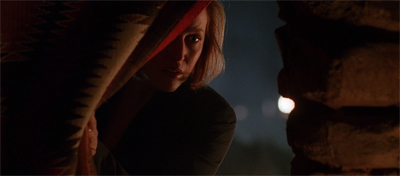
Behind the curtain...

Behind the curtain…

Continue reading

Millennium – Seven and One (Review)

This July, we’re taking a trip back in time to review the sixth season of The X-Files and the third (and final) season of Millennium.

Seven and One is the last episode of Millennium to be written by Chris Carter and Frank Spotnitz.

That is a pretty big deal. Frank Spotnitz had been a vital part of Ten Thirteen since the second season of The X-Files. He had also been the only X-Files writer apart from Chris Carter, Glen Morgan and James Wong to cross over to work on Millennium. He would become one of Carter’s most trusted associates, also contributing scripts to Harsh Realm and The Lone Gunmen. When The X-Files: Fight the Future took Carter’s attention away from Millennium in its second season, he proposed Spotnitz to run the show in his stead.

Here's Frankie!

Here’s Frankie!

Chris Carter had created Millennium, and it was clearly a show that meant a lot to him. While The X-Files was populist and accessible, Millennium always felt like more of an auteur project. It was solemn, abstract, contemplative. There is a sense that he was quite disappointed when his attention was diverted away from the show in its second year. Carter has talked time and time again about how he created Millennium as an examination of evil in the world. Appropriately enough, Seven and One finds him circling back around to that idea right before the show concludes.

Seven and One might be the most overtly religious script that Carter and Spotnitz have ever written. It seems to foreshadow the closing themes of Carter’s script for The Truth, the final episode of The X-Files. It emphasises just how essential religious themes are to Carter’s work.

Eye spy...

Eye spy…

Continue reading

Millennium – Antipas (Review)

This July, we’re taking a trip back in time to review the sixth season of The X-Files and the third (and final) season of Millennium.

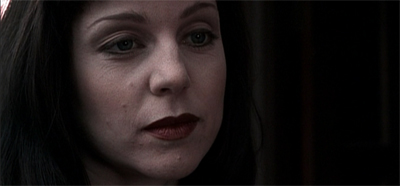
Antipas is the second of three scripts written by Chris Carter and Frank Spotnitz over the third season of Millennium. It is also the first of Lucy Butler’s two appearances during the third season, although she has little more than a cameo in Saturn Dreaming of Mercury. This is actually the second time that Chris Carter has written for the character of Lucy Butler, having scripted her début back in Lamentation towards the end of the first season. Antipas feels like a conscious effort to connect back to that first appearance.

To be fair, Lucy Butler has been radically different in each appearance. It is difficult to get a read on the character or to suggest a “definitive” take. Finding the “real” Lucy Butler is as difficult as identifying the “real” Millennium Group or as arbitrary as naming the “real” version of Millennium. That said, there are thematic throughlines. Four of her five appearances are tied into children, for example; the show fairly consistently portrays Lucy as a demonic mother figure in contrast to Frank as a loving father.

Here's Lucy!

Here’s Lucy!

While the idea of Lucy as a creepy mother ties Antipas into A Room With No View just as much as Lamentation, the script seems to hark more firmly back to Lucy’s character motivation in Lamentation than to her scheming in A Room With No View. In Antipas, Lucy is once again obsessed with biological motherhood, trying desperately to conceive – and even to claim another child as her own. In Lamentation, she sought to mother a child with Doctor Ephraim Fabricant; in Antipas, she seems to aspire towards Frank Black.

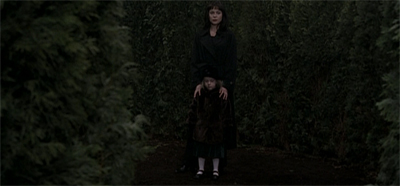
Along the way, Antipas is packed with fevered dream imagery and uncanny visuals. As with a lot of the episodes around it, Antipas feels like a very odd piece of television. When Carter wrote Lamentation, this oddness was enough of a break from the norm to power an entire episode. Antipas lacks the sort of strong centre that a piece of television like this needs to ground it. The result is an intriguing and unsettling, if not quite compelling and engrossing, episode of television.

A-mazing nanny...

A-mazing nanny…

Continue reading

The X-Files – Two Fathers (Review)

This July, we’re taking a trip back in time to review the sixth season of The X-Files and the third (and final) season of Millennium.

This is the end. I never thought I’d hear myself say those words after all these years. You put your life into something… build it, protect it… The end is as unimaginable as your own death or the death of your children. I could never have scripted the events that led us to this. None of us could. All the brilliant men… the secret that we kept so well. It happened simply, like this.

– the Cigarette-Smoking Man channels his inner Chris Carter

In case you were wondering about the title...

In case you were wondering about the title…

Continue reading

The X-Files – Dreamland II (Review)

This July, we’re taking a trip back in time to review the sixth season of The X-Files and the third (and final) season of Millennium.

Morris Fletcher is (and remains) one of the more interesting aspects of the Dreamland two-parter.

Fletcher would go on to become perhaps the most unlikely recurring character in the history of The X-Files. Michael McKean would reprise the role for a brief cameo in Three of a Kind at the end of the season. As with Kersh, he would disappear from the show’s world for the troubled seventh season, but would return the following year. He made a guest appearance in All About Yves, the finalé of The Lone Gunmen. Fletcher would then follow the Lone Gunmen back to The X-Files, appearing in Jump the Shark during the final season.

And the shippers went wild...

And the shippers went wild…

A large part of what makes Fletcher work is the wonderful guest performance of Michael McKean. McKean is a veteran actor with a long history of great work, dating back to his breakout role as Lenny (and Squiggy) on the sitcom Laverne and Shirley. Along with the move to Los Angeles, the sixth season of The X-Files began to drift away from Chris Carter’s initial reluctance to cast recognisable actors in significant roles. The X-Files: Fight the Future had featured guest appearances from Martin Landau, Blythe Danner, Armin Muller-Stahl and Glenne Headly.

The two-parter built around Michael McKean paves the way for appearances from Ed Asner, Lily Tomlin and Bruce Campbell. These are all superb guest performances, and consciously play into the idea that the sixth season of The X-Files has taken on a more playful or vaudevillian style. It is too much to describe these guest roles as “stunt casting” in the same way that putting Jerry Springer in The Post-Modern Prometheus or Burt Reynolds in Improbable was stunt casting, but the casting decisions are part of a broader change in the show.

Our man Morris...

Our man Morris…

On paper, Morris Fletcher could easily come off as a one-note creep. After all, he is a character who thinks nothing of using his body swap with Fox Mulder to cheat on his wife of twenty years. There is a creepy and pervy banality to his evil, one that mirrors that of Eddie Van Blundht in Small Potatoes. However, while Small Potatoes felt a little too sympathetic to pathetic Eddie Van Blundht, Dreamland strikes a better balance in its portrayal of Morris Fletcher. McKean plays Fletcher as a very human character, but one who is no less creepy for his well-practiced charm.

It goes almost without saying that Michael McKean’s guest performance is a major reason why Dreamland (mostly) works.

Not particularly reflective...

Not particularly reflective…

Continue reading

The X-Files – Dreamland I (Review)

This July, we’re taking a trip back in time to review the sixth season of The X-Files and the third (and final) season of Millennium.

It occasionally seems like the sixth season of The X-Files is having something approaching a midlife crisis.

It has gone through a fairly massive change in routine and lifestyle; the show recently pulled up sticks and moved to Los Angeles. It has gotten a lot more ostentatious; it looks to be spending a lot more money than it was before, and it is hanging around with a whole new caliber of guest star. It has reinvented itself completely; no longer the brooding and atmospheric show it once was, it is now downright goofy and silly. Old acquaintances would be forgiven if they had trouble recognising the show. And it’s perfectly understandable.

Back to back...

Back to back…

This is the sixth season. Dreamland I is the one-hundred-and-twenty-first episode of The X-Files. The show is well past what Chris Carter had originally planned, and well past just about any measure of success. Most shows are lucky to reach a sixth season, let alone come into the sixth season off the back of a summer film and with a great deal of security about the future. David Duchovny, Gillian Anderson and Chris Carter were all committed through to the end of the seventh season. There was even talk of a sequel to The X-Files: Fight the Future being released in 2000.

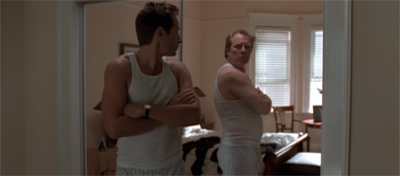
Dreamland I and Dreamland II just externalise that midlife crisis, using the classic “freaky friday” body swap set up putting Fox Mulder in a dead-end job with a family that hates him as Morris Fletcher tries to help the FBI agent grow up just a little bit.

"Yep. It's a little... out there."

“Yep. It’s a little… out there.”

Continue reading

Millennium – TEOTWAWKI (Review)

This July, we’re taking a trip back in time to review the sixth season of The X-Files and the third (and final) season of Millennium.

The best thing that can be said about TEOTWAWKI is that it knocks quite a few items off Chris Carter’s “millennial anxieties” checklist – touching on issues of school shootings, gun control, Y2K, anarchy, survivalism, and a few more.

There are some good and interesting ideas in TEOTWAWKI. It is written by Chris Carter and Frank Spotnitz, the first script credited to either writer since the first season of the show. It seems like both writers were clearly thinking about Millennium while working on the fifth season of The X-Files, storing up ideas for late use. TEOTWAWKI is not a script suffering from a lack of ideas. In fact, it has too many ideas packed too tightly. The script isn’t particular graceful; none of the threads dovetail as neatly into one another as they really need to.

Blood money...

Blood money…

This is a recurring theme across the third season of Millennium. There are shows with interesting and compelling ideas, but they are mixed together in a way that doesn’t work – often mingling with some of the more unfortunate creative decisions driving the show. Episodes in the third season frequently feel like curate’s eggs – scrambled messes with good bits and bad bits that are ultimately impossible to separate. TEOTWAWKI might be an interesting mess, but it is still a mess.

TEOTWAWKI makes it clear that The Innocents and Exegesis were not a rough spell as Millennium tried to find its sea legs. This is the way that things will be going forward, at least for a while.

"Doomsday Defense" was a better read...

“Doomsday Defense” was a better read…

Continue reading

Non-Review Review: The X-Files – Fight the Future

The X-Files: Fight the Future is often described as the mythology episode that somehow got released into theatres. In her review, Joyce Millman teased that Fight the Future was little more than “a two-hour episode of the show, except with better production values and a nicer wardrobe for Scully.” It is a fair point. It is not too hard to imagine a slightly cheaper version of Fight the Future split into two parts and replacing The End and The Beginning as the two-parter bridging the fifth and sixth seasons of the show.

Certainly, Fight the Future retains the late-stage mythology’s reluctance to provide any real sense of closure to the long-running plot about alien invasion and colonisation. Writers Chris Carter and Frank Spotnitz increase the stakes by using some of that sweet blockbuster money to pay for a gestating alien fetus, but what do Mulder and Scully actually accomplish? What would a viewer jumping from The End to The Beginning miss, except for the fact that the Well-Manicured Man has left the mortal plane to visit that great Somerset estate in the sky?

What you've all been waiting for, admit it...

What you’ve all been waiting for, admit it…

The answer is nothing, but that is not the point. As much as Fight the Future enjoys playing with the trappings of the mythology (black oil! bees! tanker trucks! space ships! Oklahoma City!), the film is only interested in the idea of alien colonisation as a vehicle to explore the show’s central relationship. Carter and Spotnitz have shrewdly realised that Fight the Future will have the largest possible audience for the show, and has decided to give the general public what they want.

As a two-hour mythology episode, Fight the Future leaves a lot to be desired. As a two-hour Mulder and Scully ship tease, it is right on the money.

Buried secrets...

Buried secrets…

Continue reading

The X-Files – All Souls (Review)

This May and June, we’re taking a trip back in time to review the fifth season of The X-Files and the second season of Millennium.

There are a lot of aspects of The X-Files that mark it as an artifact of the nineties.

It is easy to point to all the visual cues and indicators – the mobile phones, the suits, the cars. The political elements are all in play as well – the unquestioned assumption that the United States is the global superpower, the indulgence in a paranoia that exists in sharp contrast to the material prosperity surrounding it. There are even any number of pop cultural references buried within episodes themselves – from Byers and Frohike joking about Bill Clinton’s haircut in Fearful Symmetry to Scully quoting Babe in Home.

Angels in America...

Angels in America…

However, perhaps the most obvious indicator of the nineties is the way that The X-Files seems to fetishise absolute and unquestioning faith. Through episodes like Miracle Man, RevelationsAll Souls and Signs and Wonders, there is the recurring sense that giving oneself over absolutely and completely to religious faith is a sign of strength and certainty. At times, it seems like the writers are almost envious of those who have unwavering conviction in their beliefs amid the wry cynicism of the nineties.

The X-Files finds something romantic in such pure and uncompromised faith. After all, Gethsemane had proved that even Mulder has his doubts. This fixation on unquestioning religious belief made a great deal of sense against the backdrop of nineties disillusionment, but it a lot more uncomfortable when examined in hindsight through the prism of the early twenty-first century.

Scully has seen the light...

Scully has seen the light…

Continue reading

The X-Files – Emily (Review)

This May and June, we’re taking a trip back in time to review the fifth season of The X-Files and the second season of Millennium.

The biggest problems with Emily can be summed up in five words:

“… and then Mulder showed up.”

Sorry, Mulder.

Sorry, Mulder.

Continue reading