• Following Us

  • Categories

  • Check out the Archives


  • Awards & Nominations

Non-Review Review: Koyaanisqatsi

Koyaanisqatsi is a word that comes from the language of the Hopi. It’s handily translated at the end of the film, with one of the meanings lending the film its unofficial subtitle: “life out of balance”. Brought to the screen by director Godfrey Reggio and composer Philip Glass (not that you’d know it from the film’s sparse opening credits which simply identify the film as “a Francis Ford Coppola production”), it’s safe to say that Koyaanisqatsi is one of a kind. Or, given the two sequels, one of three of a kind, but that’s still quite impressive.

Let there be light...

Continue reading

Non-Review Review: Grown Ups

It’s very difficult to offer a movie that takes a cynical “Hollywood type” back to their roots. There are many reasons. The most obvious is that the type of person making the movie is a cynical Hollywood type and there’s something of an irony about making a film about the roots they’ve lost contact with – oftentimes it is more difficult to offer a grounded version of reality than it is to depict an alien invasion or a thoroughly ridiculous premise. Grown Ups is the second film this year which sees Adam Sandler playing a character attempting to reconnect with the common man – perhaps a timely theme in light of the recession, when the glitz and glamour of Hollywood stand in even starker contrast to the day-to-day lives of regular folks. However, if I didn’t know better, I’d think Sandler (whose production company produced the film and who co-wrote the script) is having something of a midlife crisis.

Not exactly a deep pool of talent...

Continue reading

End of the Line: Unearned Happy Endings…

I reviewed Baby Mama earlier today and – while I was impressed with the film’s willingness to tackle a somewhat controversial topic – I was less than impressed by the somewhat conventional ending tacked on to the film. And then I mellowed out a bit. “It is a comedy after all,” I reminded myself, in the hope that I would forgive the film because it wasn’t a black comedy – most lighthearted comedies call for a light-hearted ending, after all. Besides, this particular film isn’t the only film in recent memory to resort to a disappointingly conventional ending, so why does it bother me so much?

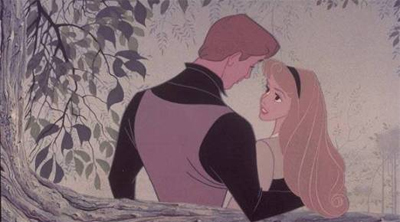
Not everybody gets a fairytale ending...

Note: As you may have guessed from the topic, I’ll be discussing endings here – particularly the one from Baby Mama. Consider yourself warned, there are spoilers ahead.

Continue reading

Non-Review Review: Baby Mama

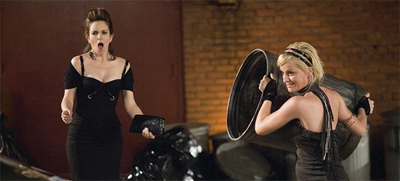
Baby Mama is effectively a “buddy” chick flick. Indeed, considering that the bulk of buddy guy flicks – like Lethal Weapon or The Expendables – are about guys doing stereotypically “macho” stuff (grrr… explosions and guns and fights and stuff!!!), it’s perhaps appropriate that this movie pairs off its two leads doing something stereotypically “feminine” (awww…. babies and maternal instincts and things…). The premise and the message of the movie are difficult to get a hold of (it by turns mocks and reinforces a conventional liberal perspective, particularly in its portrayal of class conflicts), but works at its best when it lets its two tremendously talented leads time and room to work – there’s a reason that Tina Fey and Amy Poehler are competing against each other for that Emmy this year. Despite its fairly heavy subject matter, the movie arguably finds its feet as a conventional “odd couple” comedy – which is a shame, as that’s only one of many things it’s juggling.

Guess which one's white trash...

Continue reading

By Gordon! Is Commissioner Gordon the Central Character of Nolan’s Batman?

We have to save Dent! I… have to save Dent!

– Commissioner Gordon, at the climax of The Dark Knight

It was Joss Whedon himself – the man now helming The Avengers – who once argued that the problem in bringing DC adaptations to the screen was that the traditional line-up was somewhat difficult for the audience to relate to and engage with (as compared to identifying with the X-Men’s status as social outcasts or Peter Parker’s nerdy little troubles):

Because, with that one big exception (Batman), DC’s heroes are from a different era. They’re from the era when they were creating gods.

And the thing that made [rival publisher] Marvel Comics extraordinary was that they created people. Their characters didn’t living in mythical cities, they lived in New York. They absolutely were a part of the world. Peter Parker’s character (Spider-Man) was a tortured adolescent.

DC’s characters, like Wonder Woman and Superman and Green Lantern, were all very much removed from humanity. Batman was the only character they had who was so rooted in pain, that had that same gift that the Marvel characters had, which was that gift of humanity that we can relate to.

Of course, he cites Batman as the excpetion, but you can’t help but wonder just how easy it is to relate a billionaire playboy who is focused on avenging the loss of his parents to the exclusion of all else. The wonderful thing that Christopher Nolan has done with the Batman mythos is to render it so wonderfully accessible. And perhaps he’s done that by making James Gordon, as wonderfully played by Gary Oldman, the centre of his saga.

Gordon lights up the movie...

Continue reading

Non-Review Review: Happy Gilmore

I’m not a guy who likes Adam Sandler – except maybe in The Wedding Singer or something. Still, it seems that the most unlikely people are inevitably fated to have a soft spot for a particular Sandler comedy, even if it doesn’t quite deserve it – my better half’s father, for example, has an inexplicable affection for Little Nicky. I, however, have a completely illogical affection for Happy Gilmore – despite the fact that I make note of its many flaws even as I watch it. It’s a movie I can’t quite justify my affection for, which perhaps makes it even more oddly endearing.

Taking a swing at it...

Continue reading

Sticking it to the Fan: George Lucas and Fan/Hatedom

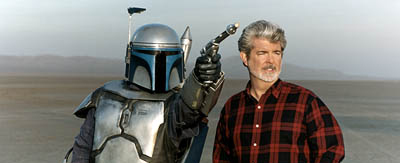
By all accounts, George Lucas should be one of the most beloved people on the planet. Ignoring the fact that he was the forefather of one of the most iconic trilogies of all time (Star Wars), he has managed to expand the boundaries of what is possible with special effects (down to companies like Industrial Light & Magic and Skywalker Sound) and even in video games (many of the earliest videogames on flopdisk came from LucasArts). Beyond that he’s also the man perhaps most responsible for Indiana Jones and one of the most influential film makers of all time. And yet his name evokes a huge amount of discord when it’s spoken. Just why is that?

Lucas has un-Fett-ered control of the franchise...

Continue reading

Non-Review Review: Superman II (The Richard Donner Cut)

Superman II has had a somewhat rocky production history. Essentially conceived as the “second half” of the original Superman film, it was all beautifully and carefully mapped out since before the original was released – in fact, Donner had done most of his work on the sequel before the original saw the light of day, and Gene Hackman didn’t even officially work on the second film (his filming blocks overlapped). It was a bold gambit, but one which could have returned an almost infinite reward. Instead, the producers of the film – the Salkinds – would fire director Richard Donner before he could finish his work and hire Richard Lester to come in a film some replacement footage. Perhaps the most telling thing about Lester is that, on viewing Donner’s epic take on the Man of Steel, the replacement dismissively stated that he wanted to stay away from “the whole David Lean thing”. Because the last thing he’s want to do is make a good movie. However, Donner would eventually get an opportunity to tell his version of the story – or as close to it as possible. Although there’s only so much editting can do, Superman II: The Richard Donner Cut makes almost as solid a case for its director’s vision as Superman III and Superman IV do for his successor’s lack of same.

Let's put this to bed...

Continue reading

Lee Lucas Film: The Background Posters from Scott Pilgrim

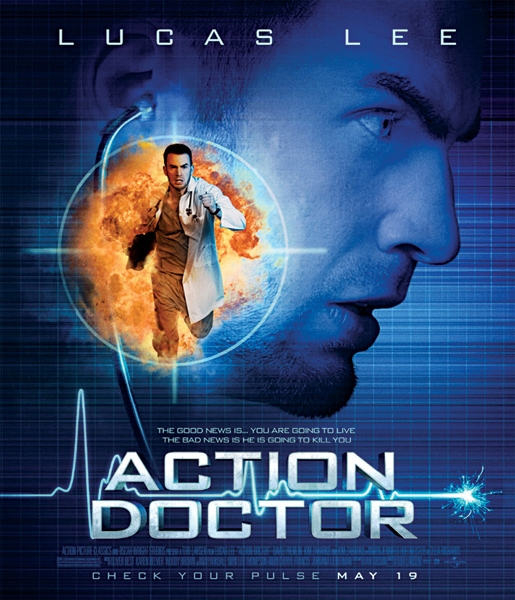
I love little pieces of movie marketing magic – particularly those which offer little easter eggs of films coming out. It’s nice to have some hype material which manages to avoid spoiling the film, but also adds a little texture to the fictional universe. And so, from the minds behind Scott Pilgrim vs. The World, we have the fictional filmography of Lee Lucas, the second “evil ex” that Scoot must vanquish. Played brilliantly by Chris Evans in a performance that would make William Shatner blush (really, like Brandon Routh, he’s clearly having the time of his life), he’s a “sell out” – a skater turned movie star. And here are some of his hits – as presented by the guys at Empire. My favourite, and a movie which needs to be made now? Doctor Action.

“The good news is… you’re going to live.

The bad news is he is going to kill you.”

Click to enlarge.

Continue reading

Non-Review Review: Scott Pilgrim vs. The World

If it weren’t for Inception, Scott Pilgrim vs. The World would be the most visually impressive film of year. Maybe it still is. This tale of adolescent irrelevence might have a bit of difficulty finding an audience, but it certainly deserves one – it’s a pure kaleidoscopic sugar rush of youthful exuberence and energy, all focused through a simple but effective emotional narrative. Indeed, perhaps its closest companion is (500) Days of Summer, the breakout romantic comedy of last year – except this time the emotional complexity is dialed down and the visual flair way up. And neither of those are bad things. In fact, as part of Edgar Wright’s latest film, they are actually quite genius.

Scott packs quite a (cup of) punch...

Continue reading