• Following Us

  • Categories

  • Check out the Archives


  • Awards & Nominations

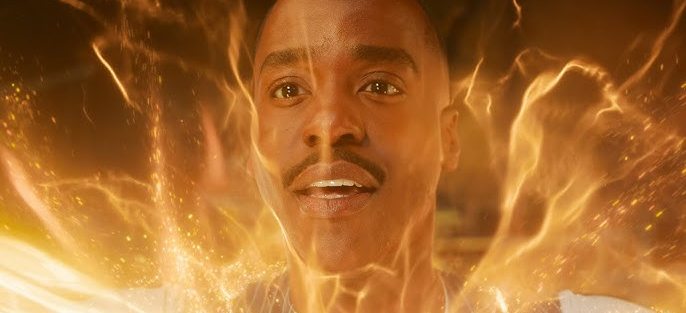
Doctor Who: The Reality War (Review)

“Oh, hello.”

Well, Russell T. Davies winds up the Fifteenth Doctor’s era by taking a second shot at The End of Time, Part II.

Fifteen’s minutes of fame.

Continue reading

350. Halloween III: Season of the Witch – All-o’-Ween (#—)

Hosted by Andrew Quinn, Darren Mooney and Joey Keogh, this week with special guests Ciara Moloney and Dean Buckley, The 250 is a weekly trip through some of the best (and worst) movies ever made, as voted for by Internet Movie Database Users. New episodes are released Saturdays at 6pm GMT.

This year, we are running a season looking at the films in the Halloween franchise. So this week, Tommy Lee Wallace’s Halloween III: Season of the Witch.

With just a week to go before Halloween, Doctor Daniel Challis finds his routine upset by the arrival of a mysterious patient. Raving mad and clutching a mask, the man is murdered later that night and his assailant imolates himself in a car bomb. Working with the patient’s daughter, Ellie, Daniel decides to investigate the case, which leads him to the gigantic Silver Shamrock corporation headed by the mysterious Conal Cochran. Daniel and Ellie soon discover that Cochran has a particularly malicious trick lined up for Halloween night.

At time of recording, it was not ranked on the list of the best movies of all time on the Internet Movie Database.

Continue reading

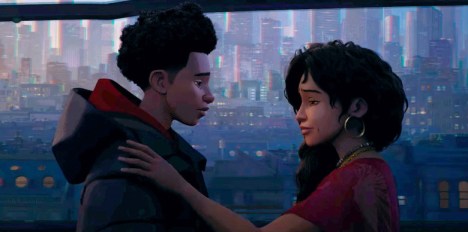
New Escapist Column! On “Across the Spider-Verse” as a Superhero Story About Parenting…

I published a new In the Frame piece at The Escapist this evening. With the release of Spider-Man: Across the Spider-Verse, it seemed like a good opportunity to delve into what the movie is about, particularly what it has to say about parenting.

Perhaps reflecting the aging demographic of superhero movie fans, a lot of recent superhero films – from Thor: Love and Thunder to Black Panther: Wakanda Forever – have been about parenting. However, Across the Spider-Verse stands out from the crowd because it’s a film that is rooted in the question of what it means to be a good parent, particularly to an exceptional child. It’s a warm and humanist fairytale that argues that the best thing parents can do for their children is to prepare them for the outside world and to listen to them when they speak.

You can read the piece here, or click the picture below.

New Podcast! The TARDIS Crew – “Torchwood – Children of Earth (Part 2)”

I was thrilled to be invited to join the great Ben and Baz Greenland for an episode of their podcast, The TARDIS Crew.

This is the second half of the episode covering Torchwood: Children of Earth, and it’s fun to get to discuss the five-episode miniseries as the culmination of Russell T. Davies’ work on both Torchwood and Doctor Who. We discuss the metaphor at the heart of the show, the queer-coding of the central narrative, and the way in which it effectively completes Jack’s arc of transforming the character into an even more dysfunctional version of the Doctor.

You can listen directly to the episode below or by clicking here.

New Podcast! The TARDIS Crew – “Torchwood – Children of Earth (Part 1)”

I was thrilled to be invited to join the great Ben and Baz Greenland for an episode of their podcast, The TARDIS Crew.

The guys are doing a retrospective deep dive on Russell T. Davies’ last tenure overseeing the Doctor Who franchise, and asked if I’d like to talk about any of his specific work on the show. I was delighted to get the chance to talk about Torchwood: Children of Earth, which stands out as not only the best that Torchwood has ever been, but belongs in the conversation as one of the best pieces of Doctor Who ever made. It’s a fun and freeform discussion, that we split into two parts for ease of listening.

You can listen directly to the episode below or by clicking here.

New Escapist Column! On “Black Panther: Wakanda Forever” and How the MCU Grew Up With Its Audience…

I published a new piece at The Escapist earlier this week. With the release of Black Panther: Wakanda Forever, and the end of Phase 4, it seemed like a good opportunity to take a look at one of the more interesting trends within the modern Marvel Cinematic Universe: the way that it has grown up with its audience.

The audience that went to see Iron Man fourteen years ago are no longer teenagers, or even young adults. They are now adults, many of whom will have settled down and started families. It is entirely possible that a couple who went to see The Incredible Hulk on their first date ended up taking their child to Thor: Love and Thunder. One of the more interesting aspects of the modern MCU has been the way that its plotting and themes have evolved to reflect that, with many of its once roguish heroes becoming biological or surrogate parents.

You can read the piece here, or click the picture below.

New Escapist Column! On How “Peacemaker” Explores Children Trying to Escape the Shadows of Their Parents…

I published a new piece at The Escapist this evening. We’re hopefully doing a series of recaps and reviews of James Gunn’s Peacemaker, which is streaming weekly on HBO Max. The fourth episode of the show released today, and it seemed like a good opportunity to take a look at the series.

Gunn’s projects return time and again to the relationship between parents and children. In particular, Gunn’s films and television shows are often about childrens trying to escape from the shadow of their abusive parents. This was true of Guardians of the Galaxy, Guardians of the Galaxy, Vol. 2 and The Suicide Squad. It is also true of Peacemaker, with the show placing a lot of emphasis on the relationship between its central character and his racist father, Auggie.

You can read the piece here, or click the picture below.

241. Kimetsu no Yaiba: Mugen Ressha-Hen (Demon Slayer – Kimetsu no Yaiba – The Movie: Mugen Train) – This Just In (#238)

Hosted by Andrew Quinn and Darren Mooney, with special guests Graham Day and Bríd Martin, The 250 is a (mostly) weekly trip through some of the best (and worst) movies ever made, as voted for by Internet Movie Database Users. New episodes are released every Saturday at 6pm GMT.

This time, Haruo Sotozaki’s Demon Slayer – The Movie: Mugen Train.

Following a series of mysterious disappearances on a train from Tokyo to Mugen, three young demon slayers are dispatched to investigate possible supernatural influences. The three quickly team up with a veteran soldier in the battle against evil, and discover just how quickly their mission can go off the rails.

At time of recording, it was ranked 238th on the list of the best movies of all time on the Internet Movie Database.

Continue reading

“It Will Always Be Broken!” The Strange Melancholy of Martin Scorsese’s “Hugo”…

The podcast that I co-host, The 250, has been running a season of coverage of director Martin Scorsese. Last weekend, we discussed Scorsese’s Hugo. It’s a fun, broad discussion. However, watching the film and talking about the film got me thinking about the film’s strange melancholy.

Martin Scorsese is a more complex and nuanced filmmaker than a casual glimpse at his filmography might suggest.

The clichéd depiction of Scorsese is largely shaped and defined by his most popular movies: Taxi Driver, Raging Bull, Goodfellas, CasinoGangs of New York, The Departed, The Wolf of Wall StreetThe Irishman. Based on these films, there is a tendency to pigeonhole Scorsese as a director who makes violent films about violent men, usually filtered through the lens of the seedy underbelly of organised crime or urban decay. This does not quite capture the breadth and the scope of Scorsese’s interests.
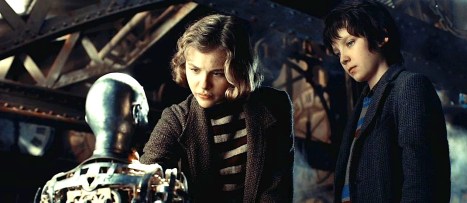
Indeed, Scorsese is a much more interesting filmmaker than that list of classics might suggest, reflected in films as diverse as Alice Doesn’t Live Here Anymore, New York, New York, The Last Waltz, After Hours, The Colour of Money, Age of InnocenceThe Last Temptation of Christ, Kundun and The Aviator. However, even allowing for that range, Hugo stands out as an oddity in Scorsese’s filmography. The film was something of a flop when it was released opposite The Muppets, and is often glossed over in accounts of Scorsese’s career and history.

This is shame. Hugo suffers slightly from arriving in the midst of a late career renaissance for Scorsese that includes some of the best and most successful films that the director ever produced: The Departed, Shutter Island, The Wolf of Wall Street, The Irishman. In the context of that body of work, Hugo is often overlooked. This is a shame, as it’s a magical and wonderful film. It manages to be a children’s film as only Martin Scorsese could produce, suffused with a melancholy and introspection that is rare in the genre.

Continue reading

“So, Your Son is a Nazi”: Modern Hollywood’s Weird Fixation on Feel-Good Stories About Fascists…

JoJo Rabbit is supposed to be an “anti-hate satire”, but what exactly is it satirising?

To be fair to director Taika Waititi, JoJo Rabbit is a well-made and charming crowd-pleaser. It manages something genuinely impressive, offering a feel-good coming of age comedy set against the backdrop of Germany in the dying days of the Second World War. It belongs the awkward, saccharine genre that produced films like Jakob the Liar or Life is Beautiful or The Day the Clown Cried. It is impossible to overstate how thin a razor blade Waititi is dancing, and how remarkable it is that he maintains his balance. The film never feels too sombre or too dark, but never as tasteless as something like The Book Thief.

Of course, Waititi largely manages this through cinematic sleight of hand. He avoids dwelling too heavily or for too long on the victims of fascist oppression in Nazi Germany. JoJo Beltzer finds a young Jewish girl hiding in his attic, but the film never details the horrors of the Final Solution. The characters are repeatedly confronted with the sight of bodies hanging in the public square, but the camera never really lingers on them. Instead, it focuses on JoJo’s reaction to them. The audience’s gaze is fixated on his gaze. The question isn’t how the audience feels about the horror, but how they feel about how JoJo feels.

This raises an interesting and slightly unsettling question about the recent wave of Hollywood films exploring the emergence of the modern extreme right and the resurgence of fascist ideology. Who exactly are these films for? What is the intended audience of JoJo Rabbit, and what exactly is it saying to them?

Continue reading