• Following Us

  • Categories

  • Check out the Archives


  • Awards & Nominations

Non-Review Review: Won’t You Be My Neighbour?

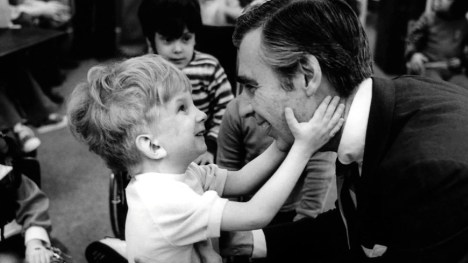
Won’t You Be My Neighbour? is an affecting and thoughtful exploration of a key figure in American popular consciousness.

Documentary maker Morgan Neville has established himself as a masterful navigator of the history of popular culture, of the depth and shadow often obscured by memory. Neville is perhaps most famous for his fascinating exploration of the back-up singers who provided a foundation for more recognisable stars in 20 Feet from Stardom, and he was also responsible for the documentary They’ll Love Me When I’m Dead, which probably made a more coherent narrative of The Other Side of the Wind than the film itself.

Won’t You Be My Neighbour? tells the story of children’s entertainer Fred Rogers, a staple of American television since the late sixties. Although the performer passed away more than a decade and a half ago, he casts a long shadow. There has been a renewed interest in his persona. Jim Carrey is playing a fictionalised version of the present in Kidding, while Tom Hanks will play a more official version of the man in a biography directed by Marielle Heller. (The film was originally titled Are You My Friend?, but is reportedly in the process of being retitled.

It is interesting to wonder why Fred Rogers is of such great interest at this precise moment, something that Won’t You Be My Neighbour? skirts around without tackling directly. Instead, Won’t You Be My Neighbour? is a sweet and affecting documentary that maybe brushes a little too lightly against its subject in places, but speaks most convincingly to what he represented and why he is so beloved.

Continue reading

Non-Review Review: Hold the Dark

“Do you have any idea what’s outside these windows? How black it gets?”
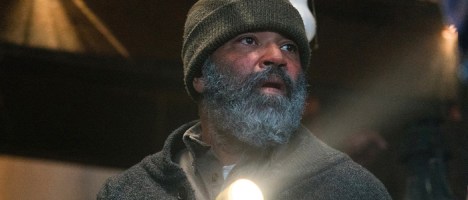
An enlightening piece of work.

In the American consciousness, the frontier is a haunted place.

In some ways, it is a concept distinct to the United States, at least in contrast to Europe. The boundaries within Europe were established centuries ago; although they might shift and bend, the contours of the continent have been known to the people who inhabited it for millennia. In contrast, to the settlers who arrived from Europe, the North American frontier was a mystery and an enigma. The frontier is distinct a border space. A border implies a point of collision that might be crossed, the neatly delineated boundary between one place and another.
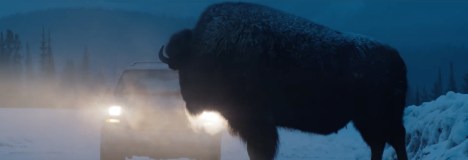
Let Bisons be Bisons.

The frontier is something entirely different. It represents the edge of reason, and limit of what is knowable. To reach the end of the frontier is to reach the end of “the West.” In geographical terms, off the western shore of the North American continent lies “the East.” In more abstract terms, the American frontier is an imaginary space rather than a literal one. After all, Jeremy Saulnier’s previous film – Green Room – suggested that the frontier could be found somewhere  surprisingly close to urbanity, only a few hours away from the familiar comforts of Portland.

Hold the Dark takes place in a decidedly more remote environment, against the snow backdrops of Alaska. Saulnier goes to great lengths to illustrate the isolation of that environment, paying particular attention to how long it takes Russell Core to reach the small Alaskan town that serves as the starting point of the story before venturing out into the real wilderness. At another point, Vernon Slone stops by an old hostel on his travels. Asked for his point of origin, he’s informed that there was no road connecting the two places. “Not directly,” he clarifies.
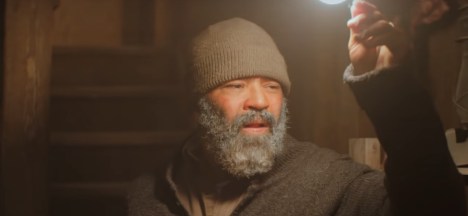
Shedding some light on the matter.

As with the snow-covered western wilderness in Wind River, there is a sense that Hold the Dark unfolds against the very limit of the American frontier, at the point where the continent has ceased to provide for the settlers and instead has become something harsh and unforgiving. It is a place that has been settled by humans, but is perhaps untouched by humanity. If Green Room allowed Saulnier to explore the vipers coiled underneath familiar rocks, then Hold the Dark is a story about the animals that hunt at the very edge of civilisation.

Green Room was effectively a cynical and grim take on the familiar horror plot that warned of the dangers lurking off the backroads, just out of sight. Hold the Dark is the story of a hunt for a dangerous predator in a harsh environment. In both films, the monster looks very familiar.
Mask appeal.

Continue reading

86. Mister Smith Goes to Washington – Independence Day 2018 (#147)

Hosted by Andrew Quinn and Darren Mooney, The 250 is a fortnightly trip through some of the best (and worst) movies ever made, as voted for by Internet Movie Database Users.

This time, an Independence Day treat. Frank Capra’s Mister Smith Goes to Washington.

Local activist and unlikely politician Jefferson Smith finds himself appointed to represent his great state in the United States Senate. However, while trying to ensure a fair deal for his constituents, Smith soon finds his faith in democracy threatened as he figures out how the institutions actually work.

At time of recording, it was ranked the 147th best movie of all time on the Internet Movie Database.

Continue reading

85. Forrest Gump (#12)

Hosted by Andrew Quinn and Darren Mooney, The 250 is a (mostly) weekly trip through some of the best (and worst) movies ever made, as voted for by Internet Movie Database Users. New episodes are released every Saturday at 6pm GMT, with the occasional bonus episode thrown in.

This time, Robert Zemeckis’ Forrest Gump.

Forrest Gump is an unremarkable man who has lived the most remarkable of lives, a feather caught in the breeze of history. From his childhood in Mississippi through the turbulence of the sixties and seventies, Forrest Gump lives a life that intersects repeatedly with the biggest moments of the twentieth century, having a profound and unspoken effect upon the course of history.

At time of recording, it was ranked the 12th best movie of all time on the Internet Movie Database.

Continue reading

New Podcast! The X-Cast – Season 3, Episode 2 (“Paper Clip”)

A real pleasure to re-team with Tony Black to round out our coverage of “the unopened file” on The X-Cast, following on from our discussions of Anasazi and The Blessing Way. And this time, it’s an even stronger line-up. The wonderful Chris Knowles is joins us for the discussion of the final part of the season-bridging trilogy.

As ever, a huge thrill to be a part of this. Anasazi, The Blessing Way and Paper Clip represent a landmark moment for The X-Files as a television show, and it’s been an honour to talk through those changes with Tony. However, Paper Clip is something special because it’s clear how much Chris loves this episode. There are few pleasures in life quite as satisfying as sitting down with somebody to talk about something they love.

I’ll be back on The X-Cast later in the season, to the point that I think the members of the Patreon may already have access to one of my own smaller side projects as part of the podcast. However, it was a delight to get to talk about three episodes that are so close to the core of what The X-Files is for a combined runtime of close to four hours.

The truth is in here. You can listen to the episode here, or click the link below.

Continue reading

67. Gran Torino (#157)

Hosted by Andrew Quinn and Darren Mooney, The 250 is a (mostly) weekly trip through some of the best (and worst) movies ever made, as voted for by Internet Movie Database Users. New episodes are released every second Saturday at 6pm GMT, with the occasional bonus episode between them.

This time, Clint Eastwood’s Gran Torino.

Korean War Veteran Walt Kowalski lives out his life in the deteriorating suburbs of Detroit, disconnected from his family and whiling away his days drinking beer on his porch. Initially aggressive and belligerent towards the Hmong family who moved in next door, Kowalski finds himself drawn into the lives of the two youngest children, forming an unlikely bond and forcing him to reassess his opinion of the community.

At time of recording, it was ranked the 157th best movie of all time on the Internet Movie Database.

Continue reading

Black Mirror – Black Museum (Review)

One of the more interesting aspects of Black Mirror‘s migration from Channel 4 to Netflix has been the subtle shift from British science-fiction horror towards American science-fiction horror.

The two episodes bookending the fourth season – USS Callister and Black Museum – exemplify this trend, episodes that would seemed very out of place when Black Mirror was “just” a quirky British anthology. USS Callister is obviously steeped in the iconography of a very American science-fiction institution, and while its male entitlement is not a uniquely American experience, that attitude has been more firmly tied into modern American politics than to  contemporary British politics.

Black Museum is even more overtly American, to the point that even the lead character’s British accent is revealed as a sham. The episode opens with a montage that practically screams “Americana!”, a big American car driving through a big American desert, a long stretch of road dwarfed by a seemingly infinite stretch of nothing, where even the jutting mountains provide a sense of impressive scale. Black Museum is set in the mythological America, a country so large that it occasionally seems to be nothing but nooks and crannies, populated with curiousities and eccentricities.

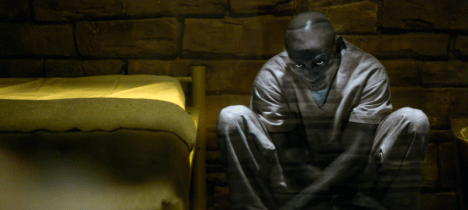
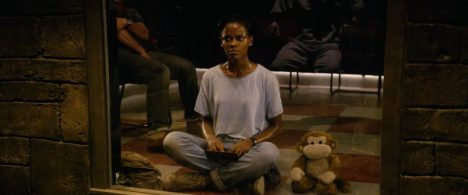
Black Museum unfolds within one such curiousity, a macabre collection of the grotesque and the ghoulish, a twenty-first century freak show run by a twenty-first century P.T. Barnum. However, over the course of the hour, the shape of Black Museum comes into focus. This is not merely a story embracing American trappings, it is also engaging with a distinctly American horror. Slowly, over the course of seventy minutes, Black Museum reveals itself as a science-fiction allegory about the exploitation of African American bodies and African American suffering; one of America’s original sins.

Continue reading

45. Paris, Texas (#241)

Hosted by Andrew Quinn and Darren Mooney, The 250 is a trip through some of the best (and worst) movies ever made, as voted for by Internet Movie Database Users. New episodes are released Saturdays at 6pm GMT, with the occasional weekend off.

This time, Wim Wenders’ Paris, Texas.

Four years after mysteriously disappearing, Travis wanders out of the desert and back into the lives of his family. Adapting to the outside world, Travis embarks upon a journey across America to bring together the shattered remains of his past life.

At time of recording, it was ranked the 241st best movie of all time on the Internet Movie Database.

Continue reading

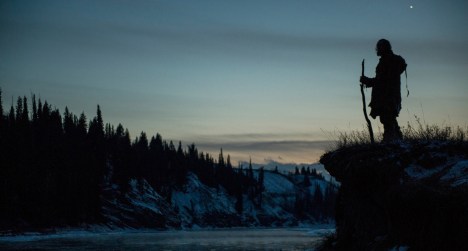
American Nightmares, Part I: Old Frontiers… (The Revenant/The Hateful Eight)

Trying something new. Or rather something old. Been a while since we published an old-fashioned thinkpiece on here, and been thinking a lot about America as filtered through film in 2015-2016. We’ll be publishing a series of these articles in the coming week. If you’d like to see more of this sort of content, please comment or share or facebook or tweet, so we know you like it.

The United States of America is a relatively young country.

Like all other countries, it has its own history and mythology. As with many of those countries, that history and mythology intertwine. The European settlers may have inherited some of that mythology from their ancestors across the Atlantic or appropriated some from the indigenous population, but a lot of that history and mythology was cultivated wholesale. The American Dream. Manifest Destiny. The idea that this was a wild continent to be tamed through the sheer strength of will of those rugged early settlers.

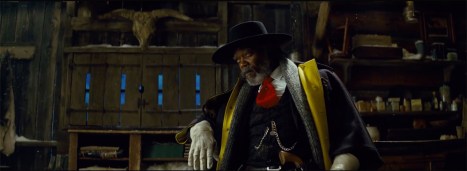
westerns9

Britain has knights. Ireland has rebels. America has cowboys. It is tempting to look upon these archetypal mythic figures as something far removed from the modern day, something so far in the distant past that they may never have existed as all. Particularly given the historical decline of the western genre in recent decades, it is easy to consider the cowboy a historical artifact covered in centuries of dust and disconnected from the modern world. Billy the Kid does not seem so far removed from King Arthur, Wyatt Earp from Brian Boru.

Of course, the reality is much more complicated. The overlap between the history and mythology is striking; these stories seemed to be mythologised before they were allowed to fad into history. The Great Train Robbery was released in 1903, and generally considered to be the first cinematic western. Although past its prime, the era of the American frontier was still in progress. Oklahoma would only become a state in 1907, with Arizona and New Mexico would become states in 1912. There is a sense that the country was still forming as the mythology coalesced.

westerns3 Continue reading

The X-Files – Nothing Important Happened Today II (Review)

This December, we’re taking a trip back in time to review the ninth season of The X-Files.

Of course, the ninth season was broadcast in a radically different world than the eighth season.

Nothing Important Happened Today I was broadcast early in November 2001, less than two months after hijackers commandeered control of several airline jets and sent them crashing into various American landmarks. The attacks upon the World Trade Centre and the Pentagon changed the world in a way that very few events can claim. History can be comfortably divided into “before 9/11” and “after 9/11”, a rare marker of cultural significance generally reserved for events like World Wars.

World on fire...

World on fire…

Tom Brokow has argued that 9/11 was “when the twenty-first century truly began.” Anne-Marie Slaughter argued that 9/11 was “the defining event of the new millennium.” Phillip E. Wegner suggested that 9/11 represented the end of “the long nineties” that had begun with the collapse of the Berlin Wall. It is not an exaggeration to suggest that 9/11 changed absolutely everything. It defined American foreign policy for over a decade after the fact, cemented a culture of anxiety and surveillance, cast an incredibly long shadow over world culture and politics.

Over two-and-a-half thousand people were killed on 9/11. Estimates suggest that up to twenty-one thousand civilians and more than two thousand American troops died during the War in Afghanistan. Studies suggest that up to half a million Iraqis have died of war-related causes and nearly four-and-a-half thousand American troops have died during the Iraq War. These are just the losses that can be tangibly measured; it is to say nothing of the lives caught in ripple effects and unforeseen (or foreseeable) consequences.

Shining a light on what happened...

Shining a light on what happened…

It is very cavalier and insensitive to suggest that The X-Files was a victim of 9/11 in any real sense. With everything else going on in the wake of 9/11, the cancellation of a television show means nothing. The cancellation of a show (even a popular show) is not even a footnote in any account of how the world changed. It is entirely reasonable to argue that The X-Files might have been cancelled even if 9/11 never happened. The show was nine years old, and had just lost one of its two leads. It was entirely possible that the show could never have recovered from that anyway.

Still, The X-Files was a show indelibly and undeniably anchored in the context of the nineties. It was a show that tapped into the zeitgeist in that historical lacuna following the end of the Cold War, when there were no more enemies to fight and where there was room for introspection and reflection about government authority. By the start of the ninth season, the show’s cultural moment had passed.

A Doggett lead...

A Doggett lead…

Continue reading