• Following Us

  • Categories

  • Check out the Archives


  • Awards & Nominations

Non-Review Review: Alien

I had the pleasure of attending of the Jameson Cult Film Club’s screening of Ridley Scott’s 1979 Alien. It was a great evening for all concerned, and it was great to see a classic film like that projected on a huge screen, blasted out of a superb sound system. The screening seemed to coincide with the build-up to the release of next year’s Prometheus, a sci-fi thriller from Ridley Scott with “strands of Alien DNA”, but Scott’s film is one of those rare pieces of cinema that continues to give, even thirty years after the original release. It’s rare to point to a film that seems to offer new nuance and depth on each viewing, especially within the horror genre. Alien is a movie that’s absolutely fascinating in its complexity.
A bad egg…

Continue reading

The Adventures of Tintin: The Shooting Star (Review)

To celebrate the release of The Adventures of Tintin: The Secret of the Unicorn in the United States later this month, I’ll be taking a look at some of nineties animated television show. Check back daily!

Note: This is our review of the animated episode, check out our review of the book here.

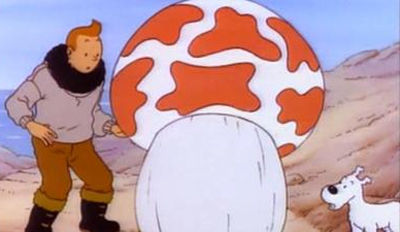
I like The Shooting Star. It’s one of the stranger entries in the series, and so it tends to divide fans – much like the equally surreal Flight 714. Part of the reason I enjoy it so much is the wonderful atmosphere Hergé generates early in the story, as if channeling his own fears and uncertainties about a Europe that was (at the time) on the brink of war. I also enjoy the way that the adventure allowed Hergé to cut loose with his imagination – the final few pages allowing the artist to indulge his own zany imagery in a manner similar to the wonderfully odd dream sequences in Cigars of the Pharaoh and The Crab With the Golden Claws. The animated adaptation does a decent job of translating the story from one medium to another, but I can’t help but feel a little disappointed with it.

Magic mushroom...

Continue reading

Non-Review Review: Shrek

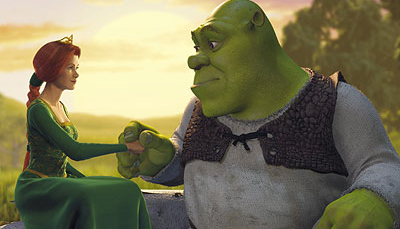
I caught Shrek again at the weekend, and I’m surprised how well it still holds up. Of course, part of my concern was that the sequels might have somehow retroactively impacted on my opinion of the original film, but I’m always a little hesitant to return to films I greatly enjoyed when I was younger – afraid that they might have been superseded by movies I’ve seen in the years since, or perhaps victim to slightly changing tastes. To be honest, it help up very well, and I was genuinely reminded of why I enjoyed it so much over a decade ago.

A fairy tale romance?

Continue reading

The Adventures of Tintin: The Crab With The Golden Claws (Review)

To celebrate the release of The Adventures of Tintin: The Secret of the Unicorn in the United States later this month, I’ll be taking a look at some of nineties animated television show. Check back daily!

Note: This is our review of the animated episode, check out our review of the book here.

Though the blu ray box set of the animated series includes the episodes in the order of the stories Hergé published, the studio actually produced the adventures in a different order, spread across three seasons. In fact, the first episode we reviewed, Tintin in America, was the last produced. So The Crab With the Golden Claws was actually the first animated adaptation in this particular series. And it makes sense to use this adventure as a good place to start any adaptation of Tintin – indeed, it appears Steven Spielberg and Peter Jackson would agree, as this is the first of three stories adapted in The Adventures of Tintin: The Secret of the Unicorn. It has everything you need from a Tintin adventure – a mystery, an exotic locale, international criminals.

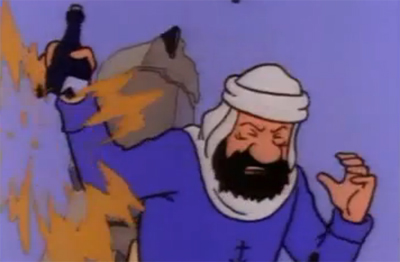
Oh, and it also introduces Captain Haddock.

Haddock can't hold his liquor...

Continue reading

Grant Morrison’s Run on Batman – Time & The Batman (Review)

December is “Grant Morrison month” here at the m0vie blog, as we take the month to consider and reflect on one of the most critically acclaimed (and polarising) authors working in the medium. Every Wednesday this month, we’ll have a Grant Morrison related review or retrospective.

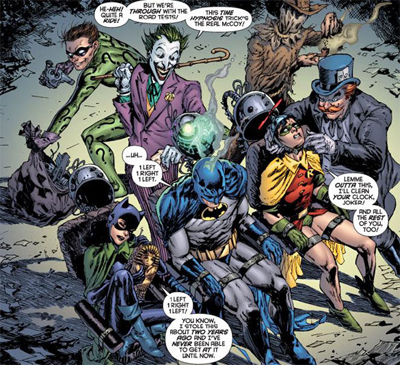
I have, I’m not entirely ashamed to admit, grown quite fond of Grant Morrison’s run on Batman. Despite the fact I’m still not overly fond of Batman R.I.P., I really appreciated The Return of Bruce Wayne and Batman & Robin was perhaps the most fun I’ve had reading comics in quite a long time. So I found myself somewhat underwhelmed by Time and the Batman, collecting Morrison’s work on Batman #700 and the two-issue follow-up that served to make explicit the ties between Batman R.I.P. and Final Crisis. It’s not that the book isn’t packed with ideas or even that it’s quite short. I think it’s more that Morrison seems to spend a lot of time here providing exposition and filling in information that perhaps couldn’t fit elsewhere in this tapestry.

Joker puts the gang back together…

Continue reading

The Adventures of Tintin: King Ottokar’s Sceptre (Review)

To celebrate the release of The Adventures of Tintin: The Secret of the Unicorn in the United States later this month, I’ll be taking a look at some of nineties animated television show. Check back daily!

Note: This is our review of the animated episode, check out our review of the book here.

In a way, King Ottokar’s Sceptre feels like the end of an era. King Ottokar’s Sceptre is the last adventure in the series that Tintin would spend alone (save for the company of the loyal companion, Snowy). Although Hergé began work on The Land of Black Gold next, the next completed story (The Crab With the Golden Claws) would introduce Captain Haddock, who would follow Tintin for the rest of the series.  It was also the last story that Hergé completed before the outbreak of the Second World War, and the sense of paranoia is palpable. After this story, Hergé would remove a lot of the more overt political commentary from the series, preferring to offer more subtle and biting commentary. I’m delighted to say that the animated adaptation retain pretty much all of the spirit of Heré’s original story, which I was a little worried about given how deeply rooted the story is in the European politics of the thirties.

Keys to the kingdom...

Continue reading

Trick or Tweet: Phoning or Tweeting During a Movie…

I don’t know, I guess I kind of assumed that “don’t use your phone during a movie” was such a basic part of movie decorum that it really wasn’t worth mentioning. However, it seems that I might have been just a little bit naive in my supposition, at least concerning the iPhone app that came with Despicable Me. Now the Tateuchi Center in Bellevue in Washington is building a theatre designed to accommodate those who want to text and twitter during a film, stating:

“This is the wave of the future for the people we worry about attracting,” said John Haynes, the theater’s executive director. “Simply forbidding it and embarrassing people is not the way to go. So we are wiring the building in anticipation of finding ways to make it work over time.”

I don’t know, I thought embarrassing users was actually a pretty good idea. I just don’t like the idea of encouraging people to use their mobiles during any sort of performance – and, you can bet, this theatrical example will have implications for usage in cinemas.

Continue reading

The Adventures of Tintin: The Black Island (Review)

To celebrate the release of The Adventures of Tintin: The Secret of the Unicorn in the United States later this month, I’ll be taking a look at some of nineties animated television show. Check back daily!

Note: This is our review of the animated episode, check out our review of the book here.

I’ve always had a bit of a soft spot for The Black Island. There are probably multiple reasons for this. Snowy is my favourite member of the Tintin ensemble, and The Black Island is as close as possible to a Snowy-centric adventure. I also tend to enjoy the pulpier stories in Hergé’s series, the ones that have aged so well that they perfectly evoke the serialised fiction of the era without feeling trapped in it – stories like The Cigars of the Pharaoh, which is in series competition to be my favourite Tintin adventure. The Black Island is undoubtedly a product of the thirties, with the German counterfeiting ring in England and the homage to King Kong, but it never feels that old. In a way, the bright colours and wonderful depiction of rural England (and other stereotypical elements like the police constables) always made me think of the British pop culture of the sixties. I think that’s the appeal of the adventure to me, in a nutshell.

And most of it made it to this animated adaptation.

Something to think about...

Continue reading

Non-Review Review: Alvin & The Chipmunks – Chipwrecked

I know it’s not exactly fair to blame Alvin & The Chipmunks, but I feel a bit spoilt by modern family entertainment. It’s easy to point to Pixar’s work, but I’m talking about the general standard of the output from Dreamworks and others like Despicable Me. However, Alvin & The Chipmunks: Chipwrecked feels like what might have passed for children’s entertainment ten years ago, when it seemed like Disney was the only major American studio capable of producing consistently high-quality entertainment. Alvin and his friends feel out of place in a movie that might have been passable over a decade ago. It doesn’t help that the movie mistakes pop culture references and Lady Gaga songs for relevance.

All at sea?

Continue reading

The Adventures of Tintin: The Broken Ear (Review)

To celebrate the release of The Adventures of Tintin: The Secret of the Unicorn in the United States later this month, I’ll be taking a look at some of nineties animated television show. Check back daily!

Note: This is our review of the animated episode, check out our review of the book here.

I have to admit, I was curious about how the animated series would handle some of the more political material Hergé inserted into his work. I admired the way that Cigars of the Pharaoh handled international drug smuggling, but I suspected that broad political satire set in a banana republic might catch some viewers completely off guard. And, to be honest, there’s a lot of other stuff in Hergé’s The Broken Ear that makes it one of the tougher stories to adapt as a cartoon adventure. It’s very close to farce, and while the cartoon acknowledges that this business is a little sillier than usual, it never feels like the episode fully embraces the story it’s trying to tell, instead settling for a fairly generic run-around featuring characters and locales from the origin story.

Spotlight on the fetish...

Continue reading