• Following Us

  • Categories

  • Check out the Archives


  • Awards & Nominations

New Escapist Column! On Marvel’s All-New, All-Different Streaming Villain Problem…

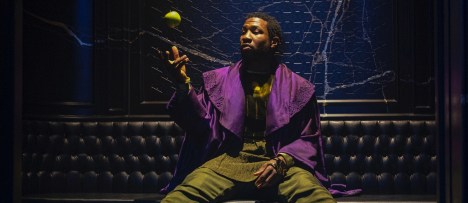
I published a new column at The Escapist yesterday. The penultimate episode of Hawkeye featured a major reveal of a significant villain for the show. This is very typical of how the Disney+ streaming shows have operated, so it seemed like a good opportunity to talk about Marvel’s streaming villain problem.

Marvel Studios have long been criticised for their fairly generic villains. However, in the transition from blockbuster releases to streaming series, the company has created a new sort of problem. Instead of generic and forgettable antagonists, these shows tend to feature puzzle boxes and references, clues and riddles. The identity of villains are often hidden and concealed, treated as late-in-the-story revelations that reward long-term fans at the expense of pacing and characterisation.

You can read the piece here, or click the picture below.
New Escapist Column! On How Only Peter Jackson Could Have Made the “Lord of the Rings” Trilogy…

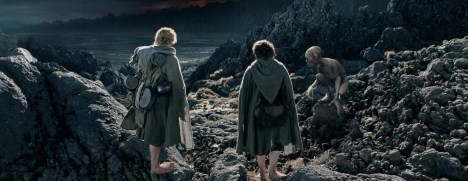
I published a new column at The Escapist yesterday. This week, to mark the twentieth anniversary of the release of The Lord of the Rings: The Fellowship of the Rings, we’re taking a look back at the trilogy as a whole. We’ll be publishing three articles looking at the films, one each day. This is the first.

Most films are minor miracles. It is remarkable that films get made at all, let alone that many of them turn out to be good. This is particularly true of the Lord of the Rings trilogy, which seemed like an impossible assignment. At the time, Peter Jackson seemed like the most unlikely of directors to successfully adapt J.R.R. Tolkien’s unfilmable epic. However, in hindsight, it seems impossible to imagine that anybody except Jackson could have brought the film to life.

You can read the piece here, or click the picture below.

New Podcast! The X-Cast – Season 7, Episode 22 (“Requiem”)

The X-Cast is covering the seventh season of The X-Files. It is a season that arrives at an interesting point in the larger arc of the series, with the creative team trying to both prepare for the end of the show without actually committing to it. I joined Carl Sweeney, Cathy Glinski and Kurt North to discuss the season finale, which perfectly encapsulates this tension.

Requiem is an episode that existed in a variety of contexts between production and airing. When it was filmed, there was every possibility that it could be the last episode of The X-Files ever. Chris Carter wanted to use it as a launching pad to a series of spin-off movies. However, between filming and broadcast, its meaning shifted dramatically. Following a disastrous season, Fox had no choice but to greenlight an eighth season of The X-Files, and David Duchovny reached a settlement in his lawsuit against Fox. Requiem went from being a series finale to a season finale, without changing a single shot.

You can listen to the episode here, or click the link below.

Continue reading

New Escapist Column! On “The Green Knight” As the Year’s Best Christmas Movie…

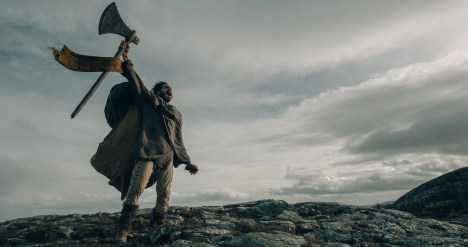
I published a new In the Frame piece at The Escapist this evening. With Christmas fast approaching, it seemed as good a time as any to take a look at the year’s best new Christmas movie.

The Green Knight can make a claim to being a Christmas movie just in terms of setting. It is a movie that unfolds primarily across two consecutive Christmases. However, its festive themes run deeper than that. I n many ways, The Green Knight is an exploration of the clash between pagan belief systems and Christian theologies that speaks to the central tension of the holiday. This isn’t just a Christmas movie, it is in some ways, a movie about Christmas.

You can read the piece here, or click the picture below.

New Podcast! Your Feature Presentation – “Ranking the Spider-Man Films From Worst to Best”

The Escapist have launched a new pop culture podcast, and I was thrilled to join Jack Packard and Marty Sliva for the first episode. With the upcoming release of Spider-Man: No Way Home, it seemed like the perfect opportunity to take a look back at the cinematic adventures of the webslinger, and discuss how they rank.

264. Star Wars: Episode VIII – The Last Jedi (#—)

Hosted by Andrew Quinn and Darren Mooney, this week joined by special guests Luke Dunne, Alex Towers, Alexandra Harvey and Andy Melhuish, The 250 is a (mostly) weekly trip through some of the best (and worst) movies ever made, as voted for by Internet Movie Database Users. New episodes are released every second Saturday at 6pm GMT, with the occasional bonus episode between them.

This time, Rian Johnson’s Star Wars: Episode VIII – The Last Jedi.

A long time ago in a galaxy far away, the First Order and the Resistance struggle for control of the cosmos. Things are looking particularly grim, as the heroes find themselves divided; Rey is on a mission to recruit the lost Jedi master Luke Skywalker, Poe finds himself trying to hold the remnants of the fleet together, and Finn embarks on a journey to a wretched hive of scum and villainy.

At time of recording, it was not ranked on the list of the best movies of all time on the Internet Movie Database.

Continue reading

New Escapist Column! On How “The Expanse” Got Small…

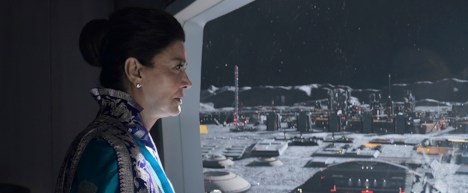
I published a new In the Frame piece at The Escapist this evening. With the final season of The Expanse beginning this week, it seemed like an opportunity to take a look at the final six episodes of the season.

For most of its run, The Expanse has been impressive in terms of scale and scope, often splitting its cast across multiple story threads and vast geographical distances. This makes the sixth season feel a little jarring, as the production team attempt to condense the longest book into the shortest season. As a result, The Expanse feels strangely insular and claustrophobic in its final stretch, almost like a cliff notes version of the show that it once was.

You can read the piece here, or click the picture below.

New Escapist Column! On Deconstruction of the “Matrix” Sequels…

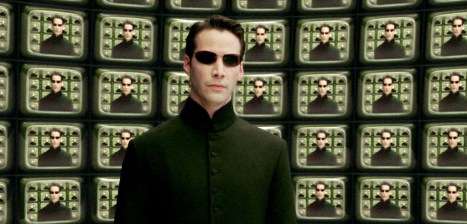
I published a new column at The Escapist yesterday. With the looming release of The Matrix Resurrections, it seemed like a good opportunity to take a look back at The Matrix and its two sequels The Matrix Reloaded and The Matrix Revolutions.

The Matrix is one of the great “Chosen One” narratives of the late nineties, and a film that had a profound cultural impact. Its legacy is surprisingly controversial, and that makes the two sequels to the film particularly interesting. Both Reloaded and Revolutions play as a response to the themes and ideas of The Matrix, picking apart the “Chosen One” narrative and the easy “us vs. them” binary. In contrast, Reloarded and Revolutions explore how that sort of mythmaking is often part of larger systems of oppression.

You can read the piece here, or click the picture below.

Non-Review Review: West Side Story

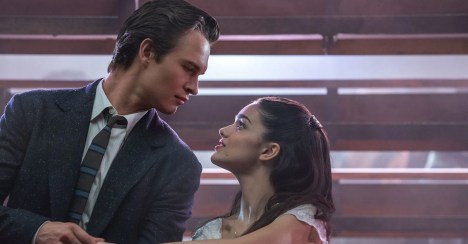
In some ways, Steven Spielberg’s adaptation of West Side Story is a match made in heaven, a union that feels as perfect as the story’s central romance.

After all, West Side Story is one of the quintessential American texts. In its review of the classic Robert Wise and Jerome Robbins adaptation, The Hollywood Reporter described the film musical as “the one dramatic form that is purely American and purely Hollywood”, and West Side Story is a musical that takes that idea to its extreme, with a show-stopping number literally titled In America. More than that, the previous cinematic adaptation stands as one of the virtuoso examples of classic Hollywood studio filmmaking, with its beautiful production design, large cast, and beautiful backlot.

“Do you want to dance or do you want to fight?”

Steven Spielberg is perhaps the most purely American and most purely Hollywood director of his generation. He is just as much a monolyth of American popular culture as West Side Story or even the cinemative musical. Writer Arthur Ryel-Lindsey might have sarcastically declared that “Steven Spielberg is American culture”, but there’s a great deal of truth in it. Depending on who you ask, Spielberg is “the defining American populist of his generation”, “possibly the greatest American director”, or even simply “synonymous with cinema.” So West Side Story feels like a wonderful synthesis of material and director.

Plus, you know, Spielberg knows how to direct sharks.

“Maria, you gotta see her…”

Continue reading

New Escapist Column! On “The Last Duel”, “Dune”, “The Green Knight”, and Being the Hero of One’s Own Story…

I published a new column at The Escapist at the weekend. With the release of Dune and The Last Duel on home media, it seemed like a good opportunity to take a look at the overlap between the two films, along with The Green Knight.

All three stories are recognisable as traditional epics, medieval or pseudo-medieval adventures featuring men who perceive themselves to be the heroes of their own narratives. However, all three films cleverly interrogate that idea of story and narrative, asking what it means to be the hero of one’s own story and who gets to control the narrative. It’s a fascinating and interesting trend, and it’s notable that all three films premiered within a few months of each other.

You can read the piece here, or click the picture below.