• Following Us

  • Categories

  • Check out the Archives


  • Awards & Nominations

New Escapist Column! On “Turning Red”, and Cinema as an Empathy Machine…

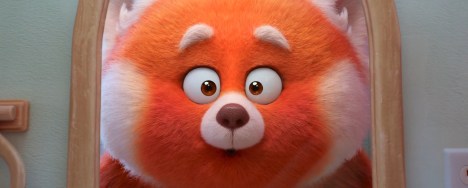
I published a new piece at The Escapist this evening. One of the big controversies this past week has concerned the critical reception to Turning Red.

The response to the film has been overwhelmingly positive, but there was one prominent review that argued that the film was “less universal” than previous Pixar films. It is interesting to unpack that idea, to wonder what it is exactly that makes Turning Red less universal and also to interrogate the power of cinema as a medium to generate empathy. In doing so, film has the power to take something very specific and render it universal.

You can read the piece here, or click the picture below.
278. The Godfather: Part III/Mario Puzo’s The Godfather, Coda: The Death of Michael Corleone (#—)

Hosted by Andrew Quinn and Darren Mooney, and this week with special guests Jenn Gannon and Jason Coyle, The 250 is a weekly trip through some of the best (and worst) movies ever made, as voted for by Internet Movie Database Users. New episodes are released Saturdays at 6pm GMT.

So this week, both Francis Ford Coppola’s The Godfather: Part III and Mario Puzo’s The Godfather, Coda: The Death of Michael Corleone.

It is 1979. Michael Corleone has solidified control of the Corleone crime family, and hopes to take the family business completely legitimate by striking a deal with the Vatican Bank. Trying desperately to reunited his fractured and divided family, Michael quickly discovers that organised crime isn’t the only place where criminals are lurking, ready to strike.

At time of recording, neither movie was ranked on the list of the best movies of all time on the Internet Movie Database.

Continue reading

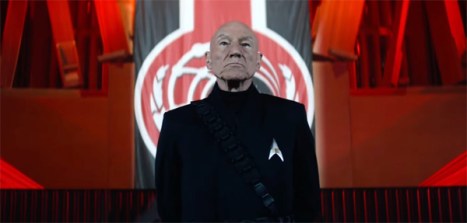
New Escapist Column! On How “Star Trek: Picard” Offers “The Next Generation” a Glimpse Through “A Mirror, Darkly”…

I published a new piece at The Escapist this evening. We’re doing a series of recaps and reviews of Star Trek: Picard, which is streaming weekly on Paramount+. The second episode of the second season released this week, and it seemed like a good opportunity to take a look at the series.

The second episode of the season is an interesting twist on a classic Star Trek trope. Star Trek: The Next Generation never really did a dark alternate universe story, comparable to something like Mirror, Mirror, Crossover, Living Witness or Twilight. It often seemed like The Next Generation was incapable of imagining the world any other way than the way that it was. As such, Penance offers something new for Jean-Luc Picard. Reflecting the gulf that exists in the more-than-a-quarter century between The Next Generation and Picard, the episode offers Picard a chance to look at a darker alternative future.

You can read the piece here, or click the picture below.


277. The Batman – This Just In (#67)

Hosted by Andrew Quinn and Darren Mooney, and this week with special guests Graham Day and Niall Glynn, The 250 is a weekly trip through some of the best (and worst) movies ever made, as voted for by Internet Movie Database Users. New episodes are released Saturdays at 6pm GMT.

So this week, a new entry: Matt Reeves’ The Batman.

Bruce Wayne is in the second year of his war on crime in Gotham, and things are not improving. Indeed, the city is thrown into anarchy when a new villain calling themselves the Riddler begins targetting city officials and threatening to unmask the city’s darkest secrets. Can Bruce survive what is coming? Can the Batman? Can Gotham?

At time of recording, it was ranked 67th on the list of the best movies of all time on the Internet Movie Database.

Continue reading

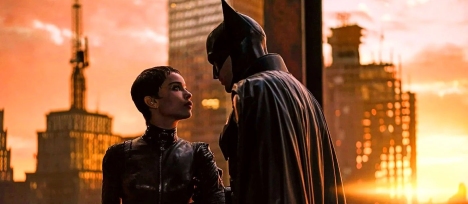
New Escapist Column! On “The Batman” as an Argument for Superheroes…

I published a new In the Frame piece at The Escapist on Friday. With the release of The Batman this weekend, it seemed a good opportunity to take a look at the film, and what it says about the state of the superhero genre.

The superhero genre is arguably the dominant mode of American blockbuster cinema, the prism through which the populist form must be viewed in its present incarnation. Perhaps the superhero is best understood as a descendent of the classic pop archetypes like the cowboy or the gangster. However, very few superhero films actively engage with what that transition actually means, what makes the superhero a more modern American archetype than the cowboy or the gangster. The Batman is the rare superhero movie engaged with this question.

You can read the piece here, or click the picture below.

276. The Godfather: Part II (#3)

Hosted by Andrew Quinn and Darren Mooney, and this week with special guests Deirdre Molumby and Brian Lloyd, The 250 is a weekly trip through some of the best (and worst) movies ever made, as voted for by Internet Movie Database Users. New episodes are released Saturdays at 6pm GMT.

So this week, Francis Ford Coppola’s The Godfather: Part II.

In 1901, Vito Andolini is evacuated from the small town of Corleone, fleeing to the new world in the hopes of a new life. In 1959, his son Michael Corleone continues his efforts to legitimise the family business. However, will Michael’s efforts to maintain control of the empire that Vito built ultimately lead to the collapse of what both men held most dear?

At time of recording, it was ranked 3rd on the list of the best movies of all time on the Internet Movie Database.

Continue reading

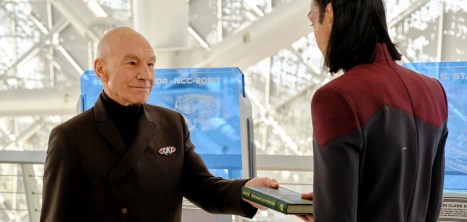
New Escapist Column! On How “Star Trek: Picard” Tries to Go Back to the Future…

I published a new piece at The Escapist this evening. We’re doing a series of recaps and reviews of Star Trek: Picard, which is streaming weekly on Paramount+. The second season premiere released this week, and it seemed like a good opportunity to take a look at the series.

The second season premiere of Picard is a much more openly nostalgic affair than the previous season had been. While the previous season often found itself caught between the past and the future, the second season seems to turn its gaze more earnestly backwards. It’s a complicated and somewhat flawed show, often retreating from the more interesting implications of its big ideas, but Picard is at least interested in grappling with the legacy of Star Trek: The Next Generation, and exploring why the utopian future it promised audiences seemed to slip from grasp.

You can read the piece here, or click the picture below.

New Escapist Column! “The Batman” as a Paranoid Conspiracy Thriller…

I published a new In the Frame piece at The Escapist yesterday evening. With The Batman releasing this weekend, it seemed like a good opportunity to take a look at Matt Reeves’ take on the Caped Crusader.

Reeves has discussed the influence of seventies cinema on The Batman. The film draws heavily from paranoid films of the era, movies like The French Connection, Klute and The Conversation. However, it is more than just nostalgia at play. The Batman finds an interesting thematic overlap between the seventies and the present day, particularly in its recurring fascination with voyeurism and surveillance. The Batman is many things, but it’s also a story about the importance of looking into the darkness, but realising that looking alone is not enough.

You can read the piece here, or click the picture below.

New Escapist Video! “The Batman Is a Bold and Beautiful Blockbuster”

I’m thrilled to be launching movie reviews on The Escapist. Over the coming weeks and months, I will be joining a set of contributors in adding these reviews to the channel. For the moment, I’m honoured to contribute a three-minute film review of The Batman, which is in theatres on Friday.

New Podcast! Primitive Culture #114 – Star Trek and Vietnam

A little while ago, I had the pleasure of sitting down with the wonderful Tony Black to talk about Star Trek and Vietnam.

The general reading of classic Star Trek tends to play up the show’s liberal credentials, to read Star Trek as a utopian and pacifist series that was very much on the right side of history. This antiwar reading is supported by episodes like Errand of Mercy, The Trouble with Tribbles and Day of the Dove, among others. However, the show’s politics are decidedly more complicated. Like America itself, Star Trek was divided over the Vietnam War, as reflected in episodes like Friday’s Child or The Omega Glory, and most especially in A Private Little War.

The result was a fun (and involved) discussion, and you can listen to it below or directly via Primitive Culture‘s homepage on trek.fm.

Continue reading