• Following Us

  • Categories

  • Check out the Archives


  • Awards & Nominations

Star Trek: Deep Space Nine – The Emperor’s New Cloak (Review)

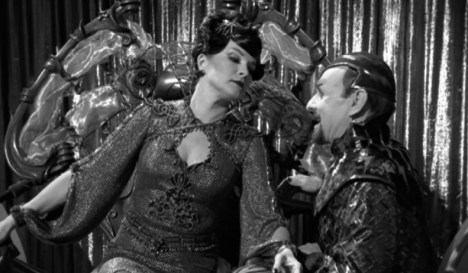
The Emperor’s New Cloak is a disaster.

To be fair, it is not a messy disaster. There is nothing particularly novel in how terrible The Emperor’s New Cloak actually is. Most of the awfulness is carried over from Through the Looking Glass and Shattered Mirror. The sharp decline in quality and merit of the mirror universe episodes since the concept’s reintroduction in Crossover has become a gentle slope. The Emperor’s New Cloak is unfunny and broadly homophobic nonsense, clumsily plotted and horribly paced. If it sets a lower bar for these mirror universe episodes, that bar is not appreciably lower.
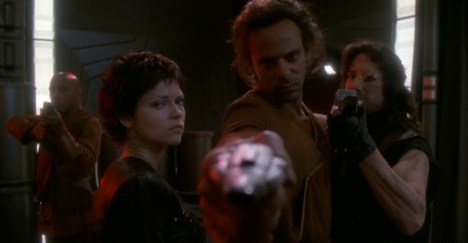
Not quite having a blast…

The Emperor’s New Cloak is terrible in the same way that Prodigal Daughter and Field of Fire are terrible. It is as though Star Trek: Deep Space Nine has reached a point where its bad episodes are no longer surprising, simply uninspired. No audience member watching The Emperor’s New Cloak will wonder how any of these ideas made it to screen. There is none of the novelty that defined the horrors in episodes like Meridian, Let He Who Is Without Sin… or even Profit and Lace. There is just a creeping sense of fatigue.

In some ways, it makes sense that the most disappointing episodes of the seventh season should be affected by this feeling of exhaustion. The end is nigh, the production team have been working on the series for seven years. Even their bad jokes are no longer shocking, simply tired.
A dark moment for all involved.

Continue reading

39. Lagaan: Once Upon a Time in India (#249)

Hosted by Andrew Quinn and Darren Mooney, The 250 is a fortnightly trip through some of the best (and worst) movies ever made, as voted for by Internet Movie Database Users. New episodes are released every second Saturday at 6pm GMT, with the occasional bonus episode between them. This week, the pair are joined by Babu Patel and Giovanna Rampazzo, with thanks to Siraj Zaidi and The Indian Film Festival of Ireland.

This time, Ashutosh Gowariker’s Lagaan: Once Upon a Time in India.

During British rule, a small Indian village comes together to play a cricket match against the local British regiment. In a season without rain, the stakes are high. If the villagers win, they will be spared taxation for three years; if the villagers lose, they will have to pay triple tax. It is all to play for.

At time of recording, it was ranked the 249th best movie of all time on the Internet Movie Database.

Show Notes:

Star Trek: Voyager – Gravity (Review)

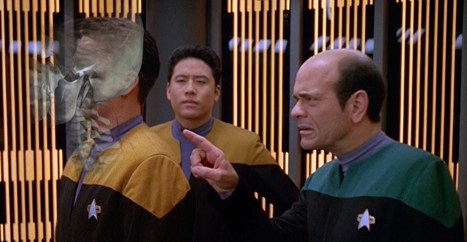
Gravity is a powerful story, all the more effective for its relative simplicity.

Tuvok has been one of the most overlooked and ignored regular cast members on Star Trek: Voyager. The later seasons tend to neglect Harry Kim and Chakotay, but they had been given considerable focus in the earlier years of the show. Chakotay had been a major focus in The Cloud, State of Flux, Cathexis, Initiations, Tattoo, Manoeuvres and Basics, Part I. Kim had taken centre stage in Emanations, Prime Factors, Non Sequitur and The Thaw. In contrast, Tuvok remained relatively anonymous, more of a supporting player than a narrative focal point.

Vulcan on a ledge.

In hindsight, this appears a rather strange choice. Tuvok is the first full-blooded Vulcan character to appear as a regular on a Star Trek show. Spock is easily the most iconic character in the franchise, to the point that he would be the torchbearer for the JJ Abrams reboot and his family still haunts Star Trek: Discovery. As such, having a fully Vulcan character should have led to all manner of interesting stories. After all, Tuvok was introduced in Caretaker as a spy working undercover in the Maquis. There should have been a lot of material to mine in the set-up.

However, for most of the run of Voyager, Tuvok seemed cast in a supporting role. He was the investigator in episodes where the crew were falsely accused, as Paris was in Ex Post Facto or Torres was in Random Thoughts. He was a reliable sounding board for other characters, as with Kes in Cold Fire or Neelix in Rise or Seven of Nine in The Raven. He was even effectively employed as a mind-controlled monster in episodes like Cathexis and Repression. Tellingly, most of the handful of episodes focusing on Tuvok focus on events where he is not himself; Tuvix, Riddles.

Vulcan love slave.

This is a shame, as there is a lot of fertile ground to explore within Vulcan psychology. Logic is never as clean or simple as Spock made it sound. Existence is full of logical contradictions and inconsistencies. The two best Tuvok-centric episodes of Voyager tend to focus on these inconsistencies. Meld is an episode in which Tuvok asks questions for which there can be no answer, and in which his insistence that the universe is an ordered and logical structure pushes him to some very dark places. Gravity explores the long-standing myth that Vulcans are emotionless.

Gravity is a surprisingly influential episode of Voyager, an episode that explores the implications of an idea which the larger Star Trek franchise had taken for granted for more than thirty years. It is an episode that feels unique in the larger context of Voyager, one build as much around character as action. It is story about love and repression, one rooted very much in who Tuvok is. It might just be one of the best Vulcan-centric stories in the franchise.

Tuvok lightens up.

Continue reading

Star Trek: Voyager – Bride of Chaotica! (Review)

Bride of Chaotica! is an enjoyable mess.

As its title implies, Bride of Chaotica! is a celebration of nostalgic futurism. It is a culmination of a number of themes running through the series. Most obviously, this particular brand of retrofuturism has been a recurring gag since Night at the start of the fifth season, but it fits within a broader context. From the outset, Star Trek: Voyager has been engaged with a more nostalgic sci-fi aesthetic than Star Trek: The Next Generation or Star Trek: Deep Space Nine.

Bride of evil.

Voyager‘s retrofuturism has taken various forms; the old school “space western” tone established by Caretaker, the retro sci-fi trappings of episodes like Innocence or Rise, the monster mayhem of episodes like Phage or Macrocosm, the Cold War paranoia of Cathexis or In the Flesh, Tom Paris’ nostalgic holoprograms in Lifesigns or Vis á Vis, the abductees from the early twentieth century in The 37’s. However, perhaps the most basic is baked into the concept of the show. Voyager is literally a series about the desire to return to a safer and more familiar time.

In some ways, Bride of Chaotica! cements this nostalgia in the context of the larger Star Trek canon, embracing the anxiety that has become increasingly apparent in the years since the thirtieth anniversary. After all, the surrounding feature films all literalise the pull of the past. Star Trek: First Contact has Jean-Luc Picard literally journey back to twenty-first century Earth while revisiting his most iconic moment. Star Trek: Insurrection has the crew discover the fountain of youth. Star Trek: Nemesis confronts Picard with a younger clone of himself.

Radio Chaotica!

It is perhaps telling that Voyager was the moment at which the Star Trek franchise stopped pushing forward. During and after Voyager, the franchise would become increasingly backwards-looking. Star Trek: Enterprise would invite the audience to meet James T. Kirk’s childhood era, trying to recapture that old magic. JJ Abrams’ Star Trek reboot would focus on a young version of Kirk and Spock. Star Trek: Discovery will feature a central character who is something close to Spock’s sister. There is a conscious pull of nostalgia.

Perhaps the future was better yesterday.

Never too far afield.

Continue reading

Non-Review Review: An Inconvenient Sequel – Truth to Power

An Inconvenient Sequel feels somewhat inconvenienced by factors outside of its control.

Much like An Inconvenient Truth, this documentary is very meticulously and carefully structured. It is built around the same core idea of a climate change lecture provided by Al Gore, but it also has a very linear and clear arc to it. There is a definite narrative running through An Inconvenient Sequel, which occasionally feels like a real-life thinking person’s political thriller, only with fewer shady businessmen and less immediately dramatic stakes. An Inconvenient Sequel has a story that it very clearly wants to tell, centring on Al Gore at the Paris Climate Change Conference.

However, that narrative is repeatedly interrupted. Forces beyond Gore’s reckoning creep in around the edges of the story that he wants to tell. Gore very clearly intended for this narrative to be triumphant in nature, to the point that he opens his big presentation in the middle of the film by promising the audience a happy ending. However, time and again, real life intervenes. Disruptions interrupt the flow of the story that Gore has constructed, to the point that the last ten minutes of the film feel like a bizarre postscript, as if real life were directed by M. Night Shyamalan.

It would be churlish to blame Gore for this. In fact, An Inconvenient Sequel is in many ways more interesting for these outside elements that creep into the story being told. Real life is full of complications that are unforeseen and yet inevitable. However, there is a sense that these sweeping dramatic reversals have caught Gore and the documentary off-balance, that they are struggling to properly respond, that they are not ready to veer “off script” to cope with what the world has thrown at them. The result is uncomfortable, chaotic, and surreal. And oddly compelling.

Continue reading

Star Trek: Voyager – Latent Image (Review)

Latent Image is a powerful allegorical piece of Star Trek, a prime example of how Star Trek: Voyager could occasionally spin gold from its shift towards a more “archetypal Star Trek” template. It is a story that could easily have been told with Data on Star Trek: The Next Generation, for example.

At the same time, Latent Image is a story that touches on many of the core themes of Voyager, many of the show’s key recurring fixations and fascinations. It is an episode about the link between memory and identity, about the importance of preserving history rather than burying it; it touches upon both the metaphorical manipulation of history in stories like RememberDistant Origin and Living Witness and the literal manipulation of the past in stories like Future’s End, Part IFuture’s End, Part IIYear of Hell, Part I and Year of Hell, Part II.

Picture imperfect.

However, it filters that experience through Brannon Braga and Joe Menosky’s recurring fascination with themes of identity and self-definition. The writers have often used the artificial characters on Voyager to explore the malleability of self, how easily the sense of self might be eroded or decayed; the EMH grappled with this challenge in Projections and Darkling, while Seven wrestled with it in Infinite Regress. The artificial characters on Voyager frequently seemed on a verge of a nervous breakdown.

Latent Image is notable for wedding these two concepts together, for integrating these two concepts and exploring the manipulation of an individual’s history as the root of an identity crisis. What happens to the EMH in Latent Image is at once an extension of the dysfunction suggested in Projections and Darkling as well as a more intimate exploration of the cultural identity crises in episodes like RememberDistant Origin and Living Witness. Latent Image suggests that memory is the thread that ties identity together. Without that continuity of self, everything unravels.

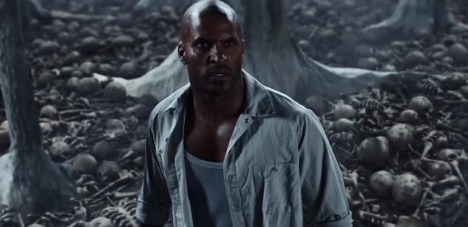
A bone to pick with him.

As such, Latent Image exists in an interesting space. It is a story that works very well as a high-concept character study, focusing on the nature of the EMH has a computer programme. Although episodes like Pen Pals suggest that Starfleet has the power to remove memories from biological life forms, the plot of Latent Image could not work as well with a character like Kim or Paris. At the same time, it is a broader allegory about how important memories and experiences are in terms of defining who a person is, and how dealing with these memories defines a cultural identity.

Latent Image is a powerful and clever piece of television.

The camera never lies.

Continue reading

38. Dunkirk – This Just In (#37)

Hosted by Andrew Quinn and Darren Mooney, and this week with special guests Niall Murphy, Jay Coyle and Phil Bagnell, This Just In is a subset of the fortnightly The 250 podcast, looking at notable new arrivals on the list of the 250 best movies of all-time, as voted for by Internet Movie Database Users.

This time, Christopher Nolan’s Dunkirk.

Continue reading

Non-Review Review: Detroit

Detroit is a powerful and visceral piece of cinema, one that loses its way in a muddled second act.

The Hurt Locker and Zero Dark Thirty cemented Kathryn Bigalow’s talent for conveying a sense of chaos and disorganisation on film. It can be very difficult to capture the messiness of real life in the movies, given how cluttered narratives can become distracting or disorienting. It takes a very real talent to guide the audience through this carnage in a way that captures the organic ambiguities of the story while ensuring that nobody is lost or distracted. Bigalow has a very rare talent for that.

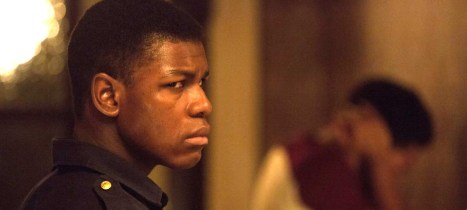
Insecurity guard.

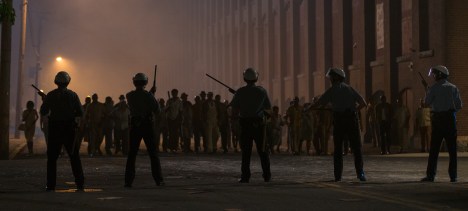
Unsurprisingly, Detroit works best in its opening and closing acts, when the narrative pulls back to the real-life story covering the Detroit Riots in late July 1967. The film’s opening and closing beats have the feel of a weird docudrama, with Bigalow using handheld cameras and tight focus in a way that allows her to blend footage of the cast with archive material. Characters are identified by legends down the bottom of the screen, while the audience is frequently put in the position of confused spectators in a way that captures the mere anarchy loosed upon the city.

However, Detroit fumbles a little bit in its second act. For the middle of the film, Detroit narrows its focus significantly. Instead of providing socio-economic and political context for the entire riots, or dealing with the aftermath of horrific events, Detroit transforms into a story about a bunch of characters locked in a confined space together. As the film’s closing text admits, these sequences are much less verifiable than the snapshots populating the opening and closing acts, much less a matter of public record.

Big Mackie.

The second act of Detroit is a more conventional fictional narrative. While the movie is never less than interesting and clever, that organic sensibility is lost. During the first and third acts, the focus is on the broader story of the larger community, so it does not matter that many of these characters feel like archetypes and ciphers. When Detroit zooms in on the characters, they seem drawn too crudely to support the scrutiny. Detroit works a lot better as an epic social study, and less well as a claustrophobic character study.

Bigalow struggles to get the balance right, resulting in a film that is certainly ambitious and worthy, but also more uneven than her recent output. Detroit is too confident and too professional to be deemed a failure, but its second act is too shallow to be a success either.

I predict a riot.

Continue reading

Star Trek: Deep Space Nine – Prodigal Daughter (Review)

Prodigal Daughter is an incredibly limp piece of television.

Prodigal Daughter plays more like a first season episode than a final season episode, the result of a creative process where the writing staff are still trying to figure out how best to approach major characters and even how best to structure individual episodes of the series. There is something distractingly amateurish about Prodigal Daughter, which seems to largely consist of one-shot guest characters standing around drab sets talking about things that happened off-screen. It is not so much bad as it is boring.

Painting a pretty picture.

To be fair, there are reasons for these problems. Ezri Dax was still a new character, and the production team were still getting to grips with her. Although Ezri had been integrated into the ensemble with relative ease, the writers had only given her a single character-focused episode in Afterimage. This was understandable, with everything else going on, but it meant that the character still had to find a unique voice. Beyond that, the structural problems with Prodigal Daughter were largely down to nightmarish disorganisation behind the scenes.

Of course, knowing this does not make it any easier to watch Prodigal Daughter.

Oh, brother!

Continue reading

Characters in Search of an Ending: Prestige Television and Literary Adaptation

The possibilities of prestige television seem limitless.

This is obvious just looking at the creative talent embracing the opportunities of the medium. Director Jane Campion observed, “The really clever people used to do film. Now, the really clever people do television.” It seems fair. Woody Allen has a television series at Amazon. Nicole Kidman and Reese Witherspoon headlined Big Little Lies. Cary Fukunaga directed all eight episodes of the first season of True Detective, starring Woody Harrelson and Matthew McConaughey. Quentin Tarantino reflected, “If ever there’s been a chance for somebody to truly do a filmed novel, it’s in this area.”

There is a sense that prestige television has come to occupy the space that used to be given to mid-tier mid-range movies, thrillers and character studies that were too small to compete with the blockbusters but also weren’t an easy fit for the traditional Oscar season. Television is arguably the place to go for smart character-driven narratives telling adult stories in a restrained and considered manner. It is an interesting shift that has in some ways redefined the relationship between film and television.

Part of this has seen an increased emphasis on book-to-television adaptations. In the past, the default path for audio-visual adaptations of successful novels has been from the page to the silver screen, cinematic takes on iconic and memorable pieces of fiction. After all, countless Best Picture winners have been adaptations of popular novels or short stories; No Country for Old Men, Million Dollar Baby, The Lord of the Rings: Return of the King, The English Patient, Forrest Gump, Silence of the Lambs. A lot of blockbusters are inspired by comic books or young adult novels.

However, as televisual storytelling has grown more complex and ambitious, producers and writers have increasingly looked to the storytelling opportunities afforded by the smaller screen. Television offers more space for writers and directors to tell their stories, to expand out novels with complex mythologies or epic scope. The gaps that had existed between film and television, in terms of budget and talent, are rapidly closing. It is entirely possible for a televisual adaptation of a beloved novel to have a list of credible writers and directors, and recognisable on-screen talent.

Still, as much as this shift might represent an important step forward in the development of television as an artform, it also illustrates some of the problems that still exist in how producers approach the medium. While television shows can do a lot of things that novels can do, they still struggle in one respect. Television shows have yet to truly embrace the power of brevity and the weight of a proper ending.

Continue reading