• Following Us

  • Categories

  • Check out the Archives


  • Awards & Nominations

Non-Review Review: The Art of Racing in the Rain

The Art of Racing in the Rain places a prestige veneer on the weirdness of the recent “man’s best friend” tear-jerker subgenre.

A Dog’s Journey and A Dog’s Purpose were a rough-and-ready example of the genre, films exploring the complicated world of human beings through the simple mind of a dog. There was an almost endearing clumsiness to how ruthlessly those films targeted the audience’s emotional vulnerability; A Dog’s Purpose used the gimmick of reincarnation as a narrative “get out of jail free” card, making a point to kill off its canine protagonist no fewer than three times, understanding this as a shortcut to the audience’s tear ducts.

“It’s about the good walk,
And the hard walk…
… It’s a beautiful ride.”

The Art of Racing in the Rain is a more prestigious product, executed with greater craft. That doesn’t mean that The Art of Racing in the Rain is any less surreal or eccentric than other entries in the subgenre, nor should it imply that The Art of Racing in the Rain has pushed that subgenre beyond the underlying assumptions that the bodily functions of a dog are hilarious. Instead, the polished exterior of The Art of Racing in the Rain is all about execution as opposed to content. The film makes the same points in the same ways, but shifts its tone to approximate sophistication.

The results are no less uncanny for that attempt at sophistication. If anything, The Art of Racing in the Rain feels all the weirder for how it juxtaposes the sillier and goofier “talking animal movie” tropes with the sensibilities of more earnest fare. The Art of Racing in the Rain is aggressive and merciless in its attempt to conjure up an emotional response to its over-extended central metaphor, but the film’s surreality lingers much longer.
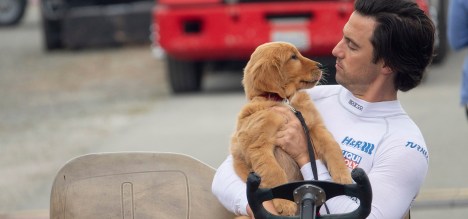
Thinks are looking pup.

Continue reading

141. Escape Plan 2: Hades – This Just In (-#100)

Hosted by Andrew Quinn and Darren Mooney, and with special guests Babu Patel and Giovanna Rampazzo, This Just In is a subset of The 250 podcast, looking at notable new arrivals on the list of the 100 worst movies of all-time, as voted for by Internet Movie Database Users.

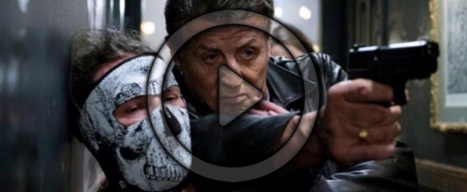
This time, Steven C. Miller’s Escape Plan 2: Hades.

At time of recording, it was ranked 100th on the list of the worst movies of all time on the Internet Movie Database.

Continue reading

New Podcast! The X-Cast – Season 4, Episode 15 (“Kaddish”)

Always a delight to stop by The X-Cast again. This time discussing a (relatively) underrated fourth season installment, Kaddish with the fantastic Russell Hugo.

Kaddish exists at a very weird point in the fourth season of The X-Files. It arrives following a blockbuster run of episodes, including Leonard Betts, Never Again and Memento Mori. Those are big episodes in the context of the show’s larger run the kind of stories that people have very strong opinions about. Kaddish follows those episodes, and so tends to be overlooked. In fact, it explicitly avoids dealing with any of the fallout from those episodes, at least directly. However, on its own terms, it’s a very lyrical and abstract story, a tale that is perhaps more timely now than when it was broadcast, a gothic fairy tale that hints at the big themes of the stories around it: about life, love, mortality, and loss. It’s beautiful in its own intimate way.

As ever, you can listen to the episode here, or click the link below.

Continue reading

New Podcast! The Time is Now – Season 1, Episode 14 (“The Thin White Line”)

As ever, a delight to stop by The Time is Now to talk about Millennium, this week with the estimable Christopher Knowles.

This week, I got to show how deep my love was for The Thin White Line, the last episode of the first season to be penned by James Wong and Glen Morgan. As with Force Majeure, this is one of my favourite episodes of the first season. It is interesting, because it’s also one of the last “serial killer of the week” stories in the season. It is also among the very best of that subgenre, and deals thematically with ideas that the show will explore in the season ahead.

This was a fun, broad discussion. As ever, you can listen to the episode here, subscribe to the podcast here, or click the link below.

Continue reading

“One Priceless Moment”: “Apollo 11”, and the Search for a Singular Defining Narrative…

This July marked the fiftieth anniversary of the lunar landings.

It was an occasion marked with much discussion and celebration. The nostalgia had arguably kicked into high gear the previous winter with Damien Chazelle’s First Man, an awards-season biopic looking at the life of Neil Armstrong. Mired in an absurd controversy, First Man failed to make as much of an impact as it might. It under-performed at the box office and ended up shut out of the big awards races. However, there were other celebrations of the landmark date. Donald Trump met with the surviving astronauts. Mike Pence used the occasion to push for a manned mission to Mars.

There was also Todd Douglas Miller’s documentary Apollo 11. This documentary is interesting, in large part because it eschews a lot of the conventions of these sorts of retrospective celebrations. There are no talking heads; what little exposition exists in the film is drawn from a combination of archive recordings and public materials, without any sequences of participants or experts trying to explain the footage that the audience is seeing. Indeed, a lot of Apollo 11 flows without dialogue, a sequential retelling of the moon landing stitched together from newly-discovered 70mm footage.

What is most striking, and most successful, about Apollo 11 is the fact that it captures the essence of the moon landing as much as the finer details. The intimate footage – cobbled together from dozens of sources  – offers a rare and intimate insight into the mission, but that is not the source of the documentary’s power. Apollo 11 fundamentally understands the appeal of the idea of the moon landing, particularly at this moment in time. Stitching together countless different perspectives of the same event into a singular cohesive narrative, it offers a glimpse of a rare moment where mankind was “truly one.”

Continue reading

Non-Review Review: Fast and Furious Presents – Hobbs and Shaw

Fast and Furious Presents: Hobbs and Shaw works best when it delivers exactly what audiences expect from that title.

The breakout star of The Fate of the Furious was the chemistry between Jason Statham and Dwayne Johnson. Behind the scenes conflicts between Johnson and franchise headliner Vin Diesel had forced the production team to structure the eighth film in the franchise so Johnson and Diesel didn’t have to share the screen. This led to a number of endearingly absurd set pieces, such as a heart-to-heart appeal between the two men conducted across a street over the speaker systems of monster cars. It also meant that Johnson had to find a new screen partner, and Statham was the member of the ensemble who fit the bill.

I have to admit, there were many more explosions and fistfights than I expected for a historical biopic exploring the relationship between Thomas Hobbes and George Bernard Shaw.

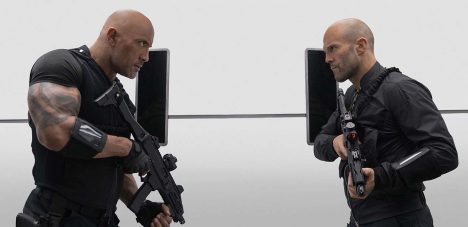
It’s easy to over-intellectualise the chemistry between Johnson and Statham. There’s the obvious physical contrast; Johnson has the bulk of a former professional wrestler, while Statham has the lean physique of a diver. There’s Johnson’s wholesome all-American persona set against Statham’s slightly devilish charm. There’s Johnson’s deep authoritative voice playing off Statham’s distinctly hard-edged accent. The duo play very well as a study in contrasts, while both also being able to support otherwise forgettable action films in their own right. They are a perfect fit.

Hobbs and Shaw works best when it understands this. The film’s best scenes are not the ridiculously over-the-top action scenes, which often seem borrowed or lifted from much better movies and which only fleetingly manage to tip themselves over into the delightful surrealist absurdity that makes the modern (Johnson era) Fast and Furious movies such a delight. Instead, the movie comes to life when Johnson and Statham are trading schoolyard insults, posturing and snarking, indulging in the sort of old-fashioned buddy action movie banter that is so rare these days.

Suns out, guns out.

Continue reading

Non-Review Review: Once Upon a Time… In Hollywood

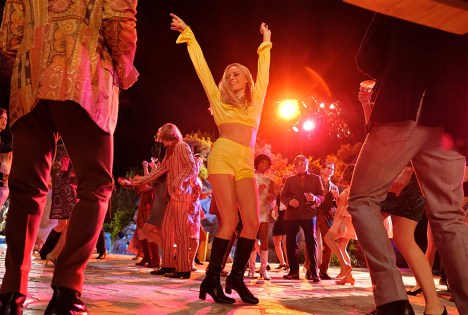
Once Upon a Time… in Hollywood is a fairy tale, for better and for ill.

Continue reading

140. Sanjuro – This Just In (#–)

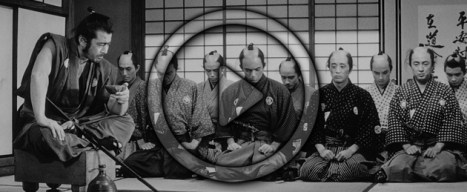
Hosted by Andrew Quinn and Darren Mooney, and with special guest Chris Lavery, This Just In is a subset of The 250 podcast, looking at notable new arrivals on the list of the 250 best movies of all-time, as voted for by Internet Movie Database Users.

This time, Akira Kurusawa’s Sanjuro.

At time of recording, it was not ranked on the list of the best movies of all time on the Internet Movie Database.

Continue reading

Non-Review Review: The Angry Birds Movie 2

The Angry Birds Movie 2 is a mess, a film that seems uncertain of its own target audience.

Like the original Angry Birds Movie, the sequel feels like something a throwback, an animated film that evolutionary leap that Pixar brought to computer-generated animation during their peak in the middle of the first decade of the twenty-first century. Other animated studios have come to embrace the sort of sophisticated storytelling that elevated those iconic and beloved Pixar films, most notably Dreamworks in projects like Kung-Fu Panda or How to Train Your Dragon.

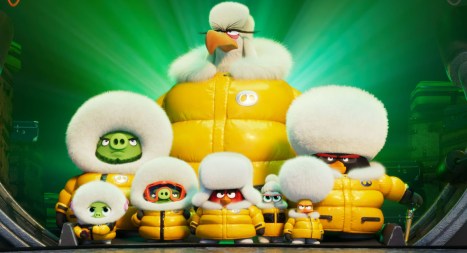
Cool customers.

In contrast, both The Angry Birds Movie and The Angry Birds Movie 2 feel displaced in time, or perhaps even a glimpse sideways into a world where Wall-E and Up never happened, so Shrek and its sequels still provide a template for storytelling in computer-generated animation. The Angry Birds Movie arguably made a better deal of this than one could expect, with an approach that harked back to the cartoonish sociopathy that defined so much of twentieth-century American animation, a particularly crass and crude spin on the Tex Avery template.

There are moments in The Angry Birds Movie 2 were that retrograde influence clearly shines through. In fact, The Angry Birds Movie 2 is at its strongest when it feels more like a collection of Looney Tunes sketches than an actually narrative. Unfortunately, all of this gets muddle; the eggs that were such an important plot point in The Angry Birds Movie get scrambled, as the film jumps from extremes; broad pop culture parodies, nineties nostalgia, absurd cartoonish violence, pseudo-feminism, a jilted lover plot, commentary on modern dating.

The se-squeal.

Maybe some of these elements could work in isolation, if the production team found an interesting angle into. Maybe some of these elements could work in unison, if they were combined in small doses and with a clear over-arching design in mind. However, The Angry Birds Movie 2 never seems sure of what it wants to be or who it wants to be for, creating a strange cocktail that doesn’t serve any of its audience particularly well.

The result is something of a curate’s egg.

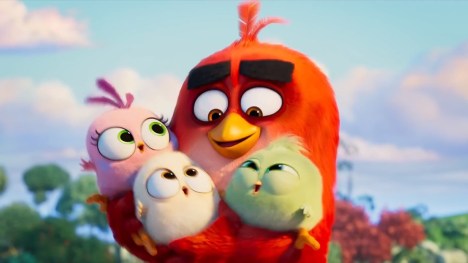
Birds of a feather.

Continue reading

Non-Review Review: The Intruder

The Intruder aims for “pulpy delight” and ends up in “trashy mess.”

The biggest issue with The Intruder is the fact that no two people involved in the film seem to have a firm idea of what exactly they are working on. This is no surprise. Director Deon Taylor doesn’t seem entirely sure what exactly the film is from one scene to another. The Intruder is formally a fairly standard horror movie, a home invasion thriller anchored in social anxieties. It is part of a rich vein of cinematic horror that can trace its development through films like Pacific Heights. It is that classic nightmare of a house guest who just won’t leave.

Fatal A-tractor.

The issue is that The Intruder tries to inflect that standard genre set-up with contemporary anxieties about race, gender and class divisions in contemporary America. The Intruder is the story of a wealthy black family that moves from the city into a spacious rural home, displacing the red-blooded middle-aged white guy who has lived in that house for his entire life. Simmering resentments bubble beneath the surface, with an escalating sense of threat and uncertainty as the conflict between these two sides (and these two perspectives) builds to a head.

The biggest problem with The Intruder is that it has no idea what to do with any of these elements, and no idea how to integrate them into a convincing or engaging horror film. Instead, the movie becomes a tonal car crash, packed full of strange choices that never add up to anything especially compelling or exciting. The Intruder pitches itself as a biting social commentary in one scene, a goofy self-aware horror spoof in another, a clumsy domestic drama in another. None of these elements fit together, creating a movie that feels less comfortable in its own surroundings than any of the protagonists.

Dennis the Menace.

Continue reading