• Following Us

  • Categories

  • Check out the Archives


  • Awards & Nominations

New Escapist Column! “Doctor Who”, “Mission to the Unknown” and Resurrecting the Lost Past…

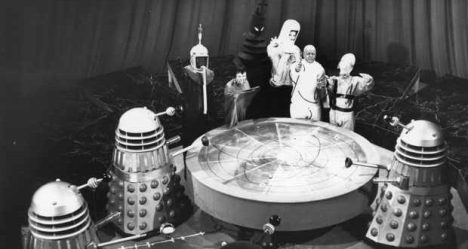
I published a new Don’t Miss It! piece at Escapist Magazine over the weekend. This one looking at one of the genuine marvels of the modern internet.

Students at the University of Central Lancaster lovingly recreated a lost episode of Doctor Who. Mission to the Unknown was purged from the BBC archives, and thought forever lost along with a host of other classic adventures, so it is amazing to see it brought to life. It is a fascinating episode in a number of respects, from its position as a prelude to the epic Daleks’ Master Plan through to the fact that it’s the rare Doctor Who story without any involvement of the Doctor whatsoever. More than that, though, the recreation is a stunning piece of work from all involved.

You can read the piece here, or click the picture below.

New Escapist Column! “Gemini Man”, and the Battle Between Hollywood’s Past and Future…

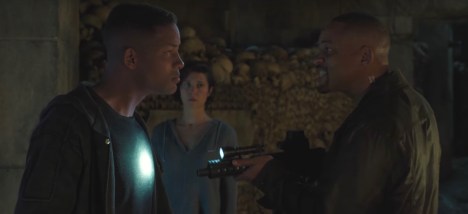
I published a new In the Frame piece at Escapist Magazine on Friday. This one takes a look at Gemini Man.

Ang Lee’s latest is a very strange beast, a nineties action movie throwback wrapped in modern technology. It pits nineties action movie icon (and one of the last surviving movie stars) Will Smith against a young computer-generated replacement, while allowing Ang Lee to embrace both a strange fascination with nineties era John Woo and his enthusiasm for technology literally so advanced that no cinema in the United States could show the film as intended. And this tension between old and new plays through Gemini Man in interesting ways.

You can read the piece here, or click the picture below.

Non-Review Review: Western Stars

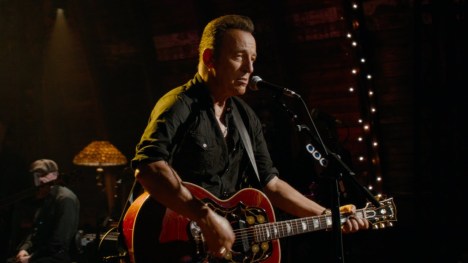
Bruce Springsteen is one of the great American storytellers.

Through nothing more than his voice, Springsteen can conjure entire lives into being. Springsteen paints vivid pictures through his music. These are often portraits of masculinity and longing, poems reflecting on the perils and challenges of trying to navigate the modern world. To listen to a Springsteen album is to be transported into another world, one that often lives in the smaller details. There are very few working singer-songwriters who can communicate so clearly and so efficiently.

As such, Western Stars seems like a reasonable prospect. The film is effectively a cinematic companion piece to Springsteen’s latest album, which shares the same name. The appeal of a project like this is very straightforward. It is interesting to see how Springsteen’s storytelling sensibility translates from one medium to another. It’s not an irrational leap. Songwriter Nick Cave cultivated an interesting creative partnership with director John Hillcoat, co-writing The Proposition and Lawless. RZA wrote and directed The Man With the Iron Fists.

The concert film structure of Western Stars seems like a safe bet. After all, Bruce Springsteen is one of the most respected live musicians working in the world, and so a live rendition of his new album is a logical approach to this. However, Western Stars runs into one very serious problem, finding a way to turn Springsteen’s biggest strength into a weakness. Springsteen’s music is so good at telling its own story that any other attempt at narrative feels completely superfluous.

Continue reading

152. Capernaum – This Just In (#118)

Hosted by Andrew Quinn and Darren Mooney, and this week with special guests Jay Coyle and Ronan Doyle, The 250 is a (mostly) weekly trip through some of the best (and worst) movies ever made, as voted for by Internet Movie Database Users. New episodes are released every Saturday at 6pm GMT.

This week, Nadine Labaki’s Capernaum.

In a Lebanese court room, a young boy takes his parents to court. He accuses them of a horrendous crime, blaming them for giving him life. As Zain reflects on a childhood shaped by trauma and suffering, the court wrestles with questions of responsibility and accountability.

At time of recording, it was ranked 118th on the Internet Movie Database’s list of the best movies of all-time.

Continue reading

Non-Review Review: Zombieland – Double Tap

“Time to nut up or shut up,” reflects veteran zombie hunter Tallahassee as a horde of the undead make their way across the front lawn of the Elvis-themed motel where he has taken up residence. His doppelganger, Albuquerque, responds derisively, “Isn’t that phrase a little 2009?”

It is more than “a little” 2009. Then again, Zombieland: Double Tap is more than a little 2009. The film is the latest in a line of long-delayed sequels, including Deadwood: The Movie, Maleficent: Mistress of Evil, Toy Story 4 and Rambo: Last Blood. It feels as if the studios are rushing through their development slate as the end of the decade approaches, frantically trying to check off any potential sequels and spin-offs that might have been gestating. This is all a little strange, given that Zombieland was itself a modest critical and commercial hit, and hardly a film crying out for a sequel that has been a decade in the making.

“Tonight were going to party like it’s 2009.”

Double Tap feels rooted in 2009, for better and for worse. It is great to see this cast reassembled, as if the intervening decade had never happened. Part of the appeal of Zombieland was the combination of an apocalyptic horror with a low-key hangout comedy, and that is dependent on cast chemistry. The years have not altered that. However, there’s also an awkwardness to the film, a sense in which it hasn’t managed to keep pace with times. A few of its jokes feel curiously dated, but it also seems strangely disengaged from any shifting cultural trends over the past decade.

The result is a movie that is as solid and charming as the original film, but which occasionally feels like it is running in place. Double Tap is easy and entertaining, but never quite gets the blood flowing.

Columbus’ Day.

Continue reading

“Someone Who Hides Behind a Mask.” “Joker”, Superheroes, Vigilantes, and Pulp Friction…

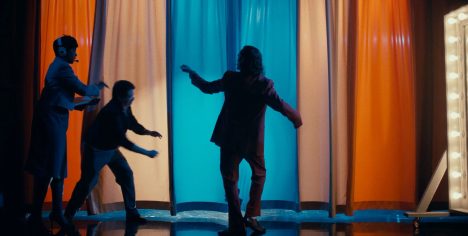
A lot of digital ink has been spilled about Joker.

This makes sense. After all, it entered the discussion as a source of moral panic. It then emerged as a box office smash. It is a potential awards contender. And it provides an interesting intersection of genre. It is a hybrid of the dominant genre at the contemporary blockbuster with more ambitious and abstract awards fare. As such, it is not a surprise that Joker has dominated public attention in the way that it has. It seems almost tailor-made to generate discussion and debate, even if that can occasionally feel deafening.

That said, one of the most interesting and frustrating aspects of Joker is the way in which the film deliberately and consciously avoids crossing any particularly provocative lines. The film sidesteps a lot of potentially thorny issues of race and gender, perhaps wary of the potential internet blow back. If the film is making a point about anything, it seems to be a self-aware acknowledgement of the desire to imbue objects with symbolic weight and meaning even when they have not been designed to bear the weight. “I’m not political,” Arthur Fleck asserts, as political meaning is imposed upon him.

That said, there is something very interesting at the heart of Joker, something that likely emerged almost entirely by accident. Joker provides an interesting genre hybrid of the seventies and eighties vigilante thriller with the contemporary superhero blockbuster. And, in doing so, suggests an interesting throughline. Joker suggests that the superhero blockbuster isn’t as far removed from these urban power fantasies as the audience might like to believe.

Continue reading

Non-Review Review: Maleficent – Mistress of Evil

Maleficent: Mistress of Evil might be the worst wide release of 2019, which is no small accomplishment in a year that produced Welcome to Marwen, Life Itself and Hellboy.

To be fair, the film’s starting point is decidedly eccentric. There is an argument to be made that the original Maleficent helped to kick start Disney’s live action remake renaissance, alongside the greater success of Alice in Wonderland. While the film didn’t quite do Aladdin or The Lion King numbers, it earned a hefty three-quarters-of-a-billion dollars at the global box office. It isn’t a surprise that it got a sequel. It is a surprise that the sequel took half-a-decade to materialise, to the point that Disney’s live action cinematic slate has already moved well beyond this villain-centric reimagining.

She’s really glowing lately.

Even allowing for the five year gap, Mistress of Evil is a staggeringly tone-deaf piece of work. The original Maleficent was a very clumsy piece of allegory, but an ambitious one. Obviously drawing from the same basic revisionist approach as Wicked or Oz: The Great and Powerful, the film attempted to offer an empathic and compassionate approach to one of the great villains of the Disney canon. The film depicted Maleficent as the victim of assault and shaming, a target of a patriarchal smear campaign.

Unfortunately, despite nods at subverting conventional gender narratives, Maleficent doubled down on them. Instead of allowing its title character her own strength and independence, Maleficent insisted on redeeming the character through the narrative of motherhood. This was decidedly uncomfortable, the obvious insinuation being that the only way for a woman to recover from such a brutal assault was through embracing conventional gender roles. Still, as misguided and clunky as the execution was, it was interesting to see a family-focused blockbuster story grappling with these sorts of big ideas.

“I’m Batman.”

Mistress of Evil somehow finds a way to double-down on the misguided clunkiness while also stripping out anything resembling an interesting or engaging social commentary. Almost everything about the movie is horrendously and grotesquely misjudged. Mistress of Evil is a frankly inexplicable hybrid of groan-worthy fifties domestic sitcom and pained allegory about the folly of resistance even when being herded into gas chambers. That isn’t even a “read” of the film, it’s “what is literally depicted on screen.”

The result is one of the most ill-judged blockbusters of the past twenty years.

Magnificent.

Continue reading

New Escapist Column! “Deadwood: The Movie”, “El Camino” and Closure In The New Age of Television…

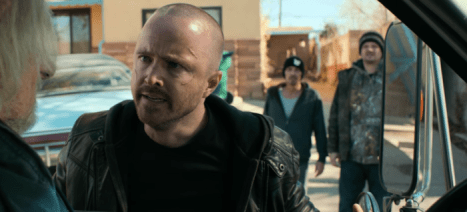
I published a new In the Frame piece at Escapist Magazine yesterday. This one looks at the recent releases of Deadwood: The Movie and El Camino: A Breaking Bad Movie as an illustration of how much the television landscape has changed in recent years.

These belated capstones to beloved series – Deadwood and Breaking Bad – are interesting because they afford the creative talent the opportunity to wrap up their story free from the production constraints of television, the urgent desperate churn of the conveyor belt that demands workable solutions in insanely short periods of time. These epilogues arrive years after the fact, and are the product of careful consideration and reflection. They allow their creators to tie a little bow around their work. After all, sometimes it is nice to have distance.

You can read the piece here, or click the picture below.

Non-Review Review: The Irishman

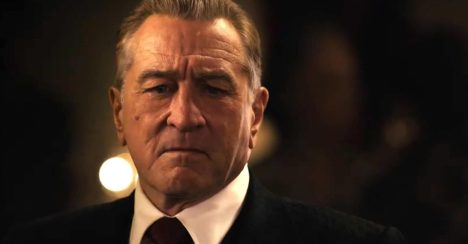
“Time goes by so fast,” Frank Sheeran reflects to a young nurse late in the movie. He adds, “You’ll understand when you get there.”

Of course, the nurse doesn’t quite understand the passage of time in the way that Frank does. “You’re young,” he explains. “You’ve got your whole life ahead of you.” In contrast, Frank Sheeran’s entire life seems to be left behind him. When The Irishman introduces the audience to its central character, he is already well past his prime. He is resting in a retirement community. He begins to narrate his story through internal monologue, but then decides to directly address the camera. After all, there is nobody left who might be exposed or shamed by his reminiscences. They are all long gone.

The end is DeNiro.

The audience really feels the passage of time in The Irishman. It is revealing that Frank’s most prized possession appears to be his watch. The watch itself changes as Frank’s situation does, becoming more ostentatious has his stock rises, but there is always a watch on the bedside table and it is always fixed first thing every morning. Even more than the ring that signifies his acceptance into the underground criminal fraternity, Frank holds tight to that watch. It measures the seconds that make up the minutes, the minutes that make up the hours, the hours that make up a life.

It is a critical cliché to praise a long film by saying that it doesn’t feel long, that the time spent watching a story unfold “flies by.” In some cases, that is true. Of this year’s hyper-extended offerings, both Avengers: Endgame and Once Upon a Time… In Hollywood move breezily enough that they never feel their length. In contrast, The Irishman does feel every minute of its three-and-a-half hour runtime. That’s part of the movie’s power. By the time that the audience has reached that conversation between Frank and his nurse, they have some small understanding of what he is saying. They have lived that life with him.

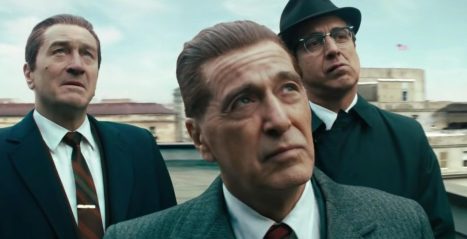
Get Hoffa his case.

Continue reading

New Escapist Column! “Ad Astra” and What We Carry with Us…

I published a new In the Frame piece at Escapist Magazine yesterday. This one has been kicking around for a little while, discussing James Gray’s Ad Astra.

In particular, it takes a look at a broader trend in modern space movies – what might be dubbed the “sad astronaut” genre. In contrast to the sixties utopian fantasies of shows like Star Trek or 2001: A Space Odyssey, these films tend to offer a more introspective portrait of space travel. Films like Gravity or Interstellar or First Man are as much about the baggage that the protagonists bring with them on their journey as they are about what the character in question might find out there.

You can read the piece here, or click the picture below.