• Following Us

  • Categories

  • Check out the Archives


  • Awards & Nominations

New Escapist Column! On “Black Mirror” as a Movie About the Limits of the Empathy Machine…

We’re launching a new column at The Escapist, called Out of Focus. With the sixth season of Black Mirror releasing on Netflix last week, it seemed like a good opportunity to delve into one of the defining shows of the modern moment.

Black Mirror is often framed as a technophobic show, asking, “what if phones… but too much?” However, this is an inherently reductive way of looking at the series, which is much more about humanity than it is about people. In many ways, the show is about how technology reflects humanity’s worst impulses back at them, and the fear that cinema and television – along with other forms of media – serve as barriers to empathy rather than windows to it.

You can read the piece here, or click the picture below.

New Escapist Column! On Why Supergirl is the Best Part of “The Flash”…

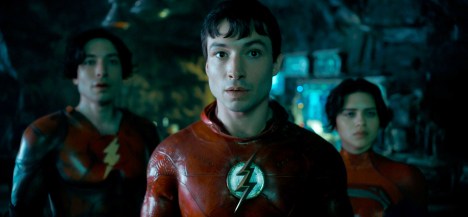
I published a new piece at The Escapist at the weekend. With the release of The Flash, it seemed worth considering the best part of the movie: Sasha Calle’s Supergirl.

For decades, Warner Bros. has struggled with the character of Superman, trying to find a way to make that character relevant for the modern world. What’s interesting about The Flash is that it finds a unique and compelling answer to this question with its take on Supergirl, presenting an immigrant who arrives to a world that is inherently hostile and xenophobic, which treats her as less than a person, and yet somehow finds the strength to fight for that planet anyway. It’s just a shame that she’s ultimately wasted and discarded by the film.

You can read the piece here, or click the picture below.

New Escapist Column! On “The Flash” as a Movie About the Horror of “The Flash”…

I published a new In the Frame piece at The Escapist this evening. With The Flash releasing this weekend, it seemed like as good an opportunity to talk about the themes of the movie, and how those ideas exist in direct opposition to its central purpose.

Thematically, The Flash is a story about how the idea of a “reset” is fundamentally pointless. It is a tale about how individuals are often the sum total of their life experiences, including the traumatic ones, and that any attempt to erase those traumas would be to erase the person that they created. However, this is very much at odds with what the film functionally is. It is an opportunity for Warner Bros. to shift around their established continuity and intellectual property, to reset characters and to recast actors. In short, The Flash is a movie about its own monstrosity.

You can read the piece here, or click the picture below.

New Escapist Column! On “The Flash” as a Two-Hour-Long Shareholders’ Memo…

I published a new In the Frame piece at The Escapist on Friday. With the release of The Flash in cinemas, it seemed like a good opportunity to consider the movie.

What is interesting about The Flash is that it is a movie almost entirely devoid of any artistic sentiment whatsoever. It is a movie that does not exist because anybody working on it had a brilliant idea that needed to be realised. It exists largely because Warner Bros. decided that they needed a Flash movie, and so – against all laws of nature and reality – simply willed that movie into existence.

You can read the piece here, or click the picture below.

New Escapist Column! On How “Strange New Worlds” Performs “Star Trek”…

I published a new piece at The Escapist earlier this week. We’re doing a series of recaps and reviews of Star Trek: Strange New Worlds, which is streaming weekly on Paramount+. So we thought we’d take a look at the second season premiere.

There is a fascinating recurring emphasis on the idea of performance within Strange New Worlds. In particular, the idea of performing Star Trek. It is not enough for Strange New Worlds to be Star Trek, or even to engage in the familiar Star Trek tropes. The show has to constantly remind and reassure viewers that it is Star Trek. This is distracting and ultimately undermines the series, which seems to spend more time asserting that it is Star Trek than it does actually being Star Trek.

You can read the piece here, or click the picture below.

New Escapist Video! “The Flash Isn’t a Film, It’s a Corporate Mandate”

I’m thrilled to be launching movie and television reviews on The Escapist. Over the coming weeks and months, I will be joining a set of contributors in adding these reviews to the channel. For the moment, I’m honoured to contribute a five-minute film review of The Flash, which was released in cinemas this weekend.

New Escapist Column! On How “Secret Invasion” isn’t Marvel’s “Andor”…

We’ll be running weekly reviews of Secret Invasion at The Escapist. But first, a review of the episodes that were previewed for press.

For months, the gossip has been that Marvel Studios have seen Secret Invasion as their answer to Andor, a show that could revitalise interest in a franchise that has been in something of a slow and steady decline, with disappointments like Ant-Man and the Wasp: Quantumania. Unfortunately, Secret Invasion really doesn’t live up to that potential. It offers glimpses of a show tht aspires to push the shared universe outside of its comfort zone, but lacks the necessary killer instinct.

You can read the piece here, or click the picture below.

New Escapist Column! On What Makes a Great Series Finale…

We’re launching a new column at The Escapist, called Out of Focus. It will publish every Wednesday, and the plan is to use it to look at some film and television that would maybe fall outside the remit of In the Frame, more marginal titles or objects of cult interest. With the recent wrap-up of shows like Barry and Succession, it seemed like a good opportunity to take a look at what makes a great television finale.

Interestingly, from The Sopranos to The Leftovers, one of the hallmarks of a truly impressive television finale is the way that it leaves room for the audiece. After all, television shows involve considerable investment from viewers, and offer a chance for the audience to really get to know and understand the characters and the themes of this world. The best of these finales are clear endings to the story being told, but which leave room for the viewer to reach their own conclusion about these characters and their journey.

You can read the piece here, or click the picture below.

New Escapist Column! On How “Strange New Worlds” is a Relic of an Older Form of Television…

I published a new piece at The Escapist yesterday. We’re doing a series of recaps and reviews of Star Trek: Strange New Worlds, which is streaming weekly on Paramount+. The second season will premiere later this week.

Strange New Worlds is an inherently nostalgic piece of Star Trek, a throwback to a kind of franchise storytelling that was inexoribly rooted in the realities of nineties television. Indeed, given the decline of the franchise during Star Trek: Voyager and Star Trek: Enterprise, there is a solid argument to be made that this mode of storytelling was specifically tied to the medium of syndicated mass media broadcast television during the nineties, which makes it an awkward and uncomfortable fit for the modern age of streaming media.

You can read the piece here, or click the picture below.

New Escapist Column! On the Question of What Even is a Movie Anymore…

I published a new In the Frame piece at The Escapist this evening. Given the summer blockbuster season will see the release of Fast X, Spider-Man: Across the Spider-Verse and Mission: Impossible – Dead Reckoning, Part One, it seemed as good a point as any to ask a seemingly simple question with a surprisingly complex answer: what even is a movie these days?

In theory, it has always been relatively easy to define a film. Not only is that the name of the medium itself, it has always historically been a self-contained unit of narrative. There is a palpable difference between a film and a television show, or a film and a stage play. However, in recent years, those boundaries have become a bit more porous, and it’s come to feel just a little bit like blockbusters are just very long and very expensive instalments in long-runing television shows.

You can read the piece here, or click the picture below.