• Following Us

  • Categories

  • Check out the Archives


  • Awards & Nominations

Space: Above and Beyond – Choice or Chance (Review)

This November (and a little of December), we’re taking a trip back in time to review the third season of The X-Files and the first (and only) season of Space: Above and Beyond.

Hostile Visit and Choice or Chance follow the two-part template established by The X-Files, keeping things fresh by offering a pretty dramatic shift between the two episodes in question.

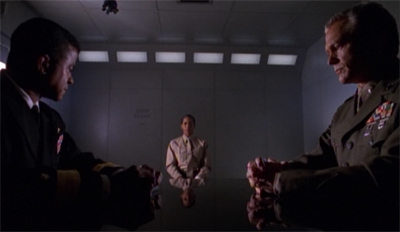
Hostile Visit featured a covert trojan house mission to infiltrate enemy space and stage a devastating attack behind enemy lines. The episode ended with the mission a failure and our heroes drifting through space. Choice or Chance features our heroes landing on a prison planet maintained by the Silicates, the evil artificial organisms that have skirted around the edge of the show’s mythology to this point.
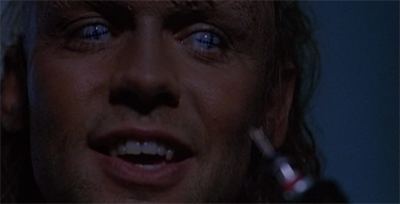
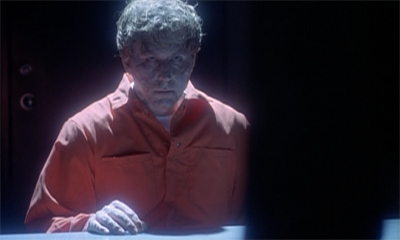
Here's Douggie!

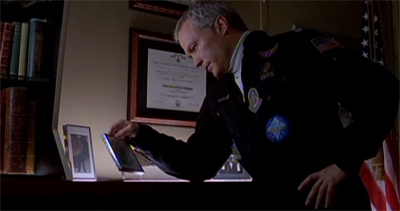
Here’s Douggie!

Choice or Chance comes very close to working. It is a lot more dynamic than Hostile Visit was, which is a good thing for the second half of a two-parter airing during November Sweeps. However, while Hostile Visit felt a little padded and extended, never quite building the momentum necessary for the story to work, Choice or Chance feels a little over-stuffed. There’s a lot of nice stuff here, but no room to properly digest it. It’s an episode that comes up with something for every member of the cast to do, but this inevitably means that the character arcs feel abbreviated and shortened.

There is a  pretty solid two-part episode to be constructed out of the ingredients of Hostile Visit and Choice or Chance. Sadly, the resulting two-parter is not it.

Crash and burn...

Crash and burn…

Continue reading

The X-Files – Nisei (Review)

This November (and a little of December), we’re taking a trip back in time to review the third season of The X-Files and the first (and only) season of Space: Above and Beyond.

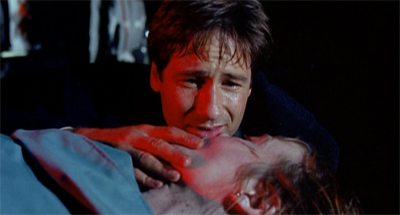
The most interesting aspect of Nisei and 731 is the fact that there’s very little forward movement by the end of it.

The previous multi-part conspiracy episodes typically featured big hooks and shock revelations. Duane Barry and Ascension demonstrated that the government was officially responsible for alien abductions, to the point where they could arrange Scully’s abduction. Colony and End Game featured shape-shifting aliens and confirmation that Samantha Mulder was a big part of this. Anasazi, The Blessing Way and Paper Clip revealed that Mulder’s father was part of a conspiracy involving Second World War criminals working on American soil to create an alien-human hybrid.

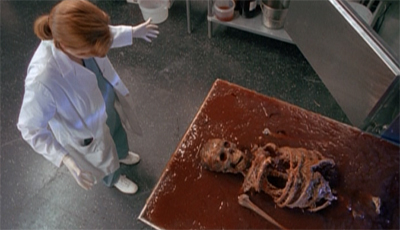
The only way its getting off this planet is in a bodybag...

The only way its getting off this planet is in a bodybag…

Nisei and 731 don’t contain any truly seismic revelations. The biggest moments here – the reveal that Japanese war criminals have been experimenting on Americans with the assistance of the government, and that the bodies in the box car in Anasazi were probably originally human – all build on what Paper Clip already established. There’s nothing as significant as the reveal of the Bill Mulder’s complicity in the conspiracy from Paper Clip, or the first appearance of the Black Oil in Piper Maru.

Nisei and 731 really seem to be about taking stock of what has happened so far in the show – as close to a “breather” mythology episode as the show could manage at this point. Of course, this being The X-Files, this “breather” episode still moves a break-neck pace and climaxes with a death-defying leap on to a moving train. As you do.

The doctors are in...

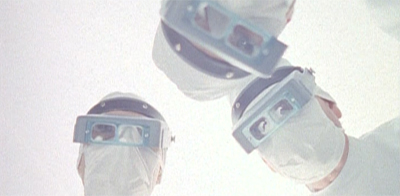
The doctors are in…

Continue reading

Space: Above and Beyond – Hostile Visit (Review)

This November (and a little of December), we’re taking a trip back in time to review the third season of The X-Files and the first (and only) season of Space: Above and Beyond.

At this point, Space: Above and Beyond could do a lot worse than learn from The X-Files.

There are quite a few echoes of The X-Files in Space: Above and Beyond, becoming more pronounced as the show approaches the middle of the season. Eyes built on the suggestion of conspiracy and cover-up to assure viewers that Space: Above and Beyond was just as cynical about authority as The X-Files ever was. The Enemy felt like an attempt to copy the formula that Morgan and Wong had worked so well back in Ice.

Picture imperfect...

Picture imperfect…

Hostile Visit and Choice or Chance feels like an attempt to do a big sweeps two-parter in the style of The X-Files. This was a crucial moment for Space: Above and Beyond. The series had been scheduled outside of its comfort zone, had not been drawing huge ratings, had found itself preempted and bounced around the schedule as a result of factors outside its control. It needed a strong performance for the November sweeps, which were a matter of pride (and money) for the networks and a matter of interest for the advertisers.

So structuring a two-parter around that period makes a great deal of sense. Unfortunately, Hostile Visit does not make for the most compelling first half.

"I want a good clean sweep."

“I want a good clean sweep.”

Continue reading

The X-Files (Topps) #10-12 – Feelings of Unreality (Review)

This November (and a little of December), we’re taking a trip back in time to review the third season of The X-Files and the first (and only) season of Space: Above and Beyond.

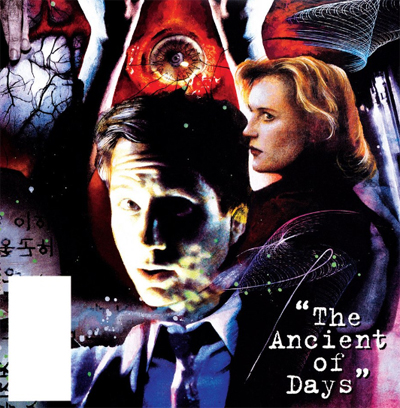
Feelings of Unreality marks the end of Stefan Petrucha and Charles Adlard’s first year on Topps’ licensed X-Files comic book.

It also marks the end of their extended arc. It became clear around six issue into their run that Petrucha and Adlard were really just telling one large and expansive story that could be broken down into small bite-sized chunks. From Not To Be Opened Until X-Mas through A Dismembrance of Things Past through Firebird and Silent Cities of the Mind, these were all separate pieces of a larger puzzle waiting to be fitted together. Feelings of Unreality marks a conclusion to this ambitious and expansive arc.

Slightly unreal...

Slightly unreal…

What has been fascinating about Petrucha and Adlard’s run on The X-Files comic book as been the way that the team has adapted the show’s format to fit within this distinct medium. Writing a tie-in like this, it would would be very tempting to do “a television episode, in comic book form!” There’s a very serious argument to be made that the comics would be pushed in that direction after Petrucha departed. However, there’s something much more compelling about a story that takes advantage of its own medium, rather than offering a flat imitation of another.

For all its flaws, Feelings of Unreality – like Petrucha and Adlard’s epic Firebird before it – feels like a comic book story. It’s pulpy, exciting, ambitious, expansive, silly. And just a little brilliant.

Lift me up...

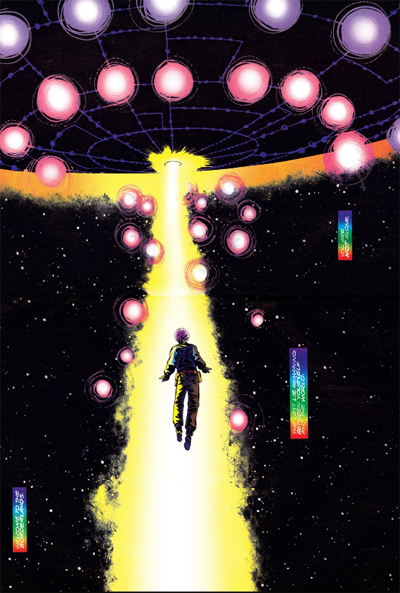
Lift me up…

Continue reading

The X-Files – Oubliette (Review)

This November (and a little of December), we’re taking a trip back in time to review the third season of The X-Files and the first (and only) season of Space: Above and Beyond.

There’s a plausible argument to be made a large part of The X-Files‘ third season is doing what worked in the first and second seasons, only better.

The Walk feels very similar to a less racist and sexist version of Excelsis Dei. 2Shy decides to split the difference between Tooms and Irresistible, with David Nutter directing. The show keeps the mythology two-parters during sweeps, and David Duchovny gets to contribute to two key stories over the course of the season. It’s not a bad approach, and it pays dividends. There is a reason that the third season of The X-Files works as well as it does. It’s a ruthlessly efficient television production machine.

Drowning his sorrows...

Drowning his sorrows…

If that argument holds water, then perhaps Oubliette can be seen as an update to Aubrey. Both stories build on the idea that horrific crimes leave very lasting consequences, and that women often have to live with the scars inflicted by men. More broadly, they are shows about our relationship with history – the idea that the past cannot ever be escaped, and that violence and pain tend to linger on years after they are initially inflicted.

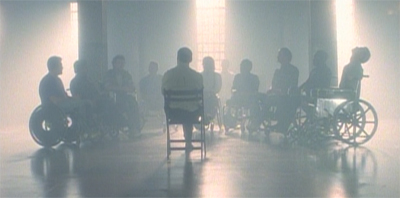
Given the broader themes of the mythology in the third season, about the secret shameful legacy of America’s conduct in the aftermath of the Second World War, Oubliette plays like a thematic prelude to Nisei and 731. However, that doesn’t do the episode justice. Oubliette is a thoughtful, moving and sentimental episode that tempers its darkness with the very faintest traces of optimism. While it is a story about abuse and exploitation and neglect and failure, it is also a story about empathy.

Shining some light on the issue...

Shining some light on the issue…

Continue reading

Space: Above and Beyond – The Enemy (Review)

This November (and a little of December), we’re taking a trip back in time to review the third season of The X-Files and the first (and only) season of Space: Above and Beyond.

On paper, The Enemy seems like a good idea.

Space: Above and Beyond has a reasonably large cast. It has devoted character-centric episodes to the three leads, and done a nice bit of world-building around that. To this point, the shows have typically split the characters up, pushed some to the fore and others to the background.  The show is now about a third of the way through the first season, so it makes a great deal of sense to do a show that actually stresses the ensemble dynamic.

Nothing to fear, but fear itself...

Nothing to fear, but fear itself…

A story like The Enemy makes a great deal of sense. When you have an ensemble, you can generate drama from next to nothing. Lock five people in a room together, you’re sure to generate some friction. Character practically defines itself as they play off one another. If you can crank up the tension, it will all come together. So a war story where our heroes find themselves trapped together and cracking under the pressure seems like a solid basis for a good story.

The problem is that The Enemy is just a clumsy mess of a script, and one that stumbles over what should be a fairly robust set-up.

"I'm still not sure that producing the episode could be considered a war crime..."

“I appreciate that it was traumatic, but I’m still not sure that producing the episode could be considered a war crime…”

Continue reading

The X-Files – The Walk (Review)

This November (and a little of December), we’re taking a trip back in time to review the third season of The X-Files and the first (and only) season of Space: Above and Beyond.

The approach that The X-Files took during its third season was to hone what had worked during the first two seasons to a fine edge.

The second season had been quite playful and experimental – taking the time to figure out what did and didn’t work. Comedy episodes, like Die Hand Die Verletzt and Humbug, worked; making shows like Clyde Bruckman’s Final Repose or Jose Chung’s “From Outer Space” logical choices. Mythology-driven two-parters during sweeps had paid off, so those returned for the third season. In contrast, the heavy science-fiction of shows like Fearful Symmetry, Død Kälm or Soft Light didn’t work, and were largely forgotten.

Let some light in...

Let some light in…

The result is a third season that plays to the established strengths of The X-Files. Sure, there are still bold and experimental episodes – particularly those credited to writer Darin Morgan. However, the third season is markedly more conservative in tone than the second season – or even the fourth season. This conservatism can work very well. The third season has very few out-and-out bombs, and more than a few classics. However, it comes at a cost.

The Walk is a reasonably well-produced episode that feels a little bit overly familiar. This is the second “supernatural revenge” story that The X-Files has done in so many episodes. There’s a point where The Walk feels a lot less like a unique story than an archetypal “fill in the blanks” exercise, where a unique location and a new set of characters are caught up in an old-fashioned ghost story.

Don't worry, Stans will take good care of him...

Don’t worry, Stans will take good care of him…

Continue reading

Space: Above and Beyond – Eyes (Review)

This November (and a little of December), we’re taking a trip back in time to review the third season of The X-Files and the first (and only) season of Space: Above and Beyond.

Eyes is perhaps the most ambitious that Space: Above and Beyond has been to this point in the season.

Eyes develops scraps hinted at in The Pilot and The Farthest Man From Home into a complex web of intrigue, with an assassination plot playing out against all sorts of institutionalised prejudice and suggesting sinister conspiracies at work behind the horrific war that drives the show. The last episode of Space: Above and Beyond credited to Glen Morgan and James Wong in 1996, the episode feels like it is solidifying the series. Six episodes in, enough foundations have been laid that development can begin.

An unstoppable killing machine.

An unstoppable killing machine.

Eyes is rather epic in scale, and massive in scope. It is a story about politics and scheming, unfolding quite far away from the front lines. In episodes like The Pilot, The Farthest Man From Home and even Ray Butts, it often felt like our lead characters were quite divorced from the big decisions. It seemed like the show was very much preoccupied with a day in the life of a space marine, rather with the larger forces at play seen only in glimpses and shadows.

Eyes is a show that does a lot to build the world of Space: Above and Beyond, doing a much better job than The Dark Side of the Sun or Mutiny at giving a sense of this dark future. While the script is perhaps a little too cluttered for its own good, it is a very well-constructed paranoid conspiracy thriller.

That's not at all fascist.

That’s not at all fascist.

Continue reading

The X-Files – 2Shy (Review)

This November (and a little of December), we’re taking a trip back in time to review the third season of The X-Files and the first (and only) season of Space: Above and Beyond.

A lot of the success of the third season of The X-Files came for learning what had worked earlier, and trying to hone that.

So, for example, the epic mythology of Colony and End Game enabled episodes like Nisei and 731 along with Piper Maru and Apocrypha. Shows like Die Hand Die Verletzt and Humbug had proven that the show could do comedy, so it wasn’t as big a risk to commit to stories like Clyde Bruckman’s Final Repose or Jose Chung’s “From Outer Space.” Even episodes like Fresh Bones had helped to define what a standard “monster of the week” should look like.

Freak like me...

Freak like me…

This approach to the third season had its drawbacks. It seemed like the first chunk of the first season was stuffed with supernatural revenge stories, to the point where it is surprisingly easy to confuse The List and The Walk on the basis of title and theme alone. However, it was a very effective way of producing television. It is very hard to fault any approach towards television production that could turn “fat-sucking vampire” into a premise that works.

The genealogy of 2Shy is quite easy to trace. It is the obvious synthesis of Tooms and Irresistible, two of the more memorable and effective monster stories of the first two seasons. 2Shy may have some very serious problems, but it does what it says on the tin.

Fresh bones...

Fresh bones…

Continue reading

Space: Above and Beyond – Ray Butts (Review)

This November (and a little of December), we’re taking a trip back in time to review the third season of The X-Files and the first (and only) season of Space: Above and Beyond.

Ray Butts is a collection of familiar war movie clichés.

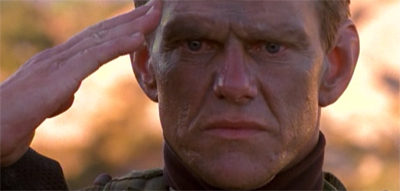
Space: Above and Beyond is effectively a gigantic Second World War movie in space, and Ray Butts allows creators Glen Morgan and James Wong to roll two of the most instantly recognisable war movie archetypes into a single character. The eponymous officer is at once a soldier traumatised by his past experiences and a tough new commander for a young unit. He is a source of friction on the show, kept ambiguous and mysterious for most of the episode’s runtime.

We salute you...

We salute you…

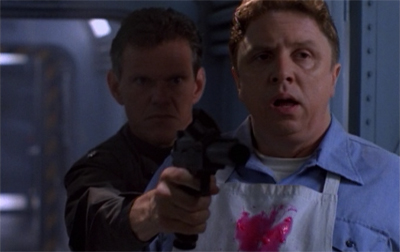
Ray Butts piles on the questions. The show doesn’t reveal his orders for quite a while, asking the audience to decide whether they trust the orders – let alone the man assigned to carry them out. The show also plays up questions around Butts himself; is Butts a man trying work through his own issues in his own way, or simply a risk-taking and borderline incompetent commanding officer? Ray Butts doesn’t have too many surprises, but it works because Morgan and Wong know how to structure an episode of television.

After the misfiring ambition of The Dark Side of the Sun, it feels almost like Ray Butts puts Morgan and Wong back in their element.

Don't shoot the chef!

Don’t shoot the chef!

Continue reading