• Following Us

  • Categories

  • Check out the Archives


  • Awards & Nominations

Non-Review Review: Shazam!

There’s a lot to like about Shazam!

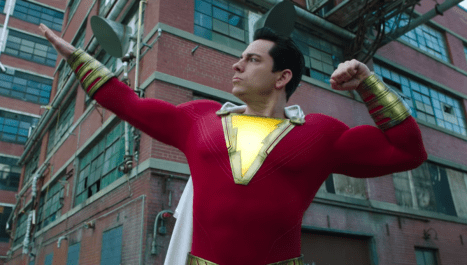
Most obviously, there’s the sheer joy that the film takes in live-action superheroics. It is, of course, something of a cliché to suggest that a certain film or television show “makes superheroes fun again.” Even just among the recent crop of superhero cinema, Spider-Man: Into the Spider-VerseIncredibles 2, Ant Man and the Wasp, Thor: Ragnarok and Spider-Man: Homecoming can all claim to have injected fun back into the genre. (Indeed, for their myriad flaws, the problem with Justice League and Aquaman was not that they weren’t trying to have fun. Quite the opposite in fact.) So it is disingenuous to state that Shazam! reintroduces the concept of fun into the genre.

Dab-bling in superheroics.

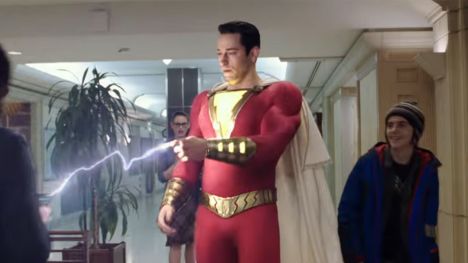
However, Shazam! still takes an incredible amount of joy in playing with the tropes and conventions of the genre. Part of this comes built into the premise. While the character of Captain Marvel could be seen as an example of the “flying brick” archetype most effectively embodied by Superman, the most appealing part of the concept has always been his secret identity. Unlike other superheroes who simply change costume to fight crime, the character physically transforms into a superhero through the use of the magic word. Captain Marvel’s secret identity is Billy Batson, usually portrayed as a child or a teenager. There’s something endearing about the wish fulfillment that anchors that concept. Shazam! invites its audience to look at superheroics through the eyes of a child.

The first two acts of Shazam! are (mostly) a joy, an engaging riff on a playful concept that understands a large part of the appeal of superheroes to their target audience. Unfortunately, the film fumbles the ball in its third act. While the relative innocence and simplicity of Shazam! are a large part of its appeal, the climax of the film gets a little bit too boggled down in cynical worldbuilding, indulging in a bloated and over-extended computer-generated fight sequence that feels lifted from a much less playful and exciting film. To borrow an old cliché, Shazam! almost convinces its audience that a man can fly, but it just can’t stick the landing.

Zap to it.

Continue reading

New Podcast! Scannain Podcast (2019) #10!

It’s time for the Scannain podcast!

This week, I join Ronan Doyle and Jay Coyle to discuss the week in film. Because Varda season never ends, both Ronan and Jay have a new film to discuss from the legendary French director. Meanwhile, in film news, we mark the passing of veteran Irish character actor Pat Laffan, study the recent funding decisions of the Broadcast Authority of Ireland, discuss the opening of applications to the WRAP fund, navigate the line-up of the Belfast Film Festival, and discuss the availability of Ross Whitaker’s Katie on Netflix.

The top ten:

  1. Cold Pursuit
  2. A Dog’s Way Home
  3. The Hole in the Ground
  4. The Aftermath
  5. Fighting With My Family
  6. How to Train Your Dragon III: The Hidden World
  7. Green Book
  8. Instant Family
  9. The Lego Movie 2: The Second Part
  10. Captain Marvel

New releases:

New Podcast! Scannain Podcast (2019) #9!

It’s time for the Scannain podcast!

This week, I join Grace Duffy and Jay Coyle to discuss the week in film. Having taken time out for the Virgin Media Dublin International Film Festival, there’s a lot to get through. There are discussions of everything from Runaway Bride to Isn’t It Romantic? to Serenity to Burning. On top of that, there’s a lot of film news to cover, including the passing of Luke Perry, the Oscar results, the various awards given out at the end of the Virgin Media Dublin International Film Festival, and the IFI International Festival Tour that is taking Irish films abroad for Saint Patrick’s Day.

The top ten:

    1. A Dog’s Way Home
    2. Kobiety Mafii 2
    3. Cold Pursuit
    4. The Aftermath
    5. The Hole in the Ground
    6. Fighting With My Family
    7. Green Book
    8. How to Train Your Dragon III: The Hidden World
    9. Instant Family
    10. The Lego Movie 2: The Second Part

New releases:

You can download the episode here, or listen to it below.

That’s “Entertainer”-ment: “The Sting” in the Tale, and the Art of Movie-Making…

Last Sunday, I discussed The Sting on The 250, the weekly podcast that I co-host discussing the IMDb’s Top 250 Movies of All-Time. However, I had some thoughts on the film that I wanted to jot down first. You can listen to the podcast here.

The Sting is a remarkable movie in a number of ways.

The film is somewhat overlooked in the annals of Best Picture winners, its victory in the category nestled between The Godfather and The Godfather, Part II. More than that, the film feels positively old-fashioned when compared to many of the Best Picture winners of the decade; The French Connection, One Flew Over the Cuckoo’s Nest, Annie Hall, The Deer Hunter, Kramer vs. Kramer and even Rocky. Many of those Best Picture winners offered a sketch of America as it existed in the seventies, a more grounded and realistic approach to cinema reflecting a broader range of experiences and perspectives than had otherwise bubbled through mainstream popular film.

Continue reading

Non-Review Review: Us

Us is fascinating, if undercut by comparisons to Get Out.

Get Out was a phenomenal feature debut from writer and director Jordan Peele, an unexpected left-turn from a comedian who was (at that time) best know for his work on one of the decade’s best sketch comedy shows, Key & Peele. It was an unexpectedly sharp piece of social satire, an incredibly pointed commentary on race and identity in contemporary America, one held together by an incredibly strong central metaphor. Get Out was driven by an almost single-minded commitment to its core ideas, which were skillfully wed to a genre vehicle. It was always clear exactly what Get Out was saying, and why it was saying that in the way that it was.

Taking a second swing.

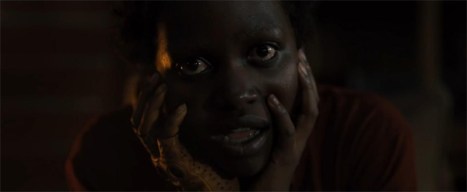
Us is a fundamentally messier film, at once more conventional in terms of its structure and rhythms while being more abstract and confused in its central metaphors. One of the central throughlines of Us is the concept of “the untethering”, and it often feels like a metaphor for the film’s own internal creative process. Us is a lot less focused than Get Out, a lot less together. It often seems like the film is caught in a tug-of-war between its two core elements: on one hand, the desire to present an old-fashioned home-invasion-turned-national-crisis narrative in the style of everything from The Strangers to Dawn of the Dead; on the other, a central metaphor touching on everything from Jungian anxiety to class warfare to the modern division of the United States.

So, to answer the important questions about Us: no, the film is not as good as Get Out; and yes, the film is really good.

Face yourself.

Continue reading

“The 250 Live: Twin Peaks – The Return”, 23rd March 2019 in Support of the Irish Cancer Society

As a fundraiser for the Irish Cancer Society’s annual Daffodil Day, the Irish popular film podcast The 250 is hosting a live eighteen-hour podcast covering David Lynch’s groundbreaking television series Twin Peaks: The Return from 2pm GMT (8am EST/5am PST) on Saturday 23rd March.

Twin Peaks: The Return is considered a landmark in modern popular culture. Originally broadcast on Showtime in May 2017, The Return has been described as “one of the most groundbreaking TV series ever” by Sean T. Collins at Rolling Stone. Matt Zoller Seitz argued that it was “the most original and disturbing to hit TV drama since The Sopranos.”

However, there is also an argument that it transcends television, and is in fact an eighteen-hour film. Those who worked on the show have suggested that director David Lynch (who directed all eighteen episodes) saw it as a single eighteen-hour movie. Film magazines like Cahiers du Cinéma and Sight and Sound ranked Twin Peaks: The Return among the very best films of the year.

What better way to hash out this debate over whether Twin Peaks: The Return is an eighteen-hour film than with an eighteen-hour podcast?

Over the course of those eighteen hours, guests will wrestle with everything from the question of whether these eighteen hours are film, television or something else entirely, take a broader look at David Lynch’s filmography, explore the themes of the series/film, and even try to make sense of the wealth of imagery within. “We’re hoping to create an experience that will appeal to both casual fan and eager enthusiast,” explained co-host Darren Mooney. “The eighteen-hour podcast should offer something for everybody. I’m very excited. And maybe a little terrified. But it’s for a good cause.”

The event will be broadcast live on The 250’s Mixlr, and an edited version of the entire podcast will be released for public consumption on The 250’s Soundcloud after the fact. Donations can be made to the Irish Cancer Society through The 250’s Just Giving in both the lead-up to and during the event itself.
The live broadcast will begin at 2pm GMT on Saturday 23rd March and run through until 8am GMT on Sunday 24th March, bringing the podcast up until midnight in Washington State. Darren and Andrew will need some damn fine coffee and cherry pie to get them through the night, which is being thoughtfully provided by the Camerino Bakery.

Although the schedule is subject to change, due to the nature of live broadcasting, at the moment it looks like:

  • 2pm: “Home.” Nostalgia and Twin Peaks: The Return, with guests Niall Glynn and Richard Drumm (HeadStuff, Quantum of Friendship)
  • 3pm: “It’s Happening Again.” Fire Walk With Me as a prelude to Twin Peaks: The Return, with guest Niall Glynn
  • 4pm: “Damn Good Coffee.” Food in Twin Peaks as a slice of Lynch’s American, with guest Caryna Camerino
  • 5pm: “We’re in the version layer.” Actor Amy Shiels (Candie) talks about working with David Lynch and her career.
  • 6pm: “This is the man I told you about.” Discussing Cooper, masculinity (and apparently Wally Brando) with guest Charlene Lydon (Element Pictures, The Lighthouse)
  • 7pm: “Not where it counts, buddy!” Discussing David Lynch’s filmography, and The Return‘s place in it with guest Donald Clarke (The Irish Times)
  • 8pm: “What is that thing?” “A glass box.” Discussing whether The Return is an eighteen hour film, an eighteen part series, or something else entirely, with guests Brian Lloyd (Entertainment.ie) and Jenn Gannon
  • 9pm: “Gotta light?” Dissecting Part 8 with Phillip Bagnall and Jason Coyle (Scannain)
  • 10pm: “Next on the Roadhouse playlist…” Analysing the musical choices of The Return with guest Cian (Selected)
  • 11pm: “What’s going on around here?” Does The Return make literal sense? Does it have a single correct meaning? Does it have to? With guest Phillip Bagnall
  • Midnight: “… is that one of the Marx Brothers?” Balancing genre, tone and pacing in The Return. With guest Phillip Bagnall.
  • 1am: “… drink deep and descend.” Alone at last, Darren and Andrew discuss Andrew’s first binge through the series, from The Pilot to the end.
  • 2am: “We’re not anywhere near Mount Rushmore.” The Return as a portrait of America, particularly modern America, and as an extension of Lynch’s vision of the country.
  • 4am: “… the evil that men do.” Andy Hazel (Twin Peaks Season 3) stops by to talk about evil as it exists in Twin Peaks.
  • 5am: “Wrapped in plastic”; Laura Palmer and the trope of the dead girl, and the engagement of The Return with that.
  • 6am: “… a long way from the world.” Darren and Andrew discuss some of their favourite moments and characters from the series, especially those neglected in earlier hours.
  • 7am: “What year is this?” Is Twin Peaks finished? Could it come back? Do we really want it to? Will it take another twenty-five years? Is the ending the best place to leave it?

Important/useful links:

Non-Review Review: Under the Silver Lake

There is far too much masturbation in Under the Silver Lake, of both the literal and figurative variety.

To be entirely fair to writer and director David Robert Mitchell, this is entirely the point. Under the Silver Lake is many things, but a large part of it is a genre hybrid between existential slacker drama, anthropological journey through the eccentric and self-absorbed spaces of Los Angeles, and absurdist investigative thriller. Those sorts of genres lend themselves to excessive self-indulgence and self-importance, the sorts of grand-sounding-yet-completely-empty philosophical treatises on the human condition that seem to have been written by those high on their drug of choice or simply themselves. With that in mind, the amount of literal masturbation in Under the Silver Lake seems pointedly self aware, a tacit acknowledgement of the figurative masturbation.

Lost Angeles.

Under the Silver Lake does have a few good ideas. More than that, it has a couple of legitimately great scenes, moments that demonstrate the same skill with the uncanny that made Mitchell’s It Follows so effective. There are moments when Under the Silver Lake walks that fine line between being darkly, bleakly funny and also being uncomfortably, hauntingly unsettling. However, the issue is that these moments are far too fleeting and far too ephemeral, frequently lost amid long and listless passages in which Under the Silver Lake indulges in well-worn cliché and obvious ideas. Under the Silver Lake is shrewd enough to acknowledge and even try to deflate some of its sense of self-importance, but there’s an awkward seam of self-assuredness that runs through the film.

As much as Under the Silver Lake might brutally and incessantly mock its lead character for his assumption that he can figure out the secret code of the universe, it often feels like Under the Silver Lake is convinced that it has a much more insightful perspective, even as it packages well-worn ideas as profound revelations.

This is all going swimmingly.

Continue reading

Non-Review Review: What Men Want

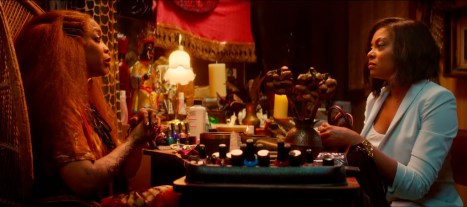
What Men Want is probably as solid an execution as the title premise could expect.

To be clear, What Men Want is very trite and straightforward. It is a movie that is largely defined by cliché. As the title implies, it’s essentially an exercise in broad gender stereotypes. There is very little novel and exciting in What Men Want. In fact, the most frustrating aspect of the whole film is the consistent refusal to work for a joke when the opportunity for a cheap lay-up presents itself. What Men Want is in no way an exceptional piece of work.

“Are you psychic?”
“No, I’ve just seen a rom-com before.”

At the same time, there is a certain charm to all of this. What Men Want is effectively an exercise in familiar formulas. Audience members will recognise all the stock romantic clichés employed here: the absurd lie that spirals into a brutal personal betrayal, the gay supporting character and sounding board, the third act separation and reunion, the protagonist’s journey towards realising that they need other people. However, there is something to be said for hitting those marks in a manner more effective than many modern films in the same subgenre.

It also helps that What Men Want is driven by a powerhouse central performance from Taraji P. Henson, who demonstrates a commitment and energy that the film can seldom match.

Catching up.

Continue reading

Non-Review Review: The Highwaymen

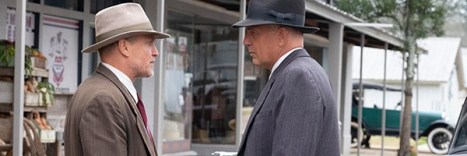
The Highwaymen is an uneven and clumsy piece of work.

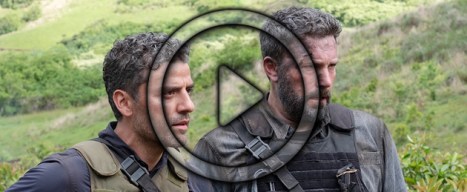
In many ways, The Highwaymen positions itself as a logical extension of the modern deconstructive western, the tales of men on the edge of the frontier grappling with the challenges of modernity. Sometimes, those stories are set in the old west as it faces massive social shifts; The Sisters Brothers is a recent, effective example. Sometimes, these stories unfold in a more contemporary setting featuring characters still processing how the world has moved past them; Hell or High Water may be the best of the recent examples. The Highwaymen positions itself somewhere on the spectrum between the two; an early scene has the Governor of Texas offering an elevator pitch for the entire film, “It’s 1934, Lee, and you wanna put cowboys on Bonnie and Clyde?”

This is the basic premise of The Highwaymen, and it is a good one. It is two different American archetypes thrown into stark opposition with one another, a story that pits two of the last cowboys in the old west against a newer and hungrier breed of American outlaw. The Highwaymen is the story of the two Texas Rangers drafted out of retirement to hunt down Bonnie and Clyde. Forget Monsters vs. Aliens or Cowboys and Aliens or Alien vs. Predator, this is a pop cultural match-up for the ages. It is cowboys versus gangsters. (It might be more accurate to describe Bonnie Parker and Clyde Barrow as “public enemies”, but “cowboys versus public enemies” is not quite so evocative.)

With all of this in mind, it is disappointing that The Highwaymen feels so hollow.

Continue reading

“It’s About Family”: Why Are Modern Blockbusters So Preoccupied With the Notion of Family?

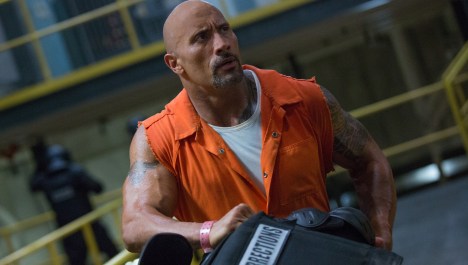
“It’s about family” has entered the cultural lexicon, usually delivered with a grim Vin Diesel bass.

It is, of course, a cliché to suggest that the Fast & Furious franchise is “about family.” Of course they are about family. Dominic Toretto never stops talking about how it is “about family.” The entire heart of the film franchise is that it’s “about family.” It arguably has been from the start, with the simmering attraction between undercover cop Brian O’Conner and Mia Toretto in The Fast and the Furious. In that first film, Brian doesn’t merely befriend the criminal that he is supposed to catch, he becomes family with him. The two men become (ironically) something close to brothers-in-law as much as brothers-at-arms. Over the course of the series, Dominic offers such pearls of wisdom as “you don’t turn your back on your family” in The Fate of the Furious.

Family runs through the film franchise. Owen Shaw, the villain of Fast and Furious 6, is revealed to be the brother of Deckard Shaw, the villain of Furious Seven. The series hinges on soap opera plot dynamics like amnesia and betrayal, all of which emphasising the importance of these familial ties in mapping out the world that these characters operate. However, “family” is more than just a word that drives the plots of these movies, as much as those plots can be said to exist. It is also an important thematic element. The films frequently feature extended sequences at family gatherings, such as barbecues and parties. (Indeed, the franchise seems to evoke almost a Pavlovian response between the words “family” and “Corona.”)

However, while the Fast and Furious franchise is perhaps the franchise most overtly and obviously committed to the theme of “family”, and certainly the film franchise with the most frequent articulation of the concept, it is far from the only example. Modern cinema, particularly modern popular cinema, seems obsessed with the notion of family. In particular, contemporary big budget films are very much engaged with the idea of “found family” much more than biological family. It is interesting to wonder why modern pop culture seems so fixated on the idea of “found family”, to the point that it dominates so much cinematic real estate.

Continue reading