• Following Us

  • Categories

  • Check out the Archives


  • Awards & Nominations

Non-Review Review: King Richard

King Richard is an interesting take on the classic sports biopic.

On the one hand, King Richard is a very conventional film. It’s a movie that hits all of the marks that one expects for an inspiring look at two sports icons like Venus and Serena Williams. There is family tension. There are debates about whether the young athletes are ready. There are training montages. Made with the active participation of the Williams family, King Richard was never going to be a gritty “warts and all” interrogation of its subject. Instead, it’s a charming and charismatic star vehicle for Will Smith, one of cinemas most charming and charismatic stars.

King Richard holds Court.

However, there’s also an interesting tension at play within the film itself, one that derives from the film’s understand of just how inevitable the success of Venus and Serena Williams actually is. To be fair, most sports biopics are stories of triumph over adversity, given that they tend to focus on successful sports stars. However, Venus and Serena Williams exist in such rarified company, dominating culture to such an impressive degree, that the conclusion of King Richard doesn’t just feel predetermined but inescapable.

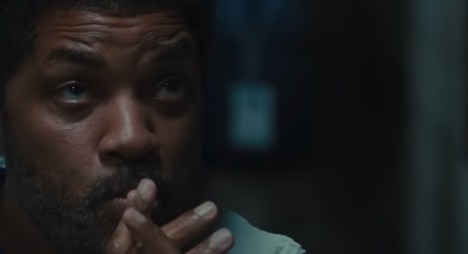
Cleverly, King Richard doesn’t try to fight this idea. Instead, it leans into it. King Richard is a character study of Richard Williams, the hustler who boasts eagerly and enthusiastically that he is “in the champion-raising business.” To any outside observer, Richard’s confidence borders on insanity. When an observer remarks that he’s claiming to have raised “the next Mohammad Ali”, Richard is quick to correct them and boast that he’s got “two” of them. There’s an interesting frisson at play here, because King Richard trusts its audience to know that – no matter how surreal his claims might appear to his contemporaries – he is entirely correct.
A Rich(ard) character study…

In hindsight, it seems almost absurd to point out how severely the odds were stacked against the success of Venus and Serena Williams. The two were born into a large working class family in Compton, surrounded by drugs and violence, with nowhere to train but community tennis courts. Richard and his wife Brandy didn’t have the money to send the pair to upper-class academies, so had to teach the girls themselves with an obsessive devotion to recording and playing back the work of professionals. However, none of that really matters, because any audience watching King Richard knows the outcome of this story.

The result of all of this is a sports biopic that hews quite close to the familiar rhythms and template of other sports biopics, but which operates according to a different internal tension. It’s a movie which sticks close enough to events that there’s no second act humbling of Richard, Venus or Serena. The movie never tries to build suspense around whether its stars are going to succeed in the face of the enormous odds against them, but instead about when and why. It’s a subtle shift in emphasis. However, coupled with the film’s strong casting and powerhouse lead performance, it’s enough to help King Richard stand out from the crowd.

The perfect Ten(nis)?

Continue reading

New Escapist Video! On the Reverence for the Irreverent “Ghostbusters”…

So, it’s been a fun road for the video companion series to In the Frame at The Escapist, but all good things must come to an end. It looks like this will be the last episode of the series, at least for a little while. It’s been a pleasure.

That said, it’s a hell of a topic to go out on, as we discuss the strange reverential cult that has developed around Ghostbusters, with the wry and ironic eighties comedy increasingly treated as something of a holy text for a certain generation of fans. It’s a very strange illustration of how nostalgia warps and distorts the very things that it claims to remember.

Non-Review Review: Ghostbusters – Afterlife

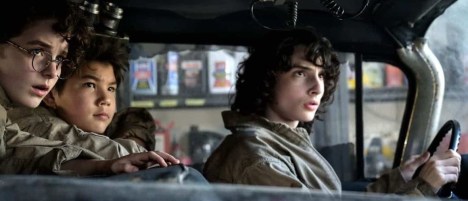
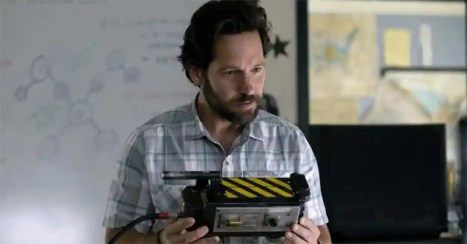
In the final act of Ghostbusters: Afterlife, young Phoebe has a sudden realisation about the farm that her family has inherited from her eccentric grandfather. “This isn’t a farm,” she boasts. “It’s a trap.”

She could just as easily be talking about the film itself. Afterlife is a belated sequel to the original Ghostbusters, consigning Ghostbusters II to a weird continuity limbo where Ray still owns an occult bookstore but there’s no way that that the film’s climax could have happened. The film follows the family of Egon Spengler, his estranged daughter and her two grandchildren, who take ownership of his farm shortly after his death. Inevitably, the family unit learns that the eccentric patriarch who abandoned them in the middle of the night with no explanation really did love them all along.

Blast from the past.

Afterlife is suffocated in a reverential nostalgia that treats the original Ghostbusters as a fetish object. Sure, a casual audience member might watch Ghostbusters as an irreverent mid-eighties comedy that was cleverly skewing Reagan era values, but Afterlife instead sees an earnest classic of American cinema that deserves to be venerated and celebrated as a monument of popular culture. Much like Ivo Shandor erected the skyscraper at 55 Central Park West as a tribute to the Cult of Gozer, Afterlife has been erected as a monument to the cult of Ghostbusters.

It’s telling that the movie’s subtitle is “Afterlife” rather than “Resurrection.” This is not a movie about breathing new life into an existing property. It’s not about finding anything new or interesting to do with these characters or concepts. Instead, it’s about finding a way to tap into the audience’s desire for Ghostbusters nostlagia as a way to wring a few more dollars. In its own way, Afterlife is as cynical as Peter Venkeman in the original Ghostbusters, but at least Venkeman had the decency not to disguise his ruthless pragmatism as earnest sentiment.

Kidding around.

Afterlife is a nightmare coloured in shades of sepia-tinted nostalgia. It is a story about how the best that children can ever hope to accomplish is to emulate their forebearers, foresaking any identity of their own as they grapple with problems that their grandparents singularly failed to resolve. It is a story about how even death is not enough to remove a respected actor and writer from his obligations to a piece of intellectual property, and a reminder of how easily the dead can be animated to serve the demands of the living.

In the world of Afterlife, the dead exist to satisfy the living. This isn’t nostalgia, it is necrophilia.

Continue reading

New Escapist Column! On “Ghostbusters”, and How Irreverence Became a Source of Reverence…

I published a new In the Frame piece at The Escapist this evening. With the release of Ghostbusters: Afterlife this weekend, it seemed like a good opportunity to take a look back at the original Ghostbusters.

The original Ghostbusters was a wry and cynical movie about three academics who find themselves forced to work in the public sector, and so start a business busting ghosts in a run-down and decaying New York City. The film was very self-aware and very glib, essentially built around the idea that three men who would be con artists in any other situation were able to come out on top in eighties America. However, in the years since, Ghostbusters has become an institution. What was once irreverent is now venerated, without any of the self-awareness that made the first film so compelling.

You can read the piece here, or click the picture below.

New Escapist Video! “Ghostbusters: Afterlife is a Lifeless Franchise Resurrection”

I’m thrilled to be launching movie reviews on The Escapist. Over the coming weeks and months, I will be joining a set of contributors in adding these reviews to the channel. For the moment, I’m honoured to contribute a three-minute film review of Ghostbusters: Afterlife, which will release in theatres next weekend.

New Escapist Column! On “The Lord of the Rings” as a Blockbuster for the Post-Ironic Age…

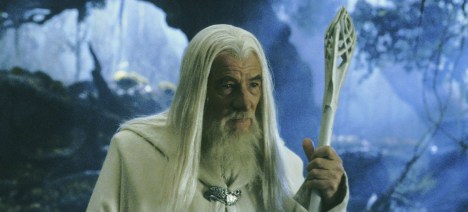
I published a new In the Frame piece at The Escapist this evening. With the twentieth anniversary of Peter Jackson’s The Lord of the Rings fast approaching, it seemed like a good opportunity to place the films in the context of their times.

Obviously, every work reflects the time in which it is produced – it speaks to a variety of factors (consciously or unconsciously) acting on the creative talent as it evolves into its final form. However, audiences also can’t help but engage with a work in the context of the time in which it is released. Peter Jackson shot most of his Lord of the Rings trilogy before 9/11, even if The Lord of the Rings: The Fellowship of the Rings was released in theatres three months after the attack. Still, it’s not to feel like the films’ earnestness and sincerity resonated with an audience looking for meaning in seemingly chaotic and arbitrary time.

You can read the piece here, or click the picture below.

New Podcast! Podcast 616 – “Eternals”

Podcast 616 is a podcast looking at the Marvel Cinematic Universe. I was thrilled to be invited to join Dan Owen for a discussion of Chloé Zhao’s Eternals, which is a movie I enjoyed considerably more than most.

It’s a fun and broad discussion, which delves into questions around auteurship within the Marvel Cinematic Universe, the paradox of superheroes, the question of power, and the challenges in adapting concepts like the Deviants for the big screen. It was really fun to roll up my sleeves and delve into this discussion with Dan, which allowed me to chat about everything from my blind spots with certain characters to the way in which the plot and themes of Eternals feels true to the spirit – if not necessarily the art – of Jack Kirby.

You can listen to the episode here, or click the link below.

New Escapist Column! On “The Wrath of Khan” and “The Voyage Home”, and the Soul of “Star Trek” in “First Contact”…

I published a new In the Frame piece at The Escapist this evening. Given that this month marks the 35th anniversary of Star Trek IV: The Voyage Home and the 25th anniversary of Star Trek: First Contact, it seemed like a good opportunity to take a look at their relationship within the Star Trek franchise – and how they connect to Star Trek II: The Wrath of Khan.

For many Star Trek fans, The Wrath of Khan remains the most beloved and most brilliant entire in the franchise’s cinematic canon. However, it’s notable that The Voyage Home was a much more populist hit, resonating with general audiences. For a decade following the release of The Voyage Home, it provided a template for the franchise for a decade. However, with the release of First Contact, the balance of power shifted. Suddenly, the franchise found itself caught in the gravity of The Wrath of Khan, which exerted a powerful gravity on the franchise’s direction and development.

You can read the piece here, or click the picture below.

New Escapist Column! On the Coolness of Boba Fett…

I published a new In the Frame piece at The Escapist this evening. With the recent trailer for the upcoming Book of Boba Fett, it seemed like a good opportunity to reflect on the character of Boba Fett.

Boba Fett is an interesting character, in large part because there has always been a huge dissonance between how cool he looks and how cool he acts. This is the more compelling facet of the character, the dissonance between the characters as a cool action figure and his general uselessness within the larger narrative of the saga. George Lucas seemed to play with this idea very pointedly and purposefully, and it’s a nuance that many subsequent takes on the character have tended to ignore or overlook.

You can read the piece here, or click the picture below.

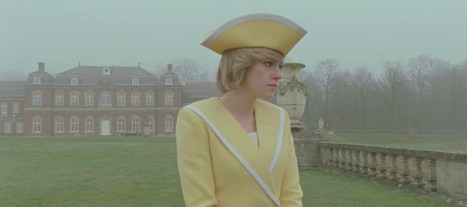
Non-Review Review: Spencer

Spencer introduces itself as “a fable based on a true tragedy.” The official synopsis describes the movie as “an imagining of what might have happened.”

The obvious point of comparison is Jackie. Both are movies directed by Pablo Larraín, offering a tightly-focused profile of their young, famous, female subjects. However, while Jackie is very much about a character who is cannily and carefully cultivating a mythology out of tragedy, Spencer is perhaps about a character failing to do just that. Jackie Kennedy was able to build the myth of “Camelot” in the wake of her husband’s death, a monument that would last generations. Spencer imagines its female protagonist crushed beneath the weight of a national myth, learning that “no one is above tradition.”

A sorry estate of affairs…

Diana Spencer remains a fascinating figure. She has a strong hold on popular culture. Her narrative is a driving force in the second half of The Crown. There was a spectacularly ill-judged attempt at a more conventional biopic with Oliver Hirschbiegel’s Diana. Her ghost haunted The Queen. Diana is often described as “the people’s princess”, but there’s something unsettling even in that affectionate appelation. It is, after all, possessive. It opens up the question of whether Diana was every truly allowed to be herself, or was instead beholden to everybody else – the royals, the public, the ghosts of royal consorts past.

Spencer is very much a companion piece to Jackie, but it feels more like a ghost story. It is haunting and ethereal, its subject flinching even from Larraín’s gaze. The result is enchanting, but also deliberately and effectively frustrating. Spencer is a fable, complete with all the echoing space that such stories usually contain.

Christmas Mourning.

Continue reading