• Following Us

  • Categories

  • Check out the Archives


  • Awards & Nominations

Non-Review Review: Sleeping Beauty (1959)

Sleeping Beauty is very much a product of the fifties, with the movie’s production spanning most of the decade. The story work commenced in 1951, with vocal performances recorded the following year. The movie was eventually released in 1959, to lukewarm critical and commercial success.

However, Sleeping Beauty reflects the fifties in other ways. The story about a young woman who needs to learn to do as her guardians instruct her, how marriage is really the ideal prospect for a woman of sixteen, and about how people we label as “evil” are unquestionably beyond redemption, Sleeping Beauty really plays to a very fifties mindset.

(Appropriately enough, the high budget and lacklustre box office performance of Sleeping Beauty would be a major part of the reason that Walt Disney would post its first annual loss in 1960.)

Sleep well...

Sleep well…

Continue reading

Non-Review Review: X-Men – Days of Future Past

X-Men: Days of Future Past works best as a paean for sixties optimism. A little bloated and messy, with not enough room for all its characters or side plots, X-Men: Days of Future Past could do with a trim or three. At the same time, it’s a very thoughtful and reflective blockbuster, pondering questions about innocence and idealism. There’s a sense that X-Men: Days of Future Past works better as a sequel to X-Men: First Class than it does an epilogue and critique of X-Men III.

Blue skies are gonna clear up...

Blue skies are gonna clear up…

Continue reading

Watch! Interstellar Trailer!

The trailer for Christopher Nolan’s Interstellar is here, and it looks typically bold and ambitious. As a sci-fi fan (and no small admirer of Nolan’s work) I am really looking forward to this one. Check out the trailer below:

Hill Street at Irish Cinemas on 23rd May!

The Irish skateboarding documentary Hill Street is opening next week in Irish cinemas. The documentary has had a long road to distribution, premiering at the Jameson Dublin International Film Festival in 2012 to great word of mouth. Looking at the history skating scene, focusing on the eponymous street, it promises a fascinating glimpse at a piece of Irish pop culture that is often overlooked or forgotten.

Check some footage from the documentary below, and catch it in cinemas from next week.

Non-Review Review: Godzilla (2014)

Gareth Edwards’ Godzilla remake exhumes the classic movie monster for one more epic city-destroying brawl. Appropriately enough, the film feels like something of a relic itself – albeit a relic from an era more recent than the prime of its featured monster. Opening with the excavation of a giant skeleton in the Philippines, and with the revelation that the titular creature was first awakened in 1954, there’s a sense of coy self-awareness to Gareth Edwards’ monster movie tribute.

This wry self-awareness only extends the film so much leeway. At the heart, Godzilla feels like a nineties blockbuster created with modern technology. If the film had a sense of humour, it would look a lot more like Godzilla-by-the-way-of-Roland Emmerich than the 1998 attempt to reintroduce the character to American audiences.

Who says Godzilla is washed up?

Who says Godzilla is washed up?

Continue reading

Non-Review Review: Bad Neighbours

Bad Neighbours is a serviceable – if unexceptional – comedy. The story of two young parents engaged in a turf war with the college fraternity next door, Bad Neighbours feels somewhat slight, even for its abbreviated ninety-seven minute runtime. The laughs are there, and the movie never outstays its welcome, but there’s a sense that the film spends a considerable amount of its runtime in neutral – ramping up for some wonderful sequences, but never building enough momentum to truly take off.

So you think you can dance...

So you think you can dance…

Continue reading

Non-Review Review: The Wind Rises

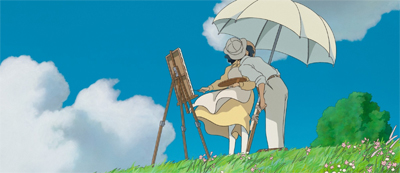
Best known in Europe and America for beautiful animated fantasies like Ponyo, Howl’s Moving Castle or Spirited Away, Hayao Miyazaki has opted for something a little bit different with his final – heavily publicised as “farewell” – film. The Wind Rises has touches of fantasy and looks absolutely beautiful, it represents a different sort of animated film. More of a historical drama and romance than an escapist fantasy, The Wind Rises is a thoughtful exploration of Japan in the lead-up to the Second World War.

Focusing on Mitsubishi aircraft designer Jiro Horikoshi, the film is a lavish animated period drama about the construction of the infamous Japanese “Zero Fighter” – the A6M Zero. The fighter of choice during the Second World War, The Wind Rises notes that the pilots flying those planes never came back as the film reflects on the social context of Japan’s march towards war, and the characters caught in the middle like an umbrella trapped in a strong wind.

thewindrises3

Continue reading

Non-Review Review: Brick Mansions

Brick Mansions is an incredibly stupid film. It’s a movie that doesn’t make any real sense. It hinges on a series of set-ups and reversals that don’t even hold together while watching the movie. Anybody expecting an action movie that makes any semblance of sense is probably best advised to look elsewhere. And yet, despite this, there’s a point where the sheer unrelenting absurdity of Brick Mansions becomes fun in a grindhouse “this is probably great fun at 2am” sort of way.

At its heart, Brick Mansions feels like a throwback to a very particular style of eighties science-fiction cinema. It’s an action movie with the faintest trace of a social conscience that really exists just to justify ridiculous plot developments and excuse a central story that makes absolutely no sense. Lacking the awareness or intelligence that defined the best of the socially-conscious eighties science-fiction action films, Brick Mansions feels a lot like the kind of guilty pleasure that eats up the airwaves at the most unsocial broadcast hours.

You don't need that to make out the plot holes...

You don’t need that to make out the plot holes…

Continue reading

Non-Review Review: Pompeii

Pompeii is a cliché love story nested inside a cheesy b-movie sitting inside a good old-fashioned disaster movie. None of these elements are entirely successful – in fact, there are points where the love story is downright painful – but Paul W.S. Anderson manages to construct a reliably pulpy (if entirely predictable) action adventure. While by no means exceptional – it’s a mess from both a plotting and a thematic perspective – Pompeii does look as sound quite nice. As with a lot of Anderson’s films, there’s a sense that the director is more interested in his action sequences than the characters trapped inside them.

Setting the town alight...

Setting the town alight…

Continue reading

Non-Review Review: The Amazing Spider-Man II

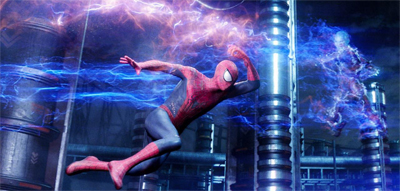
What is remarkable about Marc Webb’s The Amazing Spider-Man II is how much it resembles a comic book. Not a particular comic book – although there are numerous shout-outs to iconic Spider-Man moments, right down to the choice of costuming – but in general terms. It isn’t that Marc Webb tries to construct his film to evoke the look and feel of a comic book – this isn’t Ang Lee’s Hulk; in fact, Webb seems much more comfortable here than he was with The Amazing Spider-Man, making a movie that feels more playful and relaxed within its medium.

Instead, The Amazing Spider-Man II borrows the structure of a comic book. It offers its own story, but that story isn’t constructed particularly tightly. Instead, the story seems to have been fashioned as part of a greater – as if part of a larger serialised narrative that has yet to take form. It’s quite distinct from the approach taken with Marvel’s Cinematic Universe, where the films feel more like blocks that fit together. Instead, this feels more like the second chapter in a larger story, without being dissolved completely into the larger narrative.

The Amazing Spider-Man II has its own themes and motifs, and it documents a pretty epic selection of events, but the emphasis isn’t so much on this one encounter as what this encounter says about its hero. It’s much more interested in what these events tell us about our hero than it is in documenting a single self-contained story. It’s a novel (and somewhat bold) attempt at a serialised superhero narrative, and the results are absolutely fascinating.

Electro-fying!

Electro-fying!

Note: This is a spoiler-filled review of The Amazing Spider-Man II. You can find a spoiler-lite version here. Continue reading for more in-depth thoughts on the film, with the knowledge that absolutely everything is up for discussion. Continue at your own peril!

Continue reading