• Following Us

  • Categories

  • Check out the Archives


  • Awards & Nominations

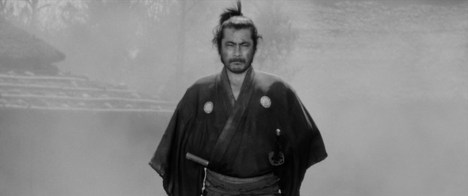
New Escapist Column! On the Lasting Appeal of Akira Kurosawa’s Samurai Films…

I published a new In the Frame piece at The Escapist this evening. Since The Escapist is a video game website, and since Ghost of Tsushima was released this weekend, I thought I’d take a look at one of the big influences on that smash hit video game.

Akira Kurosawa directed far more than samurai films, but his samurai films made an indelible mark on popular culture. Even more than half-a-century removed from most of them, Kurosawa’s samurai films remain vibrant and vital. Part of this is down to their complexity; they are at once Japanese and universal, they draw from Old Hollywood while also inspiring New Hollywood, they codify the samurai archetype while also deconstructing it. Kurosawa’s films bristle with compelling contradictions and perfect paradoxes, demonstrating a richness that endures to this day.

You can read the piece here, or click the picture below.

New Escapist Column! On the Future of “Star Wars” on Streaming…

I published a new piece at The Escapist yesterday. With the announcement that Star Wars is launching a Bad Batch television series off the back of The Clone Wars, it seemed like a good opportunity to take a look at why the franchise’s future might lie on streaming.

To a certain extent, Star Wars has suffered because it is no longer a pop cultural monolith. It arguably hasn’t been a monolith since the release of The Empire Strikes Back in 1980. Since then, Star Wars has built a fanbase populated by different audiences who want different things from the franchise. There are a lot of problems with The Rise of Skywalker, but at least part of the problem comes down to the fact that the film tried to avoid offending anybody and so satisfied nobody. Streaming offers a chance for Star Wars to be multiple things, to multiple people.

On streaming, freed from the burden of being a box-office-record-smashing success, Star Wars has the opportunity to be more experimental and more bold. It can also specifically target particular segments of its diverse fanbase, offering a little something for everybody while still potentially offering room to grow and expand. If managed wisely, Star Wars is in prime position to make the jump from big screen to small screen.

You can read the piece here, or click the picture below.

191. Sunset Boulevard (#64)

Hosted by Andrew Quinn and Darren Mooney, and this week with special guests Charlene Lydon and Rioghnach Ní Ghrioghair, The 250 is a (mostly) weekly trip through some of the best (and worst) movies ever made, as voted for by Internet Movie Database Users.

This time, Billy Wilder’s Sunset Boulevard.

Screenwriter Joe Gillis is found floating upside down in the pool of silent era film star Norma Desmond. As the authorities begin to piece together exactly what happened, Gillis’ corpse narrates a sordid tale of desperation, resentment, lust – and Hollywood haunted by its own past.

At time of recording, it was ranked 64th on the list of the best movies of all time on the Internet Movie Database.

Continue reading

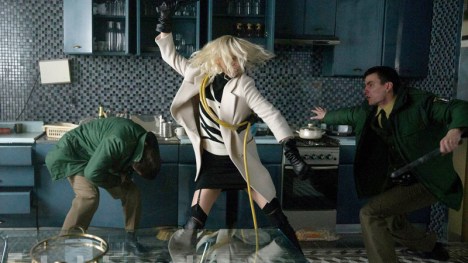
New Escapist Column! On the Perpetual Apocalypse of “Atomic Blonde”…

I published a new In the Frame piece at Escapist Magazine this evening. Since it’s three years old, and there are rumours of a sequel coming, I thought it was worth taking a look at Atomic Blonde.

Released in July 2017 and set in November 1989, there’s a pervasive sense of apocalypse to Atomic Blonde. Set against the backdrop of the fall of the Berlin Wall and released in the early months of the Trump Presidency, Atomic Blonde captures the sense of a world collapsing into madness. The deliberately jumbled spy thriller unfolds as the ordering principles of the Cold War collapse around it. There’s a grim, suffocating, brutal nihilism to Atomic Blonde, one underscored in the film’s central fear: what if the apocalypse itself never actually ends? what if it’s eternal?

You can read the piece here, or click the picture below.


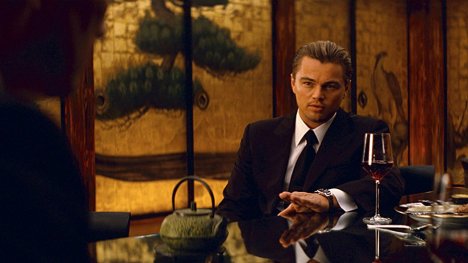
New Escapist Column! On the Cynicism of “Inception”…

I published a new piece at The Escapist earlier this week. Because Inception turned ten years old this week, it seemed like an appropriate opportunity to look back at Christopher Nolan’s blockbuster.

Inception is often discussed as a movie about movies, how the film’s team of dream infiltrators often feel like a team of filmmakers constructing an elaborate spectacle for an audience of one. However, this train of thought is rarely developed beyond the original premise. If Inception is a movie about movies, what exactly does it have to say about movies? How does it feel about them? The answers are surprisingly complicated and nuanced, especially in the context of a summer blockbuster from a director who clearly adores the format.

You can read the piece here, or click the picture below.

New Escapist Column! On the Strange Moral Panic Around “Batman Forever”…

I published a new In the Frame piece at Escapist Magazine this evening. With the film turning twenty-five last month and rumours circulating of a Joel Schumacher cut, it seemed like a good time to discuss Batman Forever.

Following on from Batman and Batman Returns, there was an immediate push for Batman Forever to be a much more conventional blockbuster. One of the interesting consequences of this is the complete erasure of anything that makes a Batman movie distinctive or unique. Batman Forever feels like a moral panic film, one desperately worried how kids might respond to the weirdness or dysfunction of Batman Returns. As such, Batman Forever offers a much more generic, much more conventional, much straighter, less interesting take on the Caped Crusader than any other film.

Indeed, the film resembles nothing so much as the moral panic around the character in the fifties, when – prompted by the publication of Doctor Frederic Wertham’s Seduction of the Innocent – there was a conscious effort to massage the character into a much more straightforward (and less complicated and less provocative) shape. Batman Forever follows a lot of the same playbook, resulting in a vision of Batman just as lost and muddled as so many of those fifties stories.

You can read the piece here, or click the picture below.

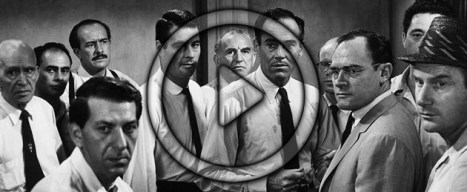
190. 12 Angry Men (#5)

Hosted by Andrew Quinn and Darren Mooney, and this week with special guests Donald Clarke and John Maguire, The 250 is a (mostly) weekly trip through some of the best (and worst) movies ever made, as voted for by Internet Movie Database Users.

This time, Sidney Lumet’s 12 Angry Men.

In New York, in the height of summer, twelve jurors assemble for what should be a simple open and shut case. Most of the jury assumes that they’ll be done within the hour. However, against all of that evidence and in spite of all of that expectation, one member of the group isn’t entirely convinced that the accused is guilty.

At time of recording, it was ranked 5th on the list of the best movies of all time on the Internet Movie Database.

Continue reading

New Escapist Column! On “The Old Guard” and Offering Easy Answers to Tough Problems…

I published a new In the Frame piece at Escapist Magazine this evening. The Old Guard was released on Netflix this evening, so it seemed a film that was worth discussing.

The Old Guard is essentially a film that exists half-way between a turn-of-the-millennium high-concept action film and a modern superhero blockbuster, and it doesn’t always split the difference in a particularly elegant way. This is a film that is about the importance of doing good in the world, even when the results aren’t quantifiable or apparent. However, it makes a rather clumsy and facile argument about that, lacking the strength or vision to make its point from first principles.

You can read the piece here, or click the picture below.

Non-Review Review: Greyhound

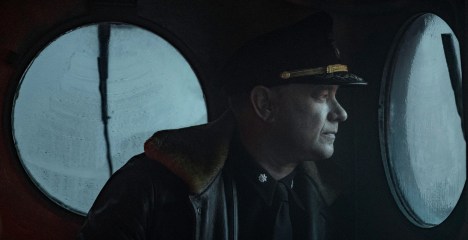
Greyhound is a tight and claustrophobic maritime thriller that knows pretty much exactly what it’s doing.

At its best, Greyhound capitalises not just on Tom Hanks as the patron saint of dads, boomers and the American cultural memory of the Second World War, but also as a time-displaced Jimmy Stewart. This makes a certain amount of sense. Despite the presence of character actors like Stephen Graham, Rob Morgan and Elizabeth Shue, Tom Hanks is the only star in Greyhound. The film remains tightly focused on Captain Ernest Krause, the commander assigned to protect a convoy of supplies crossing the Atlantic shortly after America’s entry into the Second World War.

It doesn’t exactly shatter expectations.

It makes sense that Greyhound should be tailored to Tom Hanks. Hanks wrote the screenplay, adapting it from C.S. Forrester’s The Good Shepherd. More than that, Hanks has demonstrated his strong interest in the history of American involvement in the Second World War with films like Saving Private Ryan and television series like Band of Brothers and The Pacific. As such, Greyhound feels like it fits perfectly within the actor’s wheelhouse.

This is an illustration of how effectively Greyhound works. Greyhound is a movie that knows what it needs to deliver, and sets about delivering that in the most efficient manner possible.

The old man and the sea.

Continue reading

“Doctor Who?” The Deconstructed Davison Doctor…

This week, I had the privilege of stopping by The Galactic Yo-Yo to talk a little bit about Doctor Who with the wonderful Molly Marsh. In preparation for the episode, I rewatched the bulk of the Peter Davison era for the first time in years. I talked about it on the podcast, which is worth your time. But I also thought it was worth jotting some of the thoughts down in more detail.

Rewatching the Peter Davison era of Doctor Who is a strange experience for a number of reasons, not all of which are good.

The Davison era arguably served as a point of transition. It existed in the negative space between two particularly memorable incarnations of the Time Lord. Tom Baker is justifiably considered the most important and influential actor to play the role. Notably, he was the only lead from the classic series to get a showcase scene in The Day of the Doctor. Despite Colin Baker’s protestations, this made a great deal of sense. For an entire generation of television viewers – not just Doctor Who fans – Tom Baker is the Doctor.
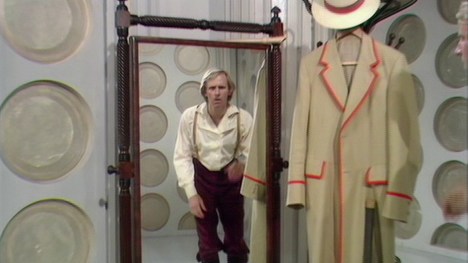
On the other extreme, Peter Davison was succeeded by Colin Baker. Whether rightly or wrongly, Colin Baker occupies a similarly important place in the mythos. With his garish costume and his string of terrible stories, Colin Baker was long the public face of the decline and decay of Doctor Who as a cultural institution. This isn’t entirely fair. The rot had set in considerably earlier than Baker’s arrival, and there’s a sense in which he suffered from terrible timing. Still, Colin Baker wound up serving as the face of the show’s hiatus and the embarrassing Doctor in Distress.

This puts Peter Davison in a strange position. He is caught between these two hugely important moments in the show’s history. However, he also arguably lacks a strong cohesive identity like other iconic iterations of the character. The Fifth Doctor is a markedly different character from the iterations around him, and Davison was subject to criticisms from fans that his interpretation of the title character was “bland” or “boring.” It’s arguable that the Sixth Doctor’s abrasive personality was a direct response to this perceived blandness.
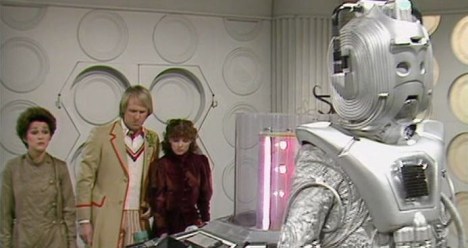
However, in just under three full seasons in the role, Peter Davison left quite a mark on the Time Lord. His final story, The Caves of Androzani, is rightly regarded as one of the finest Doctor Who stories ever made. (Indeed, it is one of the rare stories to have topped polls of fandom.) More to the point, it’s notable that Davison would become a surprisingly strong influence on the revival series. Tom Baker got to occupy centre stage in The Day of the Doctor, but Davison returned first in Time Crash. The short served primarily as a love letter to Davison’s influence on the role.

There’s a lot of very fascinating stuff happening during Davison’s time in the role, most of seemingly happening by accident. The most striking thing about Davison’s tenure in the role is the recurring sense that he doesn’t quite fit. The Fifth Doctor often seems to struggle with the basic narrative conventions of Doctor Who, wrestling with the series’ core concepts and underlying assumptions. Over the course of Davison’s three seasons in the role, Doctor Who seems to ask what might happen if there were an iteration of the Doctor who wasn’t up to the task.

Continue reading