• Following Us

  • Categories

  • Check out the Archives


  • Awards & Nominations

Non-Review Review: The Prom

The Prom arrives on Netflix as part of director Ryan Murphy’s deal with the streaming service, similar to the adaptation of The Boys in the Band.

On one level, The Prom is perfectly suited to Murphy’s aesthetic as a director. It is an adaptation of a Broadway musical about Broadway musicals, one that collides with a stereotypical depiction of the American heartland in a way that invites a heightened and almost caricatured version of both. The Prom is a larger than life production, and feels very much of a piece with Murphy’s output as writer, director and producer – from American Horror Story to Ratchet to Glee. There is no sense that any approach to The Prom could ever be “too much”, and so it’s a good fit for Murphy.
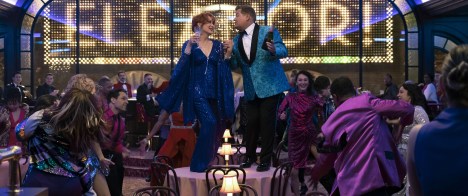
Making a whole production of it.

At the same time, The Prom ultimately feels rather empty. Murphy is very good at offering stylised hyperreal worlds, but The Prom feels like a hollow confection. This problem is compounded by a tonal issue; the movie is never entirely sure how cynical or how earnest it wants to be, and so is frequently caught halfway between extremes. The Prom never seems entirely sure whether it’s a brutal parody of feel-good nonsense or a triumphant example of escapist entertainment, so it never works in either register.

This is a shame, given the talent involved in the production and the occasional momentum that the film manages to build through its high-energy song-and-dance numbers and its game cast. Sadly, though, it never manages to hit the high notes that it needs to.

It’s a bit Broad(way)…

Continue reading

“It Will Always Be Broken!” The Strange Melancholy of Martin Scorsese’s “Hugo”…

The podcast that I co-host, The 250, has been running a season of coverage of director Martin Scorsese. Last weekend, we discussed Scorsese’s Hugo. It’s a fun, broad discussion. However, watching the film and talking about the film got me thinking about the film’s strange melancholy.

Martin Scorsese is a more complex and nuanced filmmaker than a casual glimpse at his filmography might suggest.

The clichéd depiction of Scorsese is largely shaped and defined by his most popular movies: Taxi Driver, Raging Bull, Goodfellas, CasinoGangs of New York, The Departed, The Wolf of Wall StreetThe Irishman. Based on these films, there is a tendency to pigeonhole Scorsese as a director who makes violent films about violent men, usually filtered through the lens of the seedy underbelly of organised crime or urban decay. This does not quite capture the breadth and the scope of Scorsese’s interests.

Indeed, Scorsese is a much more interesting filmmaker than that list of classics might suggest, reflected in films as diverse as Alice Doesn’t Live Here Anymore, New York, New York, The Last Waltz, After Hours, The Colour of Money, Age of InnocenceThe Last Temptation of Christ, Kundun and The Aviator. However, even allowing for that range, Hugo stands out as an oddity in Scorsese’s filmography. The film was something of a flop when it was released opposite The Muppets, and is often glossed over in accounts of Scorsese’s career and history.

This is shame. Hugo suffers slightly from arriving in the midst of a late career renaissance for Scorsese that includes some of the best and most successful films that the director ever produced: The Departed, Shutter Island, The Wolf of Wall Street, The Irishman. In the context of that body of work, Hugo is often overlooked. This is a shame, as it’s a magical and wonderful film. It manages to be a children’s film as only Martin Scorsese could produce, suffused with a melancholy and introspection that is rare in the genre.

Continue reading

New Escapist Video! “The Mandalorian – Chapter 13: The Jedi”

I’m thrilled to be launching 3-Minute Reviews on Escapist Movies. Over the coming weeks and months, I will be joining a set of contributors in adding these reviews to the channel. For the moment, I’ll be doing weekly reviews of The Mandalorian.

The review of the fifth episode of the second season, The Jedi, is available below.

“Saint Rose” is in Irish Cinemas This Weekend!

Obviously release schedules have been a bit of mess this year with the pandemic on-going. As a result, international release dates are staggered. Irish cinemas are reopening for the first time in months, and Saint Maud is now screening.

Rose Glass’ blackly comic horror film is one of my favourite films of the year to date, and so is deserving of a shoutout. You can read the original review from the Dublin International Film Festival here, or you can pick the picture below.

210. Hugo – Summer of Scorsese, w/ The Movie Palace (#–)

Hosted by Andrew Quinn, Jay Coyle and Darren Mooney, with special guest Carl Sweeney, The 250 is a (mostly) weekly trip through some of the best (and worst) movies ever made, as voted for by Internet Movie Database Users. New episodes are released every Saturday at 6pm GMT.

This time, continuing our Summer of Scorsese season with a crossover with The Movie Palace, Martin Scorsese’s Hugo.

Martin Scorsese is one of the defining directors in American cinema, with a host of massively successful (and cult) hits that have shaped and defined cinema across generations: Alice Doesn’t Live Here Anymore, New York, New York, Goodfellas, Kundun, The Departed, The Wolf of Wall Street. The Summer of Scorsese season offers a trip through his filmography via the IMDb‘s 250.

Hugo Cabret is a twelve-year-old kid living and hiding in the industrial spaces behind a central Paris railway station. Recovering from the loss of his father, Hugo is desperate to repair the damaged automaton that is the last connection that he shares with his deceased parent. The mystery leads Hugo to a strange and lonely old man operating a kiosk, and into a whole new world.

At time of recording, it was not ranked on the Internet Movie Database‘s list of the best movies of all-time.

Continue reading