• Following Us

  • Categories

  • Check out the Archives


  • Awards & Nominations

Star Trek: Voyager – Blink of an Eye (Review)

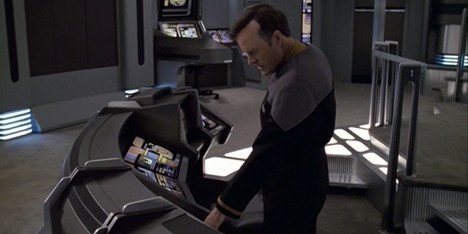
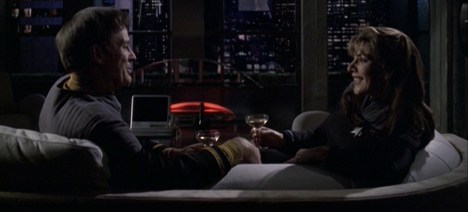
Blink of an Eye is perhaps the last truly great episode of Star Trek: Voyager.

There are good episodes that follow Blink of an Eye. There are solid comedy episodes like Renaissance Man. There are effective homage episodes like Author, Author. There are even well-constructed archetypal narratives that fit within the thematic framework of both the series and the franchise like Memorial. However, there isn’t a single episode as elegant as Blink of an Eye, a story which demonstrates the raw potential of Voyager as a narrative engine for telling these big and broad science-fiction narratives.
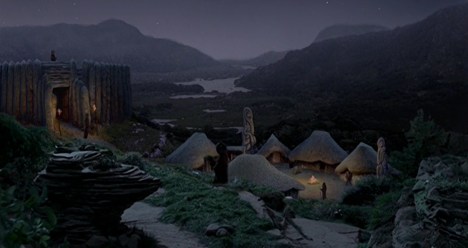
From the mountains of faith…

Indeed, it might even be possible to argue that Blink of an Eye is the last truly great episode of Berman era Star Trek.

There is a tendency to overlook Star Trek: Enterprise in discussions of the franchise’s history and legacy, no matter how quietly influential the prequel series has become in terms of Star Trek Beyond or Star Trek: Discovery. This does a disservice to the last series of the Berman era, particularly the final two seasons that grappled with the question of what it means to be Star Trek in the aftermath of 9/11. Nevertheless, the trauma of 9/11 exerted such a gravity that even the best episodes of Enterprise seemed to exist in its shadow; Judgment, Cogenitor, The Forgotten, Babel One, United.
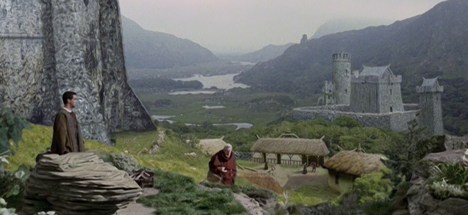
… through the valley of fear…

Even outside of hyperbole, Blink of an Eye is a beautifully constructed piece of television that speaks to the appeal and the potential of Star Trek. It is a lyrical allegory, a very simple and straightforward idea that is constructed in such a way as to invite the audience to ask profound and meaningful questions about the nature of human existence. What is it like to watch a civilisation rise up? What ideals drive it? Towards what values and ideals might it strive? More than that, what is it like to sit outside of time and watch those beholden to time? These are fascinating and enlightening ideas.

Blink of an Eye was developed from a story by Voyager writer Michael Taylor, one of the most ambitious writers to ever work on the series. Taylor had contributed the stories that would develop into The Visitor and In the Pale Moonlight, demonstrating a willingness to think outside the box. On Voyager, Taylor’s ambitions were frequently tempered and his scripts often compromised. Both Once Upon a Time and The Fight were much more generic and mediocre pieces of television than the original premise. Blink of an Eye is a rare Taylor concept that doesn’t feel watered down.
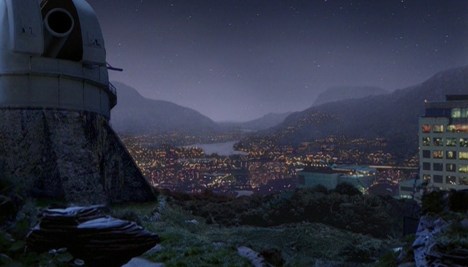
…. But the river is wide
And it’s too hard to cross…

It helps that the teleplay for Blink of an Eye was written by Star Trek veteran Joe Menosky. Menosky had a long association with the franchise and a deep understanding of how it worked, having cut his teeth on Star Trek: The Next Generation and Star Trek: Deep Space Nine. More than any other writer, Menosky understood the idea of Star Trek as a mythic framework, an avenue for exploring stories and what they mean. This theme plays through Menosky’s work on the franchise; Darmok, Masks, Dramatis Personae, Muse.

Blink of an Eye feels like an episode perfectly callibrated to the strengths of Taylor and Menosky, a high-concept episode that is fundamentally about the Star Trek mythos.
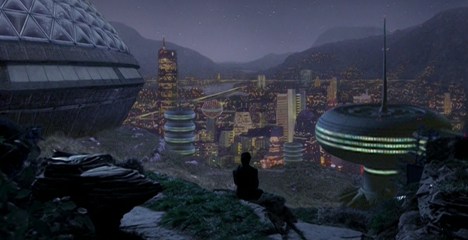
We all end in the ocean
We all start in the streams
We’re all carried along
By the river of dreams.

Continue reading

New Podcast! Not Another X-Files Podcast Podcast #602 – “Drive”

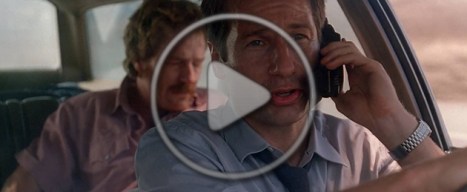
I was delighted to be invited to join Carolyn and Vanessa for the latest episode of Not Another X-Files Podcast Podcast, discussing Mulder’s impromptu roadtrip.

The guys had just finished coverage of The Lone Gunmen and the eleventh season of The X-Files, so I joined them to talk about the second episode of the sixth season, Drive. Any long-time reader of the blog will know that Drive is probably my favourite episode of the sixth season, and probably the last of my top ten X-Files episodes chronologically speaking. (I’m still sleeping on Mulder and Scully Meet the Were-Monster and The Lost Art of Forehead Sweat.)

It was an absolute pleasure to do a guest slot with the guys, to talk about everything from the O.J. Simpson car chase to the American frontier to the amount of highway in California. You can check out the podcast here, and past episodes here. Or click the link below.

Non-Review Review: The Guernsey Literary and Potato Peel Pie Society

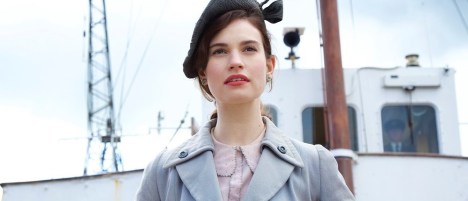
Early in the film, a supporting character reveals the ingredients of the eponymous culinary delight, the mysterious “potato peel pie.” Those ingredients are, somewhat predictably, potatoes and potato peels. With some small measure of pride, the character in question boasts that his potato pastry remains conceptually pure. There is no flour, no sugar, no flavouring. There is only potato. Watching The Guernsey Literary and Potato Peel Pie Society, this almost feels like a moment of self-awareness.

The Guernsey Literary and Potato Peel Pie Society could certainly use more flavouring.

Pie in the sky thinking.

Continue reading

Star Trek: Voyager – Fair Haven (Review)

Well, at least it’s better than Up the Long Ladder.

We’ll take what we can get.

Continue reading

74. Tonari no Totoro (My Neighbour Totoro) – Anime April 2018 (#137)

Hosted by Andrew Quinn and Darren Mooney and with special guests Graham Day and Marianne Cassidy, The 250 is a (mostly) weekly trip through some of the best (and worst) movies ever made, as voted for by Internet Movie Database Users. New episodes are released every second Saturday at 6pm GMT, with the occasional bonus episode between them.

This year, we are proud to announce Anime April, a fortnight looking at two of the animated Japanese films on the list. We hope to make this an annual event. This year, we watched a double feature of Isao Takahata’s Hotaru no haka and Hayao Miyazaki’s Tonari no Totoro to commemorate the thirtieth anniversary of their original release in April 1988. This week, the second part of the double bill, Tonari no Totoro.

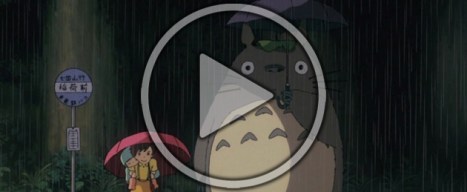
Introducing perhaps the most iconic character in Japanese animation, and perhaps one of the most iconic characters in all animation, My Neighbour Totoro is the story of two young children who move to the Japanese countryside in the aftermath of the Second World War and befriend the mysterious eponymous creature who serves as a guardian of the local environment.

At time of recording, it was ranked the 137th best movie of all time on the Internet Movie Database.

Continue reading

Star Trek: Voyager – Pathfinder (Review)

Star Trek: Voyager has always had an awkward relationship with Star Trek: The Next Generation.

Star Trek: Deep Space Nine was always the rebellious middle-child, prone to make bold and defiant gestures like blowing up a surrogate of the Enterprise in The Jem’Hadar, bringing Jonathan Frakes back to play Riker’s evil transporter duplicate in Defiant, and have former Enterprise crew member Chief Miles Edward O’Brien praise Sisko as the best captain in the fleet in The Adversary. It was a television series that was dedicated to defining its own unique identity, and at least some of that identity was defined in opposition to its direct predecessor.

Taking his Neelix.

In contrast, Voyager always felt a little more desperate, a little too eager to assert its connection to The Next Generation and to insist upon itself as a spiritual successor to that beloved (and incredibly successful) series. Despite the fact that Voyager was set primarily in the Delta Quadrant, the series never missed an opportunity to crossover with The Next Generation. Barclay appeared as a hologram in Projections, Riker was summoned across the universe in Death Wish, LaForge was rendered a captain in the future presented in Timeless.

This is to say nothing of the minor crossovers taken at every available opportunity; the use of Q and the Borg Queen among the relatively small number of recurring guest stars, the original plan to build 11:59 around Guinan, the decision to produce the dire False Profits as a sequel to the dire The Price. Repeatedly over the show’s run, Voyager feels very much like a young child digging through its elder sibling’s wardrobe for something that might possible be claimed as a hand-me-down. It is depressing, particularly considering the raw potential that was baked into the premise of Voyager.

Course correction.

Pathfinder is perhaps the apex of this approach. It is effectively a stealth episode of The Next Generation, packaged and released under the Voyager brand. The primary plot of Pathfinder focuses on two characters from The Next Generation sitting around and talking about how great Voyager is, with one of those characters even escaping into a holographic fantasy of life on board the ship to help him think. In many ways, Pathfinder could be seen to prefigure These Are the Voyages…, the catastrophic finale to Star Trek: Enterprise that borrowed the same template and somehow pushed it even further.

There is a smell of desperation about Pathfinder. Whatever the plot of the episode might suggest, Voyager feels more lost than ever.

The Last Generation.

Continue reading

New Podcast! Scannain Podcast (2018) #12!

The twelfth edition of the new and revived Scannain podcast discusses the week that has been in Irish and international film.

This week, I’m joining Jason Coyle, Ronan Doyle and Emma Fagan to discuss everything from zero-budget Irish indie The New Music to the internal logic of It Follows. As usual, we discuss what we’ve watched over the past week or so, jump into the top ten, and talk about the new releases landing in Irish cinemas.

Check it out here, or give it a listen below. You can access the New Music GoFundMe here.

Non-Review Review: Rampage

Rampage suffers from some pretty severe tonal issues. The video game adaptation starts and ends as a spiritual companion to Kong: Skull Island, but takes a detour into the last American Godzilla movie during its extended climax.

The results are jarring, creating a more dissonant movie than either of its obvious monster-movie forebearers. Rampage is goofy enough that its urban carnage feels out of place, and brutal enough that some of its cheekier decisions feel mean-spirited and vindictive. The result is very much a curate’s egg, to the point that it occasionally feels like Rampage escaped its creators in the edit room.

Going ape.

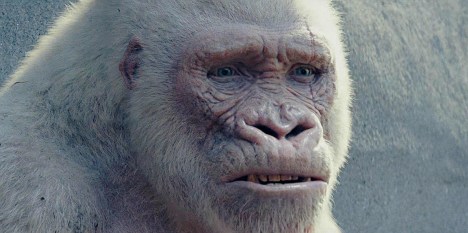
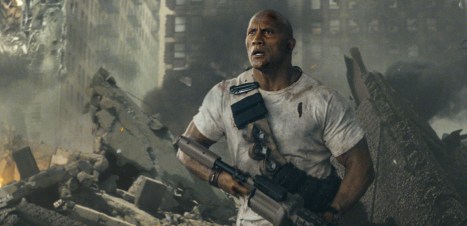
There is a lot to like in Rampage, particularly its weird committed earnestness when it comes to dealing with the friendship between a primatologist and his gigantic albino gorilla. Rampage skirts the line, occasionally embracing the camp absurdity of muscle-bound Dwayne Johnson’s deep-seated emotional attachment to a computer-generated rampaging “gene-edited” monster. Rampage understands the absurdity of the set-up, but makes a convincing sell of it nonetheless.

Unfortunately, Rampage‘s human characters are never as interesting, which creates a problem when the climax attempts to shift gears into a sprawling urban destruction epic. Rampage feels as much a product of careful and outrageous engineering as the creatures at its core. However, as with those creatures, it never feels quite like those doing the engineering had a clear design in mind.

“I sure picked a bad day to move George to the Metropolis Zoo.”

Continue reading

Star Trek: Voyager – The Voyager Conspiracy (Review)

The Voyager Conspiracy builds off the nostalgia of One Small Step, paving the way for the nostalgia of Pathfinder.

One of the more interesting aspects of the final two seasons of Star Trek: Voyager is the way in which the show embraces a weird nostalgia, both for the utopian future of the larger Star Trek franchise and also for its own earlier seasons. To be fair, the seeds for this nostalgia were arguably sown during the fifth season, with an increased emphasis on the events of Caretaker in episodes like Night, Relativity and Equinox, Part I, as well as elements like Janeway’s exploration of her family history in 11:59, the fake Earth in In the Flesh, and the return to the Maquis in Extreme Risk.

“What’s all this buzz about?”

Nevertheless, the sixth and seventh seasons of Voyager embrace the nostalgia that has been woven into the series from the outset, the journey toward the “familiar” and the “recognisable.” After all, Voyager has always been a show about the desire to return, but it is particularly interesting to see that urge to go backwards including metaphorical journeys into the history of both the Star Trek franchise and Voyager itself. The final seasons of Voyager apply the idea of returning home reflexively, it often feeling like a desire to slip backwards in time as much as space.

It is interesting to wonder what drives this nostalgia for the early years of Voyager in these final two seasons. Perhaps this wistful yearning is driven by the fact that the show is approaching its end, and is reflecting upon its own nostalgia. Perhaps the series is anxious at being the only Star Trek show on the air for the first time in its run, hoping to return to the safety and security of those early years. Perhaps it ties into a broader cultural anxiety about the millennium, a reflection of the same “end of history” anxiety that informed stories like Future’s End, Part I, Future’s End, Part II and Living Witness.

Getting into her head.

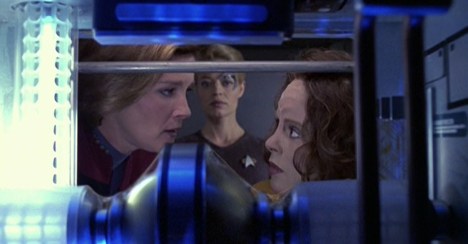
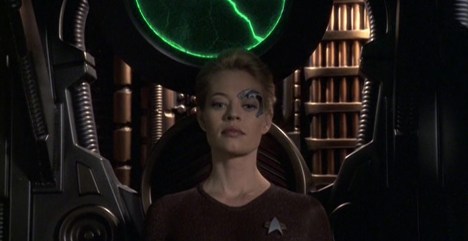
Whatever the reason, The Voyager Conspiracy feels like an exploration of the Voyager‘s continuity. The plot of the episode finds Seven of Nine effectively binge-watching the first few seasons of the show and trying to structure them into something resembling a cohesive story arc. In doing so, The Voyager Conspiracy includes an uncharacteristic selections of nods and references to earlier episodes; Caretaker, Cold FireManoeuvres, The Gift, Message in a Bottle, The Killing Game, Part I, The Killing Game, Part IIDark Frontier, Part IDark Frontier, Part II.

As such, it is an oddity in the larger context of Voyager, a television series largely defined by the absence of episode-to-episode continuity. Indeed, it is quite telling that The Voyager Conspiracy treats such continuity as inherently dangerous and destabilising influence on Voyager.

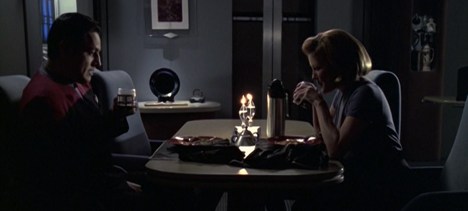
Dinner table conversation.

Continue reading

73. Hotaru no haka (Grave of the Fireflies) – Anime April 2018 (#57)

Hosted by Andrew Quinn and Darren Mooney and with special guests Graham Day and Marianne Cassidy, The 250 is a (mostly) weekly trip through some of the best (and worst) movies ever made, as voted for by Internet Movie Database Users. New episodes are released every second Saturday at 6pm GMT, with the occasional bonus episode between them.

This year, we are proud to announce Anime April, a fortnight looking at two of the animated Japanese films on the list. We hope to make this an annual event. This year, we watched a double feature of Isao Takahata’s Hotaru no haka and Hayao Miyazaki’s Tonari no Totoro to commemorate the thirtieth anniversary of their original release in April 1988. This week, the first part of the double bill, Hotaru no haka.

Regarded as one of the most affecting animated films ever made, Grave of the Fireflies tells the story of two children caught in the middle of the United States’ firebombing of Japan. Adapted from Akiyuki Nosaka’s semi-autobiographical novella of the same name, Grave of the Fireflies is a harrowing portrayal of the consequences of war, particularly upon those in need of society’s protection.

At time of recording, it was ranked the 57th best movie of all time on the Internet Movie Database.

Continue reading