• Following Us

  • Categories

  • Check out the Archives


  • Awards & Nominations

Non-Review Review: I Feel Pretty

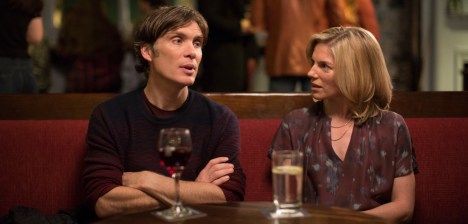
I Feel Pretty has a very bold premise for an aspirational comedy.

Renee is a young woman wrestling with her insecurities, who dreams of being more beautiful. Inspired by a late-night viewing of Big, she is inspired to transform that dream into a wish, and pleads with some external power to physically transform her. Following an awkward accident (and a brain injury) at her “Soul Cycle” class, Renee wakes up and does not recognise her own body. The only catch is that the transformation is strictly internal. Renee is delusional. Her physical appearance has not changed, but the way that she sees herself has.

Reflective anxiety.

That is an ambitious premise, but also a loaded one. There are any number of potential misfires and miscalculations that could sabotage that premise, the skillful execution of the movie relying upon a pitch-perfect management of tone, a key understanding what the movie is trying to say at any given moment, and the sense that all of the production team are working from the same template towards the same goal.

Unfortunately, I Feel Pretty lacks that sense of cohesion, resulting in a mismatched tonal disaster, a film never entirely sure whether it is laughing with its protagonist or at her.

A tough premise to stomach.

Continue reading

76. Full Metal Jacket (#94)

Hosted by Andrew Quinn and Darren Mooney, The 250 is a trip through some of the best (and worst) movies ever made, as voted for by Internet Movie Database Users. New episodes are released Saturdays at 6pm GMT, with the occasional weekend off.

This time, Stanley Kubrick’s Full Metal Jacket.

Director Stanley Kubrick crafts a bold and disorienting look at the chaos of the Vietnam War, with a film of two halves. The first half of the feature film unfolds against the backdrop of United States Marine Corps training on Parris Island, before the second half focuses on the disorganisation of the Nam itself.

At time of recording, it was ranked the 94th best movie of all time on the Internet Movie Database.

Continue reading

New Podcast! Scannain Podcast (2018) #13!

Operating a little out of sequence, the thirteenth edition of the Scannain podcast is available for your aural delectation now.

This week, I’m joining Jason Coyle and Ronan Doyle to discuss the week in film, including the allocation of €200m by the Irish Film Board as well as film festivals both foreign and domestic. As usual, we discuss what we’ve watched over the past week or so, jump into the top ten, and talk about the new releases landing in Irish cinemas. Including discussions of new releases

Check it out here, or give it a listen below.

Non-Review Review: The Delinquent Season

This film was seen as part of the Audi Dublin International Film Festival 2018.

“You’re a f&!king cliché!” one character screams at another during a particularly heated moment in The Delinquent Season.

That’s a dangerous line to put into a screenplay, particularly in what is supposed to be an intimate character-driven drama. The line skirts the boundaries of self-awareness, inviting the audience to consider it as a statement of authorial intent. It takes genuine courage to force the audience to assess whether the character in question really just “a f&!king cliché”? Obviously, the film believes that its central characters are more than just a collection of familiar tropes repackaged and reheated, but it takes confidence to stare the viewer right in the eye and broach the question.

“Look, it’s this or Infinity War.”

The Delinquent Season certainly has lofty goals. It aspires to be provocative and confrontational, to push the audience a little bit out of their comfort zone by asking them to empathise with characters who are abrasive and awkward. The Delinquent Season seems to genuinely hope that the audience might find its central characters to evoke strong emotions; to feel pity or hatred or anger at their decisions and their actions. There are points watching The Delinquent Season where writer and director Mark O’Rowe is goading the audience to hate these characters.

Unfortunately, The Delinquent Season never even considers that the audience might be bored by these four particular characters.

Table this for later.

Continue reading

Sound Off: Settling the Score on “Last Jedi’s” Soundtrack-Only Version

The score-only version of Star Wars: Episode VIII – The Last Jedi is marvelous for a number of reasons.

Announced by director Rian Johnson as a special feature available on certain digital releases of the feature film, the premise is remarkably simple. The score-only version of The Last Jedi presents the feature film complete and uneditted, but without any dialogue or sound effects. The sound mix is completely dominated by John Williams’ score for the film, from the opening Star Wars fanfare to the music playing over the closing credits. Over the course of the movie’s two-and-a-half hour runtime, not a single word is spoken and not a single laser blast is heard.

As such, the score-only version of The Last Jedi is the closest thing imaginable to a blockbuster silent movie in the current market. After all, silent films are at best a curiousity in the modern market place, often relegated to retrospectives and festival screenings, with the occasional nostalgic release like The Artist. In fact, black and white films are noticeably more common than silent films in the current market. As such, the score-only version is an intriguing piece of work. It obviously showcases John Williams’ score, and the way in which that score shaped and informs the images on the screen.

But it also demonstrates that Rian Johnson is the best director to have worked on the Star Wars franchise, from a purely technical standpoint.

Continue reading

New Podcast! Scannain Podcast (2018) #14!

Skipping unlucky number thirteen for the moment, the fourteenth edition of the Scannain podcast is available for your aural delectation now.

This week, I’m joining Jason Coyle and Ronan Doyle to discuss the week in film, including the passing of both R. Lee Ermey and Milos Forman. As usual, we discuss what we’ve watched over the past week or so, jump into the top ten, and talk about the new releases landing in Irish cinemas. Included in the discussion are films like Rampage, The Cured and Love, Simon.

Check it out here, or give it a listen below.

Non-Review Review: Avengers – Infinity War

There is a solid argument to be made for the Marvel Cinematic Universe as blockbuster television series that only releases three or four films in a given year.

There’s a lot of evidence to support this argument, perhaps most notably the directors chosen for “phase two” of the grand experiment. Joss Whedon might have directed Serenity and Much Ado About Nothing, but he remains known for his game-changing work on television series like Buffy: The Vampire Slayer, Angel, Firefly and Dollhouse. Removing Patty Jenkins from Thor: The Dark World and replacing her with Alan Taylor only reinforced this sense. Drafting in the Russo Brothers from Community to direct Captain America: The Winter Soldier cemented the notion.
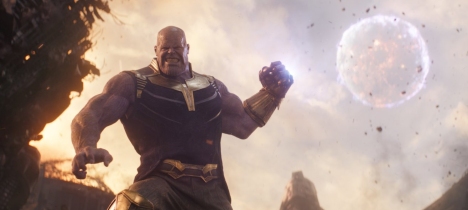
Purple reign.

Indeed, the elevation of the Russo Brothers within the Marvel Studios hierarchy with Captain America: Civil War and with Avengers: Infinity War suggests the obvious similarities between managing the sprawling continuity of the shared cinematic universe and the day-to-day management of a television show, where individual instalments might be credited to individual authors, but it is also important to maintain consistency of tone and vision across the entire line. Infinity War suggests the sort of organisational ability associated with long-form television storytelling more than any single cinematic narrative.

There are moments in which this approach works. Infinity War is full of knowing winks and callbacks, allusions and references. There is a sense of set-up and pay-off to certain threads and arcs seeded across the eighteen previous films within the established brand. Characters get emotional scenes that play upon established relationships and dynamics, which are clearly articulated within the film itself, but building off years of watching (and rewatching) these actors play off one another in these roles. There is an undeniable weight to Infinity War that simply would not be possible without that television storytelling style.
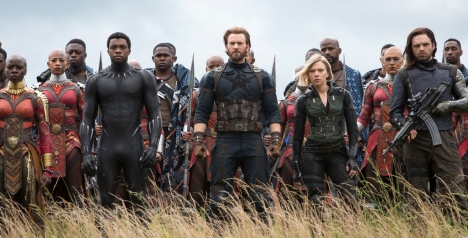
Avengers assembled.

At the same time, there are reminders of the limitations of this approach, of the challenges of balancing individual stories with a larger plan for the narrative universe in which they unfold. This is particularly notable because Marvel Studios recently shifted towards a more director-friendly approach in some of its standalone productions. Guardians of the Galaxy and Guardians of the Galaxy, Vol. 2 are both undeniably James Gunn productions. Black Panther could only have come from Ryan Coogler. Thor: Ragnarok worked as well as it did because of the unique directorial stylings of Taika Waititi.

Watching Infinity War, it becomes clear how far these directors deviated from the established style sheet, and the difference in approach between these directors and the Russo Brothers. It occasionally feels like Infinity War was constructed by people who watched those movies, without understanding why they worked as well. There is a tonal awkwardness when these characters are woven back into the fabric of the shared universe, in a manner that is occasionally unquantifiable but sometimes fundamental.
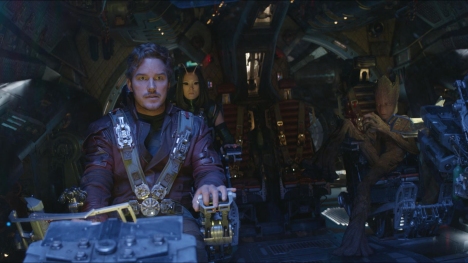
Guardians… Get In There?

Infinity War is good, clean fun. Perhaps too good and too clean. In order put the jigsaw pieces together, all of the rough edges have been sanded off. Anything that might generate friction has been stripped away, creating the impression of a very smooth and very functional storytelling engine. Midway through the film, Thor ruminates upon the existence of fate and how it has led him towards this particular moment and beyond to a greater purpose. Doctor Steven Strange perceives one single happy ending to this crisis.

There is a sense that Thor and Strange perceive the vast narrative machine of Infinity War working around them. It is an impressive machine, if a somewhat inhuman one.
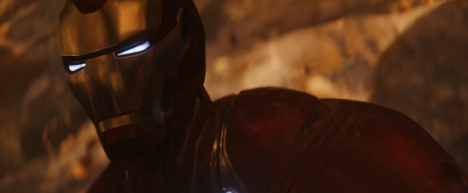
Things look pretty Stark.

Continue reading

Non-Review Review: Strangers – Prey at Night

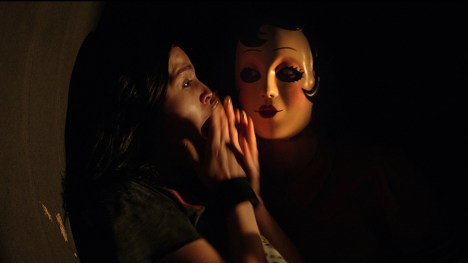
Strangers: Prey At Night is the story of a wholesome family that find themselves menaced by a group of Kim-Wilde-and-Bonnie-Tyler-loving, smiley-face-making, Nirvana-quoting nihilist hipster dirtbags. So, it’s a true horror story.

Strangers: Prey At Night is perhaps the flip side of the nostalgic-for-the-experience-of-horror-cinema movies like A Quiet Place or Lights Out, in that it’s just a straight-up nostalgic ode to all manner of forgettable eighties era slasher movies. It’s a canny example of the horror genre’s ability to cannibalise what works, a film very consciously built on the successful nostalgic retro horror vibe that made The Conjuring and The Conjuring II such massive hits, but applying it to the direct-to-video masked-and-axe-wielding-killer subgenre.

Let us prey.

Being honest, it is a surprise that it took so long to see that approach applied to the reliable low-budget slasher genre. After all, the twenty-first century has seen a host of remakes and reboots of classic hack-and-slash films like The Last House on the Left or The Hills Have Eyes, but those films consciously emphasised applying modern movie-making techniques to older material. Strangers: Prey at Night does the inverse, applying an older aesthetic to a sequel to a newer breed of horror film.

The approach is intriguing, even if the results are unsatisfying.

The horror franchise that burns twice as bright…

Continue reading

CinÉireann – Issue 6 (April 2018)

The latest issue of CinÉireann has just been released.

It’s a really great read, with Conor Murphy continuing his exploration of cinematic education, Jay Coyle looking at the filmography of Michael Inside director Frank Berry, and Stacy Grouden examining the elaborate worlds of Wes Anderson. Very much worth a look, whether you’re interested in Irish or international film.

I also have a piece in there contextualising The Cured as part of the broader trend of recent apocalyptic horrors invested in the idea of the end of a world that has yet to accept its passing; films like Logan and shows like The Leftovers.

You can read CinÉireann as a digital magazine directly. You can even subscribe and get future issues delivered to you directly. Or click the picture below.

75. Amadeus (#82)

Hosted by Andrew Quinn and Darren Mooney, and this week with special guest Phil Bagnall, The 250 is a trip through some of the best (and worst) movies ever made, as voted for by Internet Movie Database Users. New episodes are released Saturdays at 6pm GMT, with the occasional weekend off.

This time, Miloš Forman’s Amadeus.

Following a failed suicide attempt, ageing composer Antonio Salieri is consigned to psychiatric institution while babbling incoherently. When a young priest comes to visit, Salieri offers an account of his life. In particular, he elaborates upon a confession that he made on the night that he tried to take his life, that he murdered an illustrious young rival by the name of Wolfgang Amadeus Mozart.

At time of recording, it was ranked the 82nd best movie of all time on the Internet Movie Database.

Continue reading