• Following Us

  • Categories

  • Check out the Archives


  • Awards & Nominations

The X-Files – First Person Shooter (Review)

This November, we’re taking a trip back in time to review the seventh season of The X-Files and the first (and only) season of Harsh Realm.

On paper, this should be a slam dunk.

X-Cops was an incredibly risky and experimental episode of The X-Files that really pushed the show in an unexpected direction. The idea of crossing over into Cops was strange and surreal; it seemed like a gimmick that could backfire spectacularly. How could an episode of The X-Files adopt many of the identifiers and signifiers of Cops while still managing to tell its own story? It was a risky proposition, but writer Vince Gilligan and director Michael Watkins managed to pull it off, producing a definite highlight of the seventh season. (If not the final three seasons.)

Game on.

Game on.

First Person Shooter is a similarly ambitious episode, but one that should be a much safer bet. While it pushes the show outside its comfort zone in terms of setting and concept, it does not stray too far from the basic X-Files template. It is written by outsider writers William Gibson and Tom Maddox, but could logically be seen an extension of their superlative script for Kill Switch. In fact, Kill Switch wasn’t even the show’s first “killer artificial intelligence” story; Howard Gordon and Alex Gansa had written Ghost in the Machine as the series’ eighth episode.

On paper, First Person Shooter is ambitious without being entirely unprecedented. Still, the script bends the show too far out of shape. The episode seems to warp and distort the series around it. Despite the fact that First Person Shooter contains far more of the trappings and structures of The X-Files than X-Cops, the episode feels far less comfortable in its own skin. First Person Shooter plays almost like an episode of The X-Files filtered through a lens of unreality; it feels like a textured wireframe model of an X-Files episode, wandering lost in the uncanny valley.
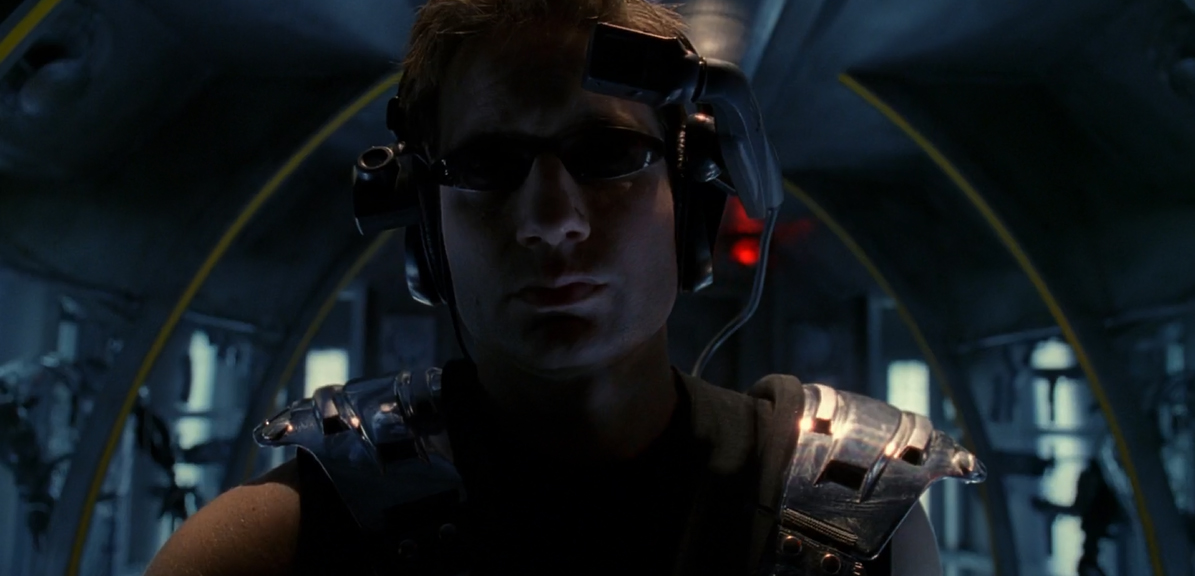
Game over.

Game over.

Continue reading

Non-Review Review: Hitman – Agent 47

Hitman: Agent 47 is not a good film, but it is bad in interesting ways.

The video game adaptation fad of the nineties has given way to a wave of blockbuster comic book movies. Those comic book adaptations have fared much better – both critically and commercially – than fare like Super Mario Brothers or Street Fighter or Mortal Kombat. As such, Hitman: Agent 47 feels like something of an outlier; it is a reboot of a video game property that already failed to take flight in a movie released eight years ago. Even if there is a resurgent interest in video game movies, it seems strange to return to this video game movie.

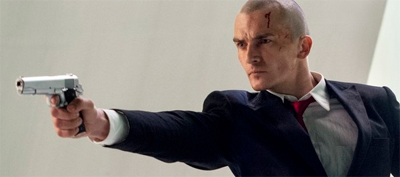
You know, that looks like a highly impractical way to hold those guns...

You know, that looks like a highly impractical way to hold those guns…

At the same time, there is something quite compelling about the structuring of Hitman: Agent 47. Perhaps inspired by the success of the relative fidelity of twenty-first century comic book adaptations, Hitman: Agent 47 struggles to provide a relatively faithful adaptation of the game-playing experience. Though the structure and tone of the movie might jar with the source material, director Aleksander Bach is careful to preserve as much of the game-play experience as possible. Extended sequences of Hitman: Agent 47 play as a walkthrough of a life-like video game.

Which, of course, only serves to make the film feel somewhat redundant; watching a bunch of actors play through scripted game-play-like scenarios might offer a faint echo of the thrill of playing a video game, but captures none of the investment.

Bloody mess...

Bloody mess…

Continue reading

Non-Review Review: Pixels

Pixels has a fun concept.

The idea of video game characters invading the world is a delightfully gonzo piece of pop culture nostalgia. It is easy to see why Sony picked up the option for Patrick Jean’s 2010 short film, even if the concept was not new. Neither version of Pixels can quite measure up to Raiders of the Lost Arcade, the short that aired as part of Anthology of Interest II during the third season of Futurama. That ten minute short story captured the sheer unadulterated joy of a world under siege from its juvenile obsessions.

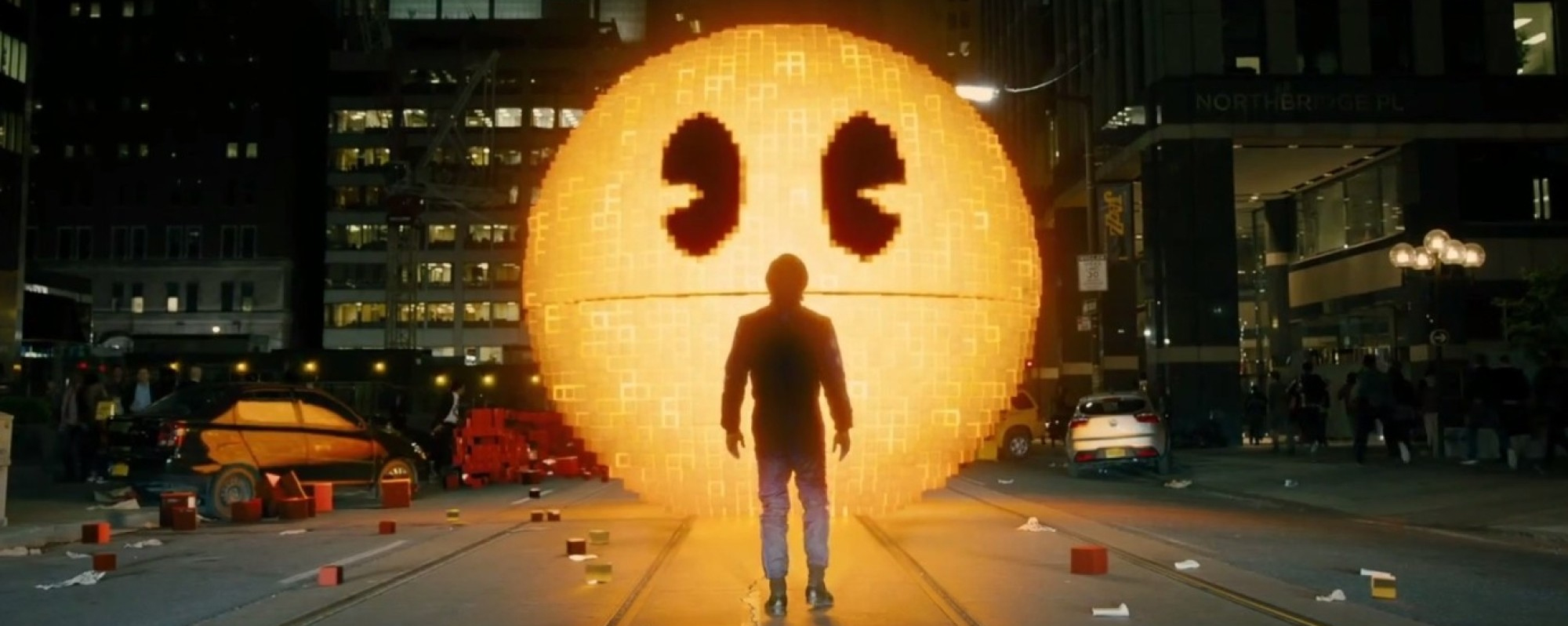
You are my sunshine...

You are my sunshine…

There are a lot of problems with Pixels. The most obvious is that it seems completely disinterested in its core concept as anything other than a vehicle for Adam Sandler. There is a lot of CGI and a number of recognisable pop culture references, but Pixels plays just like any other Happy Madison vehicle. It is an excuse to pair Adam Sandler up with a beautiful actress and pay for trips for friends and acquaintances around the world while making jokes that were tired when most of the audience was making them in the playground.

Pixels never embraces the goofy joy of an invasion of eighties video games, instead wallowing in the presence of washed up nineties hackery.

All the President's... People.

All the President’s… People.

Continue reading

The X-Files (Topps) #13 – One Player Only (Review)

This November (and a little of December), we’re taking a trip back in time to review the third season of The X-Files and the first (and only) season of Space: Above and Beyond.

After a twelve-issue opening mega-arc of interconnected stories about conspiracies-within-conspiracies and wheels-within-wheels, author Stefan Petrucha and artist Charles Adlard step back a little bit to close out their run with a series of standalone stories. The four issues (and three stories) that make up the rest of their run on Topps’ X-Files comic stand alone. They are connected by themes and subtext, but very clearly stand apart from what came before. Indeed, they play out almost like a postscript to the main body of work, a series of smaller bite-sized chunks.

In that light, it is interesting that One Player Only feels – superficially, at least – a lot more in step with the television show. The early issues of the comic had seen Petrucha and Adlard creating their own supporting cast and their own conspiracy, so as to avoid stepping on the toes of the production company. The Cigarette-Smoking Man was largely reduced to a number of cameos, with Skinner popping up once or twice along the way.

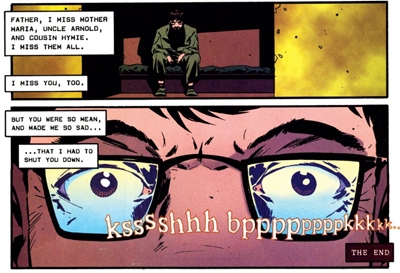
Ghosts in the machines?

Ghosts in the machines?

Not only does One Player Only feature a guest appearance from supporting characters like Mr. X or yhe Lone Gunmen, it also harks back to the structure and format of the first season of the show. On the most basic of levels, One Player Only feels like a more cyberpunk take on Ghost in the Machine, right down to the fact that Mulder is drawn into a murder at a tech company by an acquaintance from his days in the Violent Crimes Division. At one point, Mulder and Scully stumble on a ransacked house, for Mulder to deadpan, “Hm. Nothing new.”

However, if one peels back the layers, One Player Only is a fascinating piece that sets the tone for Petrucha and Adlard’s last three issues on the series, while infusing the comic with a host of fascinating cyberpunk stylings and body horror that seem to call forward to William Gibson’s future writing for the show.

Coding out...

Coding out…

Continue reading

Star Trek – The 25th Anniversary (Review)

This June, we’re taking a look at some classic Star Trek movie tie-ins. Check back daily for the latest reviews and retrospectives.

Star Trek VI: The Undiscovered Country was released quite close to the twenty-fifth anniversary of Star Trek. With Star Trek: The Next Generation at the height of its popularity, the franchise was able to mark the occasion with a variety of celebrations. There were comic books and prose books celebrating the occasion. Both Spock and Scotty appeared on The Next Generation around the time of the anniversary.

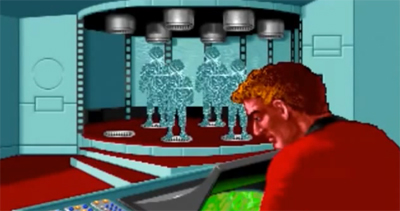
Perhaps the most obvious example was the release of Star Trek: The 25th Anniversary by Interplay. While it was not the first video game to be based on the Star Trek franchise, it was the first high profile release. It set the tone for commercial Star Trek video games, remaining one of the best-selling Star Trek video games ever produced. It paved the way for everything from Bridge Commander to A Final Unity to Elite Force.

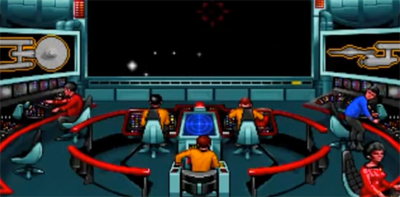
Ship shape...

Ship shape…

Released across multiple platforms and featuring seven episodic adventures structured like episodes of the classic television show, The 25th Anniversary set a dramatic and effective precedent for Star Trek video gaming. The CD-ROM edition of the game took things even further, featuring voice recordings of the show’s primary cast to help lend a sense of continuity and credibility to events. The 25th Anniversary is littered with easter eggs and in-jokes, and it’s constructed with the utmost love and affection.

However, perhaps what is most interesting about The 25th Anniversary is the way that it plays into all these established Star Trek clichés and tropes, but with a rather sophisticated outlook. It’s a wonderful example of how the original Star Trek show never stopped reinventing itself, only really reaching a truly idealised form long after it had been off the air.

Beam me up, Kyle!

Beam me up, Kyle!

Continue reading

Non-Review Review: The Edge of Tomorrow

As with Oblivion, the last “Tom Cruise in the future” blockbuster, The Edge of Tomorrow feels like a gigantic big-budget episode of The Outer Limits. It’s low on character and high in concept. The film moves fast enough to gloss over the assorted problems that come with a typical time travel narrative. The script is witty enough to keep the audience engaged, and Tom Cruise is solid enough leading man to hold it all together.

The Edge of Tomorrow is wonderfully enjoyable high-concept thrill ride, and one of the stronger offerings of the summer so far.

It's not the end of the world...

It’s not the end of the world…

Continue reading

Star Trek: The Next Generation – The Vengeance Factor (Review)

This January and February, we’ll be finishing up our look at the second season of Star Trek: The Next Generation and moving on to the third year of the show, both recently and lovingly remastered for high definition. Check back daily for the latest review.

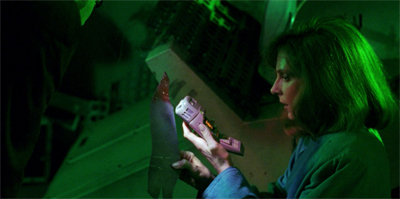
The Vengeance Factor is an ambitious little episode that never quite manages to follow through on its potential. Something of a Riker-centric romance to compliment the Troi-centric romance in The Price, the episode is an exploration of vengeance and generational strife – the cost of feuds that last decades, even centuries. It’s a story where Yuta’s thirst for revenge keeps her young, and one that opens with Crusher tracking the acts of piracy back to the Gatherers using a blood stain on a shard of metal. Subtle, it is not.

However, there’s something almost endearing about The Vengeance Factor, from its very eighties leather Mad Max reject space pirates through to the way that channels the optimism of Star Trek quite well. Although the ending is unbelievably forced, at least it is striking and effective. Far from perfect, and not among the high points of this third season, The Vengeance Factor still marks a sharp improvement from The Price.

There will be blood...

There will be blood…

Continue reading

Star Trek: The Next Generation – Shades of Grey (Review)

This January and February, we’ll be finishing up our look at the second season of Star Trek: The Next Generation and moving on to the third year of the show, both recently and lovingly remastered for high definition. Check back daily for the latest review.

Well. That’s over now. Star Trek: The Next Generation limps across the finish line of its second season with a compilation clip show designed to save money and keep the season’s episode count up. Shades of Grey is frequently cited as the worst episode not just of the second season of The Next Generation, but of the show as a whole. While it’s hard to entirely agree with this assessment – Shades of Grey is cynical and lazy, but it’s neither as sexist as Angel One or The Child nor as racist as Code of Honour or Up the Long Ladder – it is possible to see where that argument comes from.

Like the first season before it, there’s a sense that the second season of The Next Generation might have been better had it ended an episode earlier. Indeed, the second season could have ended with Q Who? and the only episode anybody would really miss would be The Emissary. Unfortunately, one imagines the syndication agreements and network policy made this impossible. While one suspects many of those involved would be happy if Shades of Grey simply faded from existence, it remains part of the show’s syndication package.

This is a little like what this episode feels like...

This is a little like what this episode feels like…

Continue reading

Doctor Who: A Christmas Carol (Review)

To celebrate the fiftieth anniversary of the longest-running science-fiction show in the world, I’ll be taking weekly looks at some of my own personal favourite stories and arcs, from the old and new series, with a view to encapsulating the sublime, the clever and the fiendishly odd of the BBC’s Doctor Who.

A Christmas Carol originally aired in 2010.

If you’re my babysitter, why are you climbing in the window?

Because if I was climbing out of the window, I’d be going in the wrong direction. Pay attention.

– Kazran and the Doctor get things straight

A Christmas Carol might just be the best Doctor Who Christmas Special ever produced, if only because it’s such a brilliantly obvious idea, executed with the show’s traditional wit and charm. Russell T. Davies tended to write the Christmas Special in the style of a gigantic blockbuster episode of Doctor Who, but Moffat adopts a slightly different approach to what has quickly become the annual tradition of the Doctor Who Christmas Special.

Davies traditionally had the Doctor collide with genres of Christmas television viewing. The Christmas Invasion was American blockbuster sci-fi, The Runaway Bride was fun odd-couple comedy action film, Voyage of the Damned was a disaster flick in space and The Next Doctor was a celebration of quaint Victoriana. In contrast, Moffat has Doctor Who collide with beloved children’s stories in his first two Christmas Specials. His second two are burdened with dealing with left-over plot threads.

A Christmas Carol is perhaps the most effective distillation of “Doctor Who as a story” that the show has ever managed, on top of being a wonderfully moving piece of Christmas television and hitting on the major themes of the Moffat era as a whole.

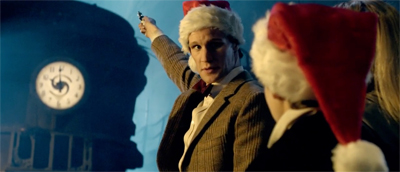
Turning back the clock...

Turning back the clock…

Continue reading

Doctor Who: The Next Doctor (Review)

To celebrate the fiftieth anniversary of the longest-running science-fiction show in the world, I’ll be taking weekly looks at some of my own personal favourite stories and arcs, from the old and new series, with a view to encapsulating the sublime, the clever and the fiendishly odd of the BBC’s Doctor Who.

The Next Doctor originally aired in 2008.

Oh, goodness me. Well. But this is… but this is nonsense.

Well, that’s one word for it.

Complete and utter, wonderful nonsense. How very, very silly.

– Jackson Lake and the Doctor

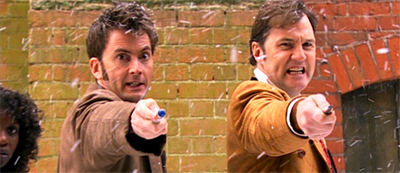
The Next Doctor actually has a pretty audacious concept. It’s one gigantic tease that plays off the audience’s media savvy. Airing after David Tennant’s departure from the role had been announced, but before Matt Smith had been named as Tennant’s successor, The Next Doctor is one gigantic tease. Like the surprise “regeneration” at the climax of The Stolen Earth, it’s a shrewd attempt to turn the audience’s expectations against themselves.

After all, the gap between an announced departure of an existing lead and the point where he actually leaves is rife for experimentation – particularly in a show about time travel. Up until The Next Doctor actually aired, it was quite possible that David Morrissey was Tennant’s successor, and The Next Doctor was a rather clever twist on the classic “multi-Doctor” story by having the Doctor team up with his future self.

Of course, as with The Doctor’s Daughter, Davies was just teasing. It’s to Davies’ credit that The Next Doctor remains interesting even after the illusion begins to slip. The first half is actually a wonderfully solid mystery and character study, albeit one that descends into confusion and chaos in the second half of the episode.

The Next Doctor...?

The Next Doctor…?

Continue reading