• Following Us

  • Categories

  • Check out the Archives


  • Awards & Nominations

House of Cards (US, 2013): Chapter 1 (Review)

House of Cards is a classic piece of BBC television, the story of a Chief Whip in the House of Parliament who is so slighted by the incoming Prime Minister’s refusal to promote him that he decides to bring the whole Conservative Party crashing down around him. If you’re at all interested in political drama, British wit or even great television, I can’t recommend it highly enough.

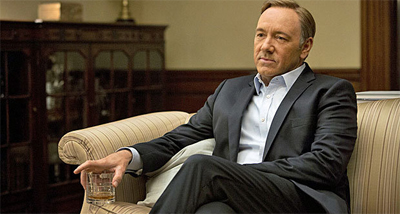
Still, I suppose that an American adaptation was inevitable. And, to be fair, you couldn’t have asked for greater talent. Kevin Spacey stars as Francis Underwood, the Majority Whip in the House of Representatives. David Fincher is producing and directing the two first episodes. It’s written by Beau Willimon, who wrote both The Ides of March and the stage play Farragut North, upon which it was based. That’s a very talented bunch of people.

And yet, one episode in, it feels a little uneven. It’s not so much the sense that the new House of Cards seems to have a bit of bother figuring out what made the original so great, nor is it the fact that changes have to be made in translating the story from London to Washington. It’s more a sense that show is really trying to figure out what it wants to be.

Let's be Frank...

Let’s be Frank…

Continue reading

Jameson Dublin International Film Festival 2013: Highlights!

The Jameson Dublin International Film Festival launched the programme for its eleventh year today. There’s some great stuff in here. There’s a variety of films, from European to American to Asian, from big budget blockbusters to intimate documentaries to more personal films. It’s a great selection of films, and festival director Grainne Humphreys should be proud. After all, if your biggest complaint is having to choose between L.A. Confidential and Bernie, then you must be doing something right.

I’ve picked out some of my own most anticipated events of the schedule below, in rough chronological order, so if you are looking for something to do on a particular day, feel free to see if there’s anything of interest. Unfortunately, some of the events overlap, so you can’t attend everything – something that’s a massive shame given some of the films on display here. With that in mind, the list is below.

JDIFF Brand 2011 (Landscape) copy

Continue reading

Non-Review Review: The Last Stand

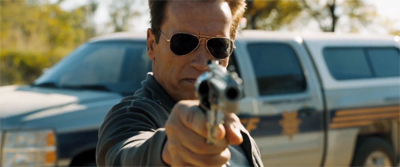
In theory, The Expendables demonstrated that age was no real impairment when it came to the task of kicking ass and taking names, even if you might need to put your reading glasses on first. So, you could argue that the issue of Arnold Schwarzenegger’s age doesn’t really need to come up during The Last Stand. We know that he is 65 years of age, and we also know that he’s probably a great deal fitter than most of us will be at that age. (Being honest, I wouldn’t be surprised to discover that a hexagenarian Arnie could trump most people in their prime.) As a result, the fixation of The Last Stand on the age of its leading man feels a little strange.

It feels especially strange because it eats into a lot of the film. The Last Stand is mostly functional, but its pacing suffers greatly. We’re going to see an Arnold Schwarzenegger vehicle, so it’s safe to assume that (a.) we’re okay with his advancing age, and (b.) we want to see him kick some whippersnapper ass. Unfortunately, The Last Stand seems to misjudge the audience’s interest in an Arnie film, and as a result our leading man spends most of the first three-quarters of the film doing very little.

The Last Stand is clearly intended to demonstrate the viability of its leading man in this modern age, but it seems to lack the confidence to just dive into the action that this sort of film is meant to provide. The result is a strange mish-mash of a film that winds up wasting a lot of good will long before it reaches its climax.

He's back!

He’s back!

Continue reading

Doctor Who: The War Games (Review)

To celebrate the fiftieth anniversary of the longest-running science-fiction show in the world, I’ll be taking weekly looks at some of my own personal favourite stories and arcs, from the old and new series, with a view to encapsulating the sublime, the clever and the fiendishly odd of the BBC’s Doctor Who.

The War Games originally aired in 1969.

Well, what was happening? Why was it so difficult to move?

It was the Time Lords.

But they’re your own people, aren’t they, Doctor?

Yes, that’s right.

Why did you run away from them in the first place?

What? Well, I was bored.

What do you mean, you were bored?

Well, the Time Lords are an immensely civilised race. We can control our own environment, we can live forever, barring accidents, and we have the secret of space time travel.

Well what’s so wrong in all that?

Well we hardly ever use our great powers. We consent simply to observe and to gather knowledge.

And that wasn’t enough for you?

No, of course not. With a whole galaxy to explore? Millions of planets, eons of time, countless civilisations to meet?

Well, why do they object to you doing all that?

Well, it is a fact, Jamie, that I do tend to get involved with things.

– Jamie, the Doctor and Zoe

The War Games represents the end of the era. It is the last appearance of Jamie as a regular companion. It is the last show featuring Patrick Troughton as the Doctor, although he would return for the occasional guest spot, celebration or charity episode. It was also the last of the series to be shot in black and white. The transition from Troughton to Pertwee would arguably be one of the most dramatic shifts in the history of the show. Not only would the show suddenly be broadcast in colour, and not only would it feature a new lead actor, but it would also have a new focus, grounded on Earth, and with that a new status quo and new rules. The show was only six years old at the time, but the change must have seemed radical to those watching.

The War Games isn’t the perfect episode – it’s too long and too plodding – but it is a lot more entertaining than some of the longer adventures, and it serves as a fond farewell to the “cosmic hobo” interpretation of the Doctor. Indeed, the episode probably seems a great deal harsher than it did in hindsight, with the specifics of regeneration not quite codified, the Doctor’s forced transformation seemed less like a formal execution than it does to modern audiences who watched the Tenth Doctor plead for more time.

The War Games is an effective and fond farewell to not only a particular iteration of the title character, but also a version of the show as a whole.

Run!

Run!

Continue reading

Who We Are In The Dark: Zero Dark Thirty & Torture…

That Zero Dark Thirty should come under fire for its use and portrayal of torture is not surprising. The film deserves to spark debate about how we respond to these sorts of threats, and critically examine our claim to the moral high ground. However, the debate seems overly simplistic. It has been suggested that the controversy over torture cost director Kathryn Bigelow a Best Director nomination, and that’s a shame. The fact she’s felt to the need to respond to these relatively shallow commentaries is less than heartening.

Zero Dark Thirty has a lot to say about torture. It’s a lot of thoughtful and insightful and nuanced stuff, and Zero Dark Thirty actually gets to the nub of the issue, very clearly condemning the culture of “enhanced interrogation”, in a way that is much more effective than any of the commentators seem to realise.

zerodarkthirty4

Continue reading

Non-Review Review: Lincoln

Steven Spielberg’s Lincoln might just be the most fascinating exploration of the overlap between legal, moral and democratic power ever produced. Abraham Lincoln’s name might brand the film, and Daniel Day-Lewis’ sensational performance might hold it together, but there’s a very clear sense in watching Lincoln that the film is more preoccupied with lofty philosophical questions about the role of a ruler in a democracy. The Civil War and the 13th Amendment provide a backdrop, but Lincoln seems more concerned with how those elected must wield the mandate given from the people. Must they always represent the views of the people who elected them, or is their job to lead?

Note: Not a Vampire Hunter...

Note: Not a Vampire Hunter…

Continue reading

12 Movie Moments of 2012: Shared Pop Culture History (Ted)

As well as counting down the top twelve films, I’m also going to count down my top twelve movie related “moments” of 2012. The term “moment” is elastic, so expect some crazy nonsense here. And, as usual, I accept that my taste is completely absurd, so I fully expect you to disagree. With that in mind, this is #2

When it comes to end of year “best of” lists, comedy seems to draw the short straw as a genre. Like some of the less earnest genres, comedy is far too easily overlooked in favour of something more “worthy” of attention. Seth MacFarlane’s Ted has been something of a contentious film this year. Depending on where you sit, the film is either the epitome of everything wrong with American comedy, or it was a refreshingly profane yet heartfelt breath of fresh air. I lean more towards the latter than the former, and I appreciated the way that it played to MacFarlane’s strengths – concealing a surprisingly sincere sentiment behind a cynical and glib exterior.

As such, it’s no surprise that the most effective sequence in the film – the opening credits – managed to play to both that side of MacFarlane and also to his wonderful ability to channel pop culture as something of a shared collective history. Call me sappy, but there was something wonderful about seeing Ted interact with Johnny Carson and watching Ted and John queue for The Phantom Menace in costume, that created a tangible sense of back story between the characters.

ted10

Continue reading

My 12 for ’12: Shame & Silence

I’m counting down my top twelve films of the year between now and January, starting at #12 and heading to #1. I expect the list to be a little bit predictable, a little bit surprising, a little bit of everything. All films released in the UK and Ireland in 2012 qualify. Sound off below, and let me know if I’m on the money, or if I’m completely off the radar. And let me know your own picks or recommendations.

This is #2

Addiction stories are very tough to do right. It’s far too easy to get caught up in the melodrama of the cycle – the excess, the withdrawal, the relapse, the epiphany. It’s tempting to wallow in each of those stages, to structure them as acts in a drama. It’s hard to resist the urge to heighten absolutely everything, to dwell on the heat of obsession and desperation that surrounds any addiction.

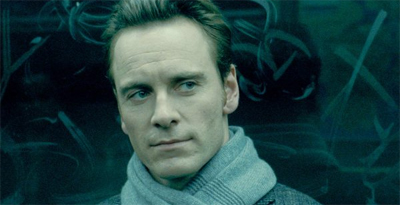
Director Steve McQueen and actor Michael Fassbender do a sensational job with Shame, avoiding these potential problems, offering a portrayal of addiction and personal collapse that is strangely understated and introverted rather than overwhelming or excessive. Indeed, the fact that the movie is about sex addiction might lead some potential viewers to worry. If ever an addiction lent itself to trashy and tasteless excess, one might imagine that sex would be that personal demon.

Instead, McQueen shows admirable restraint in tackling the topic. While he never blushes in presenting the depths of his lead’s degradation, he never sensationalises it. Instead, much like Brandon’s addiction, Shame is cold and clinical – and all the more powerful for it.

shame2

Continue reading

My 12 for ’12: The Cabin in the Woods & The Virtues of Constructive Criticism

I’m counting down my top twelve films of the year between now and January, starting at #12 and heading to #1. I expect the list to be a little bit predictable, a little bit surprising, a little bit of everything. All films released in the UK and Ireland in 2012 qualify. Sound off below, and let me know if I’m on the money, or if I’m completely off the radar. And let me know your own picks or recommendations.

This is #4

The horror movie has always been a bit of an ugly stepchild when it comes to film genres. It seems, for instance, that horror movies (and directors) have to wait longer to receive recognition for the work that they’ve done. The Shining, for example, earned several Razzy nominations in the year of release, but is now regarded as one of many classics within Kubrick’s oeuvre. There are lots of reasons that the horror genre is easy enough to dismiss or ignore.

You could argue that there’s something so basic about fear that it isn’t considered as much of an artistic accomplishment to scare the audience. There are legitimate arguments to be made about the sexist connotations of various horror films. Perhaps more than any other genre, successes within the horror genre have a tendency to lead to self-cannibalisation – sequels, remakes, knock-offs – that dilute and erode any credibility that the original film had earned. The innovation of Paranormal Activity is harder to recognise after half-a-decade of found-footage imitations. The cleverness of the original Saw becomes harder to distinguish amongst a crowd of “torture porn” wannabes.

All of these are very legitimate criticisms to make about the nature of the genre as a whole, and perhaps they speak to why films within that niche are so easily dismissed. I will aggressively argue that several horror films are among the most important films ever made, but I will also concede that there is (as with everything) a lot of trash out there, and a lot of things we need to talk about. Cabin in the Woods feels like a genuine attempt to have that sort of conversation, and to raise those questions. More than that, though, it comes from a place of obvious affection for the genre and all that it represents. This isn’t a stern lecture about the inherent inferiority of a particular type of film,  but constructive criticism from a bunch of people who care deeply about the genre as a whole.

cabininthewoods8

Continue reading

The Spirit Archives, Vol. 26 (Review/Retrospective)

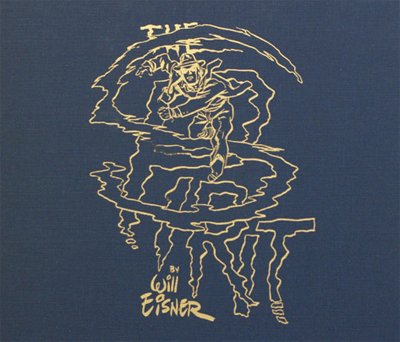
It’s strange reading The Spirit Archives, Vol. 26. Not just because it’s a collection of absolutely everything (from stories to pin-ups to posters to sketches) rather than a set of comic strips. Also because of the scope of this final hardcover collection in DC’s Spirit Archives programme. While, with the exception of the last volume, each book collected six months of the weekly strip, this final book collects pretty-much everything Will Eisner did with the character from the time that the weekly strip ended through to his death in 2005.  I’m a bit surprised that there’s only one book of this material, although it does allow the reader to flick through the decades following the end of the strip as if examining a family photo albums – watching the subtle changes as time marches on.

Despite the fact that he was cancelled, The Spirit never seemed to quite go away. There was a lot of work featuring the character by other writers and artists, but most of that isn’t collected here. Instead, this admittedly disjointed collection reads best as a sort of a documentary charting the on-going relationship between Will Eisner and arguably his most popular creation.

Still making waves…

Continue reading