• Following Us

  • Categories

  • Check out the Archives


  • Awards & Nominations

Star Trek – All Our Yesterdays (Review)

This July and August, we’re celebrating the release of Star Trek Beyond by taking a look back at the third season of the original Star Trek. Check back every Monday, Wednesday and Friday for the latest update.

It is almost as though the Star Trek franchise doesn’t want to end.

For a fifty-year-old franchise, Star Trek has a hilarious near-miss ratio when it comes to offering satisfying conclusions. There are exceptions, of course. The franchise seems quite good at closing smaller chapters while the rest of the property rattles on. Star Trek VI: The Undiscovered Country was the best place to leave the cast of the original show. The final season of Star Trek: Deep Space Nine might have been rocky, but What You Leave Behind bid an emotional farewell to the cast and crew. Beyond that? The franchise struggles.

A cold reception.

A cold reception.

It often seems like the ideal closing instalment is buried one or two stories shy of the actual ending. All Good Things… would have been a great place to leave the cast of Star Trek: The Next Generation, particularly since Star Trek: Nemesis wound up being such a damp squib of a conclusion. Demons and Terra Prime provided a satisfying conclusion to the final two years of Star Trek: Enterprise, only for These Are the Voyages… to air as the final episode of the franchise for well over a decade.

This is something that the franchise inherited from the original show. Star Trek was remarkably terrible at choosing a high (or even an appropriate) note on which to end. Although some of this can be down to the fact that sixties television seasons did not build to a finale in the way that modern television does, the three seasons of Star Trek all end in disappointing fashions. The City on the Edge of Forever would have been a great close to a first season that built incredible momentum across its run. Instead, the year ended on Operation — Annihilate!
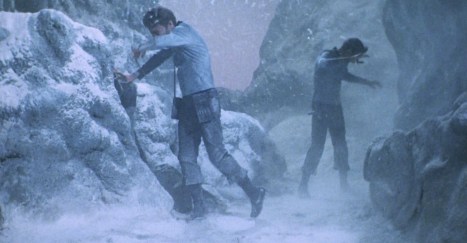
Snow escape.

Snow escape.

This was a bigger issue during the second season, when it was entirely possible that Star Trek would be cancelled. Ending on a strong note was imperative. Instead, Gene Roddenberry chose to give over the last broadcast and production slot of the season to Assignment: Earth, a thinly-disguised (and ultimately underwhelming) pilot for a series that never got off the ground. Even in terms of production, the penultimate episode of the season was Roddenberry’s vile passion project, The Omega Glory. (The Ultimate Computer would have made a much better ending.)

So it is with the third season. The last episode of the third season is an infamous disaster, Turnabout Intruder ranking as one of the very worst episodes of Star Trek ever produced. Even the misguided and mean-spirited cynicism of These Are the Voyages… has nothing on the rank sexism of Turnabout Intruder. It was an ignominious episode upon which to draw down the curtain, to wrap up three years and seventy-nine episodes of storytelling. It is hard to tell whether the episode is more or less awful than The Omega Glory or Assignment: Earth, but it is in contention.

Dying free(ze)...

Dying free(ze)…

This is all the more frustrating because a perfectly good alternative rests right along side it. All Our Yesterdays is a flawed and imperfect episode in some key ways, like many of the third season episodes around it. It is a story that flows on dream logic rather than rational plotting, relying on a bizarre fairy tale version of time travel and falling back on some of Fred Freiberger’s best-loved tropes. It is also a tough sell as a “final” episode, given that the series had not been cancelled by the point that the episode entered production, and it does not offer too much in the way of closure.

And yet. All Our Yesterdays feels like the culmination of the morose themes that have been building through the third season, all the dead worlds and the ghost stories and the doomed romances. It is a story about escaping to the past when there seems to be no future. It is populated by barren wastelands and death sentences, about the literal end of the world and survival beyond that point. It is a quiet and withdrawn affair, morbid and reflective more than heightened or action driven. It is a story about death, which feels entirely appropriate at this interval.

How BiZara...

How BiZara…

Continue reading

Star Trek: Deep Space Nine – Little Green Men (Review)

This February and March, we’re taking a look at the 1995 to 1996 season of Star Trek, including Star Trek: Deep Space Nine and Star Trek: Voyager. Check back daily Tuesday through Friday for the latest review.

Little Green Men might just be the best Ferengi episode from the seven-year run of Star Trek: Deep Space Nine.

It helps that the episode is very clearly a passion project for writers Ira Steven Behr and Robert Hewitt Wolfe. More than any other Star Trek show, Deep Space Nine had a deep and abiding affection for classic cinema. Michael Piller might have tried to steer the first two seasons of Star Trek: Voyager back to classic western storytelling tropes, while Rick Berman and Brannon Braga might have promised that Star Trek: Enterprise would be a “back to basics” reimagining of the show, but Deep Space Nine was a show that adored old-school Hollywood.

Quark's Family Vacation...

Quark’s Family Vacation…

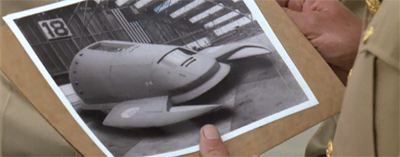
This was reflected in a number of ways. In Past Tense, Part II, B.C. planned to escape to Tasmania because Errol Flynn was born there. There was also the fact that Ira Steven Behr could never resist the lure of a good homage to classic cinema – even when it was not the best of ideas. Meridian was written as an attempt to adapt Brigadoon to the Star Trek universe; Fascination was based on the 1935 adaptation of A Midsummer Night’s DreamRules of Acquisition was basically YentlProfit and Loss was Casablanca.

It seemed almost inevitable that at some stage the cast and crew of Deep Space Nine would find themselves colliding with classic Hollywood.

"Well, it's not a saucer..."

“Well, it’s not a saucer…”

Continue reading

Star Trek: Deep Space Nine – The Visitor (Review)

This February and March, we’re taking a look at the 1995 to 1996 season of Star Trek, including Star Trek: Deep Space Nine and Star Trek: Voyager. Check back daily Tuesday through Friday for the latest review.

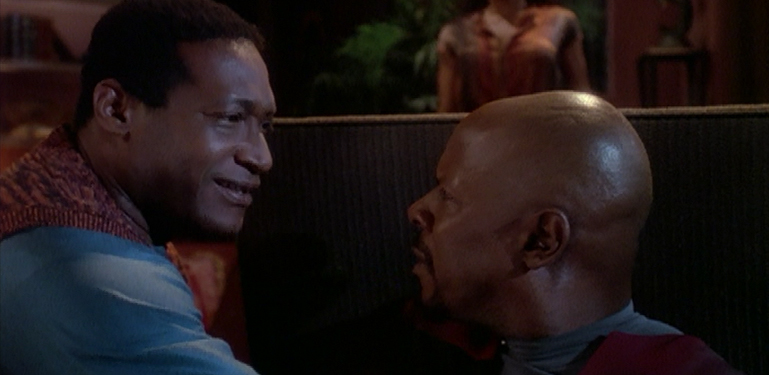
To my father, who is coming home.

Daddy's home...

Daddy’s home…

Continue reading

The X-Files – Redrum (Review)

This October/November, we’re taking a trip back in time to review the eighth season of The X-Files and the first (and only) season of The Lone Gunmen.

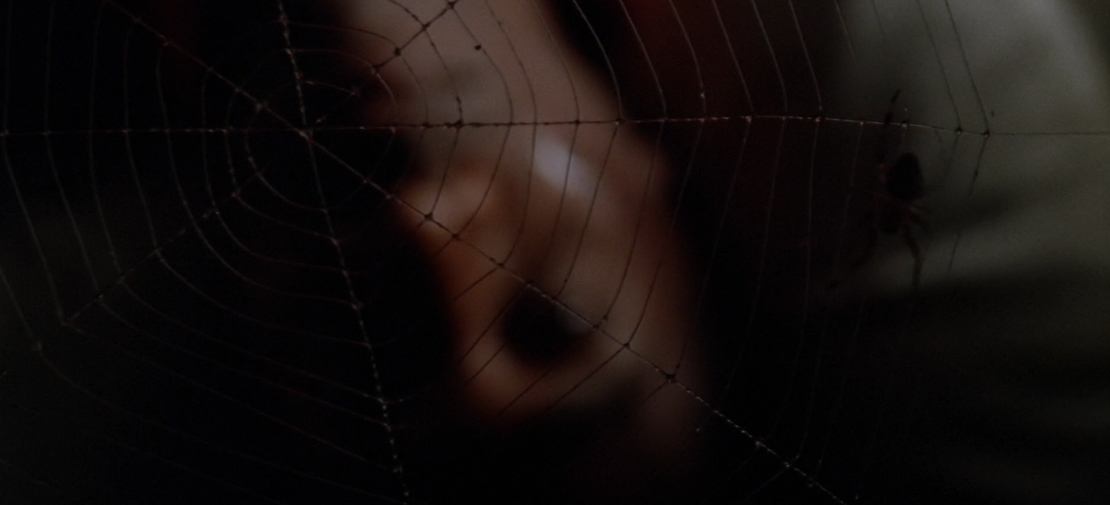
Redrum is perhaps notable as the highest concept episode of the eighth season of The X-Files, a character drama that unfolds backwards.

As a rule, the eight season is more conservative than the seasons around it. In terms of narrative, it may be the most conservative season of The X-Files since the show’s first year. Redrum is perhaps the season’s biggest formal experiment. While very few high-profile prime-time television shows would attempt to tell a story backwards, Redrum feels a lot less bold than something like HumbugJose Chung’s “From Outer Space”Musings of a Cigarette-Smoking Man, The Post-Modern Prometheus, Bad Blood, Triangle, X-Cops or even Improbable.

A tangled web...

A tangled web…

On paper, this should be a highlight of the season. Redrum features a guest performance from Joe Morton, receiving a coveted “special guest star” credit for his work. (Notably, Kim Greist did not earn a similar credit on Invocation.) The high-concept premise of the episode seems like it would make a great pitch for Sweeps, like X-Cops did only a year earlier. In fact, Redrum was produced as the first stand-alone episode of the season, priming it for the slot occupied by Drive and Hungry in earlier seasons.

There is a sense that the production team are wary of Redrum. The episode was pushed back from its production slot relatively deep into the season. It was with second-last episode of the eighth season to air before the Christmas break. The show attracted a relatively small amount of publicity, particularly as compared to the “where’s Mulder?” hype of that greeted the début of the season. There is a sense that Redrum would have garnered more attention only a year or two earlier.

"The teacup that I shattered did come together."

“The teacup that I shattered did come together.”

It is easy to see why the production team were so wary of Redrum. The eighth season is a point of transition for The X-Files. The show is still reeling from the loss of David Duchovny; there is a sense that the show never moves past that. The agenda for the eighth season is to convince viewers that The X-Files is still a viable television show, even without the lead actor who helped to make it famous. While the show is smart enough not to downplay the change, the production team are keen to demonstrate the show can still do what it always did.

As such, the eighth season finds the show adopting a “back to basics” approach, harking back to many of the tropes that made The X-Files such a breakout hit in the first place. There is a lot more horror and mood in the eighth season, a lot more of the traditional scares. That means that Redrum ends up feeling very much like the odd episode out.

It's all gone a bit Martha Wayne...

It’s all gone a bit Martha Wayne…

Continue reading

Doctor Who: Before the Flood (Review)

“Prentis! He’s alive.”

“No, he’s just not dead yet.”

– Bennett and the Doctor understand how this whole base under siege thing works

There is an argument to be made that Before the Flood is just too damn clever for its own good.

Under the Lake was a very conventional and familiar “base under siege” story, the kind of tense confined thriller that Doctor Who did so well. However, Before the Flood does more than simply extend that premise by another forty-five minutes. Instead, it gets decidedly playful. This is a nice twist on the structure of the season, a season built around multiple interlocking two-part episodes. Taking advantage of the break between Under the Lake and Before the Flood, writer Toby Whithouse shifts the episode’s genre along with its setting.

A Fisher (King) in the face of reality itself...

A Fisher (King) in the face of reality itself…

The teaser sets the tone, with the Doctor addressing the audience directly. In fact, one suspects that google searches on the phrase “bootstrap paradox” jumped dramatically at around 8:27pm BST, 10th October 2015. Although the episode’s closing sequence suggests that the Doctor might plausibly be addressing Clara, the framing makes it quite clear that he is talking through the television to the viewers at home. As if to emphasise this little detail, the Doctor’s wailing electric guitar plays into the opening credits; in case the show needed to be more self-aware.

However, Before the Flood is never entirely sure how much of this self-awareness is genuine cleverness and just how much of it is necessary structuring.

Flood of ideas...

Flood of ideas…

Continue reading

Star Trek: Enterprise – E² (Review)

Next year, Star Trek is fifty years old. We have some special stuff planned for that, but – in the meantime – we’re reviewing all of Star Trek: Enterprise this year as something of a prequel to that anniversary. This August, we’re doing the third season. Check back daily for the latest review.

Conventional wisdom treats as a bump in the road between The Forgotten and The Council, an episode that could easily be skipped on a marathon rewatch of the season. The argument suggests that the episode ultimately provides little meaningful information and advances the season’s over-arching plot by inches. The most critical of fans will consider an episode that saps the momentum out of the final run of the third season, preventing a clear home run between Azati Prime and Zero Hour.

This is certainly true from a plot-driven perspective. It would be easy enough to trim from the twenty-four episode season order without anybody batting an eyelid. At least Shran gets to make a cameo appearance in Zero Hour, while Lorian fades into discontinuity and non-existence. Like so many time travel stories, the final act of conveniently erases itself from existence. This just reinforces the sense that nothing that happened actually mattered in the grand scheme of things.

It's like looking in a mirror...

It’s like looking in a mirror…

This is another example of the complications that tend to come with serialised storytelling. The conventional way of telling a long-form story is to drive it via plot – to have a clear path along which the characters might advance with a number of clear markers along the way. In the case of the third season of Star Trek: Enterprise, the launch of the Xindi weapon is an obvious marker; it is a plot point which the show must address before the end of the season. As such, the show’s serialisation is typically measured by whether it moves the crew in relation to that plot point.

doesn’t move the crew appreciably closer to that plot point. There is a miniature hurdle for the crew to overcome (getting into the subspace corridor to make the meeting with Degra), but it is very clearly just window-dressing on a plot that is very clearly more interested in the time-travel dynamics of having the Enterprise crew meet their descendants. The same narrative ground could have been covered by having Degra accompany Archer to the Xindi Council at the end of The Forgotten.

He's all ears...

He’s all ears…

However, plot is not the only thing important to long-form storytelling. Theme and character are just as important, as The Forgotten demonstrated. The biggest problem with is that it is a plot-driven episode of television that advances the season’s thematic and character arcs, but with a story that is disconnected from the season as a whole. Which is a shame, because the thematic and character dynamics are fascinating. This is the perfect point at which to confront Archer with the idea of legacy and consequence; to ask what kind of future might lie ahead.

As with a lot of the scripts for the third season, feels like a meditation on Enterprise‘s relationship with the rest of the franchise and where it stands at this point in its run.

"Worf and Dax neve rhad to put up with crap like this."

“Worf and Dax neve rhad to put up with crap like this.”

Continue reading

Star Trek: Enterprise – Carpenter Street (Review)

Next year, Star Trek is fifty years old. We have some special stuff planned for that, but – in the meantime – we’re reviewing all of Star Trek: Enterprise this year as something of a prequel to that anniversary. This August, we’re doing the third season. Check back daily for the latest review.

This is the point at which it becomes all but impossible to argue that the production team knew what they were doing this season.

The third season of Star Trek: Enterprise holds together reasonably well, if the viewer pulls back to a big enough distance. The broad arcs are discernible and logical – there is a clear start point and a reasonable trajectory, even if the first half of the season tends to get a bit lost. It really pulls itself together during the second half of the season, with one or two exceptions, building towards a finalé that satisfies both the demands of a year-long arc and the franchise surrounding it. It is not perfect, but it is not bad for a first attempt.

Hey kids! It's Leland Orser!

Hey kids! It’s Leland Orser!

Of course, it is also quite clear that the production team really had no idea what they were doing – or even what they were trying to do. The fact that it comes together in the second half of the season all but concedes that it doesn’t hold together in the first half. The first half of the third season is populated with standalone episodes that tend to either fit thematically (North Star, Similitude) or tonally (Impulse, Exile) with the general direction of the show, but a rather limited sense of progress or advancement.

Carpenter Street is the point at which any real sense of trust between the audience and the production team snaps like a twig. It is a story that features the characters time travelling to modern-day Earth in the middle of a gigantic story arc about how they are more isolated than they ever have been before. It throws away any sense of internal logic or consistency, never really exploring how an alien species that can travel back to Detroit in 2004 should have a problem with Earth in 2153. And, crucially, it is not fun enough to excuse those issues.

Hey kid! It's Jeffrey Dean Morgan! (Really!)

Hey kid! It’s Jeffrey Dean Morgan!
(Really!)

Continue reading

Star Trek: Enterprise – Twilight (Review)

Next year, Star Trek is fifty years old. We have some special stuff planned for that, but – in the meantime – we’re reviewing all of Star Trek: Enterprise this year as something of a prequel to that anniversary. This August, we’re doing the third season. Check back daily for the latest review.

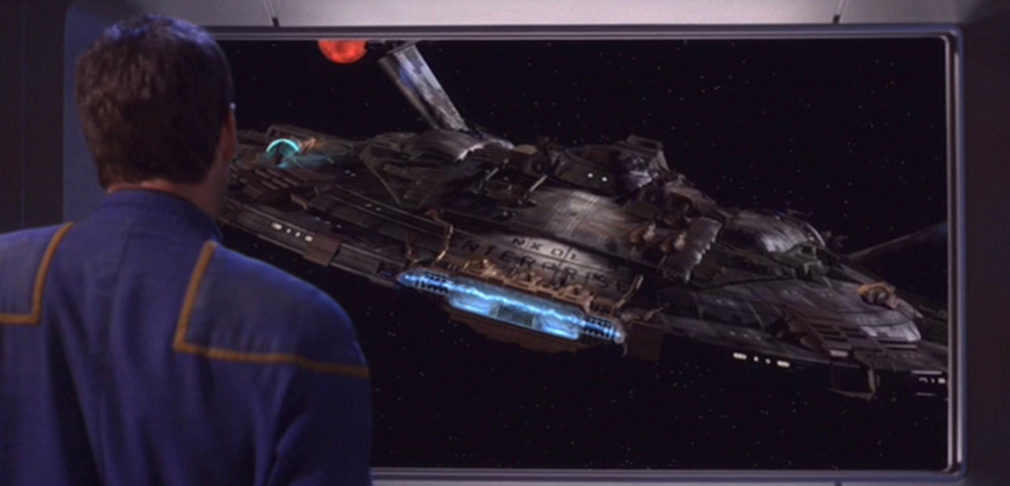
Twilight is a fascinating piece of Star Trek.

There are some significant flaws with the episode, particularly in how it treats T’Pol as a character and the eagerness with which it grabs at the famed “reset button.” However, despite these problems, Twilight is pretty much perfectly positioned. Eight episodes into the third season, the new status quo has been established. The ground rules have been laid down. Over the past seven episodes, fans have been given a sense of how the third season of Star Trek: Enterprise is supposed to work.

Keep your shirt on, Archer...

Keep your shirt on, Archer…

However, there is a palpable sense of unease about the larger arc – a question of how Star Trek can tell a story like the Xindi arc while remaining true to itself. The Shipment was an awkward attempt to impose a traditional Star Trek moral structure upon the season. North Star and Similitude are very much traditional Star Trek morality tales set against the backdrop of the larger arc. Like many of the stronger shows towards the tail end of the second season, these episodes seem to ask how you can apply old Star Trek standards to the twenty-first century.

Twilight is an episode about what happens if the Xindi arc goes wrong. Obviously, this is a story about what happens if Archer cannot save Earth from the Xindi, documenting the slow death of mankind as they are hunted through the cosmos. However, on an external level, Twilight is a story about what happens if Star Trek bungles this big grasp at relevance. It is no coincidence that the debilitating impairment that Archer develops involves his long-term memory. If the franchise forgets itself, all is lost.

Everything dies...

Everything dies…

Twilight is not just the story about the death of Earth or the death of humanity. It is a story about the death of Star Trek. Two years earlier, the franchise had seemed almost invincible; the idea of there not being any Star Trek on the air after the end of Star Trek: Voyager seemed almost absurd. However, by the time that the show had reached the third season, its existence was very much in peril. Twilight is a story about how horrible and apocalyptic the future might be; how Star Trek might find itself hobbled and then destroyed.

As its name implies, Twilight is a lament for the franchise; perhaps a tacit acknowledgement that the show was nothing more than a dead man walking at this point. The result is a surprisingly moving piece of television, a thoughtful and considerate examination of just how much is on the line for the franchise as well as the characters.

Waking dream...

Waking dream…

Continue reading

Non-Review Review: Terminator Genisys

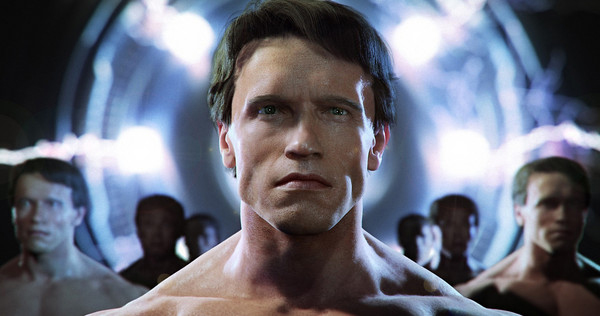
“I am inevitable,” the villain boasts towards the climax of Terminator Genisys, just as things look their darkest for our heroes. He is a fully 3D digital image sourced from wall-mounted projectors, reflecting the way that the film itself has been marketed.

He might as well be talking on behalf of the film itself. The Terminator franchise has evolved into an unlikely juggernaut, spanning over three decades and evolving from a low-budget science-fiction film into a blockbuster series. Critical (and popular) reception to Terminator III: Rise of the Machines and Terminator: Salvation has been somewhat muted, but the film franchise just keeps coming. In a way, it feels like Skynet making itself manifest. Or, more appropriately, the eponymous robot killing machine.

Fresh off the factory line...

Fresh off the factory line…

There are points where Terminator Genisys seems incredibly self-aware, posing the sort of existential and philosophical questions that are confronting the audience. In The Terminator and Terminator II: Judgement Day, James Cameron positioned time travel as a metaphor for the strings of fate and destiny that seemed to bind free will. In Terminator Genisys, time travel becomes a powerful metaphor for the process of film- (or franchise-) making itself.

Both a sequel and a prequel, a reboot and a remake, the time travel plot element of Terminator Genisys turns the franchise into a gigantic mix tape. Screenwriters Laeta Kalogridis and Patrick Lussier collaborate to turn Terminator Genisys into a live-action version of a Jive Bunny and the Mix Masters track, a sample filled with familiar beats played at the wrong tempo. There are moments when the wrongness seems the point, when Terminator Genisys wanders into the uncanny valley. There are points where it almost achieves consciousness.

Prick me, do I not leak?

Prick me, do I not leak?

Continue reading

Star Trek: Enterprise – Regeneration (Review)

Next year, Star Trek is fifty years old. We have some special stuff planned for that, but – in the meantime – we’re reviewing all of Star Trek: Enterprise this year as something of a prequel to that anniversary. This April, we’re doing the second season. Check back daily for the latest review.

It seems like a bit of an understatement to describe Regeneration as highly controversial.

The blu ray release of the second season of Star Trek: Enterprise includes two commentaries for the episode, a sure sign that there is a lot to talk about. On a track recorded in 2005, writers Mike Sussman and Phyllis Strong describe the episode as “infamous.” On a track recorded in 2013, John Billingsley describes how certain segments of fandom considered it a “jumping the shark” moment for the show. That last statement illustrates one of the perverse qualities of Star Trek fandom; one would assume that the viewers turned off by Regeneration would have already tuned out with Acquisition.

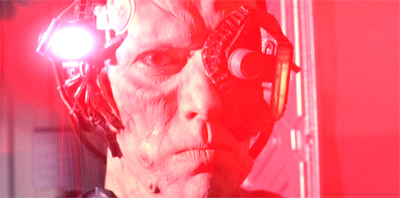
We are Borg.

We are Borg.

After all, the decision to bring back the Ferengi in Acquisition is hard to explain. Nobody was clamouring for more Ferengi episodes after Star Trek: Deep Space Nine had gone off the air. Outside of Deep Space Nine, the most enduring impression of the Ferengi was that they had begun their life as “villains that didn’t quite work” and bad quickly been transformed into “comic relief that didn’t quite work.” As such, it is hard to account for the decision to bend continuity in order to introduce the Ferengi into the first season of a prequel show designed to escape the baggage of the larger Star Trek franchise.

On the other hand, it made a great deal of sense to bring back the Borg. After all, the Borg were one of the few Star Trek aliens created after 1969 to make a genuine impression on popular culture. The Borg will never be as iconic as Klingons or Vulcans, but they will always be more iconic than Cardassians or Bajorans. They were also stars of the best-loved Star Trek movie starring the cast of Star Trek: The Next Generation. The Borg are a big deal; there is a reason that Star Trek: Voyager ran them into the ground.

"Assimilate this!"

“Assimilate this!”

It is no wonder that the Borg are frequently cited in discussions around the future of JJ Abrams’ Star Trek reboot. Asked if the creative team would consider bringing the Borg to the rebooted twenty-third century, Roberto Orci answered, “I think we would think about it.” Damon Lindelof was even blunter in his assessment, “You can’t talk about Trek and not talk about the Borg.” While they have undoubtedly been over-exposed and over-used since they first appeared in Q Who?, the Borg are the most distinctive and most successful addition to the Star Trek mythos outside the classic show.

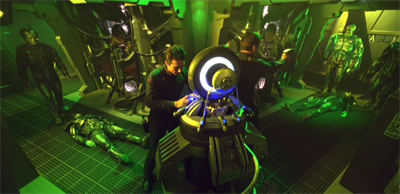
While common sense and experience seemed to weigh against bringing back the Ferengi in Acquisition, it seems that continuity is the only thing holding the Borg back from making an appearance on Enterprise. That said, Sussman and Strong find a clever way around that issue, by remembering the suggestion in Broken Bow that Enterprise is as much a sequel to Star Trek: First Contact as a prequel to the rest of the Star Trek universe.

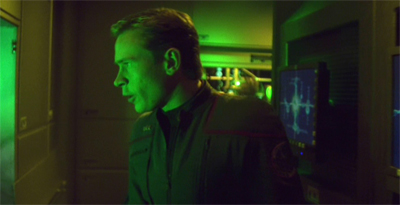
"Oh no, Cap'n, they've discovered the mood lightin' settin'."

“Oh no, Cap’n, they’ve discovered the mood lightin’ settin’.”

Continue reading