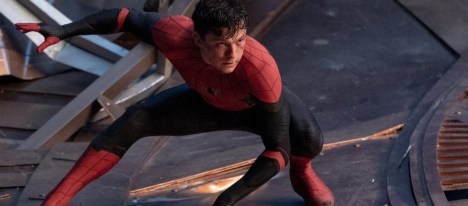
I published a new In the Frame piece at The Escapist this evening. This weekend marks the release of Spider-Man: No Way Home, so it seemed like a good idea to take a look at the movie’s big themes and ideas.
On the surface, No Way Home feels a lot like recent nostalgia plays like Star Wars: Episode IX – The Rise of Skywalker and Ghostbusters: Afterlife, in that it’s very much an appeal to the memory of a pop culture object. However, No Way Home has certain advantages over these movies, in that it’s a film that seems to be trying to be about more than just recycled imagery. However, it never seems like No Way Home is entirely sure what exactly it is about and what exactly it is trying to say about that.
You can read the piece here, or click the picture below.
I published a new column at The Escapist today. This week, to mark the twentieth anniversary of the release of The Lord of the Rings: The Fellowship of the Rings, we’re taking a look back at the trilogy as a whole. We’ll be publishing three articles looking at the films, one each day. This is the third and final of the pieces.
The Lord of the Rings: The Return of the King is typically criticised for having too many endings. However, that is oddly appropriate. The entire trilogy is an extended ending. It’s a story about the end of a magical age, about how nothing lasts forever and how everything eventually fades into history. Frodo and his allies are fighting to save Middle-Earth from Sauron, but the films make it very clear that the world’s days are numbered.
You can read the piece here, or click the picture below.
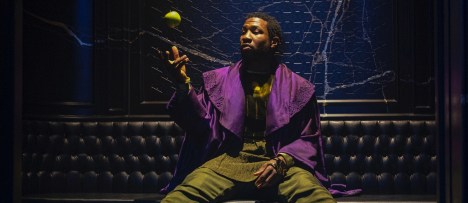
I published a new column at The Escapist yesterday. The penultimate episode of Hawkeye featured a major reveal of a significant villain for the show. This is very typical of how the Disney+ streaming shows have operated, so it seemed like a good opportunity to talk about Marvel’s streaming villain problem.
Marvel Studios have long been criticised for their fairly generic villains. However, in the transition from blockbuster releases to streaming series, the company has created a new sort of problem. Instead of generic and forgettable antagonists, these shows tend to feature puzzle boxes and references, clues and riddles. The identity of villains are often hidden and concealed, treated as late-in-the-story revelations that reward long-term fans at the expense of pacing and characterisation.
You can read the piece here, or click the picture below.
I published a new column at The Escapist yesterday. This week, to mark the twentieth anniversary of the release of The Lord of the Rings: The Fellowship of the Rings, we’re taking a look back at the trilogy as a whole. We’ll be publishing three articles looking at the films, one each day. This is the first.
Most films are minor miracles. It is remarkable that films get made at all, let alone that many of them turn out to be good. This is particularly true of the Lord of the Rings trilogy, which seemed like an impossible assignment. At the time, Peter Jackson seemed like the most unlikely of directors to successfully adapt J.R.R. Tolkien’s unfilmable epic. However, in hindsight, it seems impossible to imagine that anybody except Jackson could have brought the film to life.
You can read the piece here, or click the picture below.
The Escapist have launched a new pop culture podcast, and I was thrilled to join Jack Packard and Marty Sliva for the first episode. With the upcoming release of Spider-Man: No Way Home, it seemed like the perfect opportunity to take a look back at the cinematic adventures of the webslinger, and discuss how they rank.
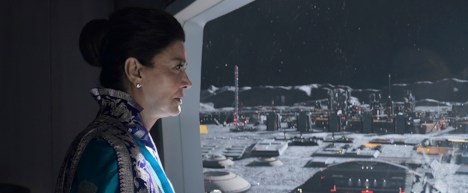
I published a new In the Frame piece at The Escapist this evening. With the final season of The Expanse beginning this week, it seemed like an opportunity to take a look at the final six episodes of the season.
For most of its run, The Expanse has been impressive in terms of scale and scope, often splitting its cast across multiple story threads and vast geographical distances. This makes the sixth season feel a little jarring, as the production team attempt to condense the longest book into the shortest season. As a result, The Expanse feels strangely insular and claustrophobic in its final stretch, almost like a cliff notes version of the show that it once was.
You can read the piece here, or click the picture below.
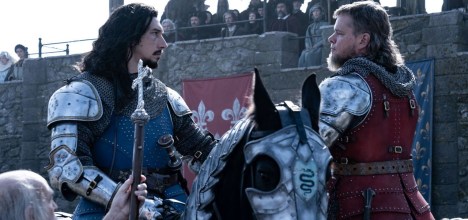
I published a new column at The Escapist at the weekend. With the release of Dune and The Last Duel on home media, it seemed like a good opportunity to take a look at the overlap between the two films, along with The Green Knight.
All three stories are recognisable as traditional epics, medieval or pseudo-medieval adventures featuring men who perceive themselves to be the heroes of their own narratives. However, all three films cleverly interrogate that idea of story and narrative, asking what it means to be the hero of one’s own story and who gets to control the narrative. It’s a fascinating and interesting trend, and it’s notable that all three films premiered within a few months of each other.
You can read the piece here, or click the picture below.
I published a new In the Frame piece at The Escapist this evening. With the release of Wheel of Time this week, there’s been a lot of publicity describing the show as potentially “the next Game of Thrones.”
It’s interesting to ponder what people actually mean when they talk about “the next Game of Thrones.” After all, Game of Thrones existed in a category unto itself. If anything, it answered the question of what “the next Lost” or “the next Sopranos” might look like, with those perhaps answering the question of “what the next E.R.” or “the next Twin Peaks” might look like, and so on. Game of Thrones was a smashing success that nobody saw coming, and which looked utterly unlike anything on television. That means that “the next Game of Thrones” probably won’t look anything like Game of Thrones.
You can read the piece here, or click the picture below.
So, it’s been a fun road for the video companion series to In the Frame at The Escapist, but all good things must come to an end. It looks like this will be the last episode of the series, at least for a little while. It’s been a pleasure.
That said, it’s a hell of a topic to go out on, as we discuss the strange reverential cult that has developed around Ghostbusters, with the wry and ironic eighties comedy increasingly treated as something of a holy text for a certain generation of fans. It’s a very strange illustration of how nostalgia warps and distorts the very things that it claims to remember.
I published a new review at The Escapist today. Wheel of Time is premiering on Amazon on Friday, and I was lucky enough to see the first six episodes.
Publicity around Wheel of Time has mostly focused on comparisons to Game of Thrones. This is reductive, and not just because Robert Jordan’s fantasy epic predates that of G.R.R. Martin. In reality, Wheel of Time often feels like a warm-up for Amazon’s upcoming adaptation of Lord of the Rings. As one might expect, given the source material, Wheel of Time offers a detailed and compelling fantasy world, but the series gets a little bit too preoccupied with setting all of its balls in motion rather than engaging with the story that it is telling.
You can read the piece here, or click the picture below.




















 the m0vie blog