• Following Us

  • Categories

  • Check out the Archives


  • Awards & Nominations

The X-Files – Season 3 (Review)

This November (and a little of December), we’re taking a trip back in time to review the third season of The X-Files and the first (and only) season of Space: Above and Beyond.

The second season of The X-Files was quite experimental in nature. Not all of that experimentation was intentional or planned, but the second season worked quite hard to demonstrate what the show could do. Gillian Anderson’s pregnancy forced the show to plot a relatively long-form arc, with Scully getting abducted and the X-files remaining closed for the first six episodes of the season. In essence, Anderson’s absence forced the show to embrace serialisation.

Other second-season experiments seemed more relaxed. The show discovered that big two-part mythology episodes did well during sweeps. Die Hand Die Verletzt and Humbug proved that the series could do comedy. David Nutter, Rob Bowman and Kim Manners became the show’s go-to directors. The show’s alien conspiracy arc became a recurring thread rather than a subset of the monsters of the week. There was a lot learnt during that second season.
xfiles-paperclip26

The third season of The X-Files feels a lot more relaxed, and a lot more comfortable. The third season seems to be largely about reinforcing the lessons learned during the second season. The third season gives more work to writers, directors and actors who made an impression during the second season. It works hard to solidify the concept of The X-Files. It seems like Chris Carter and his collaborators have finally figured out exactly what The X-Files should be, and are delivering it consistently.

The result is one of the most impressive seasons of television produced in the nineties, beginning a hot streak for the show. Chris Carter and Ten Thirteen would manage to produce three consistently fantastic seasons of television between September 1995 and May 1998. The third season of The X-Files really gets that ball rolling in a very profound and meaningful sense.
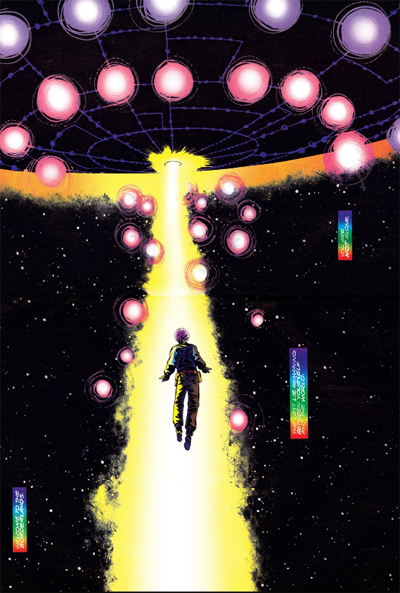
xfiles-josechungsfromouterspace5 Continue reading

Stefan Petrucha and Charles Adlard’s Run on The X-Files (Topps) (Review)

This November (and a little of December), we’re taking a trip back in time to review the third season of The X-Files and the first (and only) season of Space: Above and Beyond.

Topps’ X-Files comic was a massive success in the nineties.

The monthly series ran for forty-one issues between January 1995 and September 1998. In that time, Topps also produced an X-Files graphic novel, three digests, two annuals, a spin-off line of Season One comics and a miniseries adaptation of a Kevin Anderson novel. They also reprinted the series in quite a few formats, indicating that the comic sold well even outside the monthly schedule. The only reason that the series came to an end was because Topps eventually decided to retire from comic book publishing.

xfiles-feelingsofunreality4

After Topps withdrew from the comic book market following the Great Comic Crash of the mid-to-late nineties, the X-Files license lay fallow. Barring two Lone Gunman comics published by Dark Horse in 2001, there would be no new officially licensed X-Files comics written between September 1998 and September 2008, when Frank Spotnitz scripted a miniseries for Wildstorm. It is incredible to look back on the success of the Topps line for those three-and-a-half years when it held the license.

A lot of the credit for that success is owed to writer Stefan Petrucha, cover artist Miran Kim and interior artist Charles Adlard.

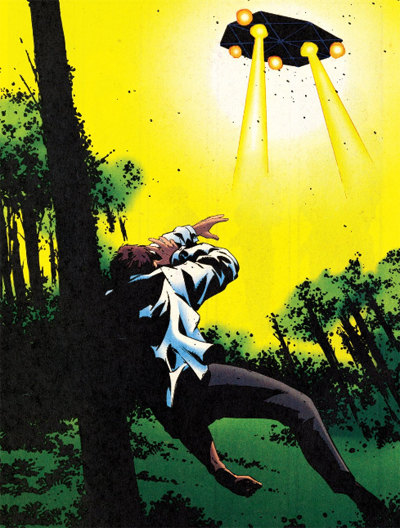
xfiles-homeofthebrave17

Continue reading

The X-Files – Wetwired (Review)

This November (and a little of December), we’re taking a trip back in time to review the third season of The X-Files and the first (and only) season of Space: Above and Beyond.

Wetwired is an oddity.

It is the penultimate episode of the third season, written by special effects supervisor Matt Beck. It is very much a conspiracy episode, albeit one lacking any real sense of forward moment and with only the loosest thematic ties to the rest of the show’s mythology. Unlike – say – Soft Light, this is not simply a “monster of the week” story with elements of the mythology grafted in. The show has largely move past those, which is why Avatar felt so weird.

More like

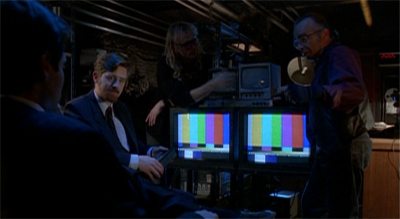
More like “terror vision”, am I right?

Instead, Wetwired is that strangest of government conspiracy stories. It is an episode dedicated almost exclusively to shady goings-on at the highest levels of government, but with no mention or inference of aliens or other sinister long-term plots. Wetwired stands out as something strange and hard to place; perhaps its closest analogue is The Pine Bluff Variant from towards the end of the fifth season.

The result is an oddity that is a little uneven and disjointed, an episode packed with clever ideas and concepts, but difficulty connecting them to each other.

Scully has had it with Mulder's quips about her driving...

Scully has had it with Mulder’s quips about her driving…

Continue reading

The X-Files – Hell Money (Review)

This November (and a little of December), we’re taking a trip back in time to review the third season of The X-Files and the first (and only) season of Space: Above and Beyond.

Hell Money is an oft-overlooked episode of The X-Files.

The positioning in the third season probably doesn’t help. It comes directly after Teso Dos Bichos, probably the season’s weakest episode. It is also positioned in the gap between Pusher and Jose Chung’s “From Outer Space”, two broadly-loved episodes that serve as pitch-perfect examples of The X-Files both on- and off-format. In contrast, Hell Money is something a little stranger. It is not as conventional as Pusher, nor as radical as Jose Chung’s “From Outer Space.”

Seeing is believing...

Seeing is believing…

Instead, Hell Money is an episode of The X-Files that loosely fits the show’s format. Mulder and Scully investigate a bunch of macabre murders where sinister forces are at work. However, in keeping with the broad themes of the third season, the evil in Hell Money takes a particularly banal form. There are no monsters here; at least, not any supernatural monsters. The only ghosts that haunt the narrative are metaphorical. There is a culture alien to our leads, but one a bit more grounded than extraterrestrials.

Hell Money is a clever and thoughtful piece of television that feels subtly and harrowingly subversive.

The writing is on the wall...

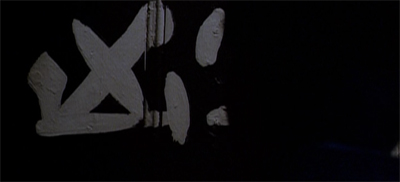
The writing is on the wall…

Continue reading

Space: Above and Beyond – Toy Soldiers (Review)

This November (and a little of December), we’re taking a trip back in time to review the third season of The X-Files and the first (and only) season of Space: Above and Beyond.

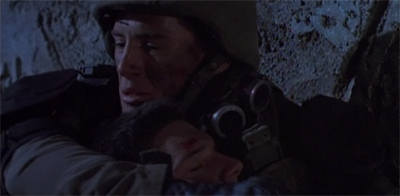
The Never No More and The Angriest Angel two-parter represented a moment when Space: Above and Beyond seemed to gel, when the show seemed to realise what it wanted to be and how it wanted to be about it. Written by showrunners Glen Morgan and James Wong, they presented a demonstration of just how well the show could work, and why it had been an absolutely ingenious idea to do the premise of “World War II… IN SPACE!”

So, naturally, Toy Soldiers shows up to demonstrate that we have yet to reach a point where we can do this consistently.

Oh, brother...

Oh, brother…

Continue reading

The X-Files – Revelations (Review)

This November (and a little of December), we’re taking a trip back in time to review the third season of The X-Files and the first (and only) season of Space: Above and Beyond.

Religion, eh?

In the mid-nineties, religion was a very difficult subject to navigate on network television. The so-called “culture wars” were in full swing at the middle of the decade, with religious values serving as a particularly brutal battleground. Religion is a very thorny and contentious subject. As recently as 2012, more than 40% of polled Americans stated they would not vote for an atheist candidate in a presidential election. Pete Stark would admit to being an atheist in 2007, becoming the first self-identified atheist in the United States Congress.

Mulder's got a taste for adventure...

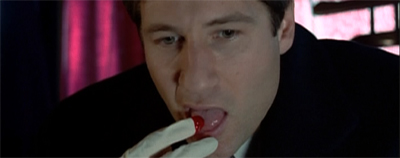
Mulder’s got a taste for adventure…

As a result, it is very difficult to have a meaningful and thoughtful conversation about it. “There’s a man that I work with – a friend – and usually I’m able to discuss these things with him… but not this,” Scully confesses at the end of the episode. While undoubtedly a comment on Mulder’s stubborn refusal to engage with Scully on the topic, it also feels like a commentary on the awkwardness of any public discussion about religious beliefs or values, which was prone to become highly charged and contentious.

The conventional wisdom was that you didn’t talk about religion at the dinner table. It wasn’t much easier on television. This puts Revelations in a very awkward position.

A bloody business...

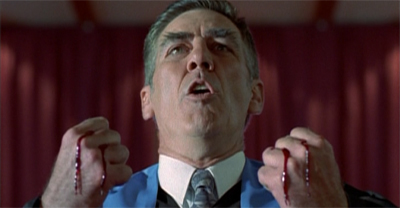
A bloody business…

Continue reading

The Flash – Plastique (Review)

So, I’m considering reviewing this season of The Flash, because the pilot looks interesting and I’ve always had a soft spot for the Scarlet Speedster. I’m also considering taking a storyline-by-storyline trek through the 1987-2009 Flash on-going series as a companion piece. If you are interested in reading either of these, please let me know in the comments.

Plastique demonstrates that we are still in the early days of The Flash as a television show. We are still working through all the stock elements and trying to figure out what works, while also using fairly stock plot lines to help the show find its feet. Going Rogue was a massive step forwards for the show, but Plastique can’t quite maintain the forward momentum. It feels more like The Fastest Man Alive or Some Things You Can’t Outrun, episodes using a fairly episodic format with generic guest stars and familiar plots to help get things moving.

Plastique is a nice demonstration of what works and what doesn’t work about The Flash at this stage in its life-cycle. It is light and bubbly, and more than a little silly. It is very consciously a CW show, to the point where it seems to wryly winking at the audience. It is also endearingly earnest, embracing a lot of its core superhero tropes even as the characters within the narrative remain reluctant to latch on to “the Flash” as a superhero code name. The Flash is a show that is unashamed about its comic book roots; Plastique even teases the appearance of a psychic gorilla.

Boom!

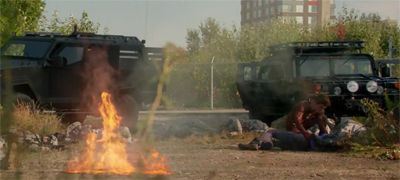
Boom!

However, there are problems. The ensemble is uneven at best. The stand-out performers – whether part of the main cast or simply guest stars – skew older. The younger actors tend to be a bit more hit-and-miss. It is more exciting to watch actors like Jesse Martin, Clancy Brown and Tom Cavanagh interact than to spend any time with Kelly Frye or Carlos Valdes. While a lot of that is down to the quality of the casting, the writing is also to blame. The Flash is at its best when it seems to treat characters as adults, rather than young people doing young people stuff.

Plastique is a solid enough episode, but it is one that demonstrates where the strengths and weakness of the show lie. The Flash needs to start compensating and adjusting for that.

A flash of inspiration...

A flash of inspiration…

Continue reading

The X-Files – Nisei (Review)

This November (and a little of December), we’re taking a trip back in time to review the third season of The X-Files and the first (and only) season of Space: Above and Beyond.

The most interesting aspect of Nisei and 731 is the fact that there’s very little forward movement by the end of it.

The previous multi-part conspiracy episodes typically featured big hooks and shock revelations. Duane Barry and Ascension demonstrated that the government was officially responsible for alien abductions, to the point where they could arrange Scully’s abduction. Colony and End Game featured shape-shifting aliens and confirmation that Samantha Mulder was a big part of this. Anasazi, The Blessing Way and Paper Clip revealed that Mulder’s father was part of a conspiracy involving Second World War criminals working on American soil to create an alien-human hybrid.

The only way its getting off this planet is in a bodybag...

The only way its getting off this planet is in a bodybag…

Nisei and 731 don’t contain any truly seismic revelations. The biggest moments here – the reveal that Japanese war criminals have been experimenting on Americans with the assistance of the government, and that the bodies in the box car in Anasazi were probably originally human – all build on what Paper Clip already established. There’s nothing as significant as the reveal of the Bill Mulder’s complicity in the conspiracy from Paper Clip, or the first appearance of the Black Oil in Piper Maru.

Nisei and 731 really seem to be about taking stock of what has happened so far in the show – as close to a “breather” mythology episode as the show could manage at this point. Of course, this being The X-Files, this “breather” episode still moves a break-neck pace and climaxes with a death-defying leap on to a moving train. As you do.

The doctors are in...

The doctors are in…

Continue reading

The X-Files – 2Shy (Review)

This November (and a little of December), we’re taking a trip back in time to review the third season of The X-Files and the first (and only) season of Space: Above and Beyond.

A lot of the success of the third season of The X-Files came for learning what had worked earlier, and trying to hone that.

So, for example, the epic mythology of Colony and End Game enabled episodes like Nisei and 731 along with Piper Maru and Apocrypha. Shows like Die Hand Die Verletzt and Humbug had proven that the show could do comedy, so it wasn’t as big a risk to commit to stories like Clyde Bruckman’s Final Repose or Jose Chung’s “From Outer Space.” Even episodes like Fresh Bones had helped to define what a standard “monster of the week” should look like.

Freak like me...

Freak like me…

This approach to the third season had its drawbacks. It seemed like the first chunk of the first season was stuffed with supernatural revenge stories, to the point where it is surprisingly easy to confuse The List and The Walk on the basis of title and theme alone. However, it was a very effective way of producing television. It is very hard to fault any approach towards television production that could turn “fat-sucking vampire” into a premise that works.

The genealogy of 2Shy is quite easy to trace. It is the obvious synthesis of Tooms and Irresistible, two of the more memorable and effective monster stories of the first two seasons. 2Shy may have some very serious problems, but it does what it says on the tin.

Fresh bones...

Fresh bones…

Continue reading

Space: Above and Beyond – Mutiny (Review)

This November (and a little of December), we’re taking a trip back in time to review the third season of The X-Files and the first (and only) season of Space: Above and Beyond.

Nothing says “this is a militaristic science-fiction show!” quite like a mutiny episode.

When producing a show like Space: Above and Beyond, doing a show based around a mutiny in wartime is a given. It’s no surprise that Mutiny is the third regular episode of the show. Indeed, when Battlestar Galactica – a show that owes a sizeable debt to Space: Above and Beyond – wanted to establish its own militaristic science-fiction credentials, it produced Bastille Day as the third episode of its first season – another story about an uprising on a spaceship in a time of crisis.

His sister's keeper...

His sister’s keeper…

Mutiny is also notable as the first episode of the season not credited to the creative team of Glen Morgan and James Wong. Of course, as executive producers, Morgan and Wong would have had a massive impact on the development and the writing of Mutiny. Stephen Zito is credited as the writer on the show. Zito is a veteran television writer and producer, working in the industry since the late eighties. He departed Space: Above and Beyond halfway through the first season, moving on to a long run on J.A.G.

Mutiny is far from perfect – indeed, it is often quite clunky in places. At the same time, it is a lot more comfortable in its skin than The Dark Side of the Sun was.

Watching like a Hawkes...

Watching like a Hawkes…

Continue reading