• Following Us

  • Categories

  • Check out the Archives


  • Awards & Nominations

The X-Files – The Amazing Maleeni (Review)

This November, we’re taking a trip back in time to review the seventh season of The X-Files and the first (and only) season of Harsh Realm.

The Amazing Maleeni is light and fairly unobjectionable.

There is nothing necessarily bad about the episode. It is inoffensive and effective. It is a story about magic that features any number of magic tricks, twisting and turning as stories about magic are contractually obligated to twist and turn. There are betrayals and double-crosses, gambits and reveals. Nobody is who they claim to be, and everything is suspect. Individual events are never what they initially appear to be, creating a sense that the audience is watching the dominos cascade. The Amazing Maleeni does almost everything that it needs to do.
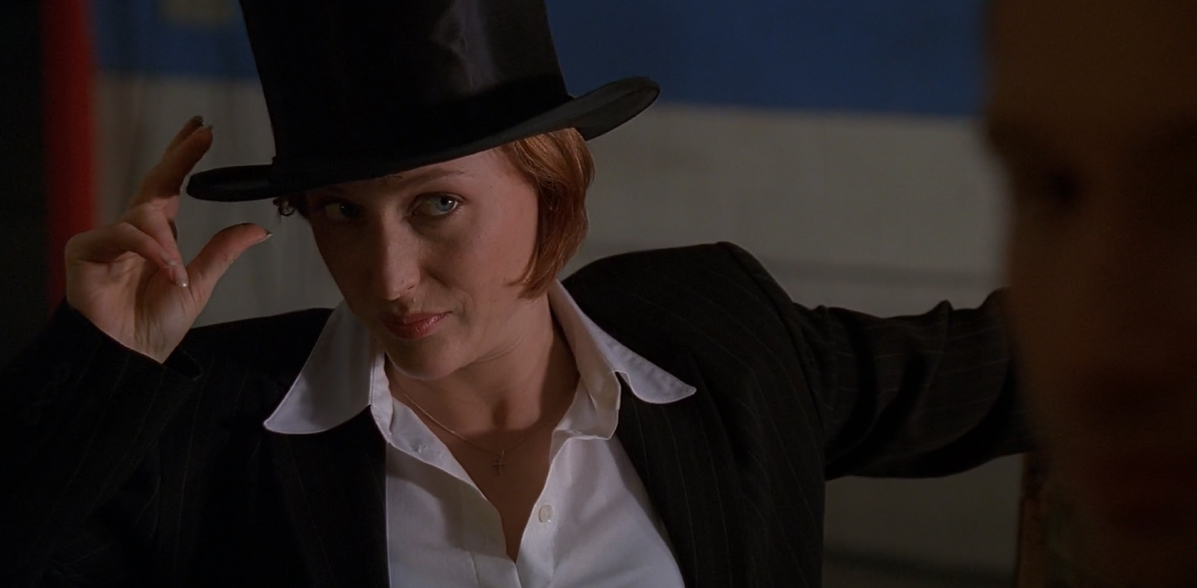
Top it all off...

Top it all off…

At the same time, there is something lifeless about the final episode; something almost routine. The Amazing Maleeni feels like a rough sketch of a much stronger episode. The mechanics of the trick are in place, but the performance needs a little more polish. There is no dynamism to the episode. The Amazing Maleeni sacrifices momentum for whimsy, charm for engagement. As an episode of television, The Amazing Maleeni is a pleasant way to pass forty-five minutes. Ultimately, it leaves no real impression.

The Amazing Maleeni is more illusion than magic.
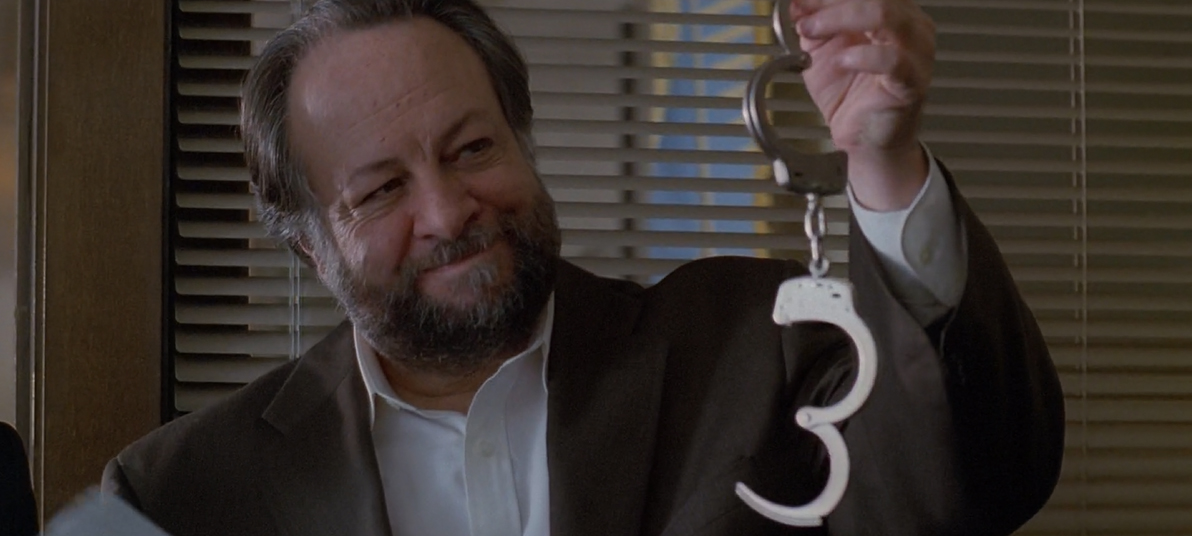
Give the man a hand (cuff)!

Give the man a hand (cuff)!

Continue reading

Doctor Who: Last Christmas (Review)

There’s a horror movie called Alien? That’s really offensive. No wonder everyone keeps invading you.

Last Christmas is perhaps the most Moffat-esque Christmas Special of the Moffat era.

As such, it is an episode that will inevitably provoke a strong reaction, playing as it does to the writer’s strengths and interests in Doctor Who. As a show, Doctor Who has a long history of crashing genres into one another. One of the most endearing aspects of the show is the way that it can be a completely different show from week to week. One week, it is a western; the next, it is a horror film. One episode is a period adventure; another is a science-fiction comedy. Doctor Who is a show about a mad man in a box who crashes into random stories.

doctorwho-lastchristmas4

Last Christmas is quite overt about this. When Shona wakes up towards the end of the episode, we are treated to a glimpse of her “to do” list for Christmas Day, which happens to feature a variety of clear influences on the episode. Strangely, she plans to open her Christmas Day binge with a double-bill of Alien and The Thing From Another World, before taking a breather and returning for Miracle on 34th Street – you really do need a bit of space before properly digesting the truly heavy stuff. (She’s also marathoning the Hugo-winning Game of Thrones.)

Last Christmas is a story that is incredibly (and almost cheekily) aware of its own fictionality. As with so much of Moffat’s Doctor Who, it is a story about stories. And dreams, which are really the same thing. “Time travel is always possible in dreams,” the Doctor observes, to borrow a quote from The Name of the Doctor. Dreams and stories.

doctorwho-lastchristmas Continue reading

The X-Files (Topps) Digest #2 – Dead to the World (Review)

This November (and a little of December), we’re taking a trip back in time to review the third season of The X-Files and the first (and only) season of Space: Above and Beyond.

Stefan Petrucha and Charles Adlard are winding at this point in their curatorship of Topps’ The X-Files comic book. The duo have contributed an absolutely staggering volume of work to the line. On top of monthly issues and short stories, there have been annuals and digests. The volume of the output has been staggering. All of it has been written by Petrucha and the vast majority was illustrated by Adlard. The quality has – generally speaking – been quite impressive.

Dead to the World is the headline story in the second “digest” published by Topps comics. As with Big Foot, Warm Heart before it, the format of the “digest” feels a little strange. There is a single (and rather long) comic written by Petrucha and illustrated by Adlard, following by a collection of shorts taken from Ray Bradbury Comics, a somewhat less popular feature of Topps’ comic book publishing line. There is a sense that the format might have worked better as a collection of short X-Files-themed stories for a variety of creators.

Face to face...

Face to face…

Nevertheless, the result is interesting. In many ways, Big Foot, Warm Heart seemed to point at where Petrucha and Adlard would go when they wrapped up their massive twelve-part “Aquarius” mega-arc. With its reflections on human failings and human abuses, it seemed like Big Foot, Warm Heart set the tone for the stories that would follow – like One Player Only or Falling. It offered a tease of things to come, suggesting the humanity could be more monstrous than any mythological creature.

In contrast, it is very tough to see where Dead to the World might have been pointing. Then again, Petrucha and Adlard would be gone from the comic a month after its publication. So perhaps the story’s funereal atmosphere feels appropriate.

Here there be monsters...

Here there be monsters…

Continue reading

The X-Files – Jose Chung’s “From Outer Space” (Review)

This November (and a little of December), we’re taking a trip back in time to review the third season of The X-Files and the first (and only) season of Space: Above and Beyond.

Then there are those who care not about extraterrestrials, searching for meaning in other human beings. Rare or lucky are those who find it. For although we may not be alone in the universe, in our own separate ways, on this planet, we are all alone.

– Darin Morgan takes his bow

It came from beyond the stars...

It came from beyond the stars…

Continue reading

The X-Files (Topps) #10-12 – Feelings of Unreality (Review)

This November (and a little of December), we’re taking a trip back in time to review the third season of The X-Files and the first (and only) season of Space: Above and Beyond.

Feelings of Unreality marks the end of Stefan Petrucha and Charles Adlard’s first year on Topps’ licensed X-Files comic book.

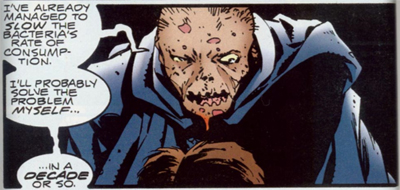
It also marks the end of their extended arc. It became clear around six issue into their run that Petrucha and Adlard were really just telling one large and expansive story that could be broken down into small bite-sized chunks. From Not To Be Opened Until X-Mas through A Dismembrance of Things Past through Firebird and Silent Cities of the Mind, these were all separate pieces of a larger puzzle waiting to be fitted together. Feelings of Unreality marks a conclusion to this ambitious and expansive arc.

Slightly unreal...

Slightly unreal…

What has been fascinating about Petrucha and Adlard’s run on The X-Files comic book as been the way that the team has adapted the show’s format to fit within this distinct medium. Writing a tie-in like this, it would would be very tempting to do “a television episode, in comic book form!” There’s a very serious argument to be made that the comics would be pushed in that direction after Petrucha departed. However, there’s something much more compelling about a story that takes advantage of its own medium, rather than offering a flat imitation of another.

For all its flaws, Feelings of Unreality – like Petrucha and Adlard’s epic Firebird before it – feels like a comic book story. It’s pulpy, exciting, ambitious, expansive, silly. And just a little brilliant.

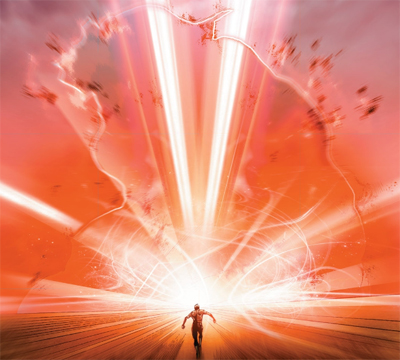
Lift me up...

Lift me up…

Continue reading

Star Trek: Voyager – Projections (Review)

This September and October, we’re taking a look at the jam-packed 1994 to 1995 season of Star Trek, including Star Trek: Deep Space Nine and Star Trek: Voyager. Check back daily for the latest review.

Projections is really the first episode of Star Trek: Voyager that feels like it is the right script coming from the right staff writer. At the start of the show’s first season, it seemed like writing assignments were handed out almost at random, with no real acknowledgement of the relative strength of any of the writers involved.

Brannon Braga is one of the best science-fiction high-concept writers in the history of franchise, but he was assigned the character-driven second episode Parallax and the issue-driven Emanations; Michael Piller’s personal strengths were always more firmly aligned with character development, so it felt strange to see him writing the time travel adventure Time and Again and the anomaly of the week in The Cloud.

All by myself...

All by myself…

Pushing the boundaries of a writing staff is something worth doing – forcing various members of the team to ease themselves out of their comfort zone – but it felt counter-productive to do this during the first season of a new Star Trek show. After all, the first season is about putting the best foot forward, and many of the early scripts for the show feel like they were handed to the wrong writers during the development process.

With Projections, it feels like Brannon Braga finally has a Voyager script that plays entirely to his strengths as a writer. It is arguably his most character-driven script on the franchise to date, but it also anchored in a pretty fascinating existential dilemma. In many respects, it is a spiritual companion to Frame of Mind, a sixth season episode of Star Trek: The Next Generationpreoccupied with questions about what reality actually might be.

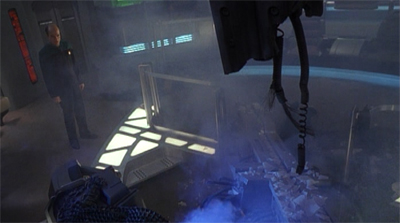
Everything falls apart...

Everything falls apart…

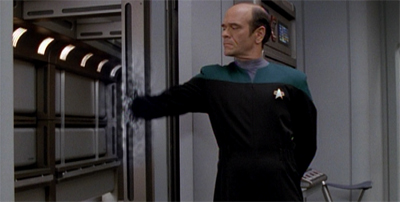
Following on from Heroes and Demons, Projections is only the second episode of Voyager to focus on the character of the Doctor. However, much like Heroes and Demons, it demonstrates the versatility of the character and the range of the actor. Projections is a very clever script that relies on its central character to really carry it across the line. At this point in Voyager‘s run, Robert Picardo seems to be one of the few members of the ensemble who could really pull it off.

The result is one of the (if not the) strongest episode of the show’s first two seasons – somewhat appropriate, given the way the show straddles the gap between the first and second seasons.

He's not all there...

He’s not all there…

Continue reading

Warren Ellis’ Run on Astonishing X-Men – Ghost Box, Exogenetic and Xenogenesis (Review/Retrospective)

This May, to celebrate the release of X-Men: Days of Future Past, we’re taking a look at some classic and modern X-Men (and X-Men-related) comics. Check back daily for the latest review.

Astonishing X-Men is an interesting book. It was originally launched to allow Joss Whedon and John Cassaday to work on an X-Men title that was (mostly) free from the confines of the wider Marvel Universe at their own pace. However, when – after considerable delays – it finally finished, it seemed quite tough to figure out what to do with the book. Astonishing X-Men was selling too well to cancel outright, and Marvel had the opportunity to capitalise on its popularity and acclaim.

Assigning writer Warren Ellis to the title was quite a clever decision. While Ellis might lack the broader pop culture cache of Joss Whedon, he is a known and respected comic book writer. Allowing Warren Ellis to cut loose on a title usually results in a delightfully chaotic and exciting comic book that manages to stand apart from just about any mess of continuity that might have spawned it.

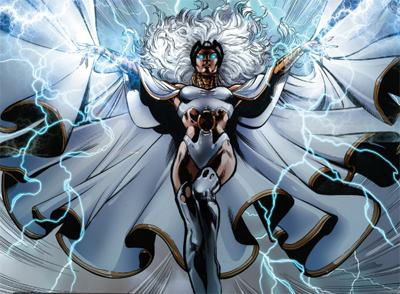
Storm warning...

Storm warning…

Ellis’ output on Astonishing X-Men is practically breathtaking. Ellis has a tendency to stay on mainstream superhero comics for relatively short runs. He worked on Secret Avengers for six months, and spent a year each on Ultimate Fantastic Four and Thunderbolts. Ellis tends to step into a superhero comic, shake things up rather brilliantly, and then walk away having made quite an impression. In many cases, Ellis’ short runs serve to define characters for years afterwards; look at Norman Osborn.

However, despite this reputation for short tenures on superhero comics, Ellis produced eighteen issues with the Astonishing X-Men brand; eleven issues of the main series, two issues of the Ghost Boxes miniseries and five issues of the Xenogenesis miniseries. That’s quite an impressive body of work. It is enough for a reasonably-sized omnibus collection. It allows Ellis a lot of room to play with his ideas, and also to make quite a mark on the central characters.

Having a blast...

Having a blast…

Continue reading

Thinking Outside the Box: When Does Reality Subtext Overwrite Fiction?

It happens every so often, to the extent that I’m actually quite used to it. I’ll be either listening to Michael Jackson on my headphones, or mention in passing a bit of trivia, or name the musician as one of the most impressive of all time. And, undoubtedly, there will always be someone who will retort with, “Yeah, but he was a pedophile.” And that will be that – pretty much everything that Jackson has accomplished will be a moot point. Don’t get me wrong, I’m not arguing one way or a nother, I just feel a little bit curious as to where the line between what happened in real life can prevent or undermine an artist’s work.

Continue reading

Non-Review Review: Source Code

A special thanks to the guys over at movies.ie for sneaking us into an advanced preview screening.

Duncan Jones really grabbed our attention with Moon, one of the most boldly original films of the last decade. However, it’s often the second film of a promising young director that is the most fascinating to watch, as the weight of expectation is measured against a (typically) larger budget and profile. Too many young talents fizzle out or stumble at the second hurdle. I’m glad to report that Jones manages to make it safely across. While Source Code might lack the power of his debut, it’s still a fascinating little science-fiction thriller, one I’m still thinking of hours after I left the screening. And that is certainly a mark of quality.

Has Colter gone off the rails?

Continue reading

Non-Review Review: The Matrix

Today I’m taking a look at the Matrix trilogy. All three films, all watched and reviewed in one day. Join us for the fun! All three reviews will be going on-line today.

Part of me wonders if The Matrix has been somewhat tarnished by its two sequels and countless spin-offs, video-games, tie-ins and “expanded universe” material. I mean, you can pick any number of iconic pop culture moments from the original film (from “I know kung-fu” to “whoa” to “stop trying to hit me and hit me”), but you’re left with a third film in the trilogy that ultimately grossed less than the original. Watching the entire trilogy back-to-back helps the later films seem much stronger, but it also perhaps helps illuminate what was missing from the following two films that made the original such a classic.

Bending over backwards to make a good movie...

Continue reading