• Following Us

  • Categories

  • Check out the Archives


  • Awards & Nominations

Star Trek – The Changeling (Review)

The first Star Trek pilot, The Cage, was produced in 1964. To celebrate its fiftieth anniversary, this December we are reviewing the second season of the original Star Trek show. You can check out our first season reviews here. Check back daily for the latest review.

The Changeling, an episode so good that they made it twice.

Sarcasm aside, The Changeling is mostly interesting for reasons outside the episode itself. It is the first contribution from John Meredyth Lucas, who would become the show’s producer towards the end of the season. Lucas took over from Gene L. Coon and is notable for being the first production staff member on Star Trek to direct an episode from his own script, with Elaan of Troyius in the show’s troubled third season. The Changeling arguably had an even bigger influence on the franchise, serving as a template for the first feature film.
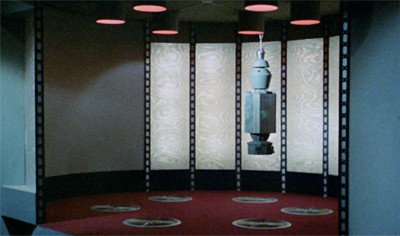
Probing problems...

Probing problems…

Okay, “template” may be a slight exaggeration. However, you can definitely feel the influence of The Changeling on Star Trek: The Motion Picture. However, that may simply be because the script to The Changeling hits quite heavily on some of Gene Roddenberry’s pet themes. It has a villainous robot outwitted by emotional humans, Kirk besting a god-like entity, and larger philosophical questions about religion and theology.

Even outside of the themes that resonate specifically with Roddenberry, The Changeling hits on a variety of other classic Star Trek tropes – from a threat leaving nothing but dead star systems in its wake through to an abundance of dead red shirts. There’s an argument to be made that The Changeling is one of the most archetypal Star Trek episode. If you were to bake a Star Trek episode from a stock list of ingredients, it would look a lot like this. For better or worse.

Melding metal...

Melding metal…

Continue reading

Star Trek: Voyager – Cathexis (Review)

This September and October, we’re taking a look at the jam-packed 1994 to 1995 season of Star Trek, including Star Trek: Deep Space Nine and Star Trek: Voyager. Check back daily for the latest review.

Cathexis has a vaguely interesting premise, but it gets a little bit too caught up in science-fiction high concepts and New Age mysticism.

Once again, there’s a sense that the wrong writer has been assigned the wrong brief. The New Age spirituality elements of Chakotay’s character were largely championed by Michael Piller; the “romantic period mystery” story for Janeway clearly comes from Jeri Taylor. The only part of Cathexis that clearly comes from credited writer Brannon Braga is the somewhat generic Invasion of the Body Snatchers plot line – and, as such, it seems to be the only thread in which Braga is particularly interested.

So we get a bunch of half-hearted New Age stuff unfolding, with Chakotay’s wandering spirit represented by a camera with a blurry filter swooping through familiar sets. Once again, Chakotay’s Native American heritage becomes a launching pad for some ill-advised mysticism and exoticism, which Cathexis never even bothers trying to explain.

Frankly, I'm surprised Tuvok put up with this for so long...

Frankly, I’m surprised Tuvok put up with this for so long…

Continue reading

The X-Files – Excelsis Dei (Review)

This August (and a little of September), we’re taking a trip back in time to review the second season of The X-Files. In November, we’ll be looking at the third season. And maybe more.

The horror genre is much maligned.

Horror films typically fight harder for recognition than films in many other genres – often finding themselves consigned to the same ghetto as science-fiction or fantasy films. They are less likely to take home major mainstream awards, and it seems like horror films typically have to wait longer for reappraisal. Outside of aficionados, there’s a wariness of the horror genre – a skepticism towards it.

Window of opportunity...

Window of opportunity…

There are a lot of reasons for that. Some of them make sense; some of them don’t. One of the more common assumptions about horror is that the genre is more likely to produce “cheap” or “trashy” entertainment, as opposed to something more profound or insightful. There are, again, lots of reasons for this assumption. Most obviously, there’s the absurd cost-to-profit ratio of cheap terrible horror films that incentivises studios to churn out as many as they can as fast as they can. There’s a reason there’s an absurd number of Saw sequels.

However, that “cheapness” or “trashiness” isn’t just a result of business decisions. There are certain story tropes and narrative techniques that exist within the horror genre that feel like the cheapest sort of thrills. If you want to make an audience uncomfortable, just throw in something one of those trashier elements. As long as the audience squirms in their seats, it doesn’t matter what the implications of your decisions are. After all, your job is to creep them out?

Bitter little pill...

Bitter little pill…

So horror takes all manner of shortcuts, without any real thought as to what those elements actually mean. They are just something that catches the audience off-guard and makes them sit up in their seat. So horror tends to indulge in the worst sorts of racism and sexism as a means of drawing any sort of response from the audience. These tried-and-tested horror staples become effective storytelling shortcuts. The foreign becomes horrific. Conservative sexual morality is enforced with brutality. Rape – literal or metaphorical – is a cheap thrill.

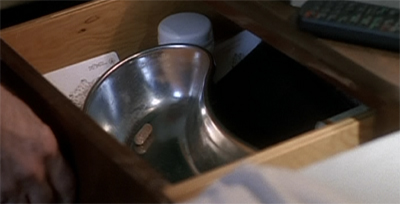
The X-Files struggles with these sorts of issues as it tries to bring horror to television. It occasionally does a very good job. However, there are also times when the series gives into its baser instincts. Excelsis Dei is an absolutely terrible episode, and an example of why the horror genre gets written off by so many people so quickly. It’s a poorly constructed hour of television, one about how old men are perverts, the rape of an under-developed character is a story hook and foreigners are magic.

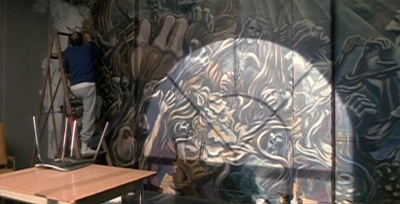
The writing (or fine art) is on the wall...

The writing (or fine art) is on the wall…

Continue reading

Star Trek VI: The Undiscovered Country by J.M. Dillard (Review)

This June, we’re taking a look at some classic Star Trek movie tie-ins. Check back daily for the latest reviews and retrospectives.

Reading her novelisation of Star Trek VI: The Undiscovered Country, it’s hard to shake the feeling that author J.M. Dillard really does not like this film.

It’s a very peculiar sensation, to read an adaptation clearly written by somebody who could not care less for the source material. It is not unique, of course. Diane Carey’s adaptation of Broken Bow is downright scathing in its attitude towards Star Trek: Enterprise. It just seems rather strange that J.M. Dillard’s early adaptation of Star Trek V: The Final Frontier seems a lot fonder of its source material.

st-theundiscoveredcountry-dillard

Continue reading

Non-Review Review: 300 – Rise of an Empire

It is almost immediately apparent that 300: Rise of an Empire was not directed by Zack Snyder. Snyder is credited on the inter-quel’s screenplay, but Rise of an Empire is directed by Noam Murro. Murro’s only other feature-length directorial credit is the forgotten indie movie Smart People, which would hardly make a case for Murro as an obvious choice to succeed Snyder in the director’s chair.

300 was a lavish and rich (and surprisingly shrewd) visual feast – packed with iconic imagery and memorable mosaics, treating it’s muscle-bound stars as props for epic spectacle while casting a knowing look out at the audience. Rise of an Empire feels like an attempt at imitation rather than innovation – with a sense that Murro isn’t bold enough to put his own stamp on the film, instead trying to channel one of the most unique voices currently working in action movies.

Slice o' life...

Slice o’ life…

Continue reading

Star Trek – Space Seed (Review)

To celebrate the release of Star Trek: Into Darkness this month, we’ll be running through the first season of the classic Star Trek all this month. Check back daily to get ready to boldly go. It’s only logical.

Following the commercial success (and lack of critical success) of Star Trek: The Motion Picture, Paramount made a conscious decision to side-line Gene Roddenberry. Given that his plans for the sequel involved Spock travelling through time to assassinate Kennedy, we can likely all agree that was probably a good thing. Harve Bennett was tasked with producing the sequel, and took to the task of researching what would become the second Star Trek film. Demonstrating considerable respect for the source material, Bennett locked himself away and screened all three seasons of the show, looking for inspiration.

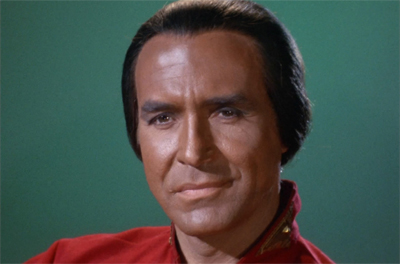
Apparently he only needed to reach the tail end of the first season, because he had found the basis of his film by the closing credits of Space Seed.

You Khan do it...

You Khan do it…

Continue reading

Kurt Busiek’s Avengers – Avengers Assemble! Vol. 3 (Review/Retrospective)

April (and a little bit of May) are “Avengers month” at the m0vie blog. In anticipation of Joss Whedon’s superhero epic, we’ll have a variety of articles and reviews published looking at various aspects of “Earth’s Mightiest Heroes.”

Read our review of The Avengers here.

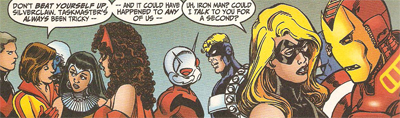
And so we reach the end of George Perez’s tenure as artist on Kurt Busiek’s Avengers run. Many would claim that the book would never really recover from the loss of the artist, though Busiek would produce over twenty subsequent issues and arguably the climax of his entire run in The Kang Dynasty. I am, to be honest, not quite so sure that this represents a turning point for the series, but I do confess that Perez would be sorely missed as the series moved through a rake of guest artists in the months that would follow. (In fact, I’ll confess to being quite fond of Busiek’s final year or two on the title.

An Avengers Assembly...

Continue reading

Tintin: The Blue Lotus (Review)

In the lead-up to the release of The Adventures of Tintin: The Secret of the Unicorn, I’m going to be taking a look at Hergé’s celebrated comic book character, from his humble beginnings through to the incomplete post-modern finale. I hope you enjoy the ride.

The Blue Lotus is regarded as something of a turning point for Hergé’s boy reporter. The cartoonist, apparently urged by those close to him, decided that – rather than basing his depiction of China on a collection of pop culture stereotypes (as he had done in Tintin in America) – he would undertake a considerable amount of research in order to ensure that the story was as respectful and faithful to Chinese culture as might have been possible. Indeed, the Chinese boy who Tintin befriends, Chang Chong-Chen, is named in honour of one of the students who helped him in coming to understand the Far East.

East of Eden...

Continue reading

Tintin: Tintin in America (Review)

In the lead-up to the release of The Adventures of Tintin: The Secret of the Unicorn, I’m going to be taking a look at Hergé’s celebrated comic book character, from his humble beginnings through to the incomplete post-modern finale. I hope you enjoy the ride.

Tintin in America was the earliest Adventures of Tintin book I read as a child, and I owned the entire collection from this point on (for obvious reasons, Tintin in the Land of the Soviets and Tintin in the Congo were not recommended childhood reading). That said, I’ve always regarded Tintin in America as one of the weaker entries in the series, perhaps because my childhood imagination yearned for something relatively more exotic than a trip to North America, or perhaps because the saturation of American pop culture made all the elements Hergé was spoofing seem like old hat. I’m not entirely sure, but I have to admit that the story hasn’t improved too much on re-reading.

America, %&#! Yeah!

Continue reading

Tintin: Tintin in the Congo (Review)

In the lead-up to the release of The Adventures of Tintin: The Secret of the Unicorn, I’m going to be taking a look at Hergé’s celebrated comic book character, from his humble beginnings through to the incomplete post-modern finale. I hope you enjoy the ride.

“Unfortunate,” is probably a word that gets tossed around quite frequently about Tintin in the Congo. The second adventure in the series, it was omitted from the list of books on the back of my old Tintin collection, for reasons that aren’t too hard to fathom. Apparently, like Tintin in the Land of the Soviets, the book was driven by editorial edict – to encourage Belgians to move to the colonies in the Congo, rather than to drum up fear and mistrust of communist Russia – though, to be frank, I really can’t see much here stirring a desire to emigrate. Tintin in the Congo is very mush a product of its time, filled with casual racism and awkward portrayals. That doesn’t make it any better, and it’s genuinely quite difficult to look past that fact.

Fur and loathing in the Belgian Congo...

Continue reading