• Following Us

  • Categories

  • Check out the Archives


  • Awards & Nominations

New Podcast! Scannain Podcast (2018) #2!

And we’re back to doing it almost weekly!

The new and improved Scannain podcast continues. A one-stop shop to talk about the week that has been in Irish and world cinema, the Scannain podcast features a rotating pool of guests discussing the week in film – what we watched, film news, the top ten and new releases. This week we’re celebrating both the Oscar nominations and the announcement of the line-up for this year’s Audi Dublin Internation Film Festival.

I’m thrilled to be part of a panel including Phil Bagnall, Jay Coyle, Ronan Doyle and Stacy Grouden. Give it a listen below.

Dunkirk and Issue of Genre Legitimacy

The release of Dunkirk has been interesting in many ways.

Most obviously, it seems to confirm Christopher Nolan as a brand name unto himself, managing to open a blockbuster war movie with no stars to speak of to impressive box office results in the middle of July. The film has been widely acclaimed, both by critics and by movie-goers; it scores well on Rotten Tomatoes, Metacritic, IMDb and CinemaScore. There is already talk of a massive Oscar push for the film, with reports of Academy screenings being so packed that additional screenings had to be scheduled.

However, beneath all of this success, there is an interesting narrative forming. There is a recurring suggestion that Dunkirk is not just a great piece of cinema from an incredibly talented director, but that it in some way represents a maturing of Nolan’s talent. Some of the critical narrative of Dunkirk has been framed almost as a cinematic “coming of age” story for Christopher Nolan, as if the veteran forty-six-year-old film maker is finally delivering on potential that has been teased over the past seventeen years.

In a not-untypical comment, David Fear at Rolling Stone reflected, “Everyone knew he had a mastery of the medium. Dunkirk proves he knows how to use it say something.” At The Guardian, Andrew Pulliver suggested that Nolan had finally earned one of the stock comparisons that had been (misguidedly) following him for most of his career, “With Dunkirk, Nolan may at last be able to walk the Kubrick walk.” The implication seems to be that Nolan’s previous nine films were all creative dry runs, cinematic confectionery suggesting (but never delivering on) true artistic talent.

This is, of course, complete nonsense. Nolan arguably established himself as a bona fides film maker with Memento, which was an impressive theatrical debut. Memento was structurally ambitious, thematically rich, and exceptionally clever. Nolan followed that up with Insomnia, a remake of a Scandinavian thriller. He then segued into a big-budget reimagining of the Batman mythos with Batman Begins, The Dark Knight and The Dark Knight Rises, interspacing them with his own projects of interest, The Prestige, Inception and Interstellar.

Whatever an audience member might make of individual films on that resume, and some are undoubtedly better than others, it seems quite clear that Nolan has been doing good work for a long time. Dunkirk is not a break in the pattern. It is in many ways a continuation and extrapolation of his earlier work. It is not so much a quantum leap forward in terms of technique, but simply a nudge in a different direction. So, why is Dunkirk being treated as a vital moment in Nolan’s career? It seems likely because Dunkirk belongs to a much more respectable genre than its Nolan stablemates.

Continue reading

Non-Review Review: Selma

Selma is a fascinating look at the Civil Rights Movement, and at the life and times of the Reverend Martin Luther King Junior.

Adopting the increasingly common approach of narrowing its focus to a rather tight sequence of events, Selma offers an interesting and insightful glimpse at the protest in Selma, Alabama – culminating in a planned march from Selma to Montgomery in March 1964. That was a pivotal moment for the Civil Rights struggle, as the cameras of the nation focused on the brutally wielded by local authorities against those marching peaceably. Selma focuses on that national moments as a vehicle to explore the Civil Rights movement as a whole.

selma3

To be fair, Selma does have its problems. There is a sense that the film is perhaps too concerned with the character of Lyndon B. Johnson, even ultimately affording him something of a heroic moment at the climax. The carefully-maintained period feel is undermined by the decision to dub Yesterday Was Hard On All Of Us by Fink over a crucial moment. In contrast, the period-specific (or close enough) songs by Otis Redding, the Impressions or Duane Eddy add context and texture to the film; the tracks by The Fink and Common (featuring John Legend) feel superficial.

However, these are minor problems. Selma features a tight script, solid direction and a host of fantastic central performances. Eschewing the sentimentality or softness associated with these sorts of prestige pictures, Selma deserves to be considered among the best of the awards season prestige pictures. Its diminished presence on Academy Awards ballots seems sadly telling.

selma1 Continue reading

Non-Review Review: Wild

Wild is adapted from Wild: From Lost to Found, Cheryl Strayed’s autobiographical account of her spiritual 1,100 mile trek across the California Pacific Trail. The bulk of the movie features Reese Witherspoon carrying a gigantic backpack stuffed with the essentials – described accurately, and perhaps affectionately, by some observers as a “monster.” This image adorns the posters and publicity materials, and feels strangely appropriate. Cheryl may have carried a gigantic back upon her back, but Reese Witherspoon carries the entire movie.

To be fair, Wild is not a bad film on its own merits. It is perfectly functional, if a little familiar in places. However, it is Reese Witherspoon’s performance that sets the film apart. It is a powerful and naked lead performance which counts among the best work in the actress’ career. The plot and character beats may feel like they have been inherited from countless other “find yourself in nature” films, it is Witherspoon who imbues Cheryl (and, by extension, the film) with a warm humanity.

Into the wild...

Into the wild…

Witherspoon a momentous performance, and Wild seems keenly aware of this. The film knows it has a gifted performer at its core giving one of the most memorable performances of the year. So Nick Hornby’s screenplay and Jean-Marc Vallée are clever enough to stand back; the bulk of the film seems built around Witherspoon, a showcase for the performer. That is a lot of weight; even more than the hefty backpack that Strayed carried with her across California. Witherspoon is more than up to the task.

Wild is a movie that lives or dies on the strength of its lead performance. Luckily, Witherspoon is tremendous.

A long walk home...

A long walk home…

Continue reading

Non-Review Review: War Horse

War Horse is a fairly solid prestige picture. Spielberg is on fine form, reminding viewers of just how he became an audience favourite. He displays a warm confidence with the material, as if getting comfortable once again with this sort of crowd-pleasing fare. The film has some fairly significant flaws, stemming mostly from a disjointed and disorganised screenplay, but it’s the director’s charm that manages to carry the film through. Ironically, for a film focusing on an equine, it feels like one of the most warmly human films that Spielberg has produced in quite a while.

No horse play!

Continue reading

Leo the Lion: Melissa Leo’s Self-Funded Oscar Campaign…

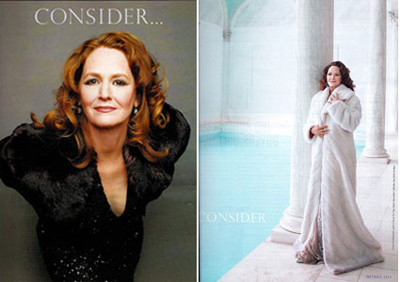
Melissa Leo took home the Best Supporting Actress Oscar last Sunday night and I was quite happy about the decision, to be honest. She was great in The Fighter and – although I personally would have though Hailee Steinfeld from True Grit would have made a more deserving winner – it wasn’t a bad result. In the lead-up to her win, Leo garnered a fair amount of publicity from the fact that she took out her own “For Your Consideration” advertisements, most of it, to be honest, quite derisive. But you know what? I’m okay with that. After all, who else was going to do it for her?

Perhaps not the most Consider-ed move...

Continue reading

Tryin’ to Throw Your Arms Around the World: Oscars 2011

You know what? I’m not actually that ticked off with the Academy Awards this year. In fact, as I mentioned in discussing the nominees, I was quite happy with the candidates up for the award. Now, nearly a week after the ceremony, I must concede that I’m generally relatively happy with the way that the awards were divided up on the night. CinemaBlend summed up the ceremony as a “group hug” to movies released in a great year for cinema, and I find it hard to object to that succinct summary.

By all accounts, the hosting was a bit of a drag...

Continue reading

Oscar Fatigue and the Pain of a Predictable Race…

You know what? At this stage I’ve seen nine of the ten Best Picture nominees this year, and I’m quite happy. There isn’t a stinker amongst them, and all I’m short is 127 Hours (maybe this weekend, before the ceremony). And yet, despite being happier with the field than I have been in quite a while, I have to admit I’ve grown somewhat tired of the Oscars this year. Usually there’s some element of surprise, but everything this year seems so sown up that there’s really no energy left in the race. One need only look at the overwhelming consensus at Awards Daily to get a feeling for how stale the race is. Admittedly there’s generally a frontrunner or two, but this year it seems that most of the major awards might as well be handed out before the ceremony begins (just to make things more efficient).

You'd have to be trapped under a rock not to see the way this race is going...

Continue reading

Is There Method to the Madness: Christian Bale’s Weight & Method Acting

Christian Bale is losing a massive amount of weight again for his role in the upcoming Concrete Island. It’s rather topical, given that the actor took time out of an interview to lambaste those who would deride his massive amount of weight loss for The Fighter:

‘To be honest, I find it laughable that it’s considered to be some f—ing gimmick — it’s so patronizing. For God’s sake, do people not understand what a pain it is to do? It’s as though it’s some comment about, ‘Oh it’s easy for him, because he’s done it a bunch of times.’ It’s not easy, it’s not fun — it’s horrible.”

In fairness, I think Bale misses the general thrust of the argument when he makes the (entirely fair) point that it’s a very difficult process. I don’t think anybody will argue that such control over his own body mass is easy (as, if it were, I’d probably choose to be the epitome of physical fitness, but it doesn’t work that way). I think the general question is whether such a large fluctuation in weight adds a benefit to his roles that is worth the physical strain. Is there a gain for the pain, so to speak?

What's the skinny?

Continue reading

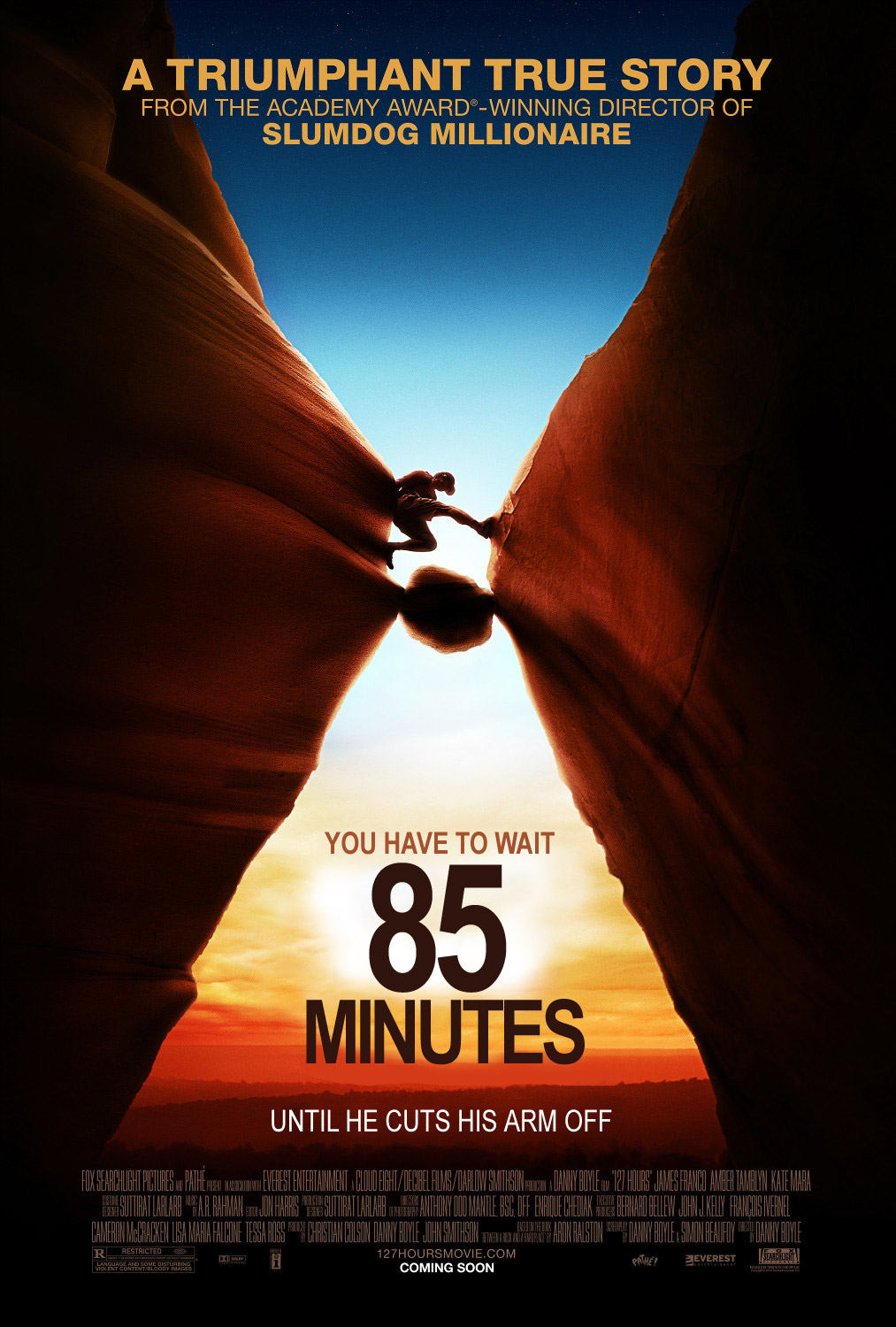
What if the Best Picture Posters Told the Truth?

Truth be told, I’m a little behind this week. I took a trip down to Sligo at the weekend and I’m preparing for a film noir blogothon next week (stay tuned). So posting this week may be a little… scattershot. Anyway, in a nice way to tie into those wonderful BAFTA poster redesigns from last year, this year we have – courtesy of theshiznit.co.uk – a simple question: what if this year’s Best Picture nominees told the truth, up front? Instead of vague names like Winter’s Bone or Inception or The Fighter… well, that last one’s pretty spot on… but what if the movies just told you everything you needed to know, on the poster? They might look like this…

(click to enlarge)

Continue reading