• Following Us

  • Categories

  • Check out the Archives


  • Awards & Nominations

La La Land and Nostalgia’s End

One of the enduring criticisms of La La Land is the extent to which it indulges in nostalgia.

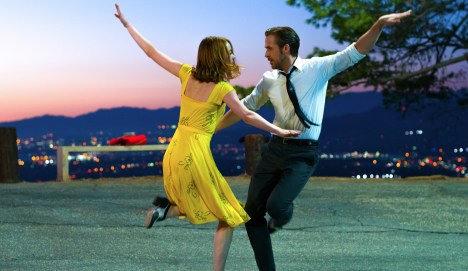
This is true of both the film and its characters. The opening scene proudly declares that the movie has been filmed in “Cinemascope”, with the landscape heavily saturated with bright colours that evoke classic Hollywood musicals even before a final showstopping number that evokes everything from An American in Paris to 7th Heaven. In this day and age, producing any big budget musical would feel like an act of nostalgia, but La La Land is a love letter to a genre that has fallen even further to the wayside than the western.
lalaland2

Even the characters inhabiting the film’s world are defined by nostalgia. This is most obvious with Sebastian, a jazz nerd who desperately wants to construct a loving shrine to the artform as he loves it. “It’s dying,” he urges Mia. “It’s withering on the vine.” Sebastian laments the conversion of a cultural landmark into a “samba and tapas” restaurant. However, Mia is implied to be just as nostalgic. Her room is decorated with classic Hollywood memorabilia. When she finishes a rendition of her one-woman show, she asks Sebastian, “Is it too nostalgic?”

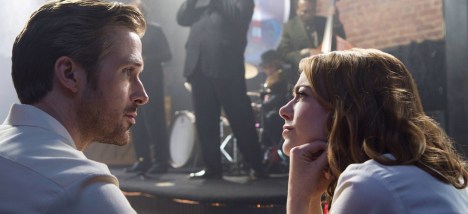
This sense of nostalgia has become an obvious line of attack against La La Land, particularly once it emerged as a Best Picture frontrunner. This is the way that things work; the same accusations were leveled at films like The Artist and Argo, to pick two recent examples. However, these criticisms miss one of the more compelling and nuanced aspects of La La Land‘s nostalgia. The film clearly pines for a lost past, wistfully remembering a world that no longer exists. However, it also accepts that loss. Unlike most exercises in nostalgia, La La Land understands that things can have value because they end.
lalaland4

Note: This post contains spoilers for La La Land, including a discussion of the film’s ending. Go see it. Then come back.

Continue reading

Seventies Heaven – The Shifting Gaze of Cultural Nostalgia

Nostalgia is a funny thing.

It is infinitely more complex than most people will allow. By its very nature, it is highly fungible, intertwined with concepts like memory and politics in a way that does not always make it easy to parse. Nostalgia hits in waves, but those waves do not always hit at the same time with the same intensity. Nostalgia is not a single monolithic concept, it pulls and pushes from moment to moment. What is the nostalgia of the moment? The eighties nostalgia of Stranger Things? The nineties nostalgia of Independence Day: Resurgence?

theniceguys2

Trying to define a pattern in pop culture’s nostalgia is like trying to read the tea leaves, falling somewhere between a conversational art and outright hucksterism.  Still, one of the more interesting – and least discussed – aspects of the grand nostalgia industrial complex is the state of transition. Big waves become little waves, emphasis shifts, focus goes elsewhere. One of the more interesting shifts in nostalgia over the past couple of years has been a transition from a strong sixties nostalgia into something altogether more seventies.

It is a rather weird sight to behold, as if watching the popular image of one decade fade into the popular image of the other.

elvisandnixon8

Continue reading

Non-Review Review: Independence Day – Resurgence

Independence Day: Resurgence is the very limit case of nineties nostalgia.

This is true in a very real sense. The film is released two decades after the massive success of the original film, which came to theatres in 1996 offering unprecedented and awe-inspiring destruction on a previously unimaginable scale. Independence Day changed the public’s expectations for blockbusters, reworking the scale of apocalyptic destruction that could populate big summer releases. However, as much fun (and as well loved) as the film was, nobody was really clamouring for a sequel.

Jazzy Jeff, without the Fresh Prince.

Jazzy Jeff, without the Fresh Prince.

However, there is another truth about nineties nostalgia buried within this belated and bloated sequel. The nineties were a different time. They were a time at which Franci Fukuyami could make a semi-credible case that the United States stood at the end of history. The Cold War was over. The War on Terror had yet to begin. The Twin Towers still stood, and most Americans were oblivious to the existence of Osama Bin Laden or al-Qaeda. The economy was reasonably prosperous. Politics were relatively stable.

It is, of course, too easy to let nostalgia paint the nineties as some sort of “golden age.” There were horrific conflicts unfolding in Africa and Eastern Europe. There were clear shifts in American political rhetoric that paved the way for the current political climate. Paranoia and conspiracy theory were working their way into mainstream political discourse. However, the nineties were a time of much lower anxiety for most Americans, and time of peace rather than perpetual existential warfare.

Maps to the stars.

Maps to the stars.

As a result, Independence Day had a radically different context in the summer of 1996 than it would in the summer of 2016. In 1996, the destruction of the White House and the Empire State Building could be treated as ridiculous escapism rather than traumatic repetition. The narrative of American individualism and exceptionalism was oddly endearing in the midst of a period of sustained global stability rather than an era of resurgent (and violent) political nationalism.

Even in terms of entertainment, the original Independence Day arrived at a point where it was enough for a blockbuster to be a blockbuster, where thematic resonance and political commentary were optional extras that were tolerated so long as they didn’t get in the way of the explosions. Independence Day was released at a point where it was enough for a movie to be “dumb fun” without carrying a deeper message. Without the internet to pick films apart and pour over their subtext, it was a lot easier to just release an unassuming spectacle.

Over the moon about it.

Over the moon about it.

More than that, the sheer practical limitations of filming a blockbuster helped to rein in a lot of potential excesses of a film on this scale. While there was always computer-generated special effects, a heavy reliance on practical models and practical effects tended to dictate both the scripting and the direction of the film. Although Independence Day was an ode to heightened spectacle, there were limits to that spectacle. There was only so much of the aliens that could be shown, there were moments where things couldn’t be exploding.

In short, Independence Day was very much the perfect movie for 1996. In its own way, Independence Day: Resurgence is an ode to that. It is also a reminder that this is no longer 1996.

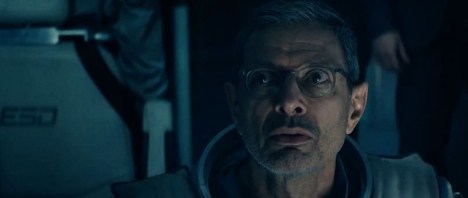
Not quite the Gold(blum) standard.

Not quite the Gold(blum) standard.

Continue reading

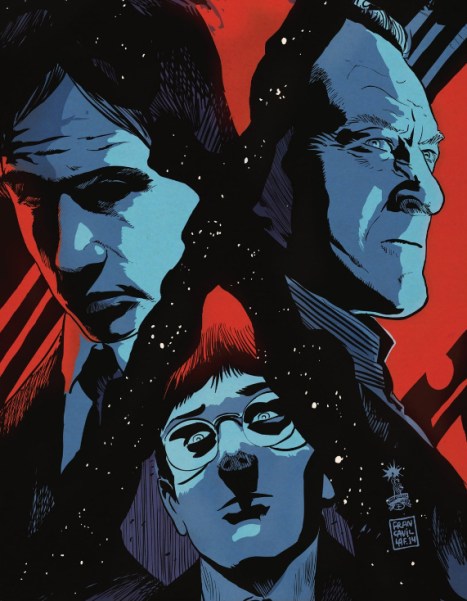
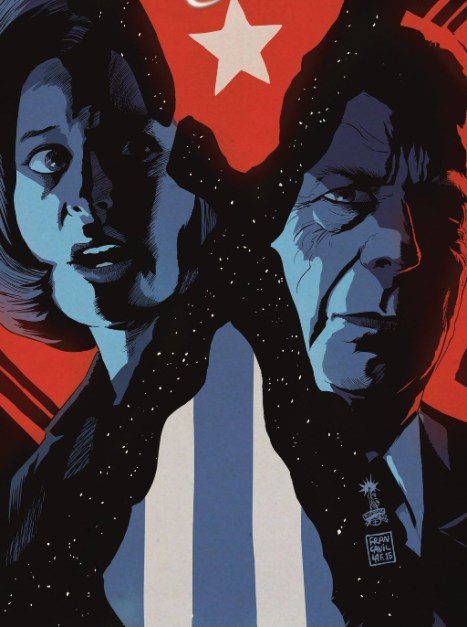
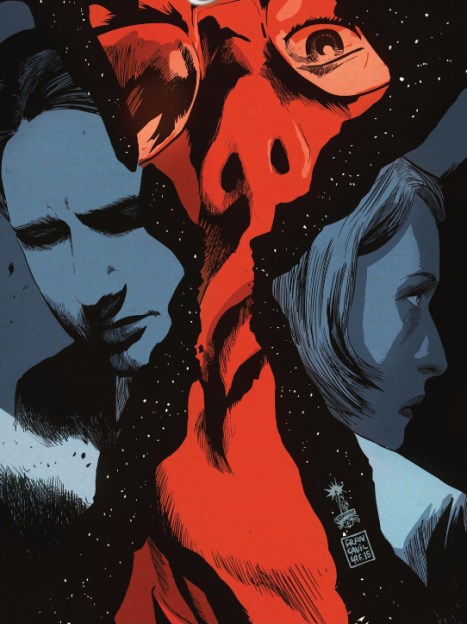
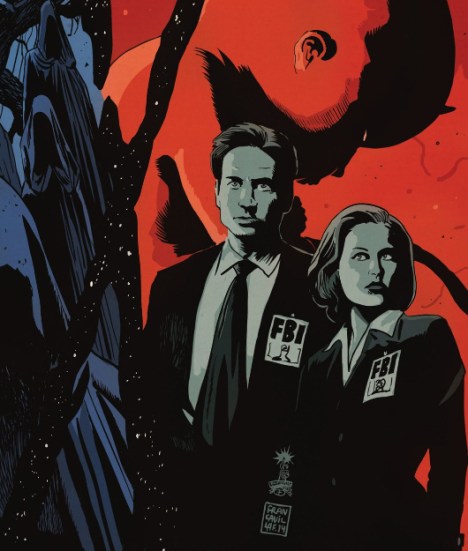
The X-Files: Season 10 (IDW) #21-25 – Elders (Review)

This June, we’re going to be taking a look at the current run of The X-Files, beginning with the IDW comic book revival and perhaps taking some detours along the way. Check back daily for the latest review.

One of the more disappointing aspects of The X-Files: Season 10 and The X-Files: Season 11 is that it does very little to adapt the mythology to the twenty-first century.

The X-Files is very much a show rooted in the political and cultural context of the nineties. Everything about the show’s first seven seasons reflects the Clinton era, with the series perfectly capturing the zeitgeist in the weird lacuna between the fall of the Berlin Wall and the destruction of the World Trade Centre. At its peak, the show touched on underlying anxieties that are social, political and existential; it asked tough questions about identity in the final days of the twentieth century. As much as Friends or The Simpsons, The X-Files embodied the nineties.

The son becomes the father... And the pseudo-son...

The son becomes the father…
And the pseudo-son…

As such, any revival of The X-Files must face questions of relevance. The X-Files so perfectly captured the spirit of the nineties that removing the series from that context runs the risk of severely damaging it. What makes now such a perfect time for The X-Files? What does The X-Files have to say about contemporary culture? How will the show be tweaked for modern audiences and sensibilities? These are not trivial questions. Any X-Files revival should be more than just a nostalgic “victory lap.”

This question of relevance faced the revival miniseries, but it also faced The X-Files: Season 10. What does The X-Files mean in the modern world? Harris had broached the question in a number of different ways, perhaps most skilfully in his approach to the classic “small town horror stories” that populated the show’s nine-season run. Whereas those stories tended to touch upon themes of globalisation and the erosion of so-called eccentric spaces, Harris used stories like Chitter and Immaculate to explore a growing cultural divide in twenty-first century America.

Cuba libre...

Cuba libre…

However, The X-Files: Season 10 does not work quite as well when it comes to updating the mythology for the twenty-first century. A lot of this is down to the strong nostalgic pull of the nineties mythology. Harris employs a lot of the same elements that were in play while the show was on the air; the same characters, the same dynamics, the same story beats. There were occasional nods towards the changing geopolitical realities, such as the use of black-oil-as-oil in Pilgrims. However, the revived mythology never engaged with the twenty-first century as well as it might.

Effectively serving as the season “finale”, Elders makes the strongest play for relevance yet. It consciously references and evokes the imagery of the War on Terror in its exploration of Gibson Praise’s revived conspiracy. Unfortunately, it doesn’t quite work.

Cross to bear...

Cross to bear…

Continue reading

The X-Files: Season 10 (IDW) #16-17 – Immaculate (Review)

This June, we’re going to be taking a look at the current run of The X-Files, beginning with the IDW comic book revival and perhaps taking some detours along the way. Check back daily for the latest review.

Immaculate is perhaps most notable for reintroducing the character of Frank Black.

One of the more interesting ironies of Millennium is the fact that show had a smaller fanbase than The X-Files, but also a much more vocal campaign to resurrect the series. Outside of a few die-hards eagerly hoping for a third film, X-Files fans had only really begun to clamour for the series to return following the hype around the show’s twentieth anniversary. In contrast, fans of Millennium had been angling for a continuation of their beloved series for years in a number of high-profile ventures.

Familiar demons...

Familiar demons…

Perhaps the most obvious of these campaigns was the Back to Frank Black campaign, which was even endorsed by series star Lance Henriksen providing an introductory voiceover to the Millennium Group Session podcasts urging listeners that “the time is now” and which put out a wonderful series of critical essays and interviews concerning the series in October 2012. As recently as August 2015, they were organising a campaign to bring a revival to Netflix. When the return of The X-Files was announced, one of the big recurring questions was “what about Frank Black?”

As such, it seemed like it was only a matter of time before Frank Black turned up in IDW’s monthly X-Files comic book series.

Baby on board.

Baby on board.

Continue reading

Non-Review Review: The Nice Guys

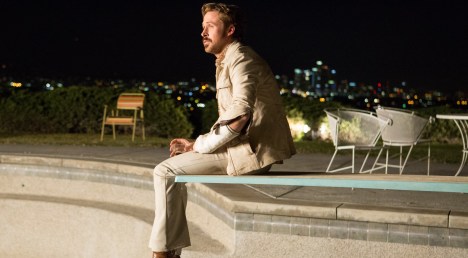
The Nice Guys is a superb piece of work, a retro seventies buddy action comedy with charm to spare.

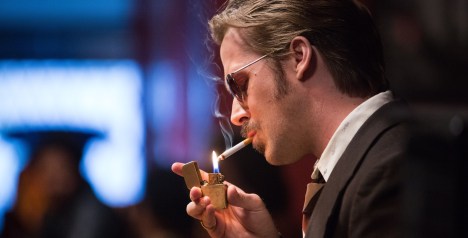
The Nice Guys is dripping with period detail. The opening tracking shot swoops behind the iconic “Hollywood” sign, still trapped in a state of decay. The characters wear brightly coloured suits. The soundtrack is populated by recognisable disco and funk songs. There are repeated references to President Richard Nixon. Characters smoke like troopers and drive around in open-top convertibles while somehow managing an unhealthy combination of sideburns, stubble and moustaches. In short, the film is set in the seventies, and the audience won’t forget it.

Cigarette-Smoking Man.

Cigarette-Smoking Man.

However, The Nice Guys has a much deeper retro charm. It harks back to the sort of buddy action films that have become a rarity these days, the story of two lovable klutzes who wander into a life-or-death mystery that gradually unravels over the course of two hours. The stakes are charmingly low-key; there is no city destroyed, no threat on a planetary scale. The characters are broadly drawn archetypes, but neither have be chosen or fated. There are at most a couple of lives resting on their shoulders, their own included.

The Nice Guy harks back to a very nineties buddy action comedy aesthetic, demonstrating a nostalgia that is more than skin deep, but which is nonetheless endearing.

Board to death.

Board to death.

Continue reading

Star Trek: Enterprise – Bound (Review)

This May, we’re taking a look at the fourth (and final) season of Star Trek: Enterprise. Check back daily for the latest review.

Bound is, for all intents and purposes, the last standalone episode of Star Trek of the Rick Berman era.

There are five more episodes following Bound, but they consist of two two-parters and the official series finale. Bound is very much the last “regular” episode of Star Trek: Enterprise to be produced, the last episodic adventure in the series. In fact, given the trends in contemporary television that are nudging the format towards serialisation and long-form storytelling, it seems entirely plausible that Bound could be the last standalone episode of Star Trek ever produced.

Strike a pose.

Strike a pose.

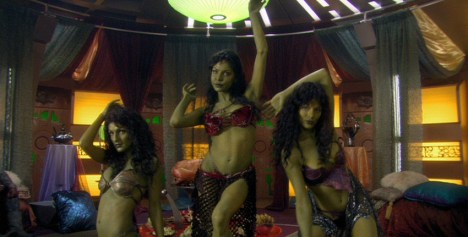
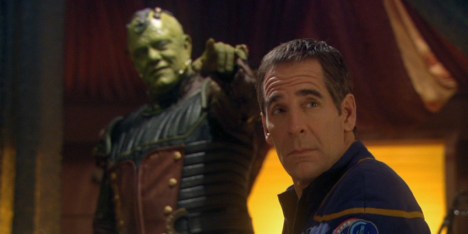
As such, it is a shame that Bound is a complete and utter disaster. It is an embarrassment to the series and to the franchise. More than that, it is an embarrassment that was written by the fourth season showrunner and which feels very much like the big ideas of the fourth season carried to their logical conclusion. Bound recalls the horrible sexism of episodes like Precious Cargo and Bounty, cloaking its objectionable sexual politics in the guise of nostalgia. Arguably the best things about Bound is that it makes Rajiin seem well-constructed in comparison.

Bound is easily the worst episode of the season and a strong contender for one of the worst episodes of the series. What better way to remember Enterprise?

Nostalgic sexism, hoy!

Nostalgic sexism, hoy!

Continue reading

Star Trek: Voyager – Flashback (Review)

This February and March (and a little bit of April), we’re taking a look at the 1995 to 1996 season of Star Trek, including Star Trek: Deep Space Nine and Star Trek: Voyager. Check back daily for the latest review.

Flashback was largely advertised as Star Trek: Voyager‘s contribution to the thirtieth anniversary celebrations of the Star Trek franchise.

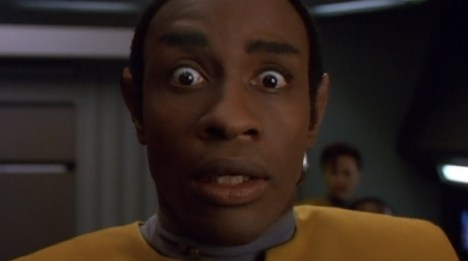
It featured guest appearances from three alumni of the original show. It was set during the events of Star Trek VI: The Undiscovered Country. It featured Tuvok and Janeway dressing up in movie-era uniforms. It was publicised as “a very special episode.” It aired only three days after the thirtieth anniversary, while Star Trek: Deep Space Nine waited nearly two months to broadcast Trials and Tribble-ations. Anybody would be forgiven for looking at Flashback as the obligatory nostalgic celebratory adventure to mark the thirtieth anniversary of the Star Trek franchise.

Hero shot.

Hero shot.

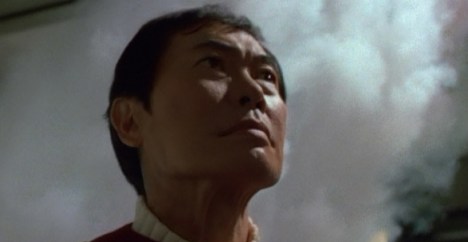
Put simply, Flashback does not work in that context. Although it features Captain Hikaru Sulu, the episode doesn’t actually allow him to accomplish anything. As far as “secret histories” go, the episode turns out to be a bit of a cul de sac. More to the point, the continuity is a mess, both in broad franchise terms and specifically with regards to the feature film it heavily references. Although it is great to see Grace Lee Whitney and George Takei back, the script only allows them to interact with Tim Russ and (fleetingly) Kate Mulgrew.

In fact, it could convincingly be argued that Future’s End, Part I and Future’s End, Part II do a much better job of filling the “celebratory thirtieth anniversary story” slot than Flashback, despite the notable absence of any actual characters from the original show. Future’s End, Part I and Future’s End, Part II feel like a gigantic (and enjoyable) homage to Star Trek IV: The Voyage Home, which is both hugely fun and also weirdly appropriate in a play-on-words sort of way. That is more in line with what fans were expecting for the anniversary: nostalgic fun.

Tim Russ was as excited as anyone to get a Tuvok episode.

Tim Russ was as excited as anyone to get a Tuvok episode.

In contrast, Flashback is something altogether stranger. Brannon Braga had been working on the story before it was suggested that Voyager should do a thirtieth anniversary episode, and Flashback plays more as a Brannon Braga script that ties into an anniversary more than an anniversary episode that happens to be written by Brannon Braga. Despite its high-profile guest cast, Flashback has more in common with Braga’s mind-bending scripts for Frame of Mind or Projections than with Trials and Tribble-ations.

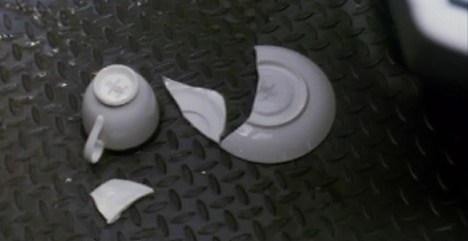
Nevertheless, there is something fascinating about Flashback, because it allows Braga to use the springboard of the thirtieth anniversary to talk about memory.

The teacup that he shattered didn't come together...

The teacup that he shattered didn’t come together…

Continue reading

The X-Files – Resist or Serve (Review)

This January, to prepare for the release of the new six-part season of The X-Files, we’re wrapping up our coverage of the show, particularly handling the various odds and ends between the show’s last episode and the launch of the revival.

The X-Files disappeared rather quietly from television.

Despite the talk of launching a film series, the franchise was allowed to lie fallow for a couple of years. There were a number of reasons for this. Immediately following the broadcast of The Truth, Chris Carter disappeared out into the world. The creator and executive producer had worked for almost a decade without any real break. It made sense for the writer to avail of the opportunity to get away from it for an extended period of time. A breather felt more than justified after overseeing more than two hundred episodes of television.

Game on...

Game on…

The band broke up. Members of the production team took jobs elsewhere. Frank Spotnitz and Vince Gilligan worked with veteran director Michael Mann on Robbery Homicide Division. John Shiban joined the writing staff on the second season of Star Trek: Enterprise. There was a sense that The X-Files had faded into the ambient background radiation of popular culture, its constituent elements – whether writers or directors or even themes or storytelling techniques – ready to flavour a new generation of television production.

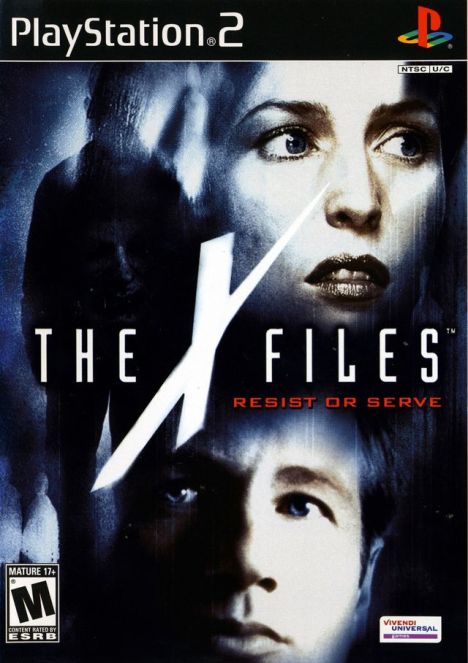
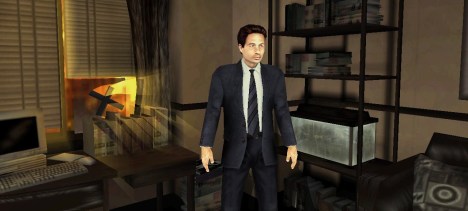
However, there were signs that the show might linger on. Even if the sequel to The X-Files: Fight the Future had yet to materialise, it lurked just over the horizon. Critical and fan consensus was starting to form around the show. Although The X-Files might have been finished, its legend was still being solidified. Resist or Serve is very much a part of this process. Released on Playstation 2 in March 2004, Resist or Serve was a very disappointing video game. However, it was also a very instructive insight into just how the legend of The X-Files was shaping up.

Feels like going home...

Feels like going home…

Continue reading

The X-Files – Sunshine Days (Review)

This December, we’re taking a trip back in time to review the ninth season of The X-Files.

Well, here’s hopin’ the TV stays off and he learns how to love the real world.

– Doggett stops just short of adding “… and that goes for you as well.”

The X-Files was always a more romantic show than it would readily admit.

The popular image of the show might be Mulder and Scully walking through darkness searching for a truth that may never be revealed or a hideous monster preying upon innocent victims. Chris Carter’s most successful work might be rooted in the dual betrayals of Watergate and Vietnam. The characters might stalk car parks late at night or explore the darkest corners of the urban landscape. Mulder and Scully might be abducted by forces beyond their control, and subjected to the cruel whims of uncaring fate. The show’s motto might be “trust no one.”

"Let's call it a day..."

“Let’s call it a day…”

Nevertheless, that cynicism is offset with a deep-seated romance. “Trust no one” is one of the defining mantras of The X-Files, but there are other more optimistic catchphrases; “I want to believe” and “the truth is out there.” Optimism outvotes cynicism by a two-to-one majority. It is not quite a decisive victory, but it is something in this cynical and chaotic world. While Mulder and Scully might never actually find the truth which they so desperately seek, they did find one another. That is more than either could have hoped and than some people can claim.

Sunshine Days is a staggeringly romantic and optimistic piece of television. Indeed, it suggests that the cynicism of The X-Files was really just a practiced veneer. As the title suggests, Sunshine Days allows the central cast to smile more frequently over forty-five minutes than most have in the course of their entire run on the show. As with the rest of the show, Sunshine Days is rooted in the culture of the seventies. However, there is something quite heartwarming in how Vince Gilligan eschews All the President’s Men for The Brady Bunch.

Out of this world...

Out of this world…

Continue reading