• Following Us

  • Categories

  • Check out the Archives


  • Awards & Nominations

Non-Review Review: Float Like a Butterfly

Unlike its protagonist, Float Like a Butterfly never quite figures out what it wants to be.

Float Like a Butterfly finds itself trapped between two different genres. On one side, Float Like a Butterfly aims for gritty social realism, charting a Traveller family as they attempt to navigate the uncaring Ireland of the early seventies. This is a familiar and naturalistic coming of age story, focusing on young Frances as she tries to hold her family together while her recently released father Michael sinks deeper and deeper into a drunken stupor. Frances is caught between the conservative patriarchal ideals of her own community, and the predatory hatred of the outside community.

The haymaker.

On the other hand, Float Like a Butterfly tries to position itself as an empowering sports movie, the familiar template about a confused and alienated young person who finds meaning and purpose through the expression that sport offers. Inspired by none other than Mohammad Ali himself, Frances aspires to become “the greatest.” She takes up boxing, even inheriting a set of gloves at one point. This is a story about a woman who is pressed in by a conservative society, but who finds a necessary outlet through sport. It is a feel-good triumphant narrative.

To its credit, Float Like a Butterfly plays both sides of this narrative relatively well; it offers a compelling portrait of life on the margins when it aims for naturalism, and delivers the feeling of empowerment and elation when it evokes those upbeat sports films. The big problem with Float Like a Butterfly is that it never reconciles these two competing halves into a single cohesive film. It is too meandering and too grounded to really sell itself as a sports narrative, but too heightened and too structured in its familiar plot rhythms to work as a slice of life.

Winning ribbons.

Continue reading

Non-Review Review: Detective Pikachu

Detective Pikachu is disarmingly cute, both the movie and the character.

There are a number of serious problems with Detective Pikachu, although none of them are so serious as to become fatal flaws and most are easily explained by virtue of the film’s target audience. Most obviously, Detective Pikachu is never a movie that is particularly elegant in its storytelling. This is a film that burdened with an impressive volume of visual and spoken exposition, particularly in the opening half-hour. Characters are constantly expositing to one another, and often spelling out their motivations and perspectives for the benefit of the audience.

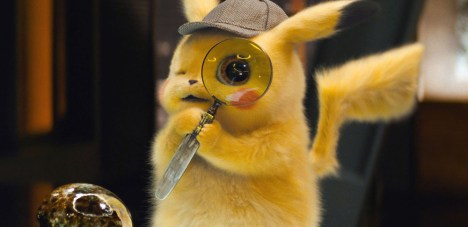
“Just want to take another Pikachu.”

However, once Detective Pikachu gets past that, there’s a lot of charm on display. A lot of that is down to the two central performances from Ryan Reynolds and Justice Smith, both of whom provide solid emotional throughlines and play the comic absurdity of the premise. There is also a lot to be said for the efficiency of the script, which rockets through virtually everything that the audience might expect from a Pokémon film. The energy of the cast prevents it from ever feeling too much like a checklist.

Detective Pikachu never quite achieves the level of transcendence, never pushes past its simple premise towards something more intriguing or compelling. Instead, Detective Pikachu delivers pretty much what it promises, with an endearing and infectious smile on its face.

No drive.

Continue reading

Non-Review Review: Extremely Wicked, Shockingly Evil And Vile

There’s an interesting film somewhere within Extremely Wicked, Shockingly Evil And Vile.

After all, the serial killer is a fascinating figure in the American popular consciousness. Although the serial killer’s stature has declined since its peak in the nineties, the recent “true crime” boom on both streaming services and in podcasts have helped to reignite some interest in the figure. Indeed, it is worth noting that Extremely Wicked, Shockingly Evil And Vile feels almost like a companion piece to director Joe Berlinger’s other Ted Bundy project, the Netflix documentary Conversations with a Killer: The Ted Bundy Tapes. As such, it is perhaps revealing that Extremely Wicked, Shockingly Evil And Vile feels like an appendix to The Ted Bundy Tapes, an extra that dramatises the meatier material presented in that streaming service true crime documentary.

Killer good looks.

After all, although Berlinger has worked on narrative films before, he is known primarily as a documentarian. (There is some small irony that his most prominent narrative film is Blair Witch 2: Book of Shadows.) Inevitably, Extremely Wicked, Shockingly Evil And Vile would feel secondary. It may have premiered on the festival before The Ted Bundy Tapes, but it was released afterwards, ensuring that to the casual viewer it will seem like something of a response to that breakout hit. More than that, though, Extremely Wicked, Shockingly Evil And Vile feels like it has very little new to say about either its serial killer or its cultural context. There is surprisingly little in Extremely Wicked, Shockingly Evil And Vile that isn’t evoked by the words “Ted Bundy.”

The serial killer is a well-explored subject in popular fiction, having been the focus of decades of narratives and deconstructions. Extremely Wicked, Shockingly Evil And Vile looks for an interesting angle on its subject, but never finds a way in. The result is a film that has an interesting premise, but which struggled to get under the skin of a serial killer.

Slice of life.

Continue reading

Non-Review Review: A Dog’s Journey

A Dog’s Journey is incredibly earnest.

To be fair, it kind of goes with the territory. A sequel to A Dog’s Purpose, the film fits comfortably in the same “narrating baby or animal observes the adult world” subgenre as the Look Who’s Talking films. The basic premise of the film finds a beloved family pet reincarnating over and over again in order to serve as a spiritual companion to a family across three generations. Voiced by Josh Gad across a wealth of breeds, genders and personas, this “boss dog” finds themselves drawn towards a family struggling to hold itself together amid incredible internal tension.

Hardly a crowning accomplishment.

The premise and execution are admittedly very hokey. The characterisation is threadbare. The actors vary wildly in terms of skill. The jokes are often hackneyed and overly familiar. The script is full of strange narrative cul de sacs and tangents that occasionally stall the forward momentum of the film. A Dog’s Journey is an exceptionally tightly (or even well-) constructed film. However, the almost aching levels of sincerity almost hold it together despite these sheering forces.

At the heart of A Dog’s Journey is an incredibly simple-yet-heartfelt idea of the relationship that exists between a dog an it’s owner. Late in the film, one character concedes to another, “It must be nice to have something that loves you unconditionally.” For all the film’s flaws, it never doubts the idea that the love of a dog for its owner (and perhaps vice versa) is truly unconditional and uncompromising, no matter how complicated the world around that relationship might become.

Fields of gold.

Continue reading

Non-Review Review: Avengers – Endgame

It says a lot about the state of contemporary pop culture that the biggest movie of the year is essentially a clip episode.

Pop culture has always been vaguely nostalgic, evoking an idealised past and reminding audiences of times when the future seemed brighter. After all, much of the New Hollywood canon is explicitly nostalgic, sixties and seventies films that pay loving homage to the thirties and the forties, often explicitly; The Sting, The Godfather, Paper Moon, Chinatown, Bonnie and Clyde. The past has always had a certain allure for cinema, perhaps because that’s what pictures have always been; individual moments captured on film and frozen in time, removed from their original context. Film is simply those frozen images run together to create the illusion of movement and life. Every film is a time machine, some are just more explicit than others.

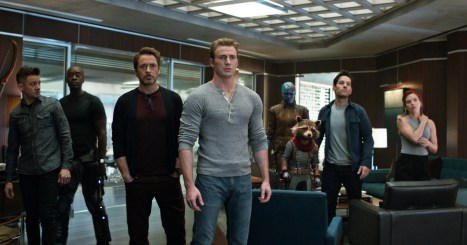
Assembly line.

However, there is something fascinating about the modern wave of nostalgia, the speed at which pop culture is consuming itself. Recent waves of seventies, eighties and nineties nostalgia are still cresting. Earlier this summer, Captain Marvel channeled some of this nineties nostalgia into blockbuster (and Blockbuster) form. However, it also feels like nostalgia is getting closer and closer to the present, brushing up against the current moment. In some respects, the success of Lady Bird is indicative here. After all, Lady Bird is a film that is explicitly nostalgic about the post-9/11 era, evoked through footage of the Iraq War and the sounds of Justin Timberlake playing at a teen house party.

Avengers: Endgame is a strangely nostalgic beast. It is not strange that the film is nostalgic; after all, this is something of a coda to a decade of superhero films. However, it is strange how that nostalgia brushes up against the present, the climax of the film feeling very much like a loving homage to Avengers: Infinity War, a film that only premiered one year ago.

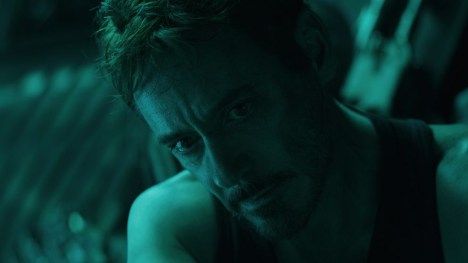
Stark raving mad…

Continue reading

Non-Review Review: Little Woods

Little Woods is a slow and somber film that never rushes, perhaps because it understands that its characters have no place to go.

There’s a strong central irony built into Little Woods, a story that unfolds against the north-western frontier of Washington State. Ollie lives on what is effectively the edge of the frontier, that great American wilderness. However, manifest destiny has not delivered. The frontier is not as vast as it might seem. Instead, Ollie finds herself trapped on the edges, pressed against the limits of the United States. Little Woods is a story about the boundaries on the extremes of the American Dream. It is no coincidence that Nia DaCosta’s theatrical debut opens and closes at the Canadian border; it is a story of character who are pressed and squeezed against the margins, at the end of everything that they know.

The circumstances Tessa-t her.

There is a compelling stillness to Little Woods, anchored in a fantastic central performance from Tessa Thompson. Little Woods works well in several different modes: as a character study, as a crime drama, as a frontier story. The film is suspenseful when it needs to be, capable of making the audience squirm when it wants them to. However, it is most effective in its relative stillness. Little Woods never feels sensationalist or absurd. It never feels exploitative or stylised. Instead, there is something very effectively grounded and mundane in the portrait that the film traces of those people trapped on the margins. There is something very matter-of-fact about the way in which Little Woods portrays the choices (or, more importantly, the lack of choices) afforded its characters.

Little Woods is an evocative, effective and atmospheric about characters living in a liminal space.

Sister act.

Continue reading

Non-Review Review: Little

Little overcomes some big problems.

There are a number of very obvious flaws with Little. On a very superficial level, the film suffers from the problem that affects a lot of comedies. Little is simply not as funny as it thinks that it is. The jokes are not bad, and don’t fall flat, but also don’t land as efficiently as they might. Even beyond that, Little suffers from some very serious structural issues. The film has a short attention span, often allowing its focus to wander without a clear sense of purpose or motivation. More than that, Little often struggles to decide which of its two primary plots (and leads) to focus upon.

A Little goes a long way.

These are serious issues, and they prevent Little from working as well as it might otherwise. However, the film works much better than these issues would suggest. There is something surprisingly endearing about Little, a genial quality that prevents the film from ever crashing too hard. It isn’t just the relatively simple (bordering on simplistic) central thesis about childhood and playfulness, it is also the empathy that the film feels for most of its cast, especially those introduced as comedic fodder. Little is a very pleasant film, particularly by the standards of studio comedy.

However, the film’s ace in the hole is its fifteen-year-old star Marsai Martin, perhaps best known for her work on Blackish. Martin produced Little as a vehicle for her talent, and it is an effective showcase. Martin carries a surprising amount of the film with a surprisingly nuanced performance for what is a deliberately broad comedy. Martin is not only game for the film’s jokes, but also capable of handling the broad emotional range (and swift emotional transitions) that the script demands of her. Little might just be Martin’s big break.

Somebody’s assistant could use a pay bump.

Continue reading

New Podcast! Scannain Podcast (2019) #13!

It’s time for the Scannain podcast!

This week, I join Grace Duffy, Ronan Doyle and Jay Coyle to discuss the week in film. There’s a lot to cover this week, most obviously the passing of Agnès Varda, who was something of a patron saint of the podcast. However, the film news also covers the United States Justice Department’s intervention in the row between Netflix and the Academy, big announcements from Cinema Con, news about Disney’s purchase of Fox, the Newport Beach Film Festival, and the Celtic Media Awards.

All of this plus the top ten and the new releases.

The top ten:

  1. How to Train Your Dragon III: The Hidden World
  2. Die Walkure – Met Opera 2019
  3. The Lego Movie 2: The Second Part
  4. Green Book
  5. Instant Family
  6. Lucifer
  7. What Men Want
  8. Captain Marvel
  9. Us
  10. Dumbo

New releases:

Non-Review Review: Unicorn Store

Unicorn Store is, appropriately enough, a strange beast.

Brie Larson’s feature-length directorial debut, adapted from a screenplay by Samantha McIntyre, struggles to manage its tone. What is Unicorn Store? Who is the target audience for Unicorn Store? The stylistic sensibilities of Unicorn Store evoke the modern American mid-budget indie film; the listless title character stuck in arrested development, the cast populated by distinguished character actors like Joan Cusack and Bradley Whitford, the use of shaky handheld camerawork to create a sense of grounded intimacy and authenticity. However, the narrative itself aspires towards something more surreal and strange, the sort of abstract stylised magical realism associated with directors like Michel Gondry or Tim Burton.

Painting a perfect picture.

Similarly, the story itself never seems to figure out at what level it wants to pitch itself. Is Unicorn Store meant for children, with its empowering story about the importance of pursuing one’s dreams in a world that expects too much adult responsibility too quickly? If so, the narrative is too rooted in adult fears and anxieties to really land, the whimsical wonder often eroded by more mundane realities that are of little interest to a young audience. Is Unicorn Store aimed at an older audience then, people like the lead character Kit, who never grew up despite society constantly telling them that they needed to? If so, the story is too light and fluffy, too superficial and too simplistic in its outlook.

Perhaps, like the mysterious “Store” featured in the film, Unicorn Store is trying too hard to be all things to all people. Indeed, the climax of the film hinges on the idea that the eponymous “Store” cannot satisfy all of its customers. While the Unicorn Store attempts to put an optimistic spin on this, there is a sense in which this is true of the film itself. Unicorn Store seems so eager to be everything that anybody could want it to be that it never figures out what it actually is.

Making her mark.

Continue reading

Non-Review Review: Missing Link

Missing Link is yeti ‘nother triumph for stop motion animation studio Laika.

To be fair, Missing Link is a different beast than Kubo and the Two Strings, the last major release from the studio and one of the most striking (and under-appreciated) animated films of the last decade. Kubo and the Two Strings was a lyrical and powerful fairy tale, a surprisingly weighty meditation on big ideas like the stories that people tell and the losses that they carry around with them. Missing Link is a much lighter film than that, a piece of film that is much less consciously mature in the story that it is telling. This is not to suggest that Missing Link is shallow or superficial, or that it ignores big ideas in favour of small delights. However, Missing Link is a film that foregrounds its visceral thrills over its central themes, and there isn’t anything inherently wrong with that.

Armed and dangerous.

Although Missing Link director Chris Butler co-wrote the script for Kubo and the Two Strings, it is probably more accurate to treat Missing Link as a more mature extension of Butler’s last work for the studio. Missing Link might be seen as a more reflective and introspective take on some of the core ideas of ParaNorman, a similar high-energy romp that meditated upon the relationship that exists between mankind and those things which exist beyond mortal comprehension. Missing Link is sturdily constructed from a narrative perspective, with well-defined characters who are given strong arc and a script that understands both what it is trying to say and how best to say it without tripping over itself. However, the script also understands that it is not the primary draw to Missing Link.

Whereas Kubo and the Two Strings felt like an intricate portrait drawn from the deepest pools of the animators’ imagination, Missing Link is a much more kinetic and dynamic piece. Missing Link is a globe-trotting adventure that spans from the deep blue-green forests of Washington State to the snowy plains of the Hindu Kush. It is the sort of rollicking old-fashioned adventure populated by heroes who spend a lot of time charting train lines and ferry lanes on maps, where obligatory back story is delivered against mesmerising backdrops, and where a variety of energised and imaginative action scenes arrive to a tightly-calculated schedule. Missing Link might lack the complexity of Kubo and the Two Strings, but there’s an infectious dynamism to Missing Link that neatly compensates.

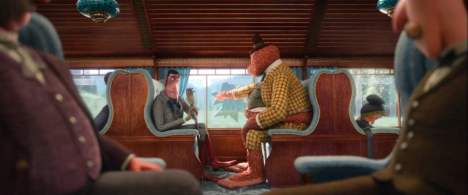
Following their train of thought.

Continue reading