• Following Us

  • Categories

  • Check out the Archives


  • Awards & Nominations

Star Trek: Voyager – Scientific Method (Review)

Scientific Method is in many ways the flip side of the coin to episodes like Nemesis, Distant Origin or Remember.

Nemesis, Distant Origin and Remember were effective demonstrations of Jeri Taylor’s approach to Star Trek: Voyager, a conscious effort to downplay the unique premise of the show in favour of pitching a more generic sort of Star Trek. With that in mind, Nemesis, Distant Origin and Remember constructed powerful allegories to examine pressing contemporary issues through the lens of science-fiction, resulting in episodes that represented one of the most defining aspects of the franchise: the sci-fi-tinged morality play.

Built into Voyager's DNA.

Built into Voyager’s DNA.

Not every example of this approach worked as well as those three episodes. Voyager began leaning into this more archetypal and generic Star Trek storytelling at the start of its third season, and the results were quite hit-and-miss. There were certainly brilliant examples in the seasons ahead, like Living Witness or Blink of an Eye. But not every allegory worked as well. Sometimes, the episodes were too didactic, like Critical Care or Repentance. Sometimes, the episodes were too generic, like The Chute. Sometimes, they were just ill-judged, as with Retrospect.

Scientific Method is a very bland and forgettable episode of Star Trek. It is not necessarily bad, but it is also not particularly memorable. In some ways, it demonstrates the limitations of the “generic Star Trek” approach to scripting for Voyager. Without a set of interesting and well-developed characters with strong dynamics in a series with a unique identity, an average episode can feel rather flat.
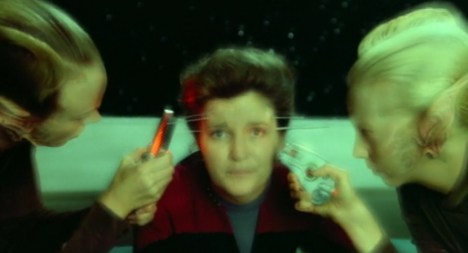
Give her head peace.

Give her head peace.

Continue reading

The Lone Gunmen – Bond, Jimmy Bond (Review)

This October/November, we’re taking a trip back in time to review the eighth season of The X-Files and the first (and only) season of The Lone Gunmen.

If The Pilot is a proof of concept, then Bond, Jimmy Bond is all about demonstrating that The Lone Gunmen can work on a weekly basis.

Second episodes are more important than most viewers realise. While television pilots typically enjoy larger budgets and looser schedules in an effort to demonstrate that a concept can work as a television show, second episodes are very much about demonstrating precisely how that model will be applied to the structure of a weekly television show. The second episode is about transitioning from a pilot into a weekly schedule. As such, Bond, Jimmy Bond is much more indicative of the first season of The Lone Gunmen than The Pilot was.

All set.

All set.

So Bond, Jimmy Bond is largely about laying groundwork for what follows, and for setting the tone for what comes next. The title makes this clear, introducing the fifth and final member of the leading ensemble. While The Pilot had made room for Zuleikha Robinson as the mysterious Yves Adele Harlow, Bond, Jimmy Bond introduces Stephen Snedden as the well-meaning but none-too-bright James “Jimmy” Bond. This is the cast as it will remain for the rest of the run, give or take a guest appearance from Kimmy the Nerd.

However, there are also changes behind the scenes. Rob Bowman directed The Pilot, his last piece of work with Ten Thirteen before leaving to concentrate on feature film work like Reign of Fire and Elektra. On the commentary to The Pilot, Frank Spotnitz affectionately joked that they couldn’t afford Bowman. That seems perfectly believable, given Bowman’s rising star. As such, Bryan Spicer was drafted in to direct Bond, Jimmy Bond. Spicer would direct the lion’s share of the show, helming six of the show’s thirteen episodes.

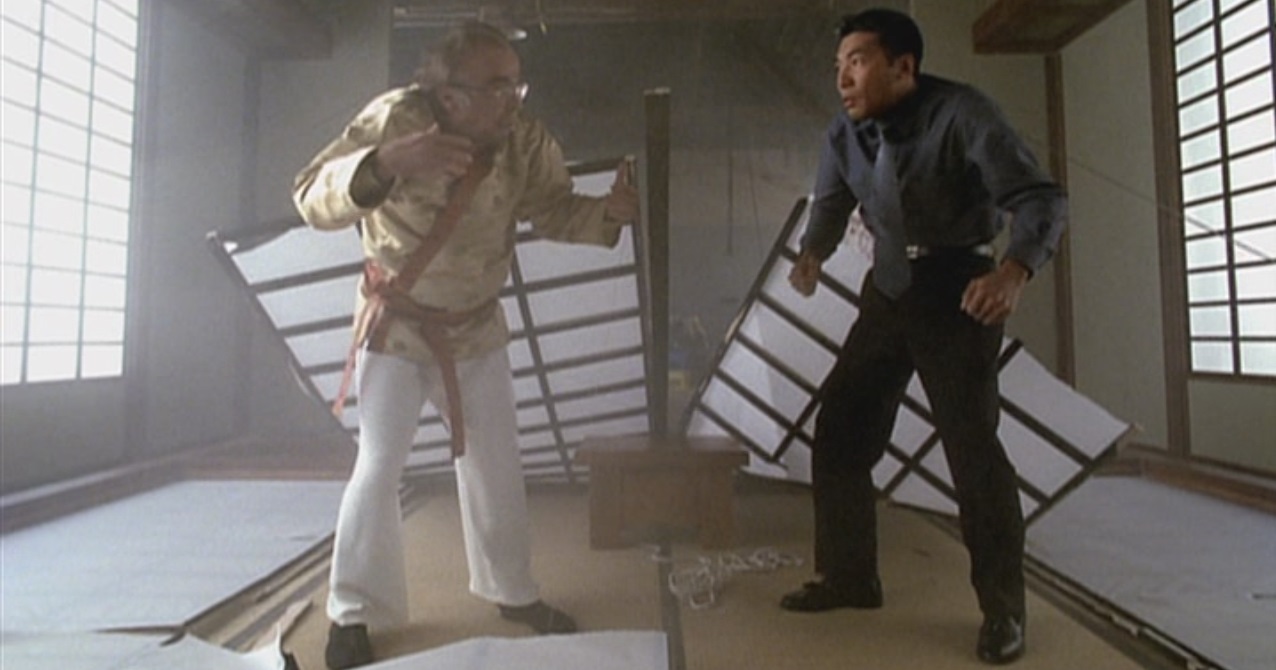
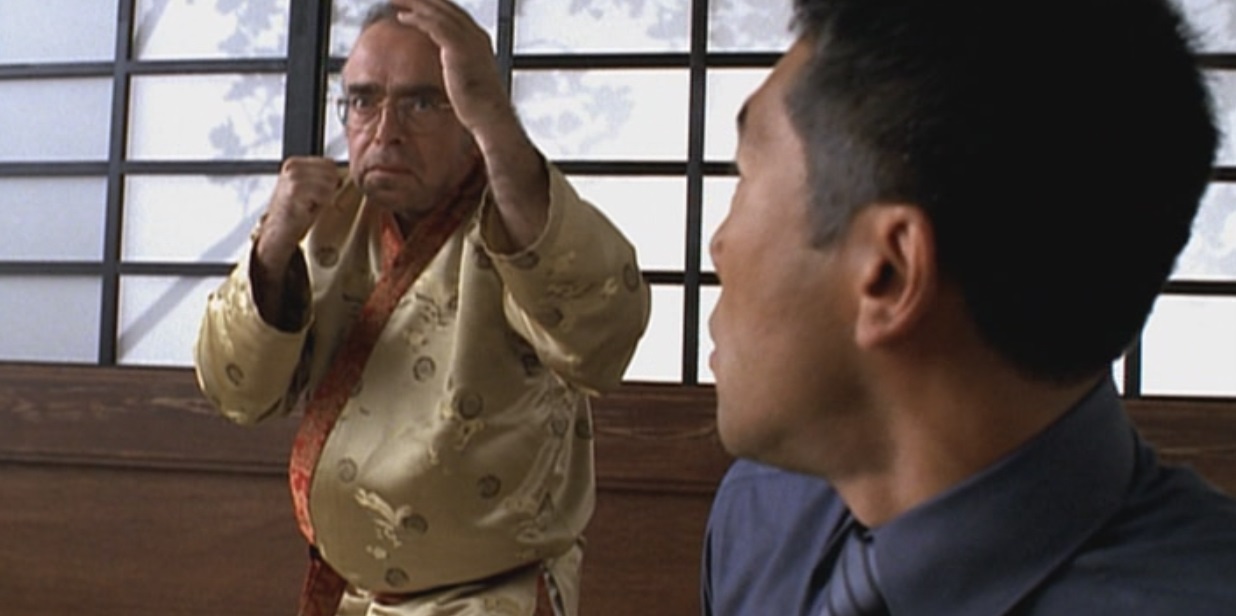
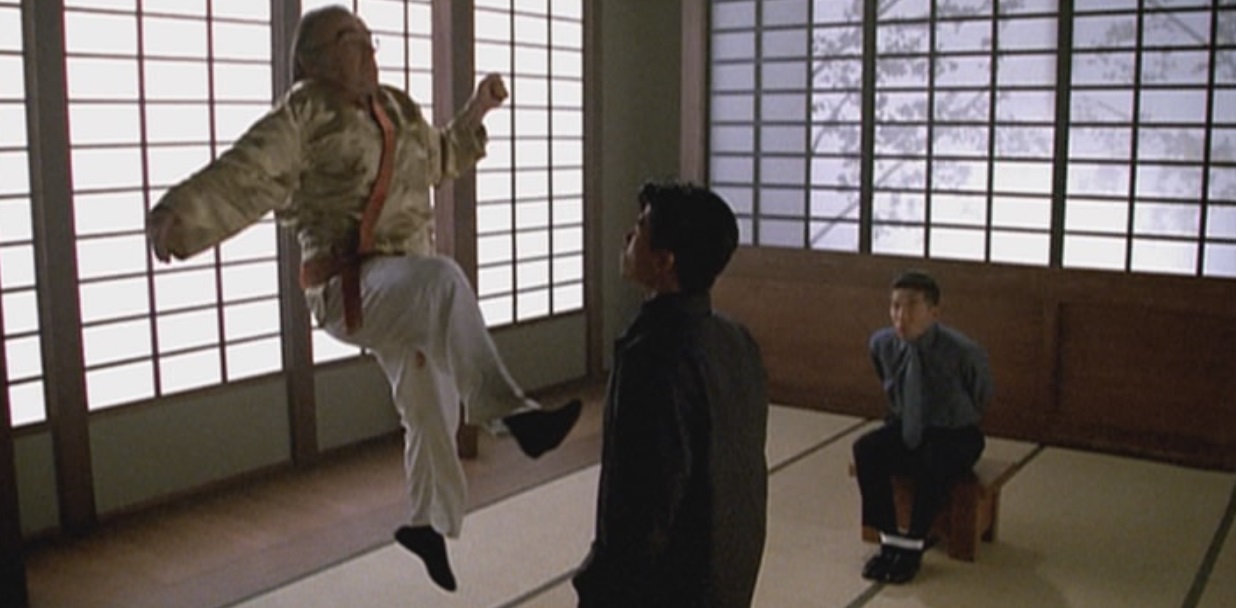
"I know kung-fu..."

“I know kung-fu…”

Spicer was very much the logical choice. He had only directed a single episode of The X-Files, but it was an important episode from the perspective of The Lone Gunmen. Spicer had helmed Three of a Kind towards the end of the show’s sixth season, the second Gunmen-centric episode and the show that provided a clear inspiration for the television series. In its own way, Three of a Kind was as much a pilot for The Lone Gunmen as Unusual Suspects or The Pilot had been, and Bryan Spicer was a perfectly logical choice for for the show’s signature director.

However, Bond, Jimmy Bond also cements some other details that will be important for the rest of the season. The Pilot had been an off-beat thriller, but it was a story with incredibly high dramatic stakes and a solid dramatic arc. The Pilot skewed, consciously or not, more towards a quirky thriller than an action comedy. As such, the wacky hijinks of Bond, Jimmy Bond are much more in line with the tone of the series than the grave threat that was posed in The Pilot. For better or worse, Bond, Jimmy Bond sets the agenda for the season ahead.

The last time Ten Thirteen got accused of mimicking The Matrix, everything worked out perfectly...

The last time Ten Thirteen got accused of mimicking The Matrix, everything worked out perfectly…

Continue reading

The X-Files – all things (Review)

This September, we’re taking a trip back in time to review the seventh season of The X-Files and the first (and only) season of Harsh Realm.

Say what you will about The X-Files, but the show was never afraid to be weird.

all things is a very odd piece of television. It is moody and atmospheric, philosophical and meandering. It is hard to contextualise, even within the framework of a season as eccentric and disjointed as the seventh season of The X-Files. It doesn’t really work, but that’s not a big problem. The seventh season is full of episodes that don’t quite work. There is definite ambition here, and a clear desire to say something that means something to actor (and director and writer) Gillian Anderson.

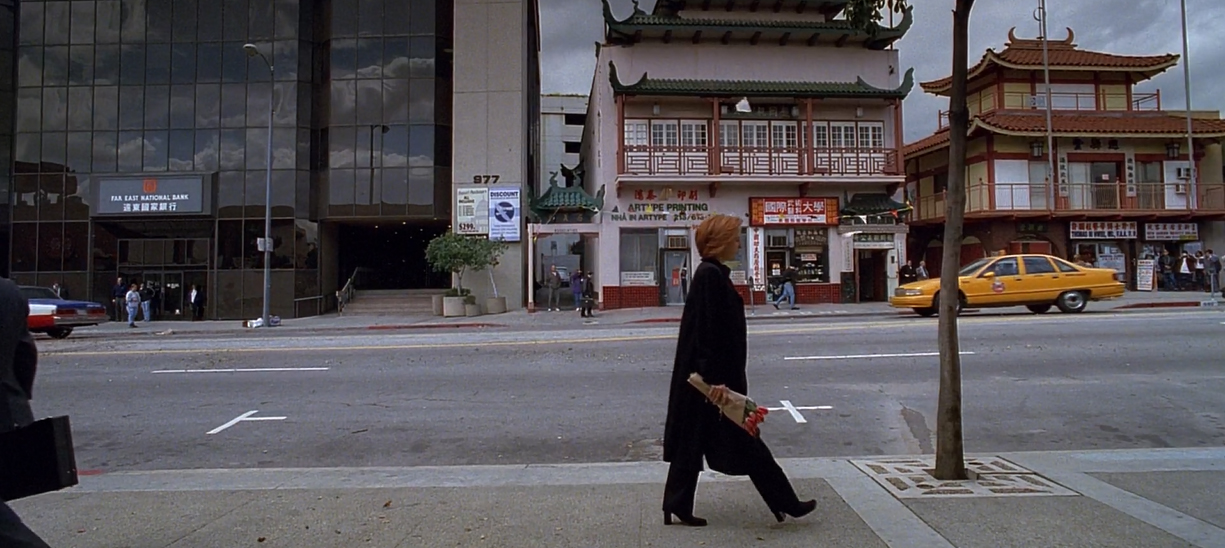
Walk o' life...

Walk o’ life…

Anderson exerts a very conscious gravity over all things. She is not the first actor to write and direct an episode of The X-Files, but she is the first to write and direct an episode centring on her character. all things is an episode written and directed by Gillian Anderson, with a heavy emphasis on Scully. This is as close to a treatise on the character as the actress is ever likely to produce. Perhaps this accounts for the heavy atmosphere and solemn tone of the piece.

all things is a mess of an episode, but it is an interesting mess. It is an episode that feels consciously at odds with both the show around it and the character at its centre. It is an awkward (and occasionally ridiculous) piece of television, but it looks and feels utterly unlike any other episode of The X-Files. That has to count for something.

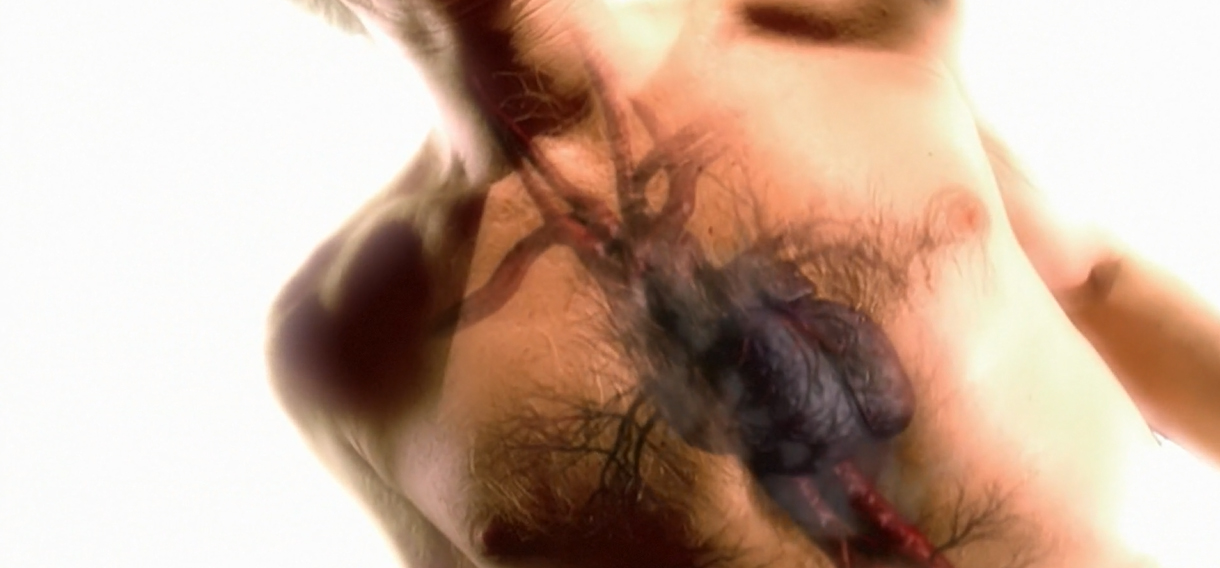
The beating of the world's heart...

The beating of the world’s heart…

Continue reading

The X-Files – Signs and Wonders (Review)

This November, we’re taking a trip back in time to review the seventh season of The X-Files and the first (and only) season of Harsh Realm.

Religion is a major part of The X-Files. After all, what is the show but a meditation on faith?

In a way, this is an aspect that dates the series. While the show’s conspiracy theories and surveillance culture paranoia resonate as effectively in 2015 as they did in 1995, the show’s religious themes seem innocent and naive in the wake of 9/11 and the War on Terror. Signs and Wonders was broadcast towards the end of January 2000. It is hard to imagine the episode being produced even two years later, once the world had been so thoroughly shaken by acts of religious zealotry.

Snaking along...

Snaking along…

The X-Files exists as a product of the nineties, pre-dating what many have termed “the new atheism.” It exists against the backdrop of the Clinton era, in the space between the fall of the Berlin Wall and the start of the War on Terror. There are points when the shew resonates beyond that; The X-Files is often a profound and thoughtful meditation on issues like trust and faith. However, there are also points where The X-Files almost seems fused in time; where it seems like a moment has been captured in celluloid like a mosquito trapped in amber.

Signs and Wonders feels like one of those moments, sitting between the failed impeachment of President Bill Clinton and the triumphant election of President George W. Bush. This is what the last gasp of the nineties looks like.

Snake handling...

Snake handling…

Continue reading

The X-Files – Rush (Review)

This November, we’re taking a trip back in time to review the seventh season of The X-Files and the first (and only) season of Harsh Realm.

When did The X-Files get so old?

As with a lot of the seventh season, Rush is an episode that seems consciously aware of the series’ advancing age. Whether watching Mulder’s life go by in The Sixth Extinction II: Amor Fati or battling zombies in Millennium, the seventh season is acutely aware of the fact that any prime-time drama that has been on the air for seven years is rapidly approaching obsolescence. What was once young and fresh becomes old and tired. There is a sense that the series really wouldn’t mind the prospect of retirement, now that it’s well past the syndication mark.

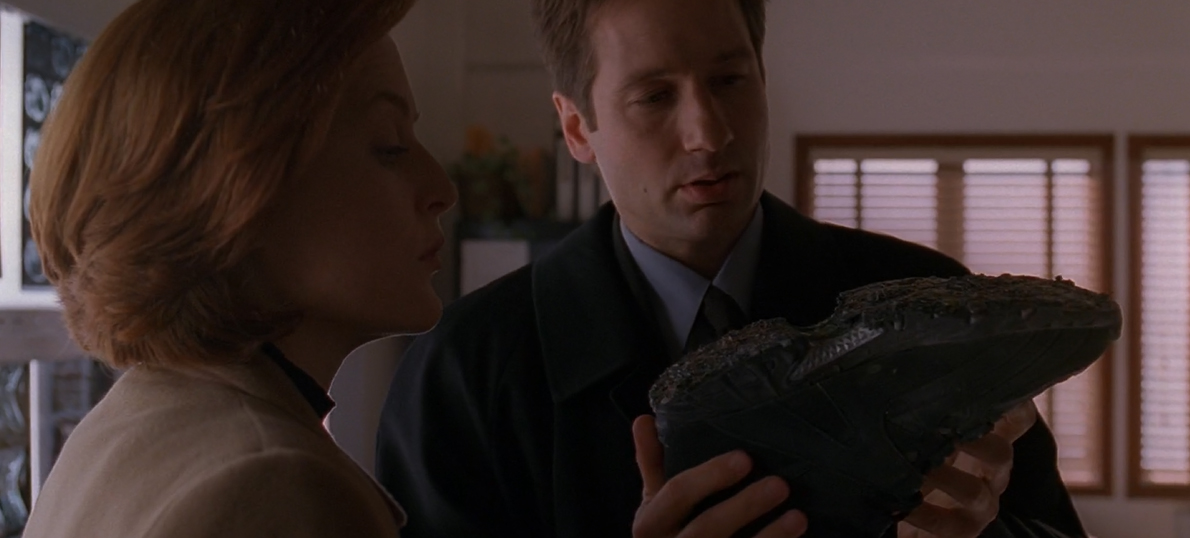
"He wore sneakers... for sneaking."

“He wore sneakers… for sneaking.”

Rush emphasises the advancing years of the show, often awkwardly putting its tongue in its cheeky as it suggests that Mulder and Scully are really lumbering dinosaurs trying to navigate the fast-paced world of high school. David Amann’s script is occasionally a little too wry and self-aware for its own good; this is an episode based around a laboured pun about how “speed” is also a drug, after all. Rush often demotes Mulder and Scully to passive observes, quipping and flirting from the sidelines as the plot unfolds around them.

Rush lacks the charm and dynamism that define the show’s (and the season’s) standout hours, but it is a well-constructed and enjoyable standalone adventure on its own terms. As with Hungry, it feels like a conscious effort to get “back to basics” with the series. If the seventh season is going to fixate on the series’ status as a televisual lame duck counting down its last few episodes, this is not such a bad way to do it.

Scully'll take a run at this...

Scully’ll take a run at this…

Continue reading

Millennium – Seven and One (Review)

This July, we’re taking a trip back in time to review the sixth season of The X-Files and the third (and final) season of Millennium.

Seven and One is the last episode of Millennium to be written by Chris Carter and Frank Spotnitz.

That is a pretty big deal. Frank Spotnitz had been a vital part of Ten Thirteen since the second season of The X-Files. He had also been the only X-Files writer apart from Chris Carter, Glen Morgan and James Wong to cross over to work on Millennium. He would become one of Carter’s most trusted associates, also contributing scripts to Harsh Realm and The Lone Gunmen. When The X-Files: Fight the Future took Carter’s attention away from Millennium in its second season, he proposed Spotnitz to run the show in his stead.

Here's Frankie!

Here’s Frankie!

Chris Carter had created Millennium, and it was clearly a show that meant a lot to him. While The X-Files was populist and accessible, Millennium always felt like more of an auteur project. It was solemn, abstract, contemplative. There is a sense that he was quite disappointed when his attention was diverted away from the show in its second year. Carter has talked time and time again about how he created Millennium as an examination of evil in the world. Appropriately enough, Seven and One finds him circling back around to that idea right before the show concludes.

Seven and One might be the most overtly religious script that Carter and Spotnitz have ever written. It seems to foreshadow the closing themes of Carter’s script for The Truth, the final episode of The X-Files. It emphasises just how essential religious themes are to Carter’s work.

Eye spy...

Eye spy…

Continue reading

The X-Files – Monday (Review)

This July, we’re taking a trip back in time to review the sixth season of The X-Files and the third (and final) season of Millennium.

It always ends the same way. As is appropriate for a story about a time loop, Monday begins with an ending. The teaser catches the last few minutes of one of the episode’s repeating time loops. It is a striking image. Everybody dies – including Mulder and Scully. How could the episode possibly continue past that point? It is simple. Time resets. The universe snaps back into shape around Mulder and Scully, much like it did at the climax of Dreamland II. Everybody gets another chance to set things right. The show bounces back to its status quo, as it did with One Son.

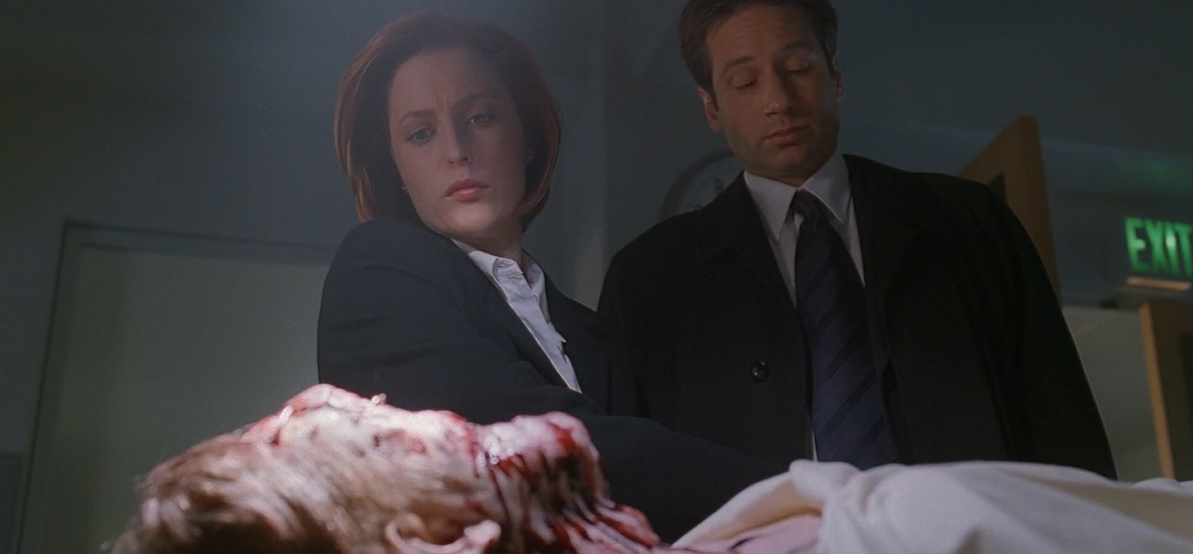
Time for a do-over. Revise it until it’s right.

A ticking clock...

A ticking clock…

Continue reading

The X-Files – One Son (Review)

This July, we’re taking a trip back in time to review the sixth season of The X-Files and the third (and final) season of Millennium.

Two Fathers and One Son are a mixed bag.

They are very messy and convoluted episodes of television, attempting to resolve a long-running plot without committing to a resolution. They swing wildly between clichéd ambiguity and b-movie exposition. They strain to stitch together half-a-decade of storytelling into a ninety-minute finalé, while trying to avoid drawing attention to any of the countless elements that might contradict or undermine the story that they are telling. They are both ambitious and efficient, energised and noncommittal.

They're here.

They’re here.

At the same time, Two Fathers and One Son make a valiant effort to bring the vast sprawling global conspiracy down to a more manageable level. Over the years, the conspiracy has evolved from a few alien abductions to a vast plot against the majority of mankind. Although they doesn’t always succeed, Two Fathers and One Son try to ground this crazy story about faceless rebels and looming colonisation in the trauma of a single family unit. The fate of mankind plays out against the backdrop of a family collapsing under its own weight.

While it doesn’t work as well as it might, it does help to draw attention to the larger themes that have played out across The X-Files as they relate to power and control, legacy and guilty, abuse and exploitation. It seems appropriate that Two Fathers and One Son should push these ideas to the fore as it attempts to close off the show’s long-running conspiracy thread, reminding viewers of what it was actually talking about.

Baby steps...

Baby steps…

Continue reading

Millennium – … Thirteen Years Later (Review)

This July, we’re taking a trip back in time to review the sixth season of The X-Files and the third (and final) season of Millennium.

… Thirteen Years Later is infamously silly. That may not be such a bad thing.

There are a lot of details that would seem to weigh against … Thirteen Years Later. It is the show’s first attempt at comedy since Darin Morgan left the staff at the end of the second season; any episode will suffer in comparison to Jose Chung’s “Doomsday Defense” or Somehow, Satan Got Behind Me. It is an episode built around a guest appearance from the rock band KISS to promote the release of their latest album, Psycho Circus. It is also an attempt to do wry self-aware meta-commentary and Hollywood satire, which could easily become indulgent.

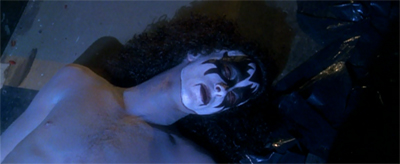
KISS was 'ere...

KISS was ‘ere…

To be quite frank, … Thirteen Years Later doesn’t really work. It is messy and convoluted. A lot of the gags are obvious, and a lot of its satire of Hollywood feels somewhat stock. The framing device builds to a pretty lame (and entirely predictable) punchline. Some of the best gags in … Thirteen Years Later are shamelessly poached from better second season episodes – the idea of Frank Black in Hawaiian shirt comes from Jose Chung’s “Doomsday Defense” while the idea of Frank Black critiquing serial killer movies was hilarious in Midnight of the Century.

However, in spite of all that, … Thirteen Years Later has an energy and momentum that is sorely missing from much of the season around it. The third season has seen a return to the mood and aesthetic of the first season, which occasionally wallowed in gloom and self-importance. … Thirteen Years Later completely skewers that sense of self-importance. Its best jokes seem to be affectionate jabs at Millennium itself, demonstrating that the show still has a great sense of humour; even if it has gotten quite effective at hiding it.

The camera never lies...

The camera never lies…

Continue reading

The X-Files – All Souls (Review)

This May and June, we’re taking a trip back in time to review the fifth season of The X-Files and the second season of Millennium.

There are a lot of aspects of The X-Files that mark it as an artifact of the nineties.

It is easy to point to all the visual cues and indicators – the mobile phones, the suits, the cars. The political elements are all in play as well – the unquestioned assumption that the United States is the global superpower, the indulgence in a paranoia that exists in sharp contrast to the material prosperity surrounding it. There are even any number of pop cultural references buried within episodes themselves – from Byers and Frohike joking about Bill Clinton’s haircut in Fearful Symmetry to Scully quoting Babe in Home.

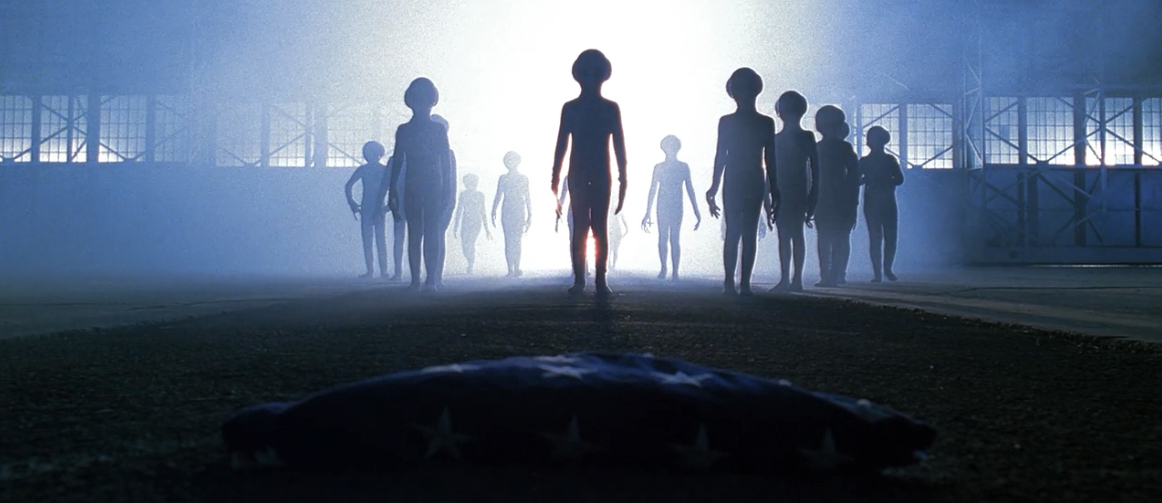
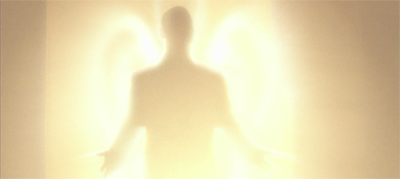
Angels in America...

Angels in America…

However, perhaps the most obvious indicator of the nineties is the way that The X-Files seems to fetishise absolute and unquestioning faith. Through episodes like Miracle Man, RevelationsAll Souls and Signs and Wonders, there is the recurring sense that giving oneself over absolutely and completely to religious faith is a sign of strength and certainty. At times, it seems like the writers are almost envious of those who have unwavering conviction in their beliefs amid the wry cynicism of the nineties.

The X-Files finds something romantic in such pure and uncompromised faith. After all, Gethsemane had proved that even Mulder has his doubts. This fixation on unquestioning religious belief made a great deal of sense against the backdrop of nineties disillusionment, but it a lot more uncomfortable when examined in hindsight through the prism of the early twenty-first century.

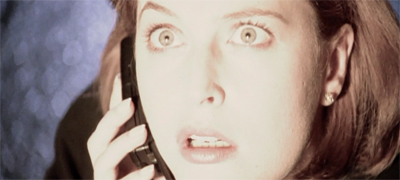
Scully has seen the light...

Scully has seen the light…

Continue reading