• Following Us

  • Categories

  • Check out the Archives


  • Awards & Nominations

The X-Files – Fallen Angel (Review)

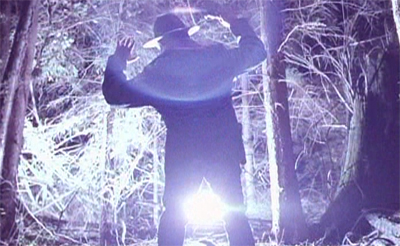
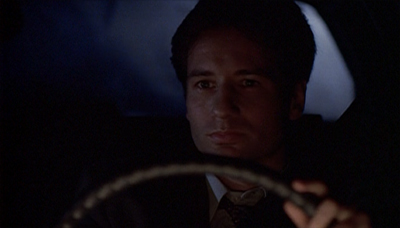
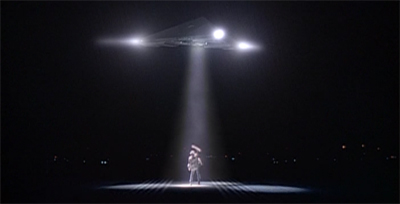
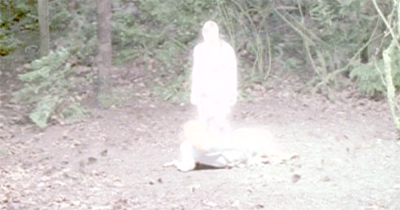
Fallen Angel is a remarkable episode. It’s really the point at which the show seems to say “huh, this conspiracy stuff is really exciting.” It’s also a complete reversal from the misfire that was Space, proving that there are people working on the show who can create monsters on a tiny special effects budget and create compelling secondary characters. Following Mulder’s investigation of a downed UFO – the eponymous “fallen angel” – the episode dives headlong into the murky world of cover-ups and secrets, kicking the show’s mythology arc into gear.

Shedding some light on the matter...

Shedding some light on the matter…

Continue reading

The X-Files – Space (Review)

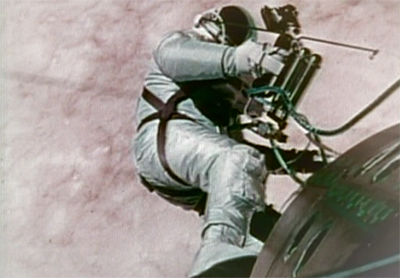
And so we go from what is possibly the strongest episode of the first season to what is definitely the worst. Space is a colossal failure of an episode, with even writer and creator Chris Carter conceding that it was “one of our most unloved episodes.” However, none of these spectacular failures occur for any particularly interesting reason. It’s the wrong idea with the wrong script with the wrong director, and a result that can’t even claim to be “so bad it’s good” like so many of the series’ other lesser hours.

At best, it’s a cautionary tale, a firm establishment of what The X-Files isn’t. Like The Jersey Devil, it’s an indicator that maybe Chris Carter should have been focused more on show-running than writing. Even factoring in the quite decent pilot, Carter is hardly batting a thousand here. However, it also offers some small measure of proof that – despite show’s fixation on extraterrestrials and UFOs – The X-Files is not really a show about space.

... and the stars look very different, today...

… and the stars look very different, today…

Continue reading

The X-Files – Ice (Review)

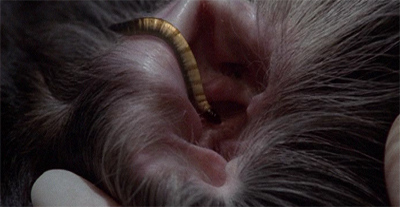
Now we’re talking. It’s been a tough couple of episodes, but The X-Files bounces back with a strong contender for the best episode of the first season. Like the last collaboration between Morgan and Wong, Ice is one gigantic homage to a classic horror film. (Well, two classic horror films.) Shadows took its cues from The Entity, while Ice draws heavily from both John Carpenter’s The Thing and Howard Hawk’s The Thing From Another World, both based on the  John W. Campbell Jr. novella Who Goes There?

However, Ice works a lot better than Shadows. Part of that is down to the fact that Morgan and Wong seem genuinely enthused and engaged with their premise, rather than simply painting by numbers. Part of this is also down to the fact that this sort of horror and paranoia is more firmly in the show’s wheelhouse than the generic “protective avenging ghost” narrative from Shadows.

Ear, ear!

Ear, ear!

Continue reading

The X-Files – Ghost in the Machine (Review)

I like Ghost in the Machine more than I really should. I mean, I know it’s a mess. The plotting is uninspired. The characters are thin. There’s a last minute link to the show’s overall conspiracy arc thrown in to compensate for the fact that plugging a device into a USB socket is hardly the most thrilling of climaxes. And yet, despite that, I think there’s an endearing weirdness to Ghost in the Machine that appeals to me.

It’s an AI story that has clearly written by a team who (by their own admission) know nothing about computers, and so there’s an almost ethereal quality to the whole thing – Mark Snow’s looping electronic score, the sparse theatrical set design of the COS mainframe, and director Jerrold Freedman’s obvious affection for Dutch angles all contribute to the sense that something rather strange is happening at the very edge of the frame.

Watch out...

Watch out…

Continue reading

The X-Files – Shadows (Review)

Shadows feels a tad generic, but that’s by design. Written by the duo of Glenn Morgan and James Wong, Shadows was apparently intended to appease the network by offering something in the mold of a traditional ghost story – indeed, The Entity is often cited as an influence on the episode. Shadows runs off a rather conventional premise – a woman is haunted by a strange force capable of manipulating and moving objects, out to avenge some grave wrong.

In many respects, following The Jersey Devil, it almost seems like the first season of The X-Files is trying to knock off various items on a paranormal checklist. UFOs? Got ’em. A popular cryptozoology monster? Yep. Ghosts or poltergeists? We got a story here. The result is hardly inspiring. The X-Files tends to work a bit better when it’s venturing off the beaten track, taking something that isn’t mainstream and running with it.

Author John Kenneth Muir argued that watching The X-Files was like “watching a movie every week.” If that’s the case, Shadows feels more like a movie of the week.

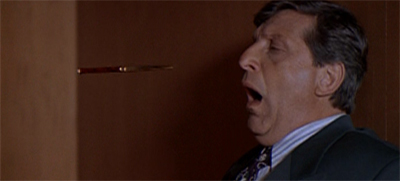
The pen is mightier than the sword!

The pen is mightier than the sword!

Continue reading

The X-Files – Conduit (Review)

The X-Files is somewhat fascinating as a historical artifact, a prism through which the viewer might explore the United States in that gap of time between the end of the Cold War and the start of the War on Terror. The show serves as something of a travelogue through the American subconscious, a vehicle for the nation’s fear and anxieties. It might be quaint now to look back on the show’s depiction of mobile phones and the internet, but The X-Files offers a snapshot of an America just on the cusp of that technological revolution, when there were still dark shadows and corners of the continent to be probed and explored.

One of the more interesting aspects of The X-Files is the way that it deals with faith in the nineties. Scully’s attempts to reconcile her religious beliefs with a rational approach to the universe are surprisingly insightful and nuanced, but Mulder’s belief system also offers a vehicle to explore the form that faith might take. “I want to believe,” Mulder confesses at the end of Conduit, with the iconic poster turning the sentiment into a motto. It doesn’t matter that Mulder chooses to invest his faith in aliens or conspiracies, The X-Files is still an exploration of what faith meant in the nineties.

Why is Mulder so driven?

Why is Mulder so driven?

Continue reading

The X-Files – Deep Throat (Review)

Deep Throat was filmed in August 1993, more than a year after the production of The Pilot in March 1993. In a way, Deep Throat feels like the first proper episode of the show’s first season, even carrying the production number 1×01. It cements a lot of the themes and ideas suggested in The Pilot, more firmly establishing arcs and characters. Indeed, The Pilot ended with a glimpse at the massive government conspiracy surrounding encounters with alien life forms, but Deep Throat serves to demonstrate just how deep that conspiracy goes.

The episode builds on countless ideas and conspiracy theories, delving into the popular suggestion that the United States military has been reverse-engineering alien technology for its own purposes. This suggests that Mulder isn’t just dealing with modern interactions between aliens and humanity, he’s digging into something that is rooted far deeper. As the eponymous informant teases him at the end of the episode, “Mr. Mulder, they’ve been here for a very long time.”

The truth is up there...

The truth is up there…

Continue reading

The X-Files – Pilot (Review)

The X-Files is twenty years old this year. To celebrate, I’ll be spending Month X looking back at the first season.

There was a time, around the third season, when The X-Files became the show. It had grown from the quirky newcomer of Fox’s prime time line-up, through its status as a cult hit, into a bona fides pop culture touchstone. Looking back now, twenty years after the show first began, it is something entirely different. It’s weird to look back over a long-running television, divorced from the immediacy of broadcast, a sort of “if I knew then what I know now…” sort of thing.

However, looking back at The X-Files, it’s more than just knowing how it ends. It’s more than just knowing about the show’s slow and drawn-out two-year death. It’s more than knowing that the conspiracy plotline kinda (but not quite entirely) makes sense, if you look at it the right way and don’t over-think it. Approaching The X-Files now, twenty years later, is more like opening an old tomb, unlocking a time capsule. The musky smell of the past seems to seep out of the television screen, transporting the viewer to a time that really isn’t that far away, but feels like centuries ago.

The X-Files is, undeniably, a pop culture artefact from the nineties, a show that seems to slot almost perfectly between the end of the Cold War and the start of the War on Terror. It’s an exploration of a version of America that simply doesn’t exist any longer, the long and silent pregnant pause where the United States was the world’s sole unchallenged superpower. The X-Files really embodied that period of time, much like 24 managed to channel the anger and the rage of the post-9/11 era into piece of the zeitgeist.

And, to be fair, you can sense that sort of nineties existential anxiety even as early as The Pilot.

Beam me up...

Beam me up…

Continue reading

Non-Review Review: X-Files – I Want to Believe

The title just about says it all. I want to believe in The X-Files. I want to believe in Mulder and Scully. I want to believe in Chris Carter. But I’m looking for proof. Proof that the franchise that held the entire world’s attention for a few minutes in the mid- to late-nineties still has some life in it. Proof that a ridiculous complicated and illogical and poorly written final few seasons on the air had not sucked the marrow entirely from the bones of a once unique pop cultural entity. So, what does the movie give me? Not concrete proof, but a little hint of faith. The film is not as bad as the final two years of the show. That’s the good news. The bad news is that it isn’t as good as the first five.

"X" doesn't mark the spot...

"X" doesn't mark the spot...

Continue reading