• Following Us

  • Categories

  • Check out the Archives


  • Awards & Nominations

12 Movie Moments of 2012: Chris Cooper Raps (The Muppets)

As well as counting down the top twelve films, I’m also going to count down my top twelve movie related “moments” of 2012. The term “moment” is elastic, so expect some crazy nonsense here. And, as usual, I accept that my taste is completely absurd, so I fully expect you to disagree. With that in mind, this is #1

If you ever need proof of how delightfully absurd The Muppets was, the sight of Oscar-winner Chris Cooper dancing and rapping across his desk, only to unleash a storeroom full of chorus girls while Jason Segel looks on in confusion should do the trick. It’s a fantastic moment because it’s so ridiculously surreal. Cooper is rapping for about a minute of screen-time, meaning that it’s over before it has really begun – leaving both the characters and the audience wondering what the hell just happened.

In a great way.

themuppets10

Continue reading

12 Movie Moments of 2012: Shared Pop Culture History (Ted)

As well as counting down the top twelve films, I’m also going to count down my top twelve movie related “moments” of 2012. The term “moment” is elastic, so expect some crazy nonsense here. And, as usual, I accept that my taste is completely absurd, so I fully expect you to disagree. With that in mind, this is #2

When it comes to end of year “best of” lists, comedy seems to draw the short straw as a genre. Like some of the less earnest genres, comedy is far too easily overlooked in favour of something more “worthy” of attention. Seth MacFarlane’s Ted has been something of a contentious film this year. Depending on where you sit, the film is either the epitome of everything wrong with American comedy, or it was a refreshingly profane yet heartfelt breath of fresh air. I lean more towards the latter than the former, and I appreciated the way that it played to MacFarlane’s strengths – concealing a surprisingly sincere sentiment behind a cynical and glib exterior.

As such, it’s no surprise that the most effective sequence in the film – the opening credits – managed to play to both that side of MacFarlane and also to his wonderful ability to channel pop culture as something of a shared collective history. Call me sappy, but there was something wonderful about seeing Ted interact with Johnny Carson and watching Ted and John queue for The Phantom Menace in costume, that created a tangible sense of back story between the characters.

ted10

Continue reading

My 12 for ’12: Shame & Silence

I’m counting down my top twelve films of the year between now and January, starting at #12 and heading to #1. I expect the list to be a little bit predictable, a little bit surprising, a little bit of everything. All films released in the UK and Ireland in 2012 qualify. Sound off below, and let me know if I’m on the money, or if I’m completely off the radar. And let me know your own picks or recommendations.

This is #2

Addiction stories are very tough to do right. It’s far too easy to get caught up in the melodrama of the cycle – the excess, the withdrawal, the relapse, the epiphany. It’s tempting to wallow in each of those stages, to structure them as acts in a drama. It’s hard to resist the urge to heighten absolutely everything, to dwell on the heat of obsession and desperation that surrounds any addiction.

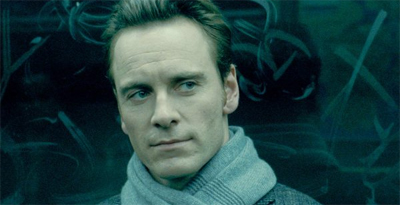
Director Steve McQueen and actor Michael Fassbender do a sensational job with Shame, avoiding these potential problems, offering a portrayal of addiction and personal collapse that is strangely understated and introverted rather than overwhelming or excessive. Indeed, the fact that the movie is about sex addiction might lead some potential viewers to worry. If ever an addiction lent itself to trashy and tasteless excess, one might imagine that sex would be that personal demon.

Instead, McQueen shows admirable restraint in tackling the topic. While he never blushes in presenting the depths of his lead’s degradation, he never sensationalises it. Instead, much like Brandon’s addiction, Shame is cold and clinical – and all the more powerful for it.

shame2

Continue reading

12 Movie Moments of 2012: Missing Children (End of Watch)

As well as counting down the top twelve films, I’m also going to count down my top twelve movie related “moments” of 2012. The term “moment” is elastic, so expect some crazy nonsense here. And, as usual, I accept that my taste is completely absurd, so I fully expect you to disagree. With that in mind, this is #3

I was not as taken with End of Watch as some were. I enjoyed the film, and I think both Michael Peña and Jake Gyllenhaal gave superb performances, but I think that the decision to structure the arc of these two police officers was a bit of a mistake – as the film resorted to clichés like drug cartels putting out a hit on these two individual cops. The film started as an impressively grounded and candid exploration of what life must be like in the line of fire, but then it became a much more conventional film (albeit shot in an unconventional manner).

Still, when End of Watch was good, it was great. It was raw, powerful stuff that gave an impression of what it must be like to do that job day-in and day-out. At its best, it demonstrated the obvious toll that these small day-to-day incidents must take on those protecting and serving. Often it was the smaller sequences that worked best, those with little-to-no connection to the overriding “cartel” arc – the kinds of things that felt like the stuff that must confront officers of the law on a daily basis.

None was more powerful than the rather simple house call investigating the disappearance of two small children.

end_of_watch_two_a_l

Continue reading

12 Movie Moments of 2012: “… it has its moments…” (Men in Black 3)

As well as counting down the top twelve films, I’m also going to count down my top twelve movie related “moments” of 2012. The term “moment” is elastic, so expect some crazy nonsense here. And, as usual, I accept that my taste is completely absurd, so I fully expect you to disagree. With that in mind, this is #4

Wait, this game doesn’t happen until October.

Oh, it’s always October and November and March. So many futures and they’re all real, just don’t know which one will coalesce. Until then, they’re all happening, like this one. It’s my favorite moment in human history. All the things that had to converge for the Mets to win The World Series. They were in last place every single season until they won it all.

You said you had a gift for us…

That baseball for instance, thrown for the last hour of the game, manufactured in 1962 by the Spalding Factory at Chicopee Massachusetts, was aerodynamically flawed. Due to the horsehide being improperly tanned because Sheila, the tanners wife, left him for a Puerto Rican Golf pro that Sunday…

– J, Griffin and K discuss the Mets

Sometimes great scenes pop up in the most unlikely of places. I enjoyed each of three Men in Black films, even if I’d be reluctant to rank them as among the finest films of their given years, or to consider all three among great cinematic trilogies. I’d be lying if I said that I had been eagerly anticipating the release of Men in Black 3 this year, which turned out to be a solid and reliable popcorn film in a year featuring films that so often went to one extreme or the other. It won’t be a surprise entry on my top films of the year, but it does what it sets out to do, and is often charming doing so.

However, it’s always incredibly satisfying to find one striking or memorable scene in a film that is fairly easy to dismiss as “merely” entertaining. Men in Black 3 has one such scene, featuring the superb Michael Stuhlbarg as the alien Griffin, who has the unique ability to see throw time, weighing and considering probabilities and possibilities. With the capacity to see any moment in history, Griffin uses his gift… to watch the Mets. Somehow, that makes all the wondrous “wibbly-wobbly timey-wimey” stuff seem even more magical.

Men-in-Black-3-Griffin

Continue reading

My 12 for ’12: The Cabin in the Woods & The Virtues of Constructive Criticism

I’m counting down my top twelve films of the year between now and January, starting at #12 and heading to #1. I expect the list to be a little bit predictable, a little bit surprising, a little bit of everything. All films released in the UK and Ireland in 2012 qualify. Sound off below, and let me know if I’m on the money, or if I’m completely off the radar. And let me know your own picks or recommendations.

This is #4

The horror movie has always been a bit of an ugly stepchild when it comes to film genres. It seems, for instance, that horror movies (and directors) have to wait longer to receive recognition for the work that they’ve done. The Shining, for example, earned several Razzy nominations in the year of release, but is now regarded as one of many classics within Kubrick’s oeuvre. There are lots of reasons that the horror genre is easy enough to dismiss or ignore.

You could argue that there’s something so basic about fear that it isn’t considered as much of an artistic accomplishment to scare the audience. There are legitimate arguments to be made about the sexist connotations of various horror films. Perhaps more than any other genre, successes within the horror genre have a tendency to lead to self-cannibalisation – sequels, remakes, knock-offs – that dilute and erode any credibility that the original film had earned. The innovation of Paranormal Activity is harder to recognise after half-a-decade of found-footage imitations. The cleverness of the original Saw becomes harder to distinguish amongst a crowd of “torture porn” wannabes.

All of these are very legitimate criticisms to make about the nature of the genre as a whole, and perhaps they speak to why films within that niche are so easily dismissed. I will aggressively argue that several horror films are among the most important films ever made, but I will also concede that there is (as with everything) a lot of trash out there, and a lot of things we need to talk about. Cabin in the Woods feels like a genuine attempt to have that sort of conversation, and to raise those questions. More than that, though, it comes from a place of obvious affection for the genre and all that it represents. This isn’t a stern lecture about the inherent inferiority of a particular type of film,  but constructive criticism from a bunch of people who care deeply about the genre as a whole.

cabininthewoods8

Continue reading

12 Movie Moments of 2012: Dancing (Monsieur Lahzar)

As well as counting down the top twelve films, I’m also going to count down my top twelve movie related “moments” of 2012. The term “moment” is elastic, so expect some crazy nonsense here. And, as usual, I accept that my taste is completely absurd, so I fully expect you to disagree. With that in mind, this is #5

Sometimes it’s the simplest moments that stick in the memory. Monsieur Lahzar was a superb little French-Canadian film that went under the radar last year. It’s a film that I really recommend. Comedian Mohamed Fellag gives a wonderfully moving central performance as a replacement teacher helping his class deal with the suicide of his predecessor. The eponymous Lahzar is so buttoned down that it’s oddly affecting to watch him interact with the children, but it’s the smaller private moments that allow Fellag to really craft and define his character.

lezhar

Continue reading

My 12 for ’12: Prometheus, Faith, Treachery & The Great Beyond…

I’m counting down my top twelve films of the year between now and January, starting at #12 and heading to #1. I expect the list to be a little bit predictable, a little bit surprising, a little bit of everything. All films released in the UK and Ireland in 2012 qualify. Sound off below, and let me know if I’m on the money, or if I’m completely off the radar. And let me know your own picks or recommendations.

This is #5

In the year 7510,
If God’s a-comin’, he ought to make it by then.
Maybe he’ll look around himself and say,
“Guess it’s time for the Judgement Day.” 

In the year 8510,
God’s gonna shake his mighty head.
He’ll either say “I’m pleased where man has been”,
Or tear it down and start again.

-Zager and Evans, In The Year 2525

Faith is a funny thing. If you don’t have it, it’s impossible to explain. If you do have it, it needs no explanation. Ridley Scott’s Prometheus feels a little bit ham-strung by the Alien DNA” that it carries. As a prequel to the iconic film series, it’s hardly the most successful endeavour. Indeed, the film’s references to everybody’s favourite chest-bursting extra-terrestrial feel almost forced. Like the discussion about the Scientology influence on The Master, focusing on the instantly recognisable xenomorph tends to obscure the unique strengths of Prometheus as its own film.

Interestingly, the strongest connection to Alien is thematic rather than literal. Like Ridley Scott’s first science-fiction masterpiece, Prometheus postulates a cold and uncaring universe, one that is inherently alien, incomprehensible and hostile. The human condition causes us to question, but Prometheus suggests that there can be no answers – no satisfactory answers at least.

prometheus16

Continue reading

12 Movie Moments of 2012: The Dark Knight Returns (The Dark Knight Rises)

As well as counting down the top twelve films, I’m also going to count down my top twelve movie related “moments” of 2012. The term “moment” is elastic, so expect some crazy nonsense here. And, as usual, I accept that my taste is completely absurd, so I fully expect you to disagree. With that in mind, this is #6

Ireland got an IMAX screen this year. Well, it had an IMAX screen before, but it shut down before The Dark Knight kick-started the whole “watching cool movies in IMAX” thing. Evidently, watching Liam Neeson talk about Everest wasn’t nearly as exciting as watching Batman flip over an articulated lorry. Christopher Nolan shot a large percentage of The Dark Knight on IMAX, but he shot even more of The Dark Knight Rises using the special cameras.

As such, I was delighted that Cineworld and The Irish Times organised a special screening of The Dark Knight Rises in early December, even though the cinema had only reopened after Nolan’s epic was available on blu ray. It’s an oft-cited criticism that the third part of Nolan’s Batman trilogy featured surprisingly little Batman. I’d disagree, and instead suggest that the film made excellent use of its large cast – and when Batman appeared on screen he carried the weight that he deserved.

The sequence in which Bruce leads the Gotham Police Department on a merry chase while pursuing Bane and his terrorists is the perfect example, a fantastically constructed action sequence that tells us pretty much everything we need to know about the cast at that moment in time.darkknightrises15a

Continue reading

My 12 for ’12: The Master & The American Century

I’m counting down my top twelve films of the year between now and January, starting at #12 and heading to #1. I expect the list to be a little bit predictable, a little bit surprising, a little bit of everything. All films released in the UK and Ireland in 2012 qualify. Sound off below, and let me know if I’m on the money, or if I’m completely off the radar. And let me know your own picks or recommendations.

This is #6

It’s very weird being a popular culture nerd who lives outside the United States. A significant portion of pop culture is exported directly from the United States. I grew up on Star Trek and Batman, two iconic American franchises. I probably know more about American history – filtered through feature films, television shows and other popular forms of entertainment – than school taught me about the origins of my own nation. Even then, it still feels a little strange to watch American film makers commentating on American situations, and to not only recognise but almost understand how those references work within the American subconscious.

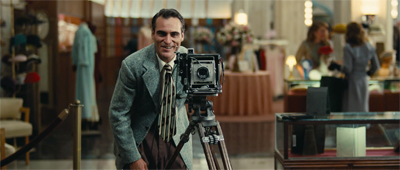
The Master is a fascinating exploration of post war America, the period where America well and truly emerged as the defining global power, where the country embraced economic prosperity and manifest destiny no longer referred to expansion out west, but a bold adventure into a promising future. In an article published shortly before America entered the Second World War, Henry R. Luce argued that the twentieth century was “the American century.” If it seemed that way before the conflict, it was all but certain afterwards. Of course, economic prosperity does not always bring with it a sense of peace and tranquillity, and The Master explores the sense of existential ennui that took root in a way that is, if you’ll pardon the pun, masterful.

themaster2

Continue reading