• Following Us

  • Categories

  • Check out the Archives


  • Awards & Nominations

Non-Review Review: Foxcatcher

Foxcatcher is exhausting.

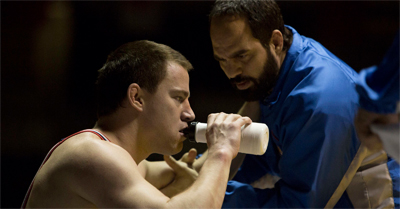
Director Bennett Miller’s account of the relationship between billionaire John “Eagle” DuPont and the Schultz brothers is a draining experience. Beautiful performances, stunning cinematography and a minimalist script create an uncomfortable and looming sense of dread. Even those unfamiliar with the story DuPont’s sponsorship of the United States Olympic Wrestling Team cannot help but feel tragedy bearing down. Foxcatcher is a heartbreaking and harrowing piece of work, an affecting and unsettling tale of power, desperation and loneliness.
Wrestling with demons...

Wrestling with demons…

Foxcatcher is beautifully crafted. Every element of the production is carefully and meticulously put together. Steve Carell transforms himself to play the role of DuPont, assisted by superb make-up overseen by Bill Corso and his team. Every frame of the movie looks crisp, the blues and reds and yellows popping out of the screen; Greig Fraser’s cinematography effectively captures the starkness of the Pennsylvanian landscape across the seasons. Miller is comfortable enough to let Foxcatcher unfold at its own pace, never rushing.

The result is a compelling and grimly fascinating story, told elegantly. There are points when Foxcatcher perhaps seems a little too distant and clinical, but the three lead performances help to keep the film firmly grounded.

To catch a fox...

To catch a fox…

Continue reading

Non-Review Review: The Penguins of Madagascar

The Penguins of Madagascar is solid family entertainment. It does not rank among the best of Dreamworks’ animated output, nor among the year’s best animated films. However it is a fun adventure movie that moves along at just the right pace – allowing a number of action set-pieces and a solid cast carry most of the weight. The Penguins of Madagascar is fun and solid; it is arguably more fun and more solid than any of the three Madagascar movies that spawned this spin-off.

The Penguins of Madagascar is just what the doctor ordered with the holiday season approaching. It is a film that makes for a solid family diversion, a movie that will appeal to kids without pandering too heavily, and will acknowledge the adults in the audience without losing focus. It is an enjoyable romp, one that delivers almost perfectly on what it sets out to do. It isn’t transcendental or brilliant in the way that The Lego Movie was, but it is more than merely functional.

Cheesy? Sure.

Cheesy? Sure.

Continue reading

Non-Review Review: Wild

Wild is adapted from Wild: From Lost to Found, Cheryl Strayed’s autobiographical account of her spiritual 1,100 mile trek across the California Pacific Trail. The bulk of the movie features Reese Witherspoon carrying a gigantic backpack stuffed with the essentials – described accurately, and perhaps affectionately, by some observers as a “monster.” This image adorns the posters and publicity materials, and feels strangely appropriate. Cheryl may have carried a gigantic back upon her back, but Reese Witherspoon carries the entire movie.

To be fair, Wild is not a bad film on its own merits. It is perfectly functional, if a little familiar in places. However, it is Reese Witherspoon’s performance that sets the film apart. It is a powerful and naked lead performance which counts among the best work in the actress’ career. The plot and character beats may feel like they have been inherited from countless other “find yourself in nature” films, it is Witherspoon who imbues Cheryl (and, by extension, the film) with a warm humanity.

Into the wild...

Into the wild…

Witherspoon a momentous performance, and Wild seems keenly aware of this. The film knows it has a gifted performer at its core giving one of the most memorable performances of the year. So Nick Hornby’s screenplay and Jean-Marc Vallée are clever enough to stand back; the bulk of the film seems built around Witherspoon, a showcase for the performer. That is a lot of weight; even more than the hefty backpack that Strayed carried with her across California. Witherspoon is more than up to the task.

Wild is a movie that lives or dies on the strength of its lead performance. Luckily, Witherspoon is tremendous.

A long walk home...

A long walk home…

Continue reading

The X-Files – Piper Maru (Review)

This November (and a little of December), we’re taking a trip back in time to review the third season of The X-Files and the first (and only) season of Space: Above and Beyond.

Piper Maru and Apocrypha continue a pretty clear thematic throughline for the show’s third season mythology episodes.

As with The Blessing Way/Paper Clip and Nisei/731, Piper Maru and Apocrypha tell a story about how we relate to the past. In particular, in keeping with the rest of the third season mythology, it is a show about the legacy of the Second World War. The X-Files is a show that is sceptical of the decisions made by the American government towards the end of the Second World War, particularly as those decisions shaped and moulded the present. In many ways, The X-Files is a show about history and legacy, trauma and consequence.

A fish out of water...

A fish out of water…

Piper Maru and Apocrypha are less direct about this connection than the earlier mythology episodes. They aren’t about the war criminals given safe habour after the Second World War in return for scientific knowledge or tactical advantages. Instead, Piper Maru and Apocrypha are shows about dredging up the past and confronting the consequences of past actions. These two episodes are not only steeped in American popular history, but also in the show’s internal continuity. The majority of what happens here is driven by events we’ve seen in the show.

At the same time, Piper Maru and Apocrypha represent an attempt to boldly expand and push the mythos forward in the same way that Colony and End Game did at this point in the second season. The result is an intriguing two-parter that feels a little muddled and messy, an example of the show stumbling slightly as it tries to grow outwards. Although the mythology is still working a lot more efficiently than it would in later seasons, there is a sense of clutter beginning to filter in.

The eyes have it...

The eyes have it…

Continue reading

Non-Review Review: Whiplash

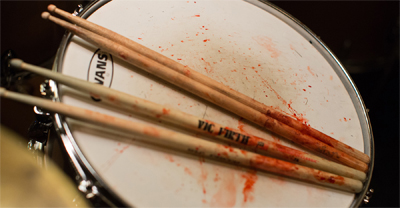
The joy of Whiplash is in how the film subverts so many of the conventions of the “unconventional teacher pushes promising young student” subgenre. A one-sentence plot summary for the film suggest an inspirational and life-affirming tale. Andrew heads to a prestigious music school to hone his skills on the drums, and encounters an obnoxious and confrontational teacher who pushed him to his limits. One can already hear the applause, see the inevitable hug, feel the radiating mutual respect.

Whiplash carefully and meticulously subverts these expectations, avoiding many of the familiar plot beats that one might expect from a story like this. There’s a raw, gruelling honesty to the story – Whiplash is not a story calibrated or tailored to make the audience feel particularly comfortable or happy. Indeed, it addresses its central themes with a refreshing candidness. It asks some very tough questions about honing talent and the responsibilities of a teacher. It doesn’t offer any easy answers.

Anchored in two compelling central performances and a beautiful soundtrack, Whiplash builds to a beautifully cathartic climax, one that refuses to wrap too tight a bow around an intriguing little film.

Stick around...

Stick around…

Continue reading

Non-Review Review: The Drop

It is suggested that hell is other people. Perhaps not so much. Perhaps hell is the absence of other people. Towards the end of The Drop, a character ruminates on the idea of eternal damnation – suggesting that hell is nothing but eternal emptiness, a cosmic echo chamber where the damned are left with nothing but their own sense of isolation. Maybe that is what damnation is, nothing but an individual’s own loathing and self-doubt reflected back them, amplified through the darkness.

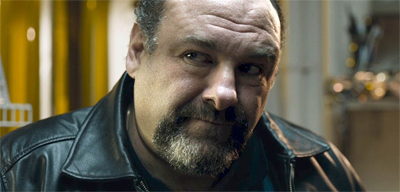
The Drop is a tense and claustrophobic thriller. The bulk of the action unfolds around the small world as Bob knows it. Bob is a simple man. He works at a small dive, “Cousin Marv’s Place.” When asked tough questions, he simply answers, “I just tend bar.” As Bob explains, the dive bar occasionally serves as a “drop” for all the money laundered through local crime. Bob doesn’t know where it comes from or where it goes. He is only aware of it when it comes into his care and when it leaves.

It's a dog's life...

It’s a dog’s life…

The Drop is a story about isolation and loneliness. Characters reflect on their place in the world, trying to make sense of what unfolds around them. Most are unknowable to each other, mysteries and enigmas. Asked a personal question, Bob replies, “That’s my business.” When his friend Nadia asks why Bob never inquired about her own very obvious scars, Bob simply answers, “I figure that’s your business.” The world as Bob knows it is a small place. Maybe it’s constantly getting smaller.

Adapted by Dennis Lehane from his own short story Animal Rescue, The Drop wallows in its own sense of lost direction and impending doom. Michaël R. Roskam’s direction never rushes the story or the actors, allowing the film time to take in the emptiness and hollowness in this small world that briefly intersects with something much bigger and more unpleasant. Perhaps a little too stately and relaxed in places, The Drop is nevertheless an atmospheric delight.

Just Cous...

Just Cous…

Continue reading

Non-Review Review: The Babadook

Monsters are real.

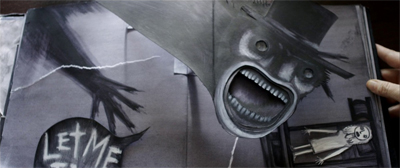
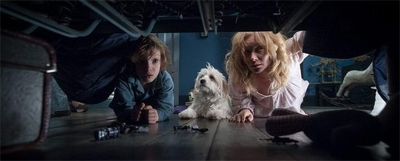
We all have our own monsters that we keep with us over our lives. “You can’t get rid of the Babadook,” a mysterious storybook threatens early in the runtime of The Babadook. Young Samuel tries to warn his mother Amelia about the monster lurking in the dark spaces – under the bed, in the closet, in the corner of his eye. He offers one rather sage bit of advice when it comes to such creatures. “You have to let it in.”

thebabadook1

Writer and director Jennifer Kent has crafted a superlative creature feature with The Babadook, acknowledging the metaphorical nature of monsters. These strange nightmares tend to stand in as expressions of guilt or anxiety. They give expression to thoughts and fear we could never properly articulate. The Babadook teases its audience with questions about the reality of the eponymous creature.

Is the strange “Mr. Babadook” something that truly exists, or is it something Samuel (and maybe Amelia) have created to cope with a horrific trauma?

thebabadook2 Continue reading

Non-Review Review: Fury

Fury is an apocalyptic glimpse of warfare.

Unfolding in the last days of the Second World War, as Allied forces pour into Germany from all sides, there’s a sense that this is the end. This is the abyss. As the introductory text explained, Hitler had declared a doctrine of “total war” against these invading forces. Every man woman and child was to be mobilised against the advancing armies, in the hope that it might somehow slow down the Allied war machine. If you throw enough people at it, you might do some damage – even if it is just clogging the gears.

He will strike down with Fury-ous anger...

He will strike down with Fury-ous anger…

A movie about a tank crew enduring these last few days, Fury gets considerable mileage out of that image – of human flesh falling before the unstoppable and inevitable machine. At a couple of points in the movie, characters die with their faces quite literally down in the mud. At other points, bodies are crushed beneath the tracks of the eponymous vehicle. Towards the climax, we encounter a body so thoroughly squashed beneath the weight of the Allied advanced that it seems like an empty uniform.

Fury is at its best when it captures the sheer unrelenting terror and horror of the advancing war machine – the nihilism of fighting a war that has already been decided, and the bleak inevitability of large-scale slaughter.

Fog of war...

Fog of war…

Continue reading

Non-Review Review: Nightcrawler

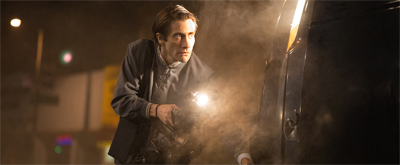
Nightcrawler features a tour de force performance from Jake Gyllenhaal.

Gyllenhaal plays Louie (“call me Lou”) Bloom, a wandering and lost soul who stalks late-night Los Angeles in search of a lucrative pay-day. He is just trying to get his foot on the ladder any way that an entrepreneurial young gentleman can – he’s introduced stealing construction supplies and scrap metal so he can sell them on, seguing effortlessly into a well-rehearsed job pitch applying for an unpaid internship.

nightcrawler

Bloom seems like a man who has watched people from a distance for years, almost through a filter. Gyllenhaal injects a haunting eccentricity into the character, his wide eyes and practised stillness almost edging Bloom into the uncanny valley. Though he seems to always know just what to say, there’s something distinctly inhuman about Lou Bloom. He watches people, but from the outside. He has got a pretty passable impersonation of a human being down, but there’s just something missing.

Nightcrawler is a fascinating, harrow and occasional wry look at desperation and ruthlessness – and the heady cocktail they make when blended together.

nightcrawler1

Continue reading

Non-Review Review: The Best of Me

As with a lot of Nicholas Sparks adaptations, there’s something inherently reductive about The Best of Me. The film would suggest that characters are either inherently good or inherently bad, with several members of the cast existing as nothing more than roadblocks serving to keep the film’s central couple apart. The Best of Me is not set in the real world; it makes no allowance for the nuanced complexities of human emotions and relationships.

Instead, The Best of Me unfolds in a weird parallel world, a world where all human interactions and feelings are clear-cut and simple. It is easy to see the appeal of this world. It is a realm of romantic fantasy, where probability and chance are simply the tools of dramatic irony; where obvious twists are not only expected, they are obligatory. The Best of Me introduces its male lead, Dawson, reading Stephen Hawking as lazy shorthand for how smart he is. He can’t be that smart, or he’d understand this world doesn’t follow anything as bland as physics.

thebestofme5

Throughout The Best of Me, characters ruminate on the machinations of fate and destiny. We are told that mankind has always looked to the stars to guide them. However, this metaphysical musing is not so much a thematic statement as preemptive justification for a contrived (and entirely predictable) final act. The Best of Me is very much a twist in search of a movie. It is a tire-and-tested twist, at that.

However, the characters in The Best of Me don’t seem to realise that there is a difference between fate and hackneyed writing.

thebestofme4

Continue reading