• Following Us

  • Categories

  • Check out the Archives


  • Awards & Nominations

Non-Review Review: Onward

This film was seen as part of the Virgin Media Dublin International Film Festival 2020. Given the high volumes of films being shown and the number of reviews to be written, these may end up being a bit shorter than usual reviews.

Onward fits comfortably in the upper middle range of the Pixar canon.

To be fair, at least part of this is structural. Onward is transparently a road trip adventure. There have been a couple of truly great Pixar movies built around that rough template – Toy Story 2, Up and Inside Out all come to mind. However, Onward does little to disguise its genre elements. Onward is transparently a story about two teenagers who embark on a long journey with a tight schedule that takes them through a series of episodic adventures featuring a host of memorable side characters. There is something very standard about the premise, even against the film’s fantastical backdrop.
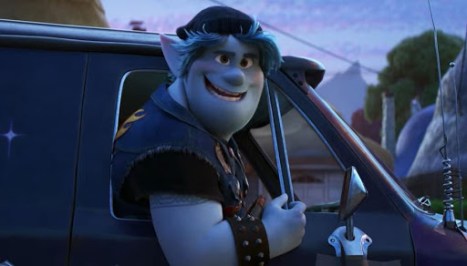
To be fair, at least some of that mundanity is intentional. After all, the central hook of Onward is that it unfolds in a magic kingdom (“Mushroomton”) that has eschewed the art of wizardry for the utility of science. So much of Onward derives from the juxtaposition of the mundane and the sublime that it makes sense that the film should be a fairly standard genre template that just happens to follow two magical creatures driving a van with a rock-album-artwork unicorn on the side on a mission to reunite with their resurrected father. However, the plotting is a little too haphazard and too episodic to completely elevate the film.

That said, Onward is consistently charming throughout. Its world and characters always feel well-drawn. More than that, the film coheres marvellously in its third act, when it pushes past that familiar road movie template into the more emotionally astute and mature sort of storytelling that audiences have come to expect from the studio. While Onward doesn’t rank among the studio’s very best, it is well worth seeking out.

Continue reading

New Escapist Column! On the Hubristic Tragedy of the Dark Universe…

I published a new In the Frame piece at Escapist Magazine this evening. With the release of The Invisible Man this week, which is quite good, I took a look back to Universal Studios’ abandoned and cursed Dark Universe.

Frankly, there is no way to talk about the Dark Universe without acknowledging it as one of the greatest acts of cinematic hubris in the twenty-first century. The whole misbegotten experiment was transparently a result of Universal looking at the success of The Avengers, and deciding to built its own imitation using whatever properties it found lying down the back of the couch. The result was Dracula Untold and The Mummy (along with one of the most hilariously ambitious pieces of marketing ambition in living memory), two of the worst-reviewed blockbusters of the decade.

Luckily, The Invisible Man is a fantastic piece of work, a shrewd and sophisticated horror that is more interested in telling its own story than existing as a piece of “content” for a larger shared universe. You can read the piece here, or click the picture below.

Non-Review Review: Mickey and the Bear

This film was seen as part of the Virgin Media Dublin International Film Festival 2020. Given the high volumes of films being shown and the number of reviews to be written, these may end up being a bit shorter than usual reviews.

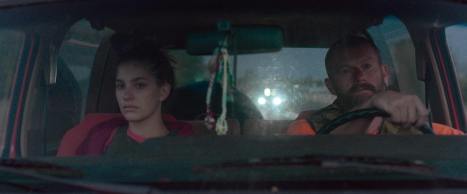
Mickey and the Bear marks a confident theatrical debut from director Annabella Attanasio.

Mickey and the Bear is a study of poverty in the Pacific Northwest, unfolding against the backdrop of a small Montana town. The opening scenes establish this quite effectively, introducing Mickey as a young woman living in a trailer that is literally falling apart with her father Hank. Hank is a veteran of the Iraq War, and the scars clearly linger. He has an opiod prescription to help with his leg wound, but adamantly refuses the psychological help that he clearly needs to come to terms with the trauma. The film is essentially a ticking time bomb in the form of a character study, a countdown to the point where Mickey’s world implodes.

Mickey and the Bear is bolstered by a set of strong performances. Mickey is played by relative newcomer Camila Morrone, who offers a complex and nuanced take on a character who has largely given up any real hope of outside intervention and so has retreated into herself. Hank is played by veteran James Badge Dale, with Hank’s dysfunction feeling of a piece with the psychological damage felt by Badge Dale’s characters in films like Flight or Echoes of War. The two play off one another well, layering their relationship with myriad emotions which suggest the full range of their complicated dynamic.

As writer and director, Attanasio infuses Mickey and the Bear with a palpable sense of quiet desperation. Dread and anxiety hang over the film, but even they are pressed beneath the weight of grim inevitability.

Continue reading

Non-Review Review: Vivarium

This film was seen as part of the Virgin Media Dublin International Film Festival 2020. Given the high volumes of films being shown and the number of reviews to be written, these may end up being a bit shorter than usual reviews.

Vivarium is an abrasive and aggressive work of surrealism.

It is very much of a piece with director Lorcan Finnegan’s earlier work, feeling like a clear descendant of his “ghost estate” short Foxes and his “land will swallow you whole” horror of Without Name. Indeed, Vivarium taps into many of those same fears, essentially beginning as a horror story about a young couple going house hunting and ending up lost in a monstrous and seemingly unending estate. It morphs from that into an exploration of a broader set of anxieties about the very idea of “adulthood”, of what young people expect from their adult life and what it in turn it expects from them.

Vivarium often feels like an extended episode of The Twilight Zone. It features a small core cast. Although shot on an actual housing estate, Finnegan pushes the production design into the realm of the uncanny so that it looks like a gigantic creepy sound stage. The script consciously pushes its narrative into the realm of the absurd. However, throughout it all, the film remains keenly focused on a simple and strong central metaphor. Although Vivarium operates at an unsettlingly heightened level of reality, and although its populated by a mess of signifiers it never entirely explains, it remains firmly anchored in relatable ideas.

Vivarium is perhaps a little over-extended and little heavy-handed in articulating its central themes and ideas, but it is consistently interesting and ambitious. It’s well worth the time.

Continue reading

Non-Review Review: The Invisible Man (2020)

The Invisible Man makes his victims visible.

Freed from the confines of the ill-fated blockbuster “Dark Universe”, writer and director Leigh Whannell is able to craft a version of the iconic H.G. Wells story that speaks to the modern moment and which taps into a set of fears that are a lot easier to acknowledge these days. Horror stories have always worked best as allegories for the things that unsettle a society – even back to the sexual anxieties of Dracula and the monstrous procreation of Frankenstein – as so Whannell reconfigures The Invisible Man to speak to a terror that was largely invisible until recently.

Ringing true.

The central protagonist of The Invisible Man is not the eponymous translucent figure. Appropriately enough, the man who turns himself invisible is largely marginalised by the narrative. In the opening ten minutes, he’s glimpsed lying in bed and then through a car window, but his face is consciously obscured. Through the rest of the film, he is largely present in a few photographs and acting through his brother as a proxy. His absence is both clever and effective, underscoring the extent to which he dominates and haunts the film even when he is off-screen.

Instead, The Invisible Man is built around Cecilia Kass. It remains tightly focused on her efforts to escape her abusive ex-boyfriend, even after his apparent suicide. The Invisible Man suggests that such trauma cannot easily be evaded and eluded. “Adrian will haunt you, if you let him,” one of Cecilia’s friends warns her. The Invisible Man argues that he’ll haunt her either way.

Interrogating assumptions.

Continue reading

New Escapist Column! On the Fascinating Paradox at the Heart of “Alien: Covenant”…

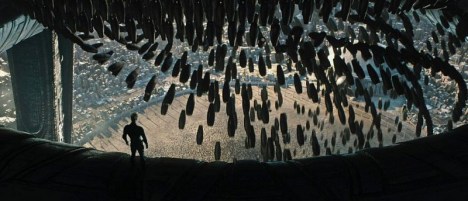
I published a new In the Frame piece at Escapist Magazine yesterday. Because it was a light week for geek culture, I actually got to write a little bit about something I’ve thought far too much about; Ridley Scott’s Alien: Covenant.

Covenant is not a great film. It’s not even a particularly good film. However, it is a fascinating film. A large part of that is because it emerged in the middle of a wave of compromised big budget blockbusters like Suicide Squad, Justice League and Solo: A Star Wars Story, films that often felt like watching a wrestling match between the director and the studio. Covenant feels the same way, trying to reconcile Fox’s desire for an Alien prequel with Scott’s desire for a Prometheus sequel. However, what’s most interesting about Covenant is how that conversation seems to play out within the movie itself.

You can read the piece here, or click the picture below.

171. Knives Out – This Just In (#—)

Hosted by Andrew Quinn and Darren Mooney, and this week with guests Alex Towers and Luke Dunne, The 250 is a fortnightly trip through some of the best (and worst) movies ever made, as voted for by Internet Movie Database Users.

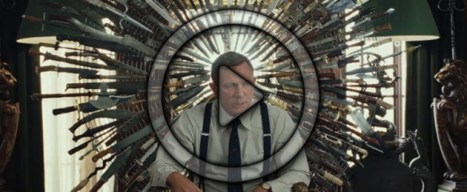
This time, Rian Johnson’s Knives Out.

The apparent suicide of noted mystery author Harlan Thrombley attracts the attention of consulting gentleman detective Benoit Blanc. Interviewing the deceased man’s family, Blanc finds a nest of vipers hiding in plain sight and comes to suspect that Harlan has been victim of murder most foul.

At time of recording, it was not ranked on the list of the best movies of all time on the Internet Movie Database.

Continue reading

Non-Review Review: Lost Girls

Lost Girls is a solid and unfussy true crime drama, anchored in a strong central performance from Amy Ryan.

There are interesting ideas simmering in the background of Lost Girls. Director Liz Garbus is best known as a documentarian, and there are certainly aspects of Lost Girls that feel like they belong more comfortably in a documentary than a narrative feature. Michael Werwie’s script is adapted from Robert Kolker’s book of the same name, looking at the case of the Long Island Serial Killer. The killer was never caught, with some speculation as to whether his last documented murder occurred in 2010 or 2013. The investigation is currently ongoing, which gives the film a certain edge and rawness.

However, Garbus works hard to keep things tasteful and restrained. In actual narrative terms, Lost Girls is fairly conventional. It often feels assembled from a list of scenes that audiences expect to see in a drama like this. There are plenty of scenes of concerned mother Mari Gilbert yelling at impotent authority figures, countless scenes dictating the indifference or ineptitude of the authority figures tasked with protecting these young women, lots of emotional scenes in which Mari comes to terms with her own imperfections as a mother following her daughter’s disappearance.

However, the most interesting aspects of this “unsolved American mystery” lurk at the edge of the frame, recalling the quiet tweaks that Just Mercy made to the death penalty drama this past awards season. Lost Girls is a serial killer film that is much more interested in systemic injustice than it is in the sensationalist actions of a single monstrous villain. Lost Girls never quite manages to convincingly restructure the serial killer investigation movie template to the extent of something like Zodiac, but perhaps it doesn’t have to. It is more interesting for subtle shifts in emphasis within a familiar formula.

Continue reading

Non-Review Review: Sergio

Sergio belongs to the same school of earnest, overwrought, tonally misjudged, narratively unfocused, clumsily paced biopics that includes Noble, The Price of Desire and A Girl from Mogadishu.

This films offer heartwarming stories about truly exceptional individuals. There is undoubtedly value in that. However, the genre often confuses subject for substance. These biographies assume that the story they are telling is so compelling and so engaging that the actual art of storytelling doesn’t matter, that the basic mechanics of constructing a satisfying narrative or balancing a consistent tone or finding an interesting hooks are fundamentally less important than the simple fact that they are about something that makes them inherently “worthy.” Worthy of attention, worthy of praise, worthy of time.

“You can’t spell U.N. with U.”

Sergio certainly tells a story that is worth telling. It is an adaptation of the life of Sérgio Vieira de Mello, the United Nations diplomat. By all accounts, de Mello was a genuinely exceptional person who made a very real and very tangible difference to the world. There is a compelling story to be told here, a life that is worthy of study and discussion. Indeed, director Greg Barker seems to think so. Sergio is Barker’s first narrative feature, and it serves as a companion piece to his 2009 documentary of the same title. It’s easy to understand why Barker was so drawn to the subject.

Unfortunately, Sergio is a complete misfire. It is a disaster. It is a clumsily constructed film with no strong sense of identity or purpose, with little to say about its central character or his circumstances beyond “this was a remarkable person.” However, even that is communicated through exposition and information dumps rather than through actual storytelling.

“You wanna live like common people.
You wanna see whatever common people see.”

Continue reading

Non-Review Review: Greed

Greed, for lack of a better word, is not good.

Greed belongs to a relatively recent subgenre, the sort of ironic and winking social commentary of films like The Big Short, Vice and Bombshell. There is a sense with these sorts of films that earnestness is overdone, that aching sincerity will only get a strong moral message so far, and that the proper way to engage with audiences is through a wry self-awareness that acknowledges the cynicism of the world in which people live. Theoretically, this approach allows the film to communicate strong central themes without potentially alienating audiences through self-righteousness or self-satisfaction.

Like all subgenres, the quality of the end result varies on a case-by-case basis. However, Greed seems like a project perfectly suited to director Michael Winterbottom. Winterbottom is a director who frequently blends fact and fiction in his work – to point where, due to his work on projects like The Trip and Tristram Shandy, a lot of his collaborations with Steve Coogan involve the actor playing a fictionalised version of himself. So there’s something interesting in the way that Greed takes a template often applied to true stories and instead builds a story around a fictional avatar of capitalism, Sir Richard MacReady.

However, Greed just doesn’t work. It’s not consistently funny enough to pull off the knowing approach to its tale of global inequality. It packs fewer genuine laughs into its runtime than more direct critiques of capitalist excess like The Wolf of Wall Street. It also lacks the comfort of projects like The Big Short and Vice in blending exposition into narrative, often clumsily halting its story to deliver earnest lectures almost directly into the camera through painful framing devices. “Think of me as an idiot,” insists one character, before setting in motion the obligatory “how capitalism works” montage.

More to the point, the narrative elements themselves also struggle, with the film awkwardly trying to casually set up dominoes to build to a seemingly chaotic outcome that looks a little too arch and too planned to come across as spontaneous. This is the problem with Greed. The film, ironically enough, seems greedy. It wants to do too much, it wants to be too many things. As a result, it winds up under-cooking the constituent elements and struggling to find a way to integrate them into a cohesive whole.

Greed is an interesting work in that – like Bombshell – it serves as a reminder that films like The Big Short and Vice are managing a much more complicated balancing act than might originally appear.

Continue reading