• Following Us

  • Categories

  • Check out the Archives


  • Awards & Nominations

The X-Files – Release (Review)

This December, we’re taking a trip back in time to review the ninth season of The X-Files.

Release is a breath of fresh air.

There are problems with the episode, serious problems. The plotting is incredibly loose, with Release relying upon a series of incredible contrivances even once you get past the supernaturally-gifted crime-solver who only joined the FBI so he could solve a murder that happens to connect back to Luke Doggett. At best, Release is clumsy and inelegant. At worst, it makes absolutely no sense. More than that, there is the question of whether or not the episode is actually necessary. Does The X-Files actually need to resolve the murder of Luke Doggett?
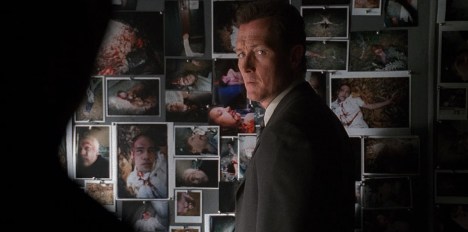
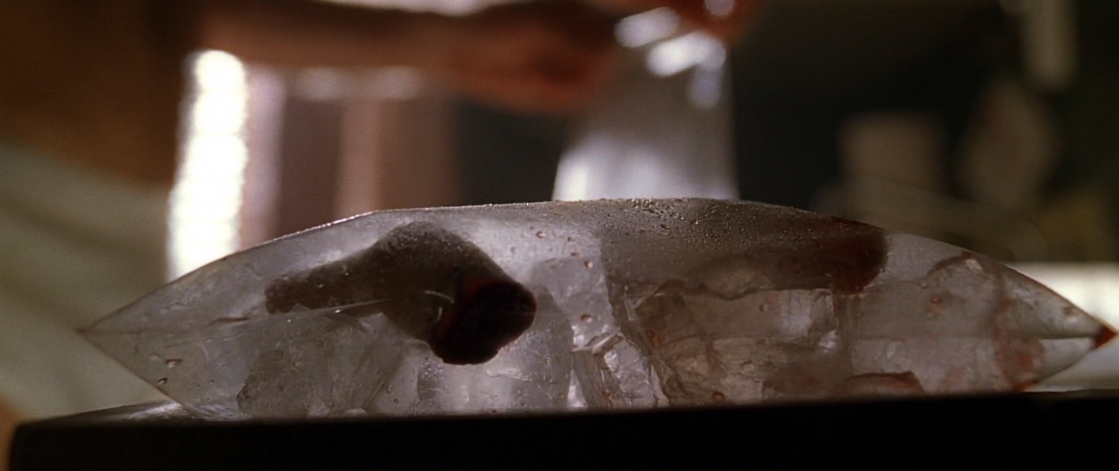
Picture perfect...

Picture perfect…

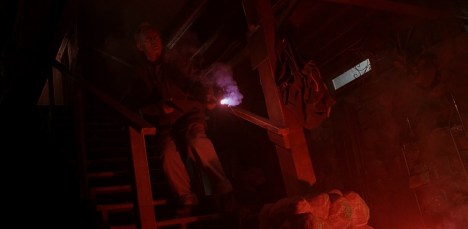
These are fairly sizable and fundamental problems. There is no getting around them. However, Release offsets those problems by being a spectacularly-produced piece of television. Everything works, from Robert Patrick’s performance to Mark Snow’s piano-heavy score to Kim Manner’s stylised direction. Release is a reminder of just how sleek and well-oiled The X-Files could be. That is quite a relief after the triple whammy of Scary Monsters, Jump the Shark and William. Release is a good episode on its own terms; in context, it is a masterpiece.

It also helps that Release feels like the first attempt to give the show actual material closure since Improbable. That closure is thematic rather than literal, with the mystery of Luke Doggett’s death serving as a vehicle through which the show might finally resolve some of its own lingering threads. In the case of Release, the show is tidying away the strands that have been woven into the fabric of The X-Files from the beginning; strands that paid homage to Silence of the Lambs and gave birth to Millennium. Release bids farewell to the forensic side of The X-Files.

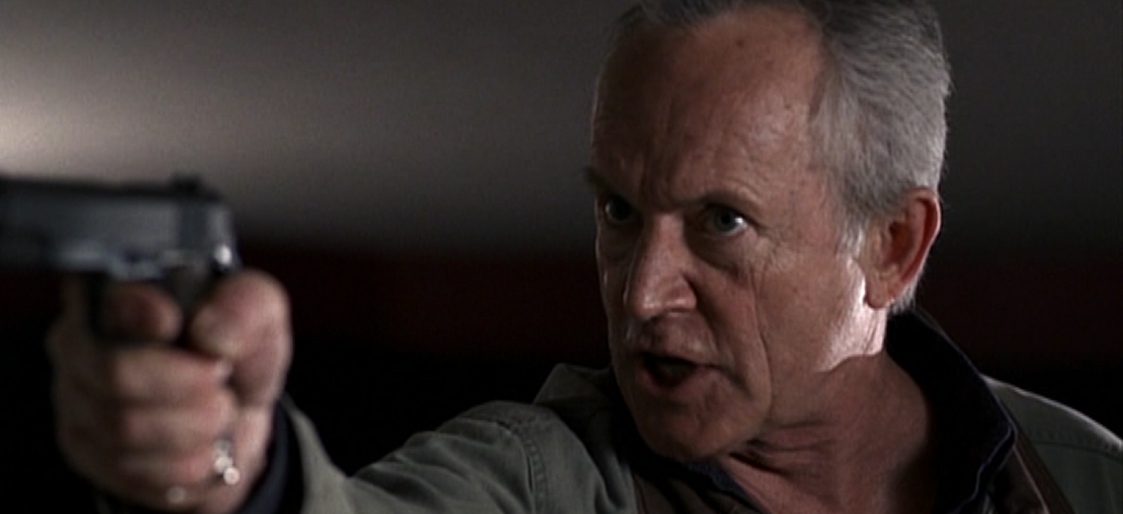
The old man and the sea...

The old man and the sea…

Continue reading

The X-Files 103: Ten Spin-Off/Tie-In Stories

Next week sees the release of The X-Files on blu ray for the first time, just over a month before the new six-episode series premieres on Fox in January. We’re running daily reviews of the show (and its spin-offs) between now and the end of the year, but we thought it might be worth compiling some guides for newer viewers who are looking to experience the length and breadth of what The X-Files has to offer. Every day this week, we’ll be publishing one quick list of recommended stories every day, that should offer a good place to start for those looking to dive into the show.

Although the bulk of discussion around and attention paid to The X-Files focuses on the two-hundred-and-two episodes (and two movies) tied to the series itself, it is worth commenting on the rich world of spin-offs and tie-ins that Chris Carter and his production team built up around the show. The X-Files was not just a nineties television show, it was a multimedia phenomenon. However, these aspects of the show are frequently overlooked in discussions of the show’s legacy and cultural impact.

xfiles-millennium33

Continue reading

The X-Files – Dæmonicus (Review)

This December, we’re taking a trip back in time to review the ninth season of The X-Files.

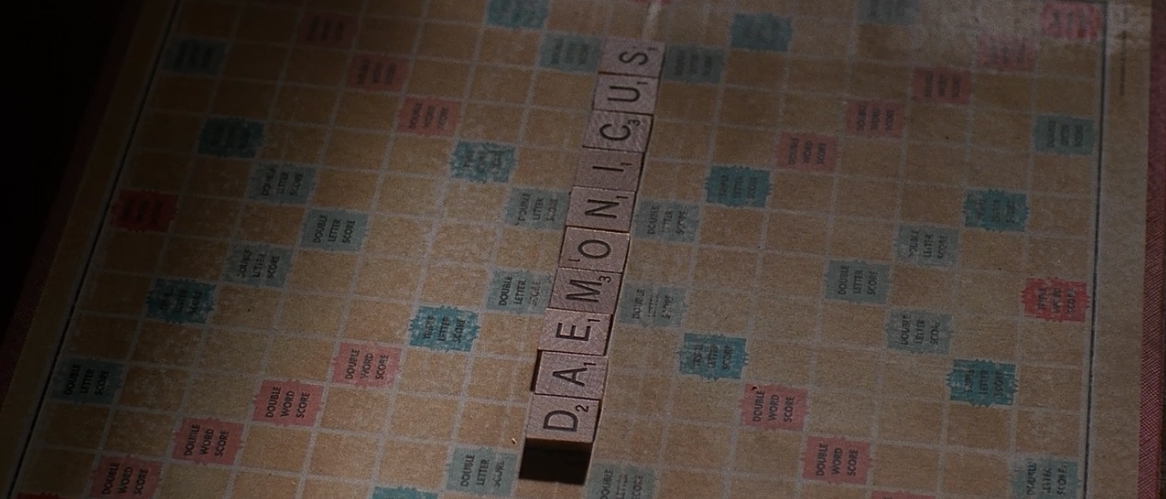
Dæmonicus is the first “monster of the week” episode of the ninth season.

This is important, particularly following on from two particularly limp introductory mythology episodes. After all, The X-Files amounts to more than just its mythology; problems with the mythology are less of a problem when they are surrounded by strong standalone episodes. Tunguska and Terma arrived as messy mythology episodes at the peak of the show’s popularity, but nobody was too bothered because they were surrounded by standalone episodes like Musings of a Cigarette-Smoking Man or Paper Hearts.

The devil inside...

The devil inside…

So the show can probably withstand the hit of Nothing Important Happened Today I and Nothing Important Happened Today II. After all, the third season opened with The Blessing Way and the fifth season opened with Redux I, with both of those seasons standing among the best seasons that the show ever produced. (That said, it helps that the second episodes of those seasons – Paper Clip and Redux II – were much stronger.) There is still a chance to salvage things here. The ninth season is down, but don’t count it out yet.

Dæmonicus could really turn things around, right?

Well, that's just cheating.

Well, that’s just cheating.

Continue reading

The X-Files – Invocation (Review)

This October/November, we’re taking a trip back in time to review the eighth season of The X-Files and the first (and only) season of The Lone Gunmen.

There is something rather strange about how the first six episodes of the eighth season approach Doggett as a character.

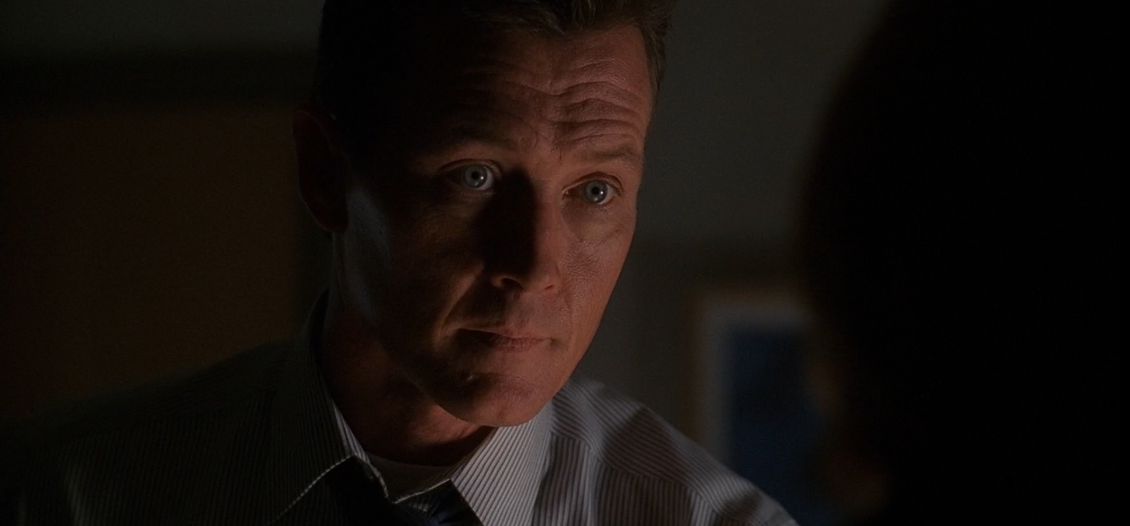
Despite the fact that he is one of the two leads on The X-Files, the series takes its time in getting around to him. Robert Patrick is effectively stepping into the shows of David Duchovny, but the early stretches of the eighth season seem quite unsure what to make of Special Agent John Doggett. Robert Patrick might appear in the opening credits, but there is a sense that the writing staff are not yet entirely comfortable with the character. Perhaps worried about alienating fans still grieving for Mulder, the show keeps a respectful distance from Doggett.

Good grief.

Good grief.

Within and Without introduced Doggett as the agent in charge of the hunt for Mulder. While Scully and Skinner were looking at Mulder as a potential victim, they frequently found themselves competing with Doggett’s decisions to paint Mulder as a potential suspect. Doggett was introduced in a surprisingly abrasive manner, literally (and clumsily) attempting to undermine the relationship between Mulder and Scully – perhaps a literal expression of fannish anxiety about the show’s new lead.

This is not to suggest that the show has been hostile (or even disinterested) towards Doggett. Both Patience and Roadrunners emphasise that Scully needs to learn to trust Doggett and that he really does have her best interests at heart. However, the show tends to look at Doggett as an object of curiousity. In the first six episodes of the season, the show tends to view Doggett from an outside perspective. He might play an active role in the narrative, but he is not really a viewpoint character.

Knife to see you...

Knife to see you…

The show generally approaches Doggett through the character of Scully. (In Redrum, it is Martin Wells.) Leaning heavily on Scully makes sense; the audience trusts Scully, so if she can trust Doggett then maybe they can as well. More than that, it offers a nice twist on the dynamic during the first season of the show. In The Pilot, Scully was introduced as a viewpoint character into the bizarre world of Fox Mulder. Seven years later, the audience is so accustomed to that bizarre world that she is the viewpoint character into the grounded world of John Doggett.

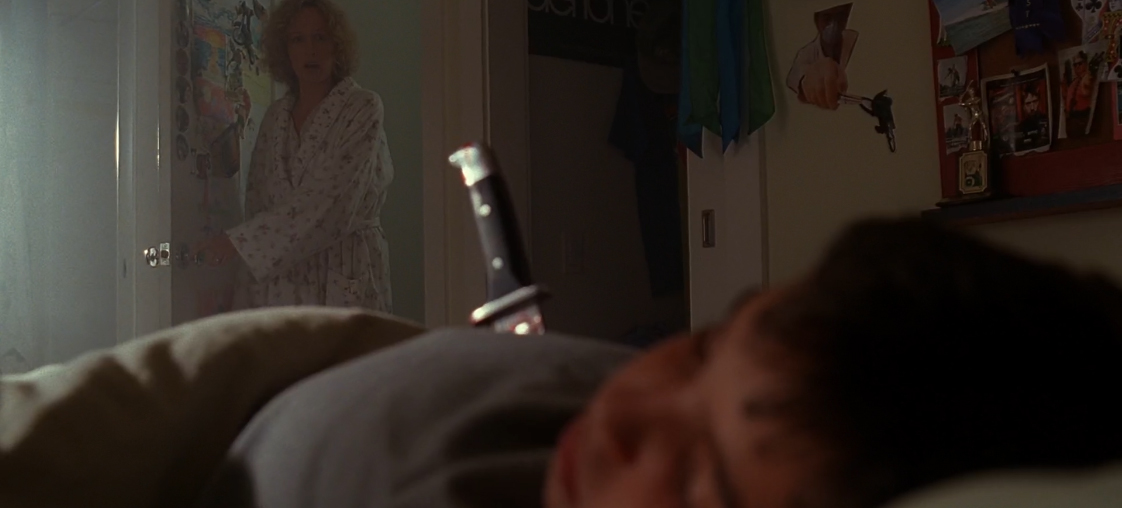
This decision to treat Scully as the viewpoint character gives Invocation a surreal tone. In many ways, Invocation is the show’s first real Doggett-centric story; it is the first time that the character gets to drive the central narrative instead of running in parallel, it is the first time that the show hints at a personal back story for Doggett beyond “generic law enforcement and armed forces experience.” However, it is all filtered through the lens of Dana Scully. It emphasises the fact that Doggett is a mystery, which seems strange given how straight-laced he seems.

"Luke, I was your father."

“Luke, I was your father.”

Continue reading

The X-Files – Orison (Review)

This November, we’re taking a trip back in time to review the seventh season of The X-Files and the first (and only) season of Harsh Realm.

The X-Files has generally avoided sequels.

There are exceptions, of course. Eugene Victor Tooms appeared twice in the first season, bookending the show’s first year in Squeeze and Tooms. The character of Robert Patrick Modell resurfaced in Kitsunegari, two years after his debut in Pusher. In a way, the mythology could be read as a series of sequels and inter-related plots, with the show lacking the sort of truly overarching design that would identify it as a single story that had been serialised. Still, The X-Files has been reluctant to resurrect old monsters, perhaps acknowledging the law of diminishing returns.

Here's Donnie!

Here’s Donnie!

So Orison is something of an oddity. It marks the second and final appearance of Donnie Pfaster, the demonic Ted Bundy type who made such an impression in Irresistible. Much like Robert Patick Modell or Eugene Victor Tooms, Donnie Pfaster was popular enough the bringing him back made a certain amount of sense; if the show had to do a “sequel” episode, Donnie was as good a candidate as any. Meanwhile, Flukeman waits by the phone. However, the question remains: why?

What is the point of bringing back Donnie? What didn’t the show do last time that it would do this time? It’s a very basic, very fundamental question. Unfortunately, Orison does not have much of an answer.

Finger food...

Finger food…

Continue reading

The X-Files – Millennium (Review)

This November, we’re taking a trip back in time to review the seventh season of The X-Files and the first (and only) season of Harsh Realm.

There are any number of ironies around the cancellation of Millennium.

The show was cancelled by Fox to make room for Harsh Realm, hoping that Chris Carter’s new show would perform better in the Friday night slot. Of course, that did not turn out to be the case; Harsh Realm was cancelled after only three episodes had been broadcast, all failing to even match the already low numbers of the third season of Millennium. A show in its third season was cancelled to make room for a hip new show that was pretty much dead on arrival. However, that is not the only irony.

Frank Black's return...

Frank Black’s return…

Millennium concluded with Goodbye to All That in May 1999. The show fell seven months shy of its own deadline. If Fox had commissioned only eight new episodes, the creative team would have been able to take the show right up to the turn of the millennium itself. (Well, in a way that would make sense to most viewers. “Nobody likes a maths geek, Scully.” Even one who is technically correct.) It seems like Frank Black would not get to see the arrival of the date that had defined his show. (It was the title, after all.)

If Christmas is the season of goodwill to all men, then it is a nice gesture that The X-Files invited Frank Black to ring in the new year (and the new millennium) with them. It might not be much more, but it is a nice gesture.

... is just one thing that fans remember about this episode.

… is just one thing that fans remember about this episode.

Continue reading

Millennium – Season 3 (Review)

This July, we’re taking a trip back in time to review the sixth season of The X-Files and the third (and final) season of Millennium.

Three seasons is a good run.

It’s not a great run, but it is worth noting that Millennium ran longer than any of Chris Carter’s creations other than The X-Files. Given you grim and esoteric Millennium turned out to be, that is quite impressive. Notably, even the third season of Millennium performed better in the ratings than the first season of Harsh Realm. In many respects, Millennium is a very odd television show; it seems surprising that it lasted for three seasons. While fans (and many who worked on it) might have wanted more, Millennium is not a failure.

millennium-thesoundofsnow28

That said, the third season of Millennium is a disaster. There are a lot of reasons for this. The show was renewed by Fox quite late in the process, meaning the production team had little time to prepare. Glen Morgan and James Wong had no interest in returning to run the show, even if the rest of the staff would have them. Either due to time constraints or frustration, nobody asked Morgan and Wong about resolving the ending of The Time is Now. Michael Duggan was hired as showrunner, only to depart eight episodes into the season.

With all of this going on, the problems with the third season are entirely understandable. The season feels like a disjointed mess because there was chaos behind the scenes. The season was confused about its own continuity because the production team had no idea what to make of the second season. With ratings plunging, the show sought comfort in the familiar; there is an extended stretch near the start of the third season where it feels like the production team were trying to turn the show into a copy of The X-Files.

millennium-teotwawki22

The third season of Millennium has fairly terrible reputation among fans. This is not entirely undeserved; the early stretch of the third season contains a string of the worst episodes that Millennium ever produced. As sympathetic as the surrounding circumstances might make an audience to the show, that goodwill evaporates when confronted with episodes like The Innocents, Exegesis, TEOTWAWKI, Skull and Bones, Through a Glass Darkly, Human Essence and Omertà. The series improves dramatically in its middle section; but it is never consistent.

The third season contains a number of underrated episodes that do count among the best that the show ever produced, and a whole host of more interesting failures around those episodes. Perhaps the best thing that might be said about the third season is that it is interesting at least as often as it is bad. That might not sound like a ringing endorsement. It isn’t. The third season of Millennium doesn’t work. The reasons for this are entirely understandable, but that does not make it any easier to watch.

millennium-sevenandone24

Continue reading

Millennium – Goodbye to All That (Review)

This July, we’re taking a trip back in time to review the sixth season of The X-Files and the third (and final) season of Millennium.

Goodbye to All That is not a bad place to leave Millennium, truth be told.

Sure, the episode has its problems, but that is true of pretty much every third season episode. However, showrunners Chip Johannessen and Ken Horton do try to offer the show some sort of closure. While Emma betraying Frank before he rides off into the sunset might have been a nice set up for a new fourth season status quo, it also feels like a nice place to leave the show as well. Director Thomas J. Wright frames that closing shot beautifully, to the point where anything that follows does feel like a coda to the three-season show.

Don't be dark, Frank Black...

Don’t be dark, Frank Black…

More than that, there’s a curious magnanimity to Goodbye to All That. The episode seems to suggest that perhaps Millennium has finally resolved all its internal conflicts about its own history. As with Borrowed Time, The Sound of Snow or Collateral Damage, there is a sense that Goodbye to All That is trying to create a cohesive theory of Millennium – suturing together three very different seasons into something approaching a singular entity. The task is impossible, but Goodbye to All That makes a valiant effort.

Yes, the actual plotting is ridiculous and Goodbye to All That tries to do too much in a single forty-five minute episode, but these are far from the worst vices of the third season. It is too much to suggest that Goodbye to All That wraps up Millennium on a high, but it does allow the show to bow out with its head held high.

"You know, for a secret organisation, we sure do a lot of branding..."

“You know, for a secret organisation, we sure do a lot of branding…”

Continue reading

Millennium – Via Dolorosa (Review)

This July, we’re taking a trip back in time to review the sixth season of The X-Files and the third (and final) season of Millennium.

And so, Millennium ends.

That is not entirely accurate. Via Dolorosa and Goodbye to All That are really the third ending to Millennium. Chris Carter’s oft-overlooked series famously reinvented itself in each of its three seasons. Every season finalé was a series finalé, bidding farewell to one version of the show before another arrives. In the first season, it was a serial killer procedural with ominous spiritual undertones. In its second season, it was the story of a family breakup that drew in all manner of religious conspiracy theories and eschatology. In its third season, it was…

"Did I tell you that I REALLY like The Silence of the Lambs?"

“Did I tell you that I REALLY like The Silence of the Lambs?”

Well, it is hard to tell what the third season was – or even what it wanted to be.

Nevertheless, Via Dolorosa and Goodbye to All That feel like an attempt to grant the series some sense of closure. In a way, these episodes typify the third season. They are messy and confused, awkwardly paced and drawn in broad strokes. At the same time, there are enough interesting ideas and clever concepts that one can see how they might have come together with a bit more craft. There is an outline of a great episode here, with Via Dolorosa and Goodbye to All That making a valiant effort to pull together messy strands of continuity from across the show’s run.

"Yep, it feels a little bit like that."

“Yep, it feels a little bit like that.”

The third season of Millennium was hampered by terrible decisions made out of the gate, but the final stretch of the season has no shortage of ambition and drive. It is no secret that the third season suffered from a number of serious problems at the start of the year. Maybe if those had been avoided, Via Dolorosa and Goodbye to All That would have an easier time drawing down the blinds. Still, it is impossible to know what might have been, and the truth is that Via Dolorosa and Goodbye to All That are a flawed conclusion to a flawed year.

Perhaps appropriately, Via Dolorosa and Goodbye to All That offer a rather disjointed conclusion to a rather disjointed year. Via Dolorosa and Goodbye to All That are written by two different teams of writers and directed by two different directors. Although the plot carries across both episodes, there are points where the transition seems rather inelegant or incongruous. Then again, this is about wrapping up the show’s troubled third season, so it is certainly representative.

"Take a picture. It'll last longer."

“Take a picture. It’ll last longer.”

Continue reading

Millennium – Nostalgia (Review)

This July, we’re taking a trip back in time to review the sixth season of The X-Files and the third (and final) season of Millennium.

Nostalgia is the last “serial killer of the week” story produced by Millennium.

Sure, there is a serial killer in Via Dolorosa and Goodbye to All That, but the last two episodes of Millennium are much more interested in the show’s mythology than in a nuts-and-bolts “Frank catches a serial killer” story. Appropriately enough, given its title, Nostalgia feels like a throwback to a simpler version of Millennium. In a way, it does more to capture the mood and feel of the first season of the show than anything like Matryoshka or Seven and One. It helps that Nostalgia is a great episode, judged by it own merits.

Frank sees all. All.

Frank sees all. All.

It makes sense that Nostalgia should come from Michael R. Perry. With his debut script for The Mikado in the second season, Perry had demonstrated quite a knack for traditional Millennium storytelling. The Mikado was arguably something of a throwback itself, the most old-school “serial killer of the week” story in the show’s delightfully off-kilter second season. If the show wanted to do one last “serial killer of the week” story, there was no writer better suited to crafting it than Michael R. Perry.

In a way, Nostalgia feels like belated vindication for the “back to basics” aesthetic running through the third season – proof that perhaps it might be possible for the show to recapture some of the stronger aspects of the first season even this late in the game. Nostalgia is a much better version of the stories that Closure and Through a Glass Darkly had tried to resurrect earlier in the year. It might be enough to entirely redeem the season’s stubborn fixation on a past fading into history, but it does demonstrate that there were interesting stories to be told using that technique.

Parks and recreation...

Parks and recreation…

Continue reading