• Following Us

  • Categories

  • Check out the Archives


  • Awards & Nominations

Star Trek: Enterprise – Stigma (Review)

Next year, Star Trek is fifty years old. We have some special stuff planned for that, but – in the meantime – we’re reviewing all of Star Trek: Enterprise this year as something of a prequel to that anniversary. This April, we’re doing the second season. Check back daily for the latest review.

It’s been a long road.

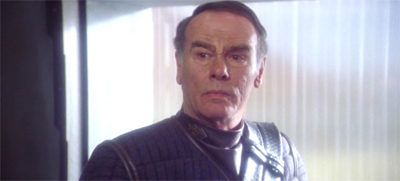
Continuing the effort in Dawn to refocus Star Trek: Enterprise on franchise core values, Stigma offers a good old-fashioned allegory episode. It is a script clearly designed to stand alongside earlier iconic Star Trek shows like A Taste of ArmageddonErrand of MercyLet That Be Your Last BattlefieldToo Short a SeasonThe High GroundHalf a LifeEthics, The Outcast, Rejoined and Distant Origin. This is a big and important episode, dealing with big and important themes. In this case, the stigma associated with HIV/AIDS and (whisper it) homosexuality.

It's just not in the show's DNA at this point...

It’s just not in the show’s DNA at this point…

Of course, it arrives well over a decade too late. Writer David Gerrold had pitched his own allegory about HIV/AIDS and homosexuality with Blood and Fire during the first season of Star Trek: The Next Generation. The script was a little clunky, but – rather than rework it – the producers decided to shut it down completely. During that show’s third season, David Livingston was on hand to stop the show from providing the franchise’s first glimpse of a homosexual couple in The Offspring. What queer content made it into Star Trek seemed somewhat haphazard.

The decision to allow Lal to chose her own gender in The Offspring is remarkable, because it goes almost unremarked. Dax’s deduction that Pel has a crush on Quark in Rules of Acquisition comes before Pel reveals that she is a female passing herself off as male. The sincerity of The Outcast was somewhat undermined by the decision to cast a female performer in the role of genderless alien who is attracted to Riker. The good work of Rejoined is undercut by the crassness of Profit and Lace and The Emperor’s New Cloak.

Meditating on a contemporary issue...

Meditating on a contemporary issue…

There was a time when an episode like Stigma would have seemed cutting edge and provocative. Broadcast during the first (or even the second) season of The Next Generation, the episode would have challenged a number of the underlying public assumptions about the spread of HIV/AIDS and attacked a very real (and very frank) homophobic policy from the government. The biggest problem with Stigma is that it features Captain Jonathan Archer instead of Captain Jean-Luc Picard.

Of course, this suggests a very tangible issue with Enterprise at this stage of its life-cycle. It still feels like a show stuck in the past. This is still Star Trek as it was being produced in 1989, despite the fact that it is now 2003. It is a problem that has haunted Enterprise since the broadcast of Fight or Flight, but one which is really emphasised not only by the plotting of Stigma, but also in its political targets.

"You know, given how often I seem to risk removal from the ship, I should probably just keep this packed..."

“You know, given how often I seem to risk removal from the ship, I should probably just keep this packed…”

Continue reading

Star Trek: Enterprise – Detained (Review)

Next year, Star Trek is fifty years old. We have some special stuff planned for that, but – in the meantime – we’re reviewing all of Star Trek: Enterprise this year as something of a prequel to that anniversary. This January, we’re doing the first season. Check back daily for the latest review.

Detained is well-meaning, if a little clumsy and awkward.

It is a rather conscious effort to do a “message show” in the grand tradition of the Star Trek franchise, using the show’s science-fiction premise to offer a commentary on current events. Detained is very clearly structured as a response to the 9/11 attacks, even if Archer only explicitly references the internment of Japanese Americans at Manzanar. Detained is full of interesting ideas, and its heart is in the right place, but the execution feels decidedly rushed and haphazard. Detained works much better as a two-line moral than it does as a forty-five minute episode of television.

You can't call him Al...

You can’t call him Al…

Continue reading

Star Trek – Friday’s Child (Review)

The first Star Trek pilot, The Cage, was produced in 1964. To celebrate its fiftieth anniversary, this December we are reviewing the second season of the original Star Trek show. You can check out our first season reviews here. Check back daily for the latest review.

Errand of Mercy was a highlight of the first season. A wry script from producer Gene L. Coon introduced the Klingons as an antagonist for the Federation. Made up to look like space!Mongols, the Klingon Empire was presented as an imperial force hell-bent on expanding its sphere of influence. In case the parallels were a little too subtle, they were locked in a Cold War with the Federation. As such, they were the perfect stand-ins for Communist aggressors trying to undermine American foreign policy.

Of course, Errand of Mercy was brutally cynical in its depiction of the Federation. The episode suggested quite heavily that the Federation was just as imperialist and adversarial as the Klingons. They might couch their foreign policy in friendly language and polite overtures, but their end goals are quite similar. Smaller political entities are nothing but pieces shuffled around a board in a deadly game of chess. Errand of Mercy was not flattering in its portrayal of Kirk, presenting him as little more than a warmonger.

"Damn dirty Klingon!"

“Damn dirty Klingon!”

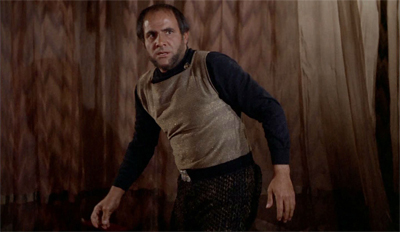
Errand of Mercy was a massive success. It remains a fan favourite to this day. In some respects, that is due to the introduction of the Klingons, but it is also an exceptional hour of scripted science fiction. So it makes sense that the show would return to the Klingons when it was renewed for a second season. Friday’s Child was the third episode produced during the second season, and returns to quite a few themes hit on by Errand of Mercy. Those themes would recur.

Friday’s Child demonstrates the obvious risks of an episode like Errand of Mercy. It’s an episode that essentially takes the “Klingons as space!Communists” seriously.

We come in peace...

We come in peace…

Continue reading

Ed Brubaker’s Run on Uncanny X-Men – Divided We Stand (Review/Retrospective)

This May, to celebrate the release of X-Men: Days of Future Past, we’re taking a look at some classic and modern X-Men (and X-Men-related) comics. Check back daily for the latest review.

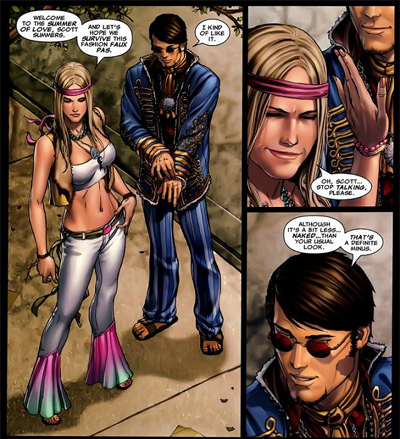
Divided We Stand actually feels like the start of something interesting for Ed Brubaker’s run on Uncanny X-Men. It’s a story arc that heralds a bold new direction for Marvel’s merry mutants in the wake of Messiah Complex, taking the team out of their comfort zone and suggesting that Uncanny X-Men will be moving a little outside its comfort zone and trying something different. It’s a story arc that sees the team reflecting on the past and considering the future.

So, naturally, it is Ed Brubaker’s last solo arc on Uncanny X-Men.

A bad trip?

A bad trip?

Continue reading

Star Trek: The Next Generation – Blood and Fire by David Gerrold (Review)

This January and February, we’ll be finishing up our look at the second season of Star Trek: The Next Generation and moving on to the third year of the show, both recently and lovingly remastered for high definition. Check back daily for the latest review.

We’ll be supplementing our coverage of the episodes with some additional materials – mainly novels and comics and films. This is one such entry. This is actually supplementary to the first season of the Next Generation, specifically the episode Symbiosis.

The lead up to the first season of Star Trek: The Next Generation was full of potential. Gene Roddenberry was directly overseeing a Star Trek production for the first time since Star Trek: The Motion Picture. More than that, the producer had brought along quite a few of the talented production staff members who had helped to make the franchise so special in the first place. David Gerrold and D.C. Fontana, two of the best loved Star Trek writers of all time, would be working on the show.

Despite all that television had changed in the decades since the original Star Trek had been on the air, Roddenberry proudly boasted to fans that the franchise would continue to engage directly with the big issues of the day. After all, one of the most memorable aspects of the classic Star Trek was the show’s willingness to engage with big political issues. Even the most casual of pop culture fans remember the awkward metaphors for Vietnam or racism.

Unfortunately, The Next Generation really seemed to lack the nerve of its direct predecessor. This became quite clear early on, when veteran writer David Gerrold’s script for the proposed Blood and Fire was unceremoniously shelved, and quickly forgotten about.

tng-bloodandfire

Continue reading

Matt Fraction’s Run on Uncanny X-Men – Nation X (Review/Retrospective)

I am doing a weekly look at Marvel’s complicated crossover chronology, following various key crossovers to see if they might give me a better idea of what I’m missing by avoiding mainstream comic book continuity. While – with The Avengers due for release in 2012 – I am focusing on the stories told featuring those characters over the past five years, I also have time for the X-Men. While this isn’t strictly speaking a crossover, it is a series of issues which connect Utopia to Second Coming, so I figured it was worth a look.

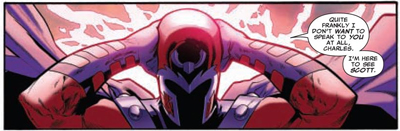
Utopia ended with a heck of a plot twist. Cyclops decided that his merry band of mutants have had enough of being looked down upon in New York and , more recently, San Francisco, so he decides to build himself an island from the remains of Magneto’s “Asteroid M” just off the San Francisco Bay. Announcing the new nation of “Utopia”, he declares the island a haven for mutants. Nation X provides a hardcover collection of the issues from Matt Fraction’s Uncanny X-Men which bridge the gap between Utopia and Second Coming, as well as the four-issue Nation X anthology miniseries. And, while it’s a decidedly uneven reading experience, I have to admit that some of Fraction’s portrayal of the mutant team is a little bit interesting – even if most is slightly boring and deeply convoluted.

Magneto has a magnetic personality...

Note: This collection opens with Dark Reign tie-in X-Men: The List written by Matt Fraction and following an attempted assassination attempt on Namor by Norman Osborn. Accordingly, I think I should open this review with a link to Abhay’s quite excellent article on the issue, which – among some more serious points – suggests that Namor is starring in his own private version of You Don’t Mess With The Zohan. Seriously, check it out.

Continue reading

Non-Review Review: The Village

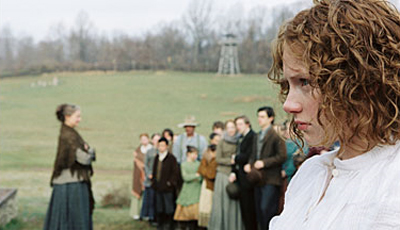
I don’t think I’m spoiling anything by revealing there’s a twist in M. Night Shyamalan’s The Village. In fact, the only shocking twist in a Shyamalan film would be if there was no twist. I have to admit that even I was a little surprised when I guessed the twist about twenty minutes into this film. And I was sadly disappointed that there really wasn’t anything else on screen to hold my interest.

Village people...

Continue reading

Non-Review Review: 28 Weeks Later

Welcome to the m0vie blog’s zombie week! It’s a week of zombie-related movie discussions and reviews as we come up to Halloween, to celebrate the launch of Frank Darbont’s The Walking Dead on AMC on Halloween night. So be sure to check back all week, as we’ll be running posts on the living dead.

It’s strange. 28 Days Later felt strangely British, with its almost quaint surroundings and “island fortress” mentality. Filmed in High Definition with an intimate approach, the movie felt somehow more tangible and organic than most of these films, managing a genuine emotional impact that it’s easy to lose sight of in these fantastical narratives – its small scale and quirky design (along with hyper saturation) lent the movie a very distinct feel, the sensation that this was a “guerilla” zombie film – shot in the early morning on abandoned streets rather than closing off sections of town. In contrast, 28 Weeks Later feels a much more managed affair, and a much more conventional one. It’s shot like any other zombie movie, and clearly intended to reach an even wider audience than the original cult hit. It’s a great movie, but one can’t help but get the sensation that the fine polish applied to it undercuts some of the impact.

The army had to find something to keep themselves occupied...

Continue reading

Calvin v. Hobbes – An Alternative Interpretation of Fight Club…

I am a sucker for a crazy movie conspiracy theory. Be it the possible identities of Keyser Soze or the fact that The Shining is about Native Americans or even whether Anton Chigurh (the unstoppable killing machine from No Country for Old Men) is actually an angel. I stumbled across a somewhat similar one a little while ago which has been out there a while (and I imagine most of you are familiar with). But, for those who aren’t, I thought I’d pass on my own favourite crazy movie theory of the moment: Fight Club is a sequel to the iconic comic strip Calvin & Hobbes. Edward Norton’s narrator is Calvin and Brad Pitt’s Tyler Durden is Hobbes. It actually makes sense.

"I am Jack's abandoned childhood friend..."

Note: In case that opening paragraph hasn’t given the game away, there are spoilers in here for the rather excellent Fight Club. I’m assuming anyone reading a detailed article on the movie has seen it (you’ve had ten years!), but – if not – consider yourselves warned that here there be spoilers.
Continue reading

Is The Shining About Native Americans?

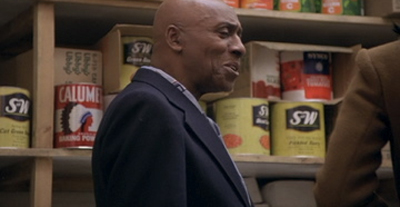
You know how interested I am in quirky interpretations of the deeper meanings of popular culture – like the discussion over whether Anton Chigurh of No Country For Old Men is actually an angel or whether this year’s Torchwood: Children of Earth miniseries was actually about the recession. So it should come as no surprise that when I read about how The Shining by Stanley Kubrick is supposedly about the genocide of the Native Americans, I was more than a little intrigued.

Even the baking powder is in on it…

Continue reading