• Following Us

  • Categories

  • Check out the Archives


  • Awards & Nominations

Doctor Who: Lucky Day (Review)

“At least your special effects are improving.”

To be fair, a pretty solid run had to end at some point, and a Pete McTighe script is as good a place as any.

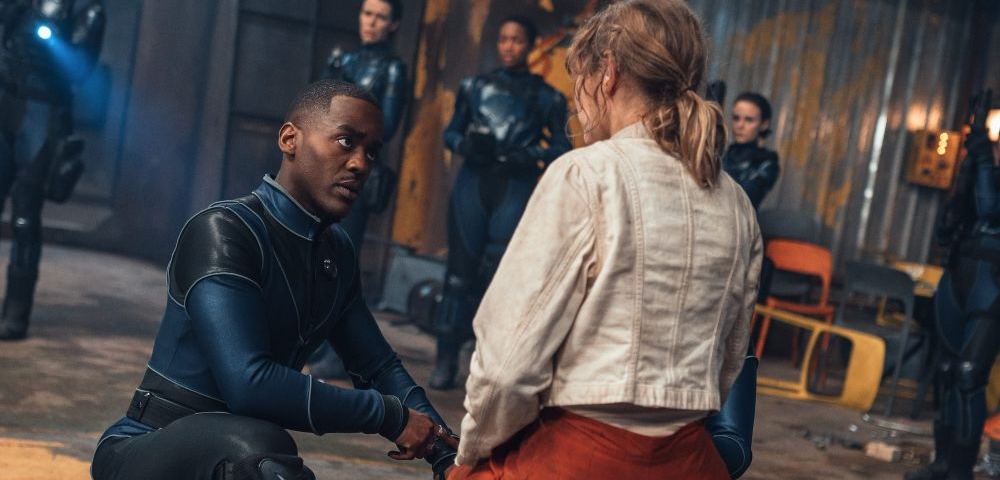
Lucky Day is an interesting episode. It solidifies the sense of this second Davies era as its own distinct object with its own distinct rhythms and structures. Just as one might pair Space Babies and The Robot Revolution, The Devil’s Chord and Lux, or Boom and The Well, Lucky Day is very obviously designed for the same slot as 73 Yards. This is another Doctor-lite episode built around Ruby Sunday, featuring U.N.I.T., set on contemporary Earth. It even brushes against rural folk horror, invoking The Wicker Man in its discussion of English villages.

Food for thought.

However, the episode takes a sharp and ambitious turn in its second half. As with a lot of recent Doctor WhoLucky Day is an episode engaged with the larger context of the show and its place in the popular discourse. It is obviously structured around things that matter to both Davies and McTighe. It is commendably self-aware and playful. There is, on paper, a lot to appreciate about Lucky Day.

The problem is the execution, as the episode’s themes break like waves against the actual narrative itself. Lucky Day only really makes sense as metatext, but cannot support the weight of its big ideas whether inside or outside the fictional universe. It’s an unlucky break.

Absolutely floored.

Continue reading

Doctor Who: The Well (Review)

“There’s still hope.”

“Hope is irrelevant.”

The Well is a strange and triumphant exercise, a collection of contradictions that coheres remarkably well.

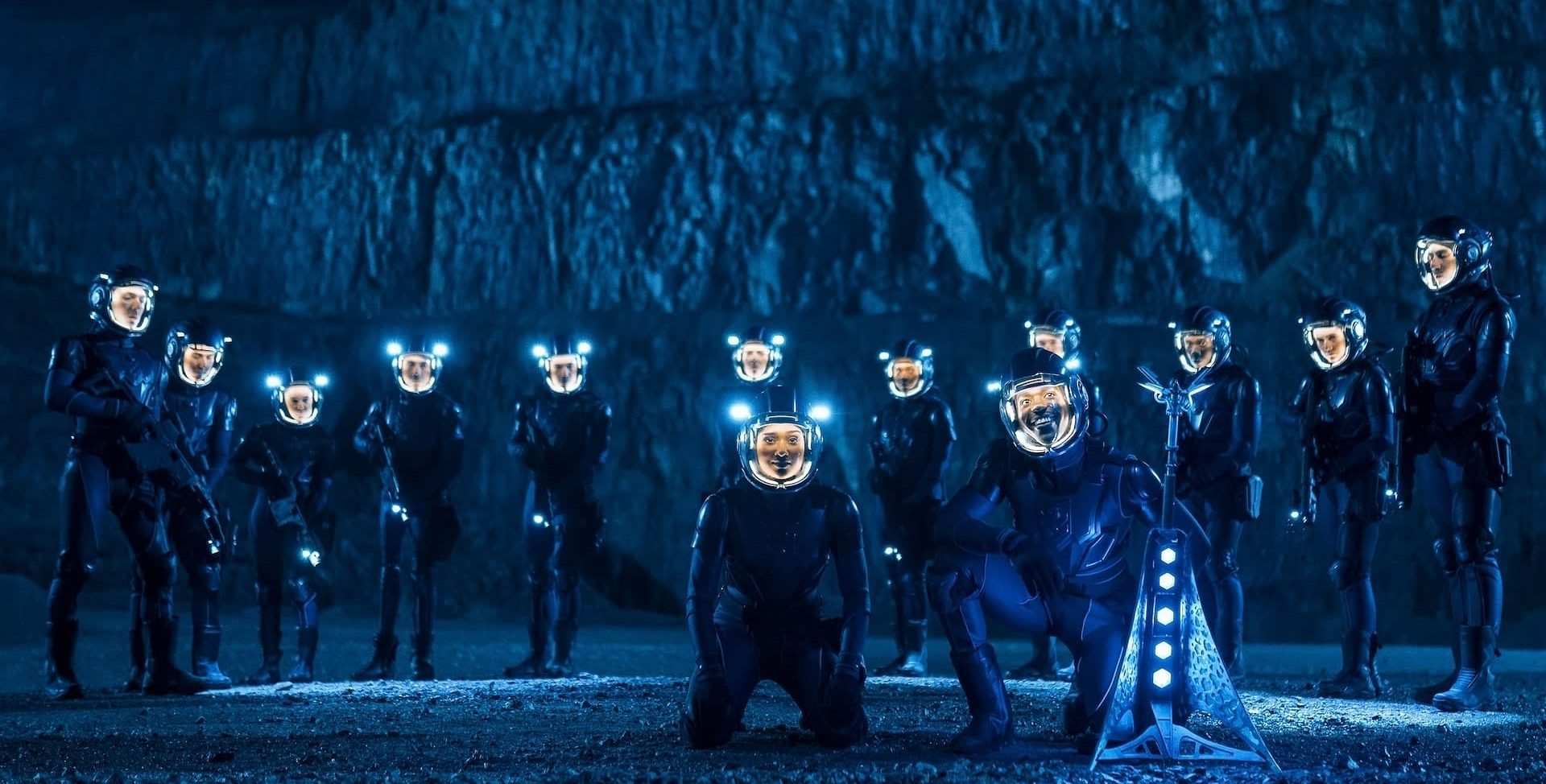
It is a chamber piece, a very basic Doctor Who story that could easily have been executed on the classic BBC budget, blown up with Disney+ money. It is a very obvious sequel to at least one beloved story from Davies’ original tenure as showrunner, and saturated with references to others, while still feeling undeniably like a produce of his second era overseeing the show. It is an exercise in nostalgia, but also a story about how that nostalgia is cursed. It is also Russell T. Davies revisiting his early work, while taking cues from Steven Moffat.

All’s well…

It shouldn’t work. The Well should collapse under its own weight. It should feel like an indulgent mess, a collection of clashing recycled imagery and iconography. However, The Well manages to strike a very careful balance between its competing priorities, allowing the individual elements to add up to more than the sum of its individual parts. It’s an episode that feels like an extension of Davies work in both The Robot Revolution and Lux, solidifying a rich thematic vein running through the first three stories of the season.

The Well is a remarkable accomplishment.

Spaced out…

Continue reading

New Escapist Column! On How “Strange New Worlds” Finally Confronts a Long-Standing “Star Trek” Blindspot…

I published a new piece at The Escapist earlier this week. We’re doing a series of recaps and reviews of Star Trek: Strange New Worlds, which is streaming weekly on Paramount+. So we thought we’d take a look at the second episode of the second season.

Strange New Worlds is obviously a nostalgic appeal to classic Star Trek, particularly the Berman era of the nineties. However, the show has been somewhat reluctant to engage with some of the blindspots of that era, in particular its refusal to acknowledge or engage with the ongoing debate around gay rights. Ad Astra Per Aspera represents a long overdue reckoning with this failure on the part of the franchise, constructing a very classic Star Trek narrative that reckons very overtly with the marginalisation of these minorities.

You can read the piece here, or click the picture below.

New Escapist Column! On “The Flash” as a Movie About the Horror of “The Flash”…

I published a new In the Frame piece at The Escapist this evening. With The Flash releasing this weekend, it seemed like as good an opportunity to talk about the themes of the movie, and how those ideas exist in direct opposition to its central purpose.

Thematically, The Flash is a story about how the idea of a “reset” is fundamentally pointless. It is a tale about how individuals are often the sum total of their life experiences, including the traumatic ones, and that any attempt to erase those traumas would be to erase the person that they created. However, this is very much at odds with what the film functionally is. It is an opportunity for Warner Bros. to shift around their established continuity and intellectual property, to reset characters and to recast actors. In short, The Flash is a movie about its own monstrosity.

You can read the piece here, or click the picture below.

New Escapist Column! On “The Bad Batch” as a Show About Veterans of a Forever War…

I published a new piece at The Escapist last week. With the release of the second season of The Bad Batch, it seemed like a good opportunity to talk about one of the more interesting facets of the series.

The Star Wars franchise has always been intensely political. George Lucas tied the original films to the Vietnam War, and the prequels to the Iraq and Afghanistan Wars. The Bad Batch feels like a culmination of this trend, a follow-up to the prequel trilogy, released in the wake of the American withdrawal from Iraq and Afghanistan, that is very much engaged with the question of what happens to an army of soldiers at the end of an ostensible “forever war.” It’s a meaty theme for an animated series, and The Bad Batch is at its most interesting tapping into it.

You can read the piece here, or click the picture below.

New Escapist Column! On “Ant-Man and the Wasp: Quantumania” as a Parable About the Legacies of Interventionism…

I published a new In the Frame piece at The Escapist this evening. With the release of Ant-Man and the Wasp: Quantumania, it seemed like a good opportunity to look at the movie’s thematic preoccupations.

Quantumania is something of a frustrating jumble of a movie. However, there are some interesting ideas nestled within it. Most engagingly, Quantumania feels like a movie that is about the legacy of foreign interventionism, dropping its characters into a strange realm that was forever altered by the pragmatic alliances made decades earlier. It’s a film about whether characters that call themselves heroes owe any obligation to help those less fortunate, particularly when that suffering is a direct consequence of earlier choices and actions. Quantumania doesn’t necessarily say any of this particularly well, but it tries.

You can read the piece here, or click the picture below.

New Escapist Column! On How “The Last of Us” Uses an Underground Metaphor…

I am doing weekly reviews of The Last of Us at The Escapist. They’ll be dropping every Sunday evening while the show is on, looking at the video game adaptation as the show progresses. This week, the show’s fifth episode.

The fifth episode of The Last of Us, Endure and Survive, is a wonderful illustration of what the show does so well. Structurally, this is the kind of episode that every post-apocalyptic show inevitably does; it’s the story of a colony of survivors overwhelmed by a hostile horde. What is so effective about Endure and Survive is that it tells this conventional story in a way that plays into the larger themes of the show around it. The Last of Us has a very literary quality to it, and the episode is built around a clever central metaphor: it’s a story about rising up from underneath.

You can read the piece here, or click the picture below.

New Escapist Column! On How “The Rogue Prince” Lets “House of the Dragon” Reflect the Modern World…

I am doing weekly reviews of House of the Dragon at The Escapist. They’ll be dropping every Sunday evening while the show is on, looking at the Game of Thrones prequel as it progresses from one episode to the next.

One of the more interesting aspects of Game of Thrones was the way in which it was a high fantasy series that used the language and conventions of the genre as what felt like a compelling commentary on American identity, filtering the anxieties of the War on Terror through the prism of dragons and free cities. House of the Dragon continues that trend, offering a show that seems to reflect a particularly anxious and unstable moment in American history.

You can read the piece here, or click the picture below.

New Escapist Column! On How “Strange New Worlds” Reaches the Limits of Allegory…

I published a new piece at The Escapist this evening. We’re doing a series of recaps and reviews of Star Trek: Strange New Worlds, which is streaming weekly on Paramount+. The seventh episode released this week, and it seemed like a good opportunity to take a look at the series.

The Serene Squall is an episode that demonstrates the limits of the old-fashioned allegorical-driven approach to Star Trek, particularly when it comes to treating aspects like race and gender as metaphor or allegory rather than simply as facets of existence. Recent spin-offs like Star Trek: Discovery and Star Trek: Picard might have been uneven, but they made huge steps forward for the franchsie by acknowledging queer leads. In its attempt to nostalgically evoke nineties Star Trek, Strange New Worlds effectively pushes all of that back into the closet.

You can read the piece here, or click the picture below.


New Podcast! Make It So – Season 2, Episode 8 (“Mercy”)

I am recapping Star Trek: Picard for The Escapist, and so was thrilled to join the wonderful Kurt North on Make It So: A Star Trek Universe Podcast to discuss the eighth episode of the second season, Mercy.

I have somewhat complicated feelings about Picard. There are parts of it that I love, and parts of it that I am a bit more skeptical about. One of the joys of coming into the podcast to discuss the episode was getting the chance to talk about the season as a whole, given how its various arcs were set up and how they paid off. It seems particularly opportune, given that Mercy is a somewhat stronger episode than those surrounding it.

Anyway, it was a huge honour to be invited on, and I hope you enjoy. You can listen to the episode here, or click the link below.