• Following Us

  • Categories

  • Check out the Archives


  • Awards & Nominations

“No one trusts each other anymore.” Brian Michael Bendis’ “Avengers” and the War on Terror

One of the great things about long-running pop art, whether television shows, film franchises or comic books, is the sense in which they can serve as a reflection of shifting cultural concerns.

The Marvel Universe spans more than six decades of continuity. It is perhaps too much to call it a single story, even if comic book continuity is held together by that fiction. It is the work of countless writers and artists, working under different editorial regimes with different creative and commercial constraints. The visual language of the medium has shifted over decades, along with its target audience, not to mention its relationship with the mainstream culture.

Still, while monthly superhero comics are rarely considered high or important art, they are an interesting window into their particular cultural moment. These characters and archetypes are constantly changing and evolving, being reworked and recontextualised to fit the perpetual present. Rereading old comic books can feel like stepping inside a time machine, taking the reader back to not just a particular moment in comics continuity, but a funhouse mirror of the larger culture.

Brian Michael Bendis stewarded the Avengers titles for eight years, from 2004 to 2012. He managed the brand across multiple titles starting with Avengers Disassembled into New Avengers and Mighty Avengers, and through a host of epic status quo-altering events. Some of those events, like House of M, Secret Invasion and Siege, Bendis wrote himself. Other events, like Civil War, he simply tied into from the sidelines.

Still, that initial run of comics from Avengers Disassembled to Siege remains hugely important. Bendis restructured the Marvel Universe to place the Avengers franchise at its core, displacing the X-Men as the company’s flagship brand. Coinciding with the launch of Marvel Studios, that run is an obvious and ongoing touchstone for the Marvel Cinematic Universe, which has directly adapted segments of this run into films like Captain America: Civil War and shows like Secret Invasion.
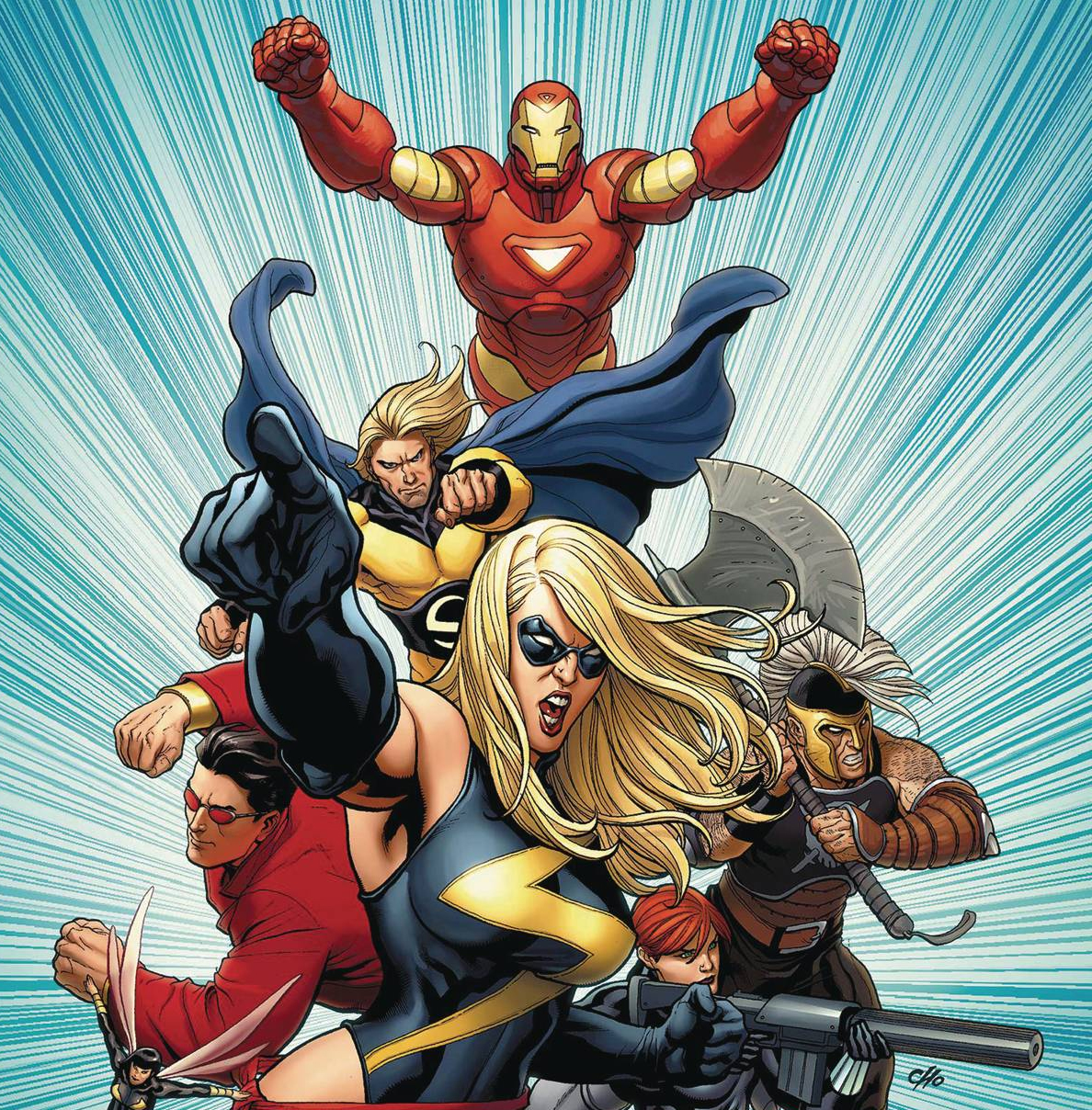
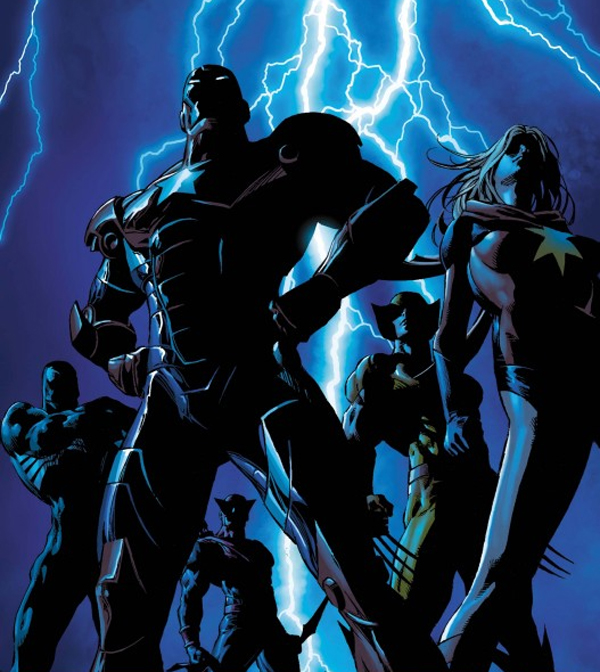
Even as the big crossover events like Avengers: Infinity War or Avengers: Secret Wars draw more heavily from the work of Bendis’ successor on the Avengers titles, Jonathan Hickman, Bendis’ Avengers remains a key influence. Thunderbolts*, for example, feels heavily indebted conceptually to Bendis’ Dark Avengers and even leans heavily on the character of Sentry, a continuity curiosity who became central to Bendis’ larger arcs.

However, even outside of its obvious cultural footprint, the remains one of the definitive explorations of the War on Terror in popular American culture, elevating the emotional and symbolic response to the 9/11 terrorist attacks into a sort of pop mythology, playing out the country’s psychodrama in costumes and capes. Bendis’ Avengers run is messy and uneven, occasionally downright clumsy in its execution. It is also a snapshot of a moment.
Continue reading

New Escapist Column! On How “Secret Invasion” Finally Foregrounds Nick Fury…

We’ll be running weekly reviews of Secret Invasion at The Escapist. To start with, the premiere.

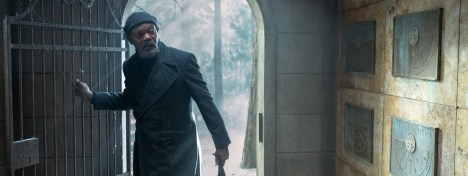
Secret Invasion is notable as the first Marvel Studios project to truly foreground Nick Fury, a character who has been essential to the shared universe dating back to the closing credits of Iron Man. It’s interesting that it took the shared universe fifteen years to build a narrative around Samuel L. Jackson. Secret Invasion adopts an interesting approach to the character, treating him as an avatar for the increasingly beleagured media franchise, a veteran and hero that might be over the hill with his best years behind him.

You can read the piece here, or click the picture below.

New Escapist Column! On How “Secret Invasion” isn’t Marvel’s “Andor”…

We’ll be running weekly reviews of Secret Invasion at The Escapist. But first, a review of the episodes that were previewed for press.

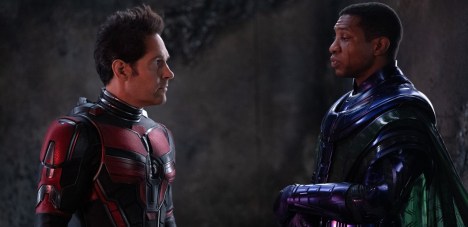
For months, the gossip has been that Marvel Studios have seen Secret Invasion as their answer to Andor, a show that could revitalise interest in a franchise that has been in something of a slow and steady decline, with disappointments like Ant-Man and the Wasp: Quantumania. Unfortunately, Secret Invasion really doesn’t live up to that potential. It offers glimpses of a show tht aspires to push the shared universe outside of its comfort zone, but lacks the necessary killer instinct.

You can read the piece here, or click the picture below.

New Escapist Column! On “Transformers: Rise of the Beasts” and Boring Blockbuster Third Acts…

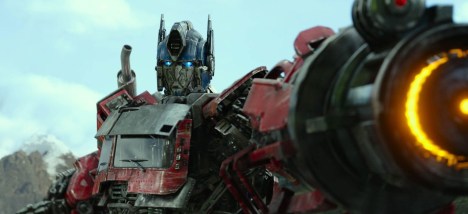
I published a new In the Frame piece at The Escapist this evening. With the release of Transformers: Rise of the Beasts, it seemed like as good a time as any to reflect on one of the blights on modern big-budget blockbusters: the bland computer-generated third act throwdown in a big empty space with no sense of geography or texture.

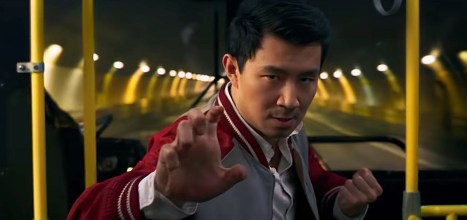
In recent years, it has become increasingly common for these sorts of spectacles to climax with a gigantic final battle in a vast computer-generated wasteland, with no defining features or landmarks, but instead just a big empty space with no sense of where objects are in relationship to one another. Rise of the Beasts is perhaps the most egregious example of the trend, but there are plenty of others: Shang-Chi and the Legend of the Ten Rings, Avengers: Endgame, Avengers: Infinity War, Black Panther. It’s a hollow, empty, cardboard world.

You can read the piece here, or click the picture below.

335. Guardians of the Galaxy, Vol. 3 (#135)

Hosted by Andrew Quinn and Darren Mooney, this week joined by special guests Graham Day and Luke Dunne, The 250 is a (mostly) weekly trip through some of the best (and worst) movies ever made, as voted for by Internet Movie Database Users. New episodes are released every second Saturday at 6pm GMT, with the occasional bonus episode between them.

This week, James Gunn’s Guardians of the Galaxy, Vol. 3.

A shocking and unprovoked attack on the community of Knowhere leaves Rocket fighting for his life. His old friends, the Guardians of the Galaxy, embark on a mission to save his life. In doing so, they find themselves journeying back into a past that he has never discussed and heading into conflict with a mysterious figure known as the High Evolutionary.

At time of recording, it was ranked 135th on the list of the best movies of all time on the Internet Movie Database.

Continue reading

New Escapist Video! On Phase 4 as Marvel’s Midlife Crisis…

We’re thrilled to be launching a fortnightly video companion piece to In the Frame at The Escapist. The video will typically launch every second Monday, and be released on the magazine’s YouTube channel. And the video will typically be separate from the written content. This is kinda cool, because we’re helping relaunch the magazine’s film content – so if you can throw a subscription our way, it would mean a lot.

This week, with the recent launch of Ant-Man and the Wasp: Quantumania, we took a look back at Marvel’s Phase 4, trying to make sense of one of the shared universe’s most disjointed and uneven phases.

New Escapist Column! On Hitting “Peak Marvel”…

I published a new In the Frame piece at The Escapist this evening. With the reports that Disney+ will only be streaming two Marvel shows this year and the decision to move The Marvels out of summer and into November, it’s interesting to contemplate whether we’re already past “Peak Marvel.”

“Peak Marvel” is a reference to “peak oil”, referring to the point at which production reaches its apotheosis, where there is so much content being produced that it is unsustainable for any number of reasons. The Marvel Cinematic Universe remains one of the most successful multimedia franchises ever, but it has been flooding the market for the better part of two years. There are signs, both in the wider industry and within the brand itself, that this model is not sustainable. The question is what comes next.

You can read the piece here, or click the picture below.

New Escapist Column! On What Kevin Feige Doesn’t Get About “Superhero Fatigue”…

I published a new In the Frame piece at The Escapist this evening. Last week, Marvel Studios President Kevin Feige made an argument that he could never understand the idea of “superhero fatigue”, referencing the diversity of genres and stories in superhero comics.

Feige’s response was interesting for a number of reasons. Most obviously, it was technically correct. Comic books are incredibly flexible in the kind of stories they tell and the way that they tell them. However, Feige’s answer sidestepped the obvious problem. In recent years, the superhero movie has grown more conservative and more conventional, becoming less likely to embrace different tones and styles, or to tell different kinds of stories. In the past fifteen years, the entire comic book adaptation genre has been flattened down to “Marvel movies”, and that is a very real problem.

You can read the piece here, or click the picture below.

New Escapist Column! On “Eternals” as an Anti-Superhero Epic…

I published a new piece at The Escapist this week. Because it’s that gap between Christmas and New Year, there’s been a bit of editorial leeway. And so, I got to write a little bit about Eternals, one of the more interesting and complicated recent Marvel Studios blockbusters.

Eternals doesn’t quite work. It’s important to acknowledge that upfront. However, the movie is interesting because of how it engages with superheroes. Eternals is not so much a superhero movie as it is a movie about superheroes. It’s about these stories that dominate the popular consciousness, this web of corporate-controlled mythology in which so much modern culture is tangled. It asks what the function of these characters and these stories should be.

You can read the piece here, or click the picture below.

New Escapist Video! On “Black Adam” and the Debate Over Superheroes Killing…

We’re thrilled to be launching a fortnightly video companion piece to In the Frame at The Escapist. The video will typically launch every second Monday, and be released on the magazine’s YouTube channel. And the video will typically be separate from the written content. This is kinda cool, because we’re helping relaunch the magazine’s film content – so if you can throw a subscription our way, it would mean a lot.

This week, we took a look at the debate over superheroes killing, which is a major thematic point in the recent blockbuster Black Adam. It’s an interesting point of discussion, but one that often overlooks and misses the larger trend within the superhero genre. That sort of debate doesn’t happen over other pulp heroes, like cowboys or gangsters or pirates, so what is it that makes superheroes a special case?