So, as I have mentioned before, I am launching a new video series as a companion piece to In the Frame at The Escapist. The video will typically launch with every second Monday article, and be released on the magazine’s YouTube channel the following week. This is kinda cool, because we’re helping relaunch the magazine’s film content – so if you can throw a subscription our way, it would mean a lot.
This week, given that TENET is now available to stream in the United States and around the world, it seemed like a good time to take a look at Christopher Nolan’s latest. In particular, a look how the themes of TENET resonate with other films in Nolan’s filmography, from Memento to The Prestige to Inception to Interstellar.
I published a new In the Frame piece at The Escapist this evening. With TENET now on streaming, it seemed like a good time to dive into the film’s position within Christopher Nolan’s filmography.
Most discussions of Nolan’s filmography focus on the director’s obsession with time, and TENET makes sense in that context. However, the film also ties into more existential anxieties that simmer through Nolan’s body of work, in particular the question of reality actually is and how best to respond to a world that can fundamentally chaotic, hostile and unknowable. TENET deals this this theme, confronting its audience and its characters with a reality that appears to be unraveling.
You can read the piece here, or click the picture below.
I published a new In the Frame piece at The Escapist yesterday evening. With the release of Superman: The Animated Series in high-definition on HBO Max in March, it seemed like an opportunity to take a look back at the underappreciated entry in the DC Animated Universe.
Superman: The Animated Series tends to get overshadowed in discussions of the DCAU by the two shows either side of it, by the earlier Batman: The Animated Series and by the two later Justice League series. However, Superman: The Animated Series is an interesting bridge between the two, eschewing the “villain of the week” structure of Batman: The Animated Series to instead focus on long-form storytelling that developed character and built the world in ways that would pay off in the later spin-offs. It remains one of the best takes on the Man of Steel.
You can read the piece here, or click the picture below.
I published a new In the Frame piece at The Escapist this evening. With the release of Spiral: From the Book of Saw this weekend, it seemed like a good excuse to take a look back at the larger Saw franchise.
For good and for ill, the Saw movies are inexorably tied to the George W. Bush era, with their meditations on torture and their emphasis on moral hypocrisy. However, discussions of the franchise tend to overlook the way in which the films intersect with another millennial trend: reality television. The Saw franchise is the rare horror movie franchise that is actively engaged with the idea of watching horror movies. In particular, in the relationship that exists between horror movies and their audiences – and whether those watching at home are observers or participants in the carnage.
You can read the piece here, or click the picture below.
I published a new In the Frame piece at The Escapist yesterday evening. With the wrapping up of the first season of The Falcon and the Winter Soldier, it seemed like a good time to take a look back at the show’s first season – and, in particular, how it positions itself within the larger Marvel Cinematic Universe.
The Marvel Cinematic Universe is thirteen years old this May. It spans 24 films, a handful of television series and almost a dozen separate film franchises. That is a lot of baggage. Indeed, it seems like the MCU has reached a point where the baggage of its earlier installments exerts almost as much gravity as the source material itself. The Falcon and the Winter Soldier feels like a prime example of this, with the series very much engaged in conversation with the films in the Captain America franchise.
You can read the piece here, or click the picture below.
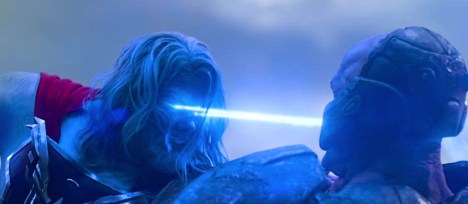
I published a new In the Frame piece at The Escapist yesterday evening. With the release of the first season volume of Jupiter’s Legacy on Netflix, it seemed like an opportunity to talk about the weirdness of the Netflix bloat.
The first season of Jupiter’s Legacy is eight episodes long, but covers about as much narrative real estate as the first two issues of Mark Millar and Frank Quitely’s comic book. The season doesn’t even get to what is effectively the big inciting incident for the bulk of the comic book, instead stretching certain plot points and certain threads past breaking points. It’s not that Netflix departs or deviates from the source material; it’s often quite faithful in quoting from the comic. It’s that the show can’t seem to even get started.
You can read the piece here, or click the picture below.
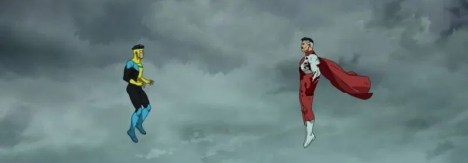
I published a new In the Frame piece at The Escapist yesterday evening. With the end of the first season of Invincible, it seemed like a nice opportunity to take a look at what makes the animated superhero show so interesting.
A lot of the discussion of Invincible has focused on the violence of the show, with many commentators arguing that Invincible is a deconstruction of classic superhero tropes. However, what’s striking about Invincible is what this violence conceals. At its core, Invincible is a surprisingly earnest and conventional superhero story, executed with a minimum of ironic detachment and self-aware distance. It is not a deconstruction of the tropes of superhero storytelling, but an earnest celebration of them.
You can read the piece here, or click the picture below.
So, as I have mentioned before, I am launching a new video series as a companion piece to In the Frame at The Escapist. The video will typically launch with every second Monday article, and be released on the magazine’s YouTube channel the following week. This is kinda cool, because we’re helping relaunch the magazine’s film channel – so if you can throw a subscription our way, it would mean a lot.
This week, following the release of Mortal Kombat, we thought we’d give audiences what they really wanted. Yes, that’s right: a deep dive on Mortal Kombat: Annihilation.
I published a new In the Frame piece at The Escapist this evening. With the release of Mortal Kombat over the weekend, it seemed like as good a time as any to take a look back at the earlier nineties iteration of the cinematic franchise.
In particular, Mortal Kombat: Annihilation is a much more interesting movie than is often acknowledged. It is a complete disaster in just about every sense, but is a revealing one. Watched from remove of two decades, Annihilation often feels like a template for the sort of fan service blockbuster that we now take for granted, with its broad themes of “family” and its plot that serves primarily as an object on which continuity references and nostalgic shoutouts might be ornately arranged.
You can read the piece here, or click the picture below.
I published a new In the Frame piece at The Escapist this evening. As The Falcon and the Winter Soldier winds down its season, it seemed like a good opportunity to consider the show’s approach to the question: “What does Captain America stand for?”
It has been a turbulent few years for American identity, and it makes sense that a television about a character carrying the mantle of “Captain America” should have to figure out what that title means. The biggest issue with The Falcon and the Winter Soldier is that it defines the concept of “Captain America” in negative terms. The series is more preoccupied with what Captain America isn’t than what he actually and actively is.
You can read the piece here, or click the picture below.




















 the m0vie blog