• Following Us

  • Categories

  • Check out the Archives


  • Awards & Nominations

Non-Review Review: The Monuments Men

If you tried to take an Indiana Jones film and turn it into a meditation on the scale and conflict of the Second World War, you would end up with The Monuments Men. That is to say, if you sucked all the fun out of it while trying to balance a pulpy tone with a more weighty reflection on the cultural responsibilities that came with winning the Second World War. The movie is just as tone deaf and ill-judged as that description seems to imply – having a lot of clever things to say, but never being quite sure how to say them.

There is a good film to be found in The Monuments Men, if one looks hard enough. One can imagine writer, director and actor George Clooney chipping away at the story trying to find that good movie, like one of those artists whose work was rescued by this band of merry men. You get a sense that Clooney can see the angel in here somewhere; he’s just not sure how to set it free.

The art of the chase...

The art of the chase…

Continue reading

Star Trek: The Next Generation – Contagion (Review)

This January and February, we’ll be finishing up our look at the second season of Star Trek: The Next Generation and moving on to the third year of the show, both recently and lovingly remastered for high definition. Check back daily for the latest review.

Contagion is a nice reminder that the average quality of Star Trek: The Next Generation is improving. While the stand-out episodes of the second season of The Next Generation tend to attract a lot of attention, the more solid episodes tend to get a bit lost in the discussion. Contagion doesn’t rank alongside Elementary, Dear Data, A Matter of Honour, The Measure of a Man or Q Who?, but it’s still demonstrating that we’ve reached a point where the show can churn out a pretty good episode without it feeling like a special occasion.

It’s a bit of a shame, then, that Contagion comes from two individuals outside the show’s writers’ room.

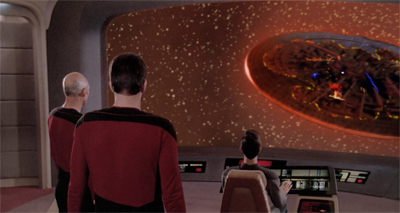
The Yamato rests in pieces...

The Yamato rests in pieces…

Continue reading

Non-Review Review: Barbaric Genius

Barbaric Genius has a fascinating subject. Writer John Healy was responsible for The Grass Arena, generally regarded as one of the most searingly and brutally honest depictions of life on the streets published during the eighties. However, despite the fact that The Grass Arena became a touchstone for an entire generation and that it was so successful that it was developed into a film, Healy faded rather quickly from view. Despite writing consistently over the years that followed, none of Healy’s work was published for more than two decades following the 1988 release of The Grass Arena.

It’s an intriguing mystery, and Barbaric Genius does a thorough job exploring it, but the documentary suffers a bit as it tries to bring its subject into focus, often feeling like director/producer/narrator Paul Duane is having difficulty getting the necessary distance between himself and the film.

barbaricgenius

Continue reading

Star Trek: Deep Space Nine – Blood Oath (Review)

Star Trek: Deep Space Nine is twenty years old this year. To celebrate, I’m taking a look at the first season. Check back daily for the latest review or retrospective.

Blood Oath is a pretty fantastic piece of Star Trek: Deep Space Nine, and kicks the second season back into gear after a few mediocre (although not embarrassing) episodes. While it’s hardly the best episode of the year, and comes with its share of problems and baggage, it’s a tight and well-constructed piece of space opera. It’s a pulpy Klingon adventure, with the show’s best exploration to date of the existential problems of being Dax and a relatively simple (but potent) moral dilemma. It’s also just great fun.

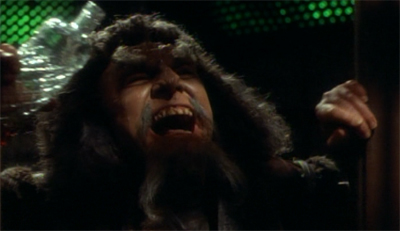
Here's Kor!

Here’s Kor!

Continue reading

Non-Review Review: Star Trek VI – The Undiscovered Country

This August, to celebrate the upcoming release of Star Trek: Into Darkness on DVD and blu ray, we’re taking a look at the Star Trek movies featuring the original cast. Movie reviews are every Tuesday and Thursday.

Whatever its faults, Star Trek VI: The Undiscovered Country is a fond farewell to the original cast of Star Trek, giving the ensemble one last epic adventure before heading off into legend. Chancellor Gorkon suggests that the “the undiscovered country” that lends the movie its title is “the future.” Most Shakespearean scholars would argue that it is “death.” Perhaps they need to – as Gorkon argues – “experience” it in “the original Klingon”, or perhaps there’s more to it than that.

Perhaps the undiscovered country can be both – the death waiting for all of us eventually, the “chimes at midnight” that Chang alludes to after a disastrous diplomatic dinner. Probably not. Still, The Undiscovered Country does represent a death. It’s the end of an era, the extinguishing of a torch that had already been passed. It’s the last adventure of Kirk’s starship Enterprise, and it feels appropriate that it serves to end the Cold War raging between the Klingons and the Federation.

It’s a beautiful farewell to the crew, to the extent that even the actors’ decision to “sign” the closing credits doesn’t feel over saccharine or manipulative. The movie has more than its fair share of narrative flaws, neither as tight as Star Trek II: The Wrath of Khan nor as energetic as Star Trek IV: The Voyage Home. However, it hangs together remarkably well, in no small part thanks to a solid premise, a strange honesty and a deep affection for the cast and crew.

We're having some old friends for dinner...

We’re having some old friends for dinner…

Continue reading

X-Men: Operation Zero Tolerance (Review/Retrospective)

To celebrate the release of The Wolverine this month, we’re taking a look at some classic and modern X-Men and Wolverine comics. I’m also writing a series of reviews of the classic X-Men television show at comicbuzz every weekday, so feel free to check those out.

Operation Zero Tolerance is very much an artefact of the nineties. It’s a big bombastic X-Men romp, one that manages to hit on a lot of the key themes and ideas of the franchise (making them resonate with the public mood), while still seeming loud and simply and incredibly hollow. After all, it’s a comic about the prejudice facing a minority in the nineties, with repeated references to the Holocaust. “Zero tolerance?” Senator Robert Kelly asks towards the end of the event. “Isn’t that what the Nazis had for the Jews in the last World War?” The villain, Bastion, is presented as a “wannabe Hitler.”

Operation Zero Tolerance is, in a word, blunt. With so many of the high-profile comics of the nineties, from both Marvel and DC, “subtlety” is an alien concept. This is an X-Men comic where racial intolerance and prejudice are expressed through nothing short of attempted genocide. On the one hand, it’s very clearly the mutant prejudice idea pushed to its logical extreme. On the other hand, the notion of the United States government even passively condoning an attempted genocide feels like it robs the franchise of the social relevance which had made it so compelling and intriguing.

Still, the event’s impact is quite obvious. It’s hard not to see Operation Zero Tolerance as the driving influence on the entire X-Men franchise from House of M through to Second Coming.

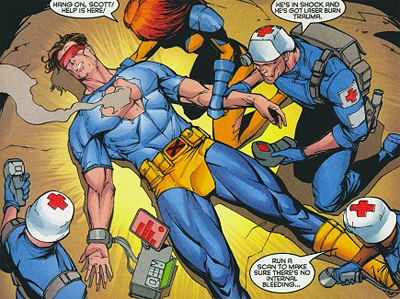
Chances of survival are Slim...

Chances of survival are Slim…

Continue reading

Ultimate Comics: Divided We Fall, United We Stand – X-Men (Review/Retrospective)

To celebrate the release of The Wolverine later in the month, we’re taking a look at some classic X-Men and Wolverine comics every Monday, Wednesday and Friday here. I’m also writing a series of reviews of the classic X-Men television show at comicbuzz every weekday, so feel free to check those out.

I actually like the scope of Divided We Fall. It’s a big universe-altering event spanning Marvel’s three Ultimate Universe titles, but it isn’t so granular or so tightly-wound that the three books are tripping over one another. Each of the three books involved tell their own side of the story. Each can be read independently, with no real dependence on the other two. There’s a sense that the creators involved are being allowed a reasonable degree of creative freedom, and that Brian Wood is crafting his own X-Men epic that doesn’t exist simply to tie into the headline-making decision to bump Captain America up to superhero-in-chief over in Ultimate Comics: Ultimates.

In a weird way, for a book in the middle of a gigantic crossover, Wood’s Ultimate Comics: X-Men feels like it’s seeking a fresh start, like it’s kicking off a new chapter, and relishing the status quo shattering crossover as an excuse to just get on with it.

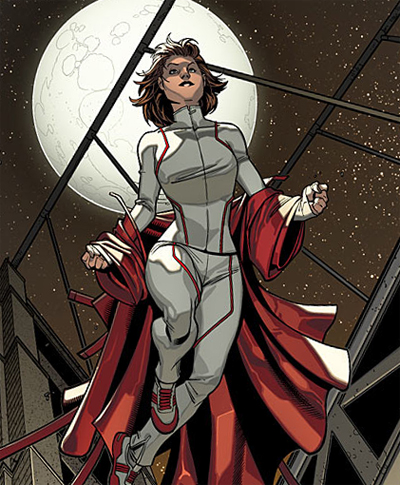
Mutant Pryde...

Mutant Pryde…

Continue reading

Civil War: Wolverine (Review)

To celebrate the release of The Wolverine later in the month, we’re taking a look at some classic X-Men and Wolverine comics every Monday, Wednesday and Friday here. I’m also writing a series of reviews of the classic X-Men television show at comicbuzz every weekday, so feel free to check those out.

A lot of the recent big Marvel events, stretching from Brian Michael Bendis’ Avengers Disassembled through to at least Avengers vs. X-Men, can be read as commentaries on post-9/11 America. In particular, they focus on questions the relationship between the power and trust held by various authorities, and how those are earned or abused. Perhaps Civil War was the most overt of these, with the conflict in the comic coming down to the clash between the demands of liberty and security.

So, I suppose, at least Marc Guggenheim’s Wolverine tie-in to the event is explicit about what it’s trying to do. It’s any even more explicit 9/11 parable, casting the famous mutant as an investigator looking for his own kind of justice in the wake of a horrifying terror attack.

Talk about seeing eye-to-eye...

Talk about seeing eye-to-eye…

Continue reading

Non-Review Review: World War Z

World War Z is a lesson in compromise, a Frankenstein’s monster stitched together out of necessity with the lines very clearly showing. It goes this way and then that way, never really sure where it wants to be in the next act, save that it’s a safe bet there might be zombies. World War Z isn’t as bad as it might have been, but the problem is that it feels like it’s trying so hard to find an ending that it never bothers to excel. It’s not that World War Z is bad, it’s a competently made thriller that works as well as it can with a script that spent most of production in triage. The problem is that it’s never bold enough to do anything genuinely exciting.

Pitting our best man against the zombie horde...

Pitting our best man against the zombie horde…

Continue reading

Doctor Who: Cold War (Review)

Hair. Shoulderpads. Nukes. It’s the eighties. Everything’s bigger!

– the Doctor

The theory that this fiftieth anniversary half-season is intended as an homage to Doctor Who‘s rich and varied past holds up with Cold War. If The Bells of St. John was a Pertwee-era invasion tale, and The Rings of Akhaten was a shout-out to classic Hartnell world-building, then Cold War wears its influences even more brazenly. It’s the archetypal “base under siege” story popularised in the Troughton era, to the point where it even brings back one of the era’s most iconic monsters.

Indeed, the “Troughton base under siege by classic monsters” story is the only classic Doctor Who formulation that this half-season visits twice. While Cold War is easily weaker (and less ambitious) than Nightmare in Silver, it still fills that niche remarkably well. After all, if any Doctor Who writer can channel nostalgia, it’s Mark Gatiss.

Going green...

Going green…

Continue reading