• Following Us

  • Categories

  • Check out the Archives


  • Awards & Nominations

Non-Review Review: Focus

Focus is a fun old-fashioned heist movie that suffers from the lack of a central plot.

In some respects, Focus plays as a con itself. While movies about con artists are inevitably built around charismatic rogues and antiheroes, the stories practically structure themselves. Cons are visually interesting and dynamic, they are fun and exciting. Watching characters trying to out-wit one another in rapidly-escalating situations creates instant dramatic tension, and it is easy to see why the genre has remained popular. The beats are familiar – the “big one”, the “revenge con”, the “try to get alive game.”
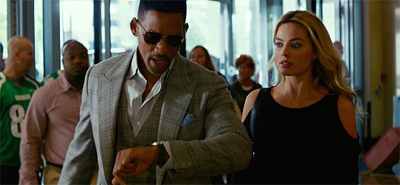
Off the clock...

Off the clock…

Focus keeps teasing the audience with possible plot hooks that might sustain a two-hour film, diverting the audience’s focus and keeping them off-balance. “So what about the big con?” Margot Robbie’s Jess teases Will Smith’s Nicky. “You mean the one where we all make so much money we all retire?” Nicky teases back, dismissively. What makes Focus so interesting – and what also arguably prevents it from working as well as it might – is that it consciously plays against these recognisable elements. There is no big con, there is no story.

This is the long con that Focus plays – and plays very well. For all that it teases the plot-driven trappings of a caper movie, Focus is a good old-fashioned star-driven drama, a movie built around Will Smith’s movie icon charisma. It is one hell of a gamble, and one that doesn’t play off as well as it might, Focus‘ unwavering commitment provides a charm and energy that carries movie through. Offering advice to Jess, Nicky insists, “You never drop the con. Never break. Die with the lie.” It seems that Focus lives by its own words.

A star vehicle...

A star vehicle…

Continue reading

Non-Review Review: The Second Best Exotic Marigold Hotel

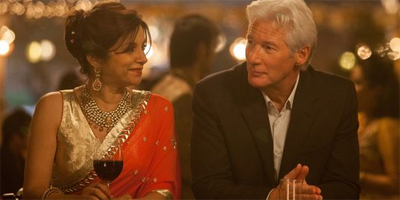
The Second Best Exotic Marigold Hotel takes a formula that worked well enough the first time, and tries to figure just how much it can add in on top without throwing everything out of a balance. When producing a sequel, the tendency is to double down on what worked before – to commit to the bits to which the audience responded, sometimes missing the fact that moderation might have been some of the appeal. The Second Best Exotic Marigold Hotel commits to its cast, putting the various star through a wide variety of sitcom premises that look like they might have been lifted from a UK Gold marathon.

In some ways, The Second Best Exotic Marigold Hotel feels a little bit like the ambitious construction and renovation project planned by Sonny Kapoor: sprawling, excessive, unwieldy, overly elaborate. The main cast are not clustered as they were the first time around, meaning that The Second Best Exotic Marigold Hotel feels disjointed at best and haphazard at worst. Richard Gere arrives to lend some extra prestige (and some international appeal) to the film, but seems almost like a distraction from the thespians around him.

Getting into Gere...

Getting into Gere…

There are points where it feels like The Second Best Exotic Marigold Hotel might collapse under its own weight. The character plots don’t really intersect or overlap, so the ensemble frequently finding themselves fighting for space as the movie tries to figure out who warrants the most attention. (The relative name recognition seems to offer a convenient deciding factor, which is a shame in some respects.) While director John Madden does not keep as tight a rein on the film as he might, he prevents the film from completely dissolving into a series of interconnected sitcom episodes.

Still, despite these problems, The Second Best Exotic Marigold Hotel delivers what it promises: a familiar framework for veteran actors to demonstrate that they can still carry a light and entertaining film.

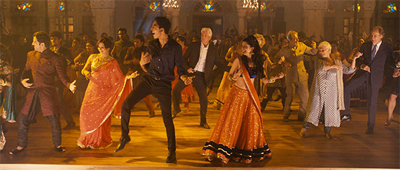
No need to make a song and dance about it...

No need to make a song and dance about it…

Continue reading

Non-Review Review: Suite Française

Suite Française is the name given to a planned series of five novels written by Irène Némirovsky during the Second World War. Living in France during the conflict, Némirovsky was Ukrainian and Jewish descent. She completed the first two novels in the series (Tempête en Juin and Dolce) and had outlined the third (Captivité) before she was arrested as a Jew in 1942. Némirovsky was detained at Pithiviers, before she was transferred to Auschwitz. She died in Auschwitz in August 1942.

The two novels were undiscovered for more than half a century; her daughter – Denise Epstein – only discovered the novels in the nineties. They were written microscopically inside journals. The 140 pages that Némirovsky had written expanded to more than 500 printed pages. There is some evidence that even the two “completed” manuscripts were not quite finished. Notes suggested that Némirovsky was considering revisions to Dolce so as to change the fate of a featured character. More than six decades after her death, Suite Française was eventually published in 2004.

An officer and a gentleman...

An officer and a gentleman…

Adapting any novel for the screen is tough job, let alone a sequence of five novels – only two of which were ever finished, and published posthumously. Part of the intrigue of Suite Française was the fact that these were novels depicting incredible historical events as they actually occurred. It is impossible to quite convey that sense of urgency and vitality after decades of storytelling about the Second World War. Although it is an adaptation of a novel published only a decade earlier, Suite Française has the weight of considerable expectations baring down on it.

Even allowing for the difficulties with this particular adaptation, Saul Dibb and Matt Charman’s script still feels quite clumsy in execution; despite excising most of Tempête en Juin, the finished script feels curiously over-written. Monologues tend to meander and wander, as if the script doesn’t trust the cast to convey deep emotion through their performances, as if the writers are afraid the audience might miss the key philosophical or moral points of the script. This is a shame, as Suite Française is beautifully acted and looks quite wonderful.

The good German...

The good German…

Continue reading

Non-Review Review: The Wedding Ringer

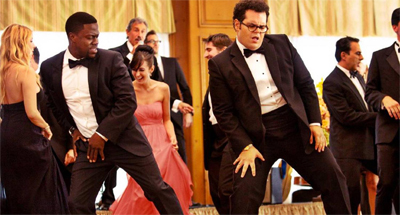
The bromantic wedding comedy is a fairly reliable comedy subgenre; but it is also one that requires a great deal of care. Producing a comedy about weddings can be something of a minefield; it is very easy to play into the familiar gendered stereotypes the controlling fiancée or the disengaged husband-to-be. The Wedding Ringer is an addition to the rapidly-growing subgenre that focuses on a stereotypically masculine perception of “the big day” – wondering what the groom makes of festivities.

The Wedding Ringer comes packed with awkward gender truisms. At one point, professional best man Jimmy Callahan (head of “TBM – The Best Man Inc.”) is confronted by his assistant Doris Jenkins. Doris explains to Jimmy that male and female relationships work differently; that it is tough for men to acknowledge emotion and to connect with one another. This is perhaps the most dialogue that The Wedding Ringer affords any female character in any one scene.

theweddingringer5

“Weddings are for the woman,” Jimmy assures his client, Doug Harris, in one scene. It seems like a stock stereotype that the movie is setting up to subvert – that Jimmy and Doug will eventually learn (in a “knowing is half the battle” sort of way) that marriage is a two-person enterprise that becomes shared at the moment of union. Instead, The Wedding Ringer never shifts its position. The Wedding Ringer sticks to its guns, hitting all the plot beats that one might expect from a movie espousing that philosophy.

Kevin Hart works the material as best he can, and The Wedding Ringer works best when it allows itself to drift from its central premise. However, it is weighed down by a clunky script and a decidedly mean-spirited world-view.

theweddingringer1 Continue reading

Non-Review Review: Inherent Vice

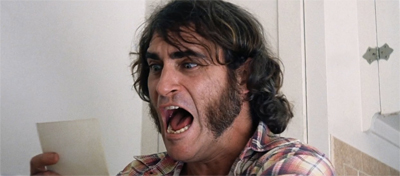
In many ways, Inherent Vice resembles its central character – former-hippie-turned-private-investigator Larry “Doc” Sportello.

Inherent Vice is prone to ramble and meander, stumbling across its central conspiracies as much by fate as by actual investigation. The logic is fuzzy, but the genius is clear. Navigating a complex web of seventies paranoia, it often seems as if Inherent Vice is playing a game of free association between its themes, stumbling upon some higher meta-physical plane where all the evils of the world (or, at least, Los Angeles) are connected by threads almost imperceptible.

Bad trip...

Bad trip…

Both Inherent Vice and Doc are hooked on their own particular drugs. Over the course of Inherent Vice, Doc makes it quite clear that heroine is just about the only dope he won’t take into his body. Inherent Vice itself is drawn the delightfully trippy far-out prose of Thomas Pynchon, with Paul Thomas Anderson’s script pausing intermittently to dump large quantities of existential musing on to the market. If Pynchon’s prose didn’t flow eloquently from actresses like Katherine Waterston and Jeannie Berlin, the audience might complain.

Running almost two-and-a-half hours, Inherent Vice is more than a little indulgent. Luckily, it is more than a little brilliant as well.

Lawyer up...

Lawyer up…

Continue reading

Enter the Jameson First Shot Film Competition!

The guys at Jameson passed on details of their Jameson First Shot competition a few weeks ago. Here are the details for any budding film makers around the world looking to enter for a chance to work with some top-notch talent.

Jameson is on the hunt for the globe’s most gifted, undiscovered filmmakers with compelling stories to tell. Simply write an original piece of work, with the final draft being no more than seven pages in length. The story should reveal, with lightness of touch, the epic that is to be found in everyday experiences.  Closing date for entries is 1st February 2015. More information on the rules, including length and theme, can be found at http://www.jamesonfirstshot.com/.

Last year’s short films starred Uma Thurman and one of the winners just sold his first full length script. It’s a great platform for budding screen writers and this year is the first time it has been open to Irish entrants. Check out two of last year’s winners.

Non-Review Review: Selma

Selma is a fascinating look at the Civil Rights Movement, and at the life and times of the Reverend Martin Luther King Junior.

Adopting the increasingly common approach of narrowing its focus to a rather tight sequence of events, Selma offers an interesting and insightful glimpse at the protest in Selma, Alabama – culminating in a planned march from Selma to Montgomery in March 1964. That was a pivotal moment for the Civil Rights struggle, as the cameras of the nation focused on the brutally wielded by local authorities against those marching peaceably. Selma focuses on that national moments as a vehicle to explore the Civil Rights movement as a whole.

selma3

To be fair, Selma does have its problems. There is a sense that the film is perhaps too concerned with the character of Lyndon B. Johnson, even ultimately affording him something of a heroic moment at the climax. The carefully-maintained period feel is undermined by the decision to dub Yesterday Was Hard On All Of Us by Fink over a crucial moment. In contrast, the period-specific (or close enough) songs by Otis Redding, the Impressions or Duane Eddy add context and texture to the film; the tracks by The Fink and Common (featuring John Legend) feel superficial.

However, these are minor problems. Selma features a tight script, solid direction and a host of fantastic central performances. Eschewing the sentimentality or softness associated with these sorts of prestige pictures, Selma deserves to be considered among the best of the awards season prestige pictures. Its diminished presence on Academy Awards ballots seems sadly telling.

selma1 Continue reading

Non-Review Review: The Kingsman

The creators of The Kingsman either really love or really hate the classic Roger Moore Bond films. Probably both.

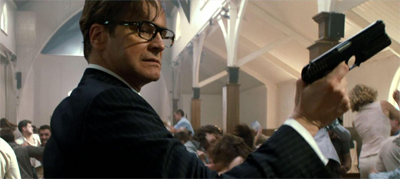
Another creative collaboration between Matthew Vaughn, Jane Goldman and Mark Millar, The Kingsman is just as juvenile, crass and ultimately charming as Kick-Ass. There is a sense of mischievous and cheeky fun to this classic spy film homage. It is effectively an update of those seventies and eighties spy films with a more cynical and self-aware attitude. There is a sense that The Kingsman is simply more transparent than its inspirations in its infectiously juvenile and borderline offensive sensibilities.

Sound and Firthy...

Sound and Firthy…

It is hard to tell how much of this homage is genuine nostalgic affection, and how much is witty subversion. The Kingsman is a spy film that not only uses outdated (and occasionally insensitive) spy movie tropes, it practically revels in them. Although the third act occasionally feels a little too mean-spirited in its riff on classic Bond sensibilities, The Kingsman has enough boundless energy and raw enthusiasm to keep the audience watching. The script is well-observed and the direction is tight. A superb central cast helps to anchor the film.

The Kingsman is an odd beast. It is that rare homage that seems quite likely to shock and offend many fans that otherwise share its nostalgic inclinations. However, those willing to be a bit more adventurous will find much to love in this updated spy caper.

Matthew Vaughn's fingerprints are all over this...

Matthew Vaughn’s fingerprints are all over this…

Continue reading

My 12 for ’14: Gone Girl and the most $£@!ed up people…

With 2014 coming to a close, we’re counting down our top twelve films of the year. Check back daily for the latest featured film.

Gone Girl is a surprisingly playful film.

David Fincher is a director who likes to play with his audience, constructing elaborate and stylish labyrinths that might trap the audience as easily as they trap his characters. Gone Girl plays to Fincher’s strengths, as Gillian Flynn adapts her best-selling novel into a pulpy thriller. The news that Fincher and Flynn would collaborate on HBO’s Utopia is fantastic, giving television viewers something to anticipate; one hopes that the collaboration might be as fruitful as that enjoyed by Nic Pizzolatto and Cary Joji Fukunaga on True Detective this year.

gonegirl3

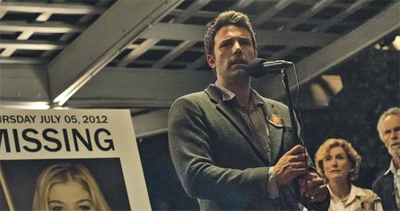
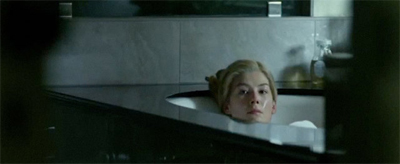
Gone Girl is a story about stories. Most particularly, it is the story of two people fighting to control their own narratives; to try to steer the stories being told around them. Is Nick Dunne a loving husband desperately searching for his missing wife? Or is Nick Dunne a sociopath desperately trying to cover-up her murder? Is Amy Dunne an innocent victim who has worked her way into the heart of the American public? Or is Amy Dunne a manipulative and ruthless (and ruthless) cynic who has helped to turn her marriage into a perpetual struggle?

Gone Girl is a very sleek and stylish film that is lovingly crafted and wryly self-aware. It is a horror story about a dysfunctional marriage, a tale about media fascination and a black comedy about resentment and revenge. More than that, it is a puzzle that competes against the audience, a story that seems to change form at any point where the viewer might finally have come to grips with what they are watching.

gonegirl5

Note: This “best of” entry includes spoilers for Gone Girl. You should probably go and see the movie, because everybody is talking about it. Don’t worry, we’ll wait for you. Still there? Good. Let’s continue. Continue reading

My 12 for ’14: The Guest and a Halloween Christmas Movie…

With 2014 coming to a close, we’re counting down our top twelve films of the year. Check back daily for the latest featured film.

2014 was a spectacular year for genre work. Perhaps emboldened by the success of genre fare (shared universes! talking apes! killer racoons!) in the summer movie season over the past number of years, it seemed like both major and minor studios were more willing to play with concepts that could easily seem absurd or throwaway.

’71 blended its historical real-world setting with the claustrophobia one might expect to find in horror thriller – a zombie movie set in seventies Belfast. The Babadook is a awards-caliber study of disillusioned parenthood that just happens to use the language of a supernatural horror. Birdman is a blistering Hollywood satire and character study driven by imagery and iconography more traditionally associated with fantasy. There has always been genre overlap, but it seemed particularly pronounced this year.

theguest

The Guest revels in its pulpy nature, offering a gleefully absurd intersection of a classic slasher movie with a more traditional holiday fare. The story of a mysterious visitor who moves in with the family of a deceased soldier, The Guest is wry and quick-witted, subversive and cheeky in equal measure. Anchored by a script from Simon Barrett that refuses to pull any punches, razor-sharp direction from Adam Wingard and a superb central performance from Dan Stevens, The Guest is a pure pulpy pleasure.

In many respects, The Guest feels like what would happen if you asked John Carpenter to make a Christmas movie. Only set at Halloween.

Flying the flag...

Flying the flag…

Continue reading