• Following Us

  • Categories

  • Check out the Archives


  • Awards & Nominations

Non-Review Review: Hitman – Agent 47

Hitman: Agent 47 is not a good film, but it is bad in interesting ways.

The video game adaptation fad of the nineties has given way to a wave of blockbuster comic book movies. Those comic book adaptations have fared much better – both critically and commercially – than fare like Super Mario Brothers or Street Fighter or Mortal Kombat. As such, Hitman: Agent 47 feels like something of an outlier; it is a reboot of a video game property that already failed to take flight in a movie released eight years ago. Even if there is a resurgent interest in video game movies, it seems strange to return to this video game movie.

You know, that looks like a highly impractical way to hold those guns...

You know, that looks like a highly impractical way to hold those guns…

At the same time, there is something quite compelling about the structuring of Hitman: Agent 47. Perhaps inspired by the success of the relative fidelity of twenty-first century comic book adaptations, Hitman: Agent 47 struggles to provide a relatively faithful adaptation of the game-playing experience. Though the structure and tone of the movie might jar with the source material, director Aleksander Bach is careful to preserve as much of the game-play experience as possible. Extended sequences of Hitman: Agent 47 play as a walkthrough of a life-like video game.

Which, of course, only serves to make the film feel somewhat redundant; watching a bunch of actors play through scripted game-play-like scenarios might offer a faint echo of the thrill of playing a video game, but captures none of the investment.

Bloody mess...

Bloody mess…

Continue reading

Non-Review Review: Me and Earl and the Dying Girl

There is a weird sense of entitlement that runs through certain strand of indie cinema, one that argues that a certain kind of comfortable middle-class male angst is almost overwhelming. At the risk of generalising, it feels like a millennial anxiety, the sense that the world was promised to an eager young generation who have found themselves subsisting as passengers and background extras in a world that was supposed to bow to their whims.

The emotionally immature male protagonist who must learn to embrace his gift and be himself (or self-actualise or self-realise, depending on how you feel about the trend) is ubiquitous.  It is arguably nothing new. Certainly, one can trace a clear lineage between the stock Woody Allen protagonist and any number of modern cinematic depictions of middle-class masculinity, from Listen Up Philip to Liberal Arts.

meandearlandthedyinggirl4a

Continue reading

Non-Review Review: Trainwreck

Trainwreck is a refreshing romantic comedy, a collaboration that plays to the strengths of both lead and writer Amy Schumer and director Judd Apatow. The comedy follows a young woman who learnt from an early age (through inappropriate doll metaphors) that “monogamy doesn’t work.” Amy is very much a female version of the arrested adolescent character that Apatow helped to popularise in mainstream American comedy, the immature adult who has yet to face any real personal or professional responsibility.

In some respects, Trainwreck is a continuation of a comedy trend that began with Bridesmaids, realising that male characters did not hold a monopoly on emotional disaster zones. Female characters are just as likely to exercise poor judgment and make questionable personal decisions. If Apatow figured out how to keep the romantic comedy fresh by tweaking the mental age and emotional stability of the male lead, then his collaboration with Schumer does something similar by swapping the gender dynamics.

Hold me.

Hold me.

The basic character and emotional arcs have not changed. After all, the romantic comedy can really only have one of two outcomes; they live happily ever after, or they don’t. Trainwreck charts the same course as The 40-Year Old Virgin or Knocked Up, which basically followed the same arcs as When Harry Met Sally or Sleepless in Seattle. For all the novelty of swapping the gender roles in the Apatowian comedy, Trainwreck is not particularly subversive or deconstructive.

Rather, Trainwreck is a stellar execution of a very traditional form. It is not a comedy that defies conventions or upsets expectations; it hits virtually every major beat that story like this can be expected to hit. It benefits from a rather wonderful collaboration of a writer (and actress) with a sharp eye for millennial humour working alongside a director who understands the mechanics of the genre intuitively. Trainwreck is perhaps the best mainstream romantic comedy that Hollywood has produced in quite some time.

Everything is on track...

Everything is on track…

Continue reading

Non-Review Review: The Man From U.N.C.L.E.

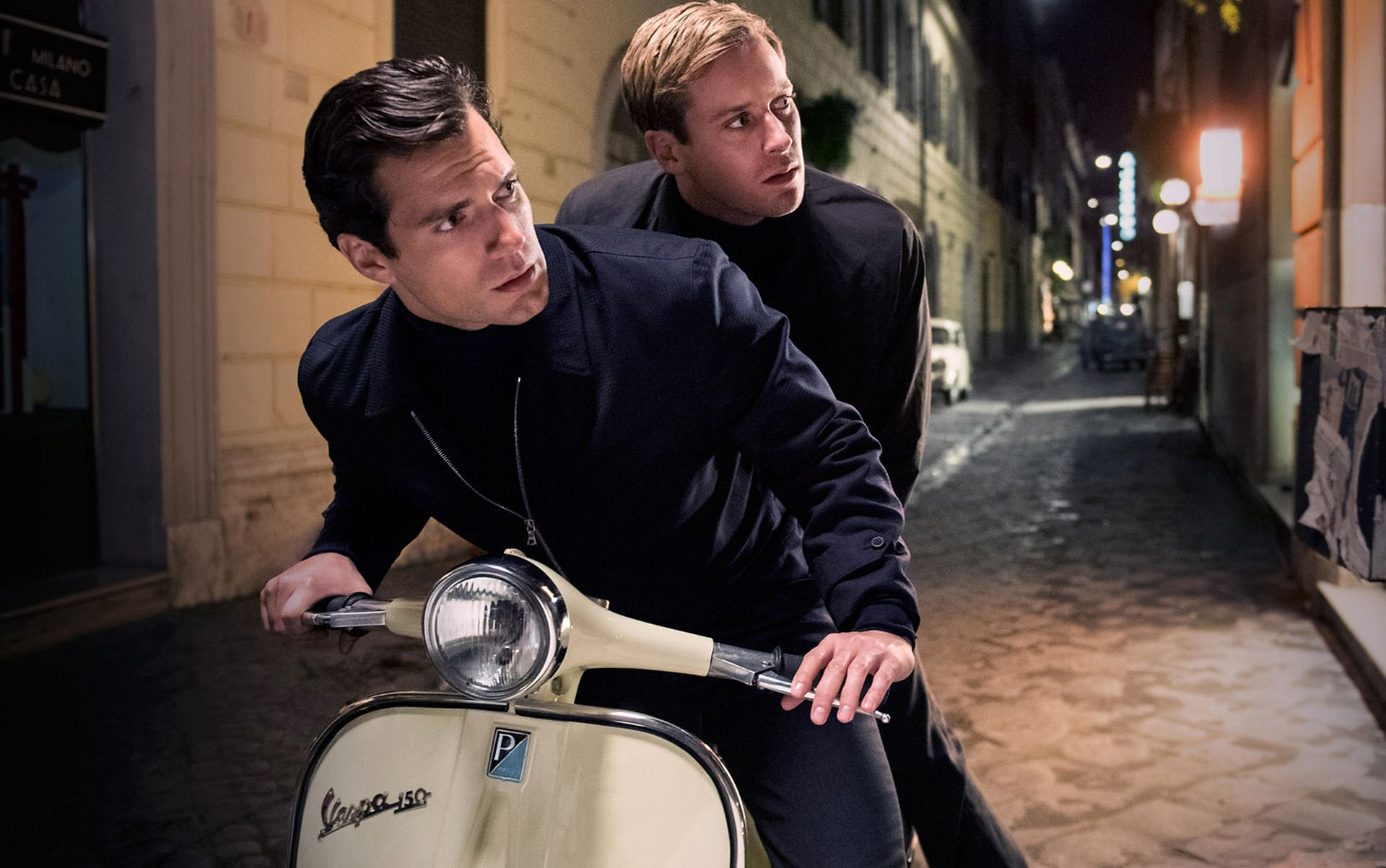
The Man From U.N.C.L.E. has style and charm. It doesn’t have much more than that, but never underestimate how far style and charm can get you. Guy Ritchie has always had a nice a sense of movement, and The Man From U.N.C.L.E. always moves at a nice pace, even when it’s not entirely sure where it is going. A film so light that it threatens to get caught in the gust as it breezes by, it is also important never to overestimate how far style and charm can get you either.

Ride along...

Ride along…

Continue reading

Non-Review Review: Paper Towns

There is an irony at the heart of Paper Towns. In many ways, it is a typical teenage coming of age fantasy. Quentin is approaching the end of his high school life, which has been spent buried in books. One night, the girl next door sneaks into his bedroom and takes him on a whirlwind adventure through the Orlando nightlife. Reconnecting with the enigmatic Margo for the first time since childhood, old feelings are reignited; Quentin allows himself to feel excited and alive. However, the next morning, Margo is gone.

As Quentin begins a bizarre treasure hunt to track her down, he finds himself caught up in a dynamic adventure. Deciphering a series of clues that offer an indication of where Margo might have gone, Quentin discovers that there is more to life than his own narrow experiences to date. The pursuit of Margo allows Quentin to come out of his shell. “You’re cute when you’re confident,” Margo assures him at one point in the film. “Less so when you’re not.” Inevitably, Quentin learns that he has to venture outside of his shell and push past his comfort zone.

Dream girl...

Dream girl…

This is a classic teen movie trope, reinforcing the sense that key to adolescent (and even adult) fulfilment is comfort in your own skin. It’s a nice idea, because it is undoubtedly true. However, Paper Towns is not particularly convincing in its thesis statement. For a film about the need to be comfortable with your teenage self, Paper Towns tries very hard. There is a crispness and efficiency to Paper Towns that belies its big central idea, a sense that the film is urging its central character to try something it is not comfortable enough to do on its own terms.

The result is a film that is charming and witty on its own terms, but which occasionally feels just as illusory as any of the fictitious locales to which the title alludes.

Shopping for trouble...

Shopping for trouble…

Continue reading

Non-Review Review: Fantastic Four (2015)

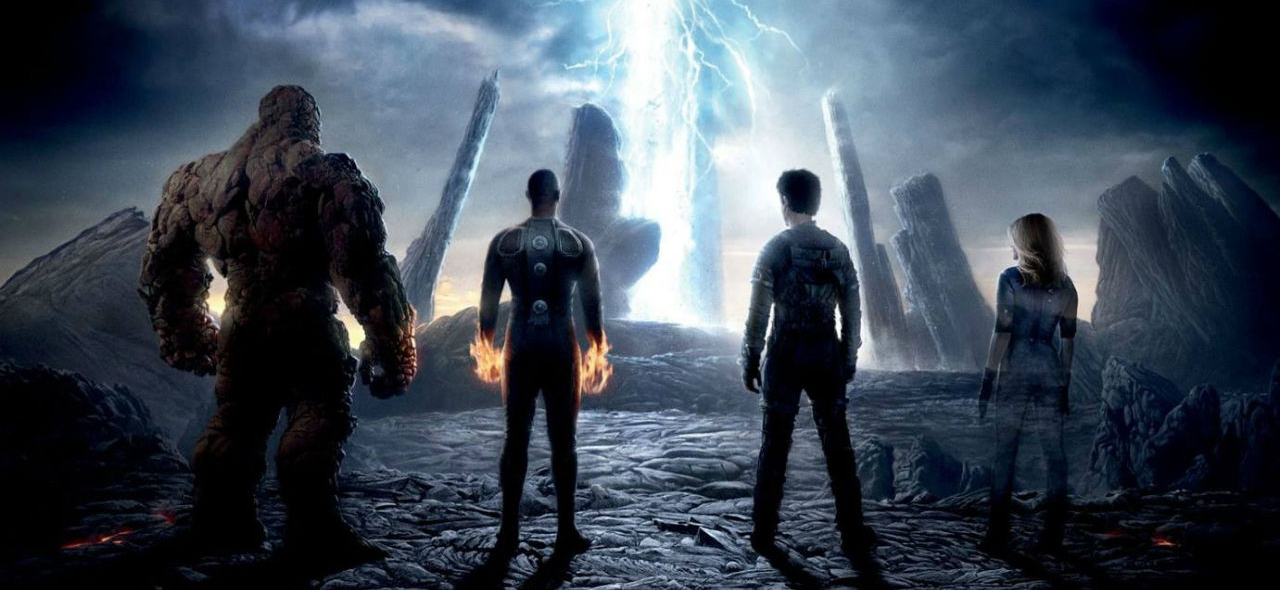
The second scene of Fantastic Four opens on a shot of a red neon sign reading “Grimm”, panning down slowly to a scrapyard packed with exhausted husks of old vehicles that have long outlived their usefulness. If you were to reduce Josh Trank’s Fantastic Four down to a single shot, that would be it; the purest possible distillation of this hundred-minute effort to adapt Marvel’s (literal) first family to the silver screen. It is possible to make a good Fantastic Four film, even if the movies bearing the family’s name suggest otherwise; The Incredibles proved as much.

What is remarkable about Fantastic Four is just how thoroughly and meticulously the edges have been sanded down, replaced with a misshapen grey blob that wants to be X-Men or The Avengers, or anything but what it is. All the moving parts of the film are compelling on their own merits. This is the first studio effort from Josh Trank. It is a vehicle for Miles Teller. It has a soundtrack from Philip Glass (and Marco Beltrami). It features Victor Von Doom in an era when studios have demonstrated they are not afraid of comic book tropes and absurdities.

Fantastic finish?

Fantastic finish?

Fantastic Four effortlessly squanders just about all that good will in a ruthlessly efficient manner, a demonstration of how brutal a bad script and a cynical edit can be. Trank only fleetingly shines through, commandeering the film for about ten minutes in the middle. Miles Teller is reduced to an exposition machine. Any unique identifiers on the Philip Glass soundtrack are pared down for generic superhero movie bombast. The film is so concerned that the audience won’t take a character named Doctor Doom seriously that he’s barely in the film.

The most interesting aspect of Fantastic Four is the recurring sense that the characters themselves openly resent the direction that the project took. Sadly, even Reed Richards cannot stretch far enough to bend the film back into shape.

Clobbering time...

Clobbering time…

Continue reading

Non-Review Review: Pixels

Pixels has a fun concept.

The idea of video game characters invading the world is a delightfully gonzo piece of pop culture nostalgia. It is easy to see why Sony picked up the option for Patrick Jean’s 2010 short film, even if the concept was not new. Neither version of Pixels can quite measure up to Raiders of the Lost Arcade, the short that aired as part of Anthology of Interest II during the third season of Futurama. That ten minute short story captured the sheer unadulterated joy of a world under siege from its juvenile obsessions.

You are my sunshine...

You are my sunshine…

There are a lot of problems with Pixels. The most obvious is that it seems completely disinterested in its core concept as anything other than a vehicle for Adam Sandler. There is a lot of CGI and a number of recognisable pop culture references, but Pixels plays just like any other Happy Madison vehicle. It is an excuse to pair Adam Sandler up with a beautiful actress and pay for trips for friends and acquaintances around the world while making jokes that were tired when most of the audience was making them in the playground.

Pixels never embraces the goofy joy of an invasion of eighties video games, instead wallowing in the presence of washed up nineties hackery.

All the President's... People.

All the President’s… People.

Continue reading

Non-Review Review: Mission: Impossible – Rogue Nation

Mission: Impossible: Rogue Nation moves like the clappers.

The movie speeds along through a selection of impressive stunt work and setpieces, constantly ramping up the tension and raising the stakes. The threat is constantly larger, the game ever more deadly. The film escalates and escalates, to the point where foreign heads of state are nothing more than pieces on a chessboard, fodder for impressive action sequences and swift double-crosses. In a way, this is the approach that made Mission: Impossible III and Mission: Impossible: Ghost Protocol taken to its logical conclusion. Momentum is key.

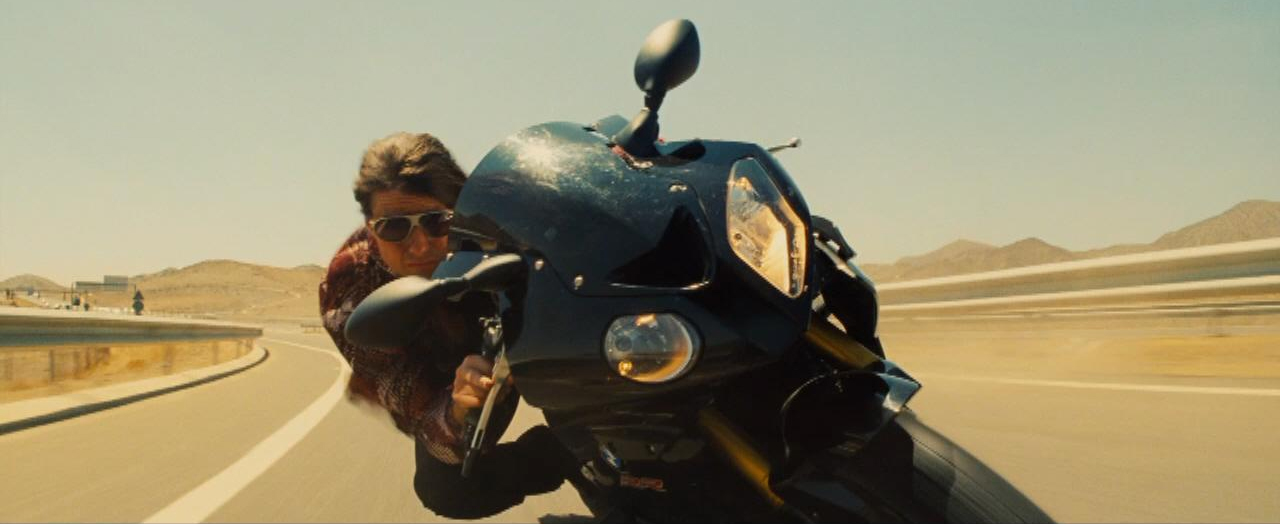
Cruising...

Cruising…

However, there are points where it feels like Mission: Impossible: Rogue Nation hits the limit of this approach – that it serves as a control case to demonstrate just how far you can push this sort of suped up storytelling without breaking the emotional tethers that hold all this together. There are several major emotional beats in Mission: Impossible: Rogue Nation that simply don’t land because the film has never eased its foot off the gas long enough to develop any of its characters beyond familiar archetypes.

This is perhaps the biggest problem with the film, but writer and director Christopher McQuarrie is shrewd enough that he never lets it get entirely out of hand. If the movie’s biggest emotional moments never have the necessary punch, that is not enough to sink the film; there is always another big action setpiece or another reversal or another tense thrill ride waiting after this underwhelming character beat. Mission: Impossible: Rogue Nation might move so fast that it seldom has room for its characters, but it also moves so fast that this is seldom a fatal flaw.

Winging it...

Winging it…

Continue reading

Non-Review Review: Inside Out

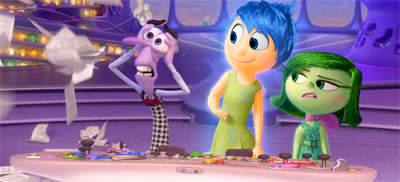
Inside Out represents a glorious return to form for Pixar.

After several years of sequels and middling films, Inside Out feels like a breath of fresh air. Films like Cars 2 and Monsters University were very much safe bets for the company, a way to leverage return from existing (and well-loved) properties. Inside Out is something altogether stranger and more high-concept. It feels like the studio is getting back in touch with its original aesthetic. It is a concept that initially seems quite complex and esoteric, but quickly reveals itself to be a simple emotional fairytale.

Memories are made of this...

Memories are made of this…

Wall-E might have been a half-silent science-fiction film, but it was also a very effective love story. Up might have been a wacky adventure about a flying house, but it was also an insightful meditation on grief and loss. Finding Nemo was populated with colourful fish, but it was also about the experience of watching a child venture into the world. Pixar established and developed a reputation as a studio that could produce films that were accessible and exciting to children, but also packed a more weighty and substantial punch for the parents in the audience.

Inside Out is perhaps the most high of Pixar’s concepts, but it ultimately boils down a very organic and instinctive story meditating on the studio’s core themes of emotional development and family metaphors.

An emotional journey...

An emotional journey…

Continue reading

Non-Review Review: Ted 2

Ted 2 is a Seth McFarlane movie that ends with an extended sequence set at New York Comic Con, that hub of nerd culture populated by people dressed like any number of iconic pop culture characters.

As such, it seems perfectly reasonable to describe Ted 2 as the quintessential McFarlane movie, for better or for worse.

Unbearable?

Unbearable?

Continue reading