• Following Us

  • Categories

  • Check out the Archives


  • Awards & Nominations

420. How to Train Your Dragon – Ani-May 2025 (#198)

Hosted by Andrew Quinn and Darren Mooney, this week with special guests Deirdre Molumby and Graham Day, The 250 is a (mostly) weekly trip through some of the best (and worst) movies ever made, as voted for by Internet Movie Database Users. New episodes are released every second Saturday at 6pm GMT, with the occasional bonus episode between them.

This week, Chris Sanders’ and Dean DeBlois’ How to Train Your Dragon.

On the island of Berk, the Viking settlers have found themselves engaged in a war against dragons spanning literal generations. Hiccup, the son of the town chieftain, struggles to find his place in a community that doesn’t value his unique strengths and attributes – he wonders whether he will even be manly enough to hunt and kill dragons. However, a chance encounter with a fallen dragon named Toothless leads Hiccup to question everything that he thinks he knows about dragons.

At time of recording, it was ranked 198th on the list of the best movies of all time on the Internet Movie Database.

Continue reading

New Escapist Column! On “Black Mirror” as a Movie About the Limits of the Empathy Machine…

We’re launching a new column at The Escapist, called Out of Focus. With the sixth season of Black Mirror releasing on Netflix last week, it seemed like a good opportunity to delve into one of the defining shows of the modern moment.

Black Mirror is often framed as a technophobic show, asking, “what if phones… but too much?” However, this is an inherently reductive way of looking at the series, which is much more about humanity than it is about people. In many ways, the show is about how technology reflects humanity’s worst impulses back at them, and the fear that cinema and television – along with other forms of media – serve as barriers to empathy rather than windows to it.

You can read the piece here, or click the picture below.

New Escapist Column! On “Poker Face” as a Show About Empathy and Action…

I published a new piece at The Escapist during the week. With the recent release of the first four episodes of Poker Face on Peacock, it seemed like a good opportunity to discuss the show’s central thematic and narrative preoccupations: the importance of both empathy and action in response to injustice.

Poker Face exists as part of Rian Johnson’s filmography, and is an obvious companion piece to Knives Out and Glass Onion. However, it fits alongside those stories in more than just its genre. Johnson is a filmmaker fascinated by the power of empathy, and the importance of understanding other human beings on a personal level. Poker Face is the story of a character so good at listening that she can instinctively spot a lie. However, in this world, empathy is not enough of itself. Poker Face is a show about the need for action in support of empathy.

You can read the piece here, or click the picture below.


New Escapist Column! On “TÁR” as a Gothic Ghost Story About Cancel Culture…

We’re launching a new column at The Escapist, called Out of Focus. It will publish every second Wednesday, and the plan is to use it to look at some film and television that would maybe fall outside the remit of In the Frame, more marginal titles or objects of cult interest. This week, we took a look at Todd Field’s TÁR.

TÁR is an interesting film, and one that embraces an unsettling ambiguity in its exploration of its subject, classical conductor Lydia Tár. Field constructs a fascinating study of a woman literally and metaphorically haunted by the sins of her past, a movie that is very modern in its language but classical in its themes and tones. Tár is a gothic horror story for the digital age, a ghost story about cancel culture, and a nightmare about how conscience is often just the voices of the past refusing to be silenced.

You can read the piece here, or click the picture below.

New Escapist Column! On How Henry Cavill Became the Internet’s Fave…

I published a new piece at The Escapist over the weekend. With the recent reaction to the news that Henry Cavill was no longer the DCEU’s Superman, there was public outpouring support for the actor. This is interesting, particularly given the contested nature of those films among online fandom.

It’s an interesting thing to contemplate, how Cavill has cultivated such popularity, despite never really breaking out as an actor. People seem to genuinely and unequivocally love Cavill, and the news of his departure generate a very public display of sympathy that is not always extended to creative talent in that position. So why does the internet love Henry Cavill? What is about Cavill that makes him more deserving of empathy than many of his colleagues and collaborators?

You can read the piece here, or click the picture below.

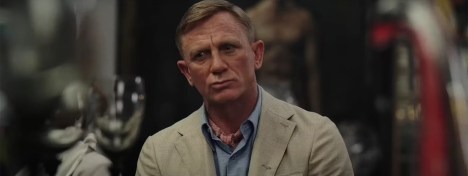
New Escapist Column! On the Radical Empathy of “Knives Out” and “Glass Onion”…

I published a new In the Frame piece at The Escapist on Friday. With the release of Glass Onion in theatres, it seemed like a good opportunity to talk about Benoit Blanc, the film’s protagonist.

Glass Onion is built around the idea of murder mysteries and puzzleboxes. However, like Knives Out before it, the film is something of a criticism of a rigidly rationalist approach to detective fiction, of the idea that solving a crime is a strictly mechanical process. Instead, both Knives Out and Glass Onions are movies about the importance of empathy and humanism in understanding the true moral nature of crime. This is most obvious in Benoit Blanc, who is introduced as an outside observer of these crimes, but cannot escape their gravity.

You can read the piece here, or click the picture below.

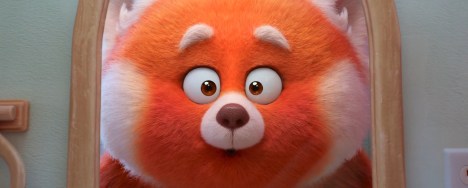
New Escapist Column! On “Turning Red”, and Cinema as an Empathy Machine…

I published a new piece at The Escapist this evening. One of the big controversies this past week has concerned the critical reception to Turning Red.

The response to the film has been overwhelmingly positive, but there was one prominent review that argued that the film was “less universal” than previous Pixar films. It is interesting to unpack that idea, to wonder what it is exactly that makes Turning Red less universal and also to interrogate the power of cinema as a medium to generate empathy. In doing so, film has the power to take something very specific and render it universal.

You can read the piece here, or click the picture below.

199. Raging Bull – Summer of Scorsese (#146)

Hosted by Andrew Quinn, Jay Coyle and Darren Mooney, and this week with special guest Grace Duffy, The 250 is a (mostly) weekly trip through some of the best (and worst) movies ever made, as voted for by Internet Movie Database Users. New episodes are released every Saturday at 6pm GMT.

This time, continuing our Summer of Scorsese season, Martin Scorsese’s Raging Bull.

Martin Scorsese is one of the defining directors in American cinema, with a host of massively successful (and cult) hits that have shaped and defined cinema across generations: Taxi Driver, Goodfellas, CasinoGangs of New York, The Departed, Shutter Island, The Wolf of Wall Street. The Summer of Scorsese season offers a trip through his filmography via the IMDb‘s 250.

Jake LaMotta is a boxer who dreams of a shot at the big time. However, Jake does not play by the rules of the game. Over the course of his life and career, Jake struggles to tame the violence inside himself as he proceeds to push those closest to him further and further away.

At time of recording, it was ranked 146th on the Internet Movie Database‘s list of the best movies of all-time.

Continue reading

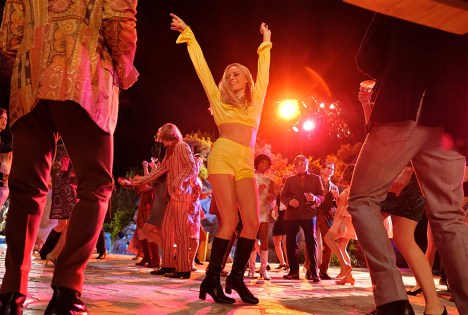
Non-Review Review: Once Upon a Time… In Hollywood

Once Upon a Time… in Hollywood is a fairy tale, for better and for ill.

Continue reading

Star Trek – The Immunity Syndrome (Review)

The first Star Trek pilot, The Cage, was produced in 1964. To celebrate its fiftieth anniversary, this December we are reviewing the second season of the original Star Trek show. You can check out our first season reviews here. Check back daily for the latest review.

The Immunity Syndrome is an underrated masterpiece, the first genuine classic overseen by producer John Meredyth Lucas.

It is bold, brilliant and more than a little bit weird. This is Star Trek as pure sixties science-fiction. It is a psychedelic ecological tale focused on mankind’s place in the larger universe. It doesn’t just pit the Enterprise against a giant space amoeba, it suggests that the universe itself is a singular gigantic organism, a complex system in which the Enterprise is just one part. The Immunity Syndrome is weird and wonderful, eerie and beautiful in equal measure. It is one of Star Trek‘s most effective encapsulations of the sixties.

Freak out!

Freak out!

Continue reading