• Following Us

  • Categories

  • Check out the Archives


  • Awards & Nominations

Doctor Who: Kill the Moon (Review)

I don’t like people being sick in my TARDIS. No being sick. And no hanky-panky.

If The Caretaker began the transition into the second half of the season, Kill the Moon completes it. The Twelfth Doctor is established. Peter Capaldi has found his footing. The audience has a clear grasp of what distinguishes his take on the character from the iterations played by David Tennant or Matt Smith. The orderly transition of lead actors is complete; the show can no go about its business. Along with The Caretaker, Kill the Moon marks the point at which the season starts building clearly and concretely towards Death in Heaven.

This is the point at which the show feels free to get a little experimental. With the exception of Listen, the first six stories of the season were all relatively conservative. Deep Breath returned to the Paternoster Gang in order to ease the transition to the new lead. Into the Dalek was the obligatory “Dalek episode.” Although it featured a fictional celebrity, Robot of Sherwood was a throwback to the old school celebrity historical. Time Heist was a light run-around. The Caretaker was the “dump the Doctor into the real world” story.
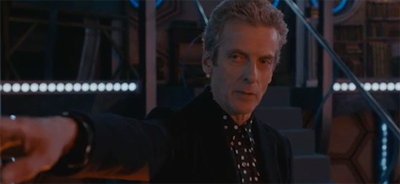
"Yes, I'm wearing my One Direction shirt. Wanna make something of it?"

“Yes, I’m wearing my One Direction shirt. Wanna make something of it?”

In contrast, the second-half of the season is more bold and experimental. Steven Moffat is not credited as a co-writer, suggesting that the training wheels are coming off. While the first six episodes were all written by established Doctor Who writers, the four episodes between The Caretaker and Dark Water are all credited to newbies. More than that, there is a spirit of experimentation. Kill the Moon and In the Forest of the Night are perhaps two of the most divisive and controversial episodes of the show since it returned in 2005. Only Love and Monsters comes close.

Kill the Moon is bold, provocative, insane and more than a little twisted.
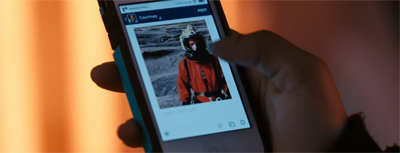
David Tennant has the same tumblr photo...

David Tennant has the same tumblr photo…

Continue reading

Doctor Who: The Caretaker (Review)

Why do I keep you around?

Because the alternative would be developing a conscience of your own?

It is interesting to look at the development of the way that the writers on Doctor Who have developed during Steven Moffat’s tenure as executive producer. Although the show does not maintain a “writers’ room” in the literal sense of the phrase, there is a sense that certain writers have recurred often enough to develop and distinguish their own voices on the show. There is enough precedent to firmly identify Robot of Sherwood as a Gatiss script, and Time Heist as a Thompson script.

As such, The Caretaker definitely feels like a Gareth Roberts script. It shares a very clear thematic throughline with Roberts’ other scripts for the Moffat era – The Lodger and Closing Time. The idea is that the Doctor has waded into the normal world and finds himself dealing with situations that normally affect normal people. In The Lodger, the Doctor rented a room. In Closing Time, the Doctor got job. In The Caretaker, the Doctor imposes himself upon his companion’s everyday life.

Watch the man...

Watch that man…

As with Roberts’ other scripts, there is a sense of fun to the adventure. Doctor Who is frequently a show about the Doctor wandering into different kinds of stories – from horrors to science-fiction to period pieces to westerns. Throwing the Doctor out of a more conventional story and into something resembling the real world is always a source of fun, even if the Moffat era has touched on this quite a bit. While The Caretaker is similar to The Lodger and Closing Time, it is perhaps closer in theme to The Power of Three.

However, Peter Capaldi’s performance is distinct enough from that of Matt Smith that The Caretaker never feels like a retread. Watching the Twelfth Doctor intersect with the real world is very different from watching the Eleventh Doctor, because he is a fundamentally different character. The Caretaker is one of the highlights of the season, marking a clear transition between the first and second halves of Peter Capaldi’s first year in the title role.

Robot!

Robot!

Continue reading

Doctor Who: Time Heist (Review)

Why? There’s no immediate threat?

Warning, intruder alert!

I should really stop saying things like that.

After the ambition of Listen, Time Heist feels like a return to the general narrative conservatism that marks the first half of the season. Introducing the Twelfth Doctor, the first six episodes of the season are all written by veteran writers. With the exception of Listen, they all play it relatively safe. Five episodes into the Twelfth Doctor’s tenure, the approach is starting to grate just a little bit. The training wheels are still on, but there is a sense that the show is itching to remove them.

Indeed, without the ambition that tempers the many flaws with In the Forest of the Night, Time Heist is probably the weakest episode of the season. However, there is something to be said about that; Time Heist may not be a particularly memorable piece of television, but that alone is enough to mark it as much stronger than misfires like Fear Her or Night Terrors or Evolution of the Daleks

or Curse of the Black Spot.

... and they lived happily ever after...

… and they lived happily ever after…

Continue reading

Doctor Who: Listen (Review)

Are you making conversation?

I thought I might give it a try.

Listen is an episode important in its unimportance.

It is the first non “event” episode credited to Moffat as a solo writer since The Beast Below. Every episode credited exclusively to Moffat since The Beast Below has been a premiere or a finalé or two-parter or a special of some description. Listen is the fourth episode of Peter Capaldi’s first season, following a celebrity pseudo-historical written by Mark Gatiss. It is an episode that is about very little. There is a lot of talking, and a lot of sitting, and – as the title implies – a lot of listening. It is utterly unlike any other episode of Doctor Who ever produced.

doctorwho-listen17

Midnight in the TARDIS…

Listen has a central mystery that it refuses to resolve, a wealth of lovely character moments, and just the faintest trace of Moffat’s “timey-wimey” stuff. As with a lot of Moffat’s writing for the show, Listen is packed with little details that seem to exist to drive fans wild, but which make a lot of sense for those willing to relax and go with it. It is fascinated with negative space, with the characters ruminating on how questions are more important than answers, and how nothing can be more defining or revealing than something.

It is an episode that feels very much in touch with the mood and themes Moffat era. In keeping with Moffat’s style since he took over the show, Listen is a lesson in the art of misdirection.

doctorwho-listen6

Chalking it up to a title drop…

Continue reading

Doctor Who: Robot of Sherwood (Review)

Shortly, I shall be the most powerful man in the realm. King in all but name, for Nottingham is not enough.

It isn’t?

After this, Derby.

Right.

Then Lincoln. And after Lincoln…

Worksop?

The world!

– the Sheriff outlines his plot to Clara

Robot of Sherwood is a functional piece of television, with a wonderful closing scene capping a very light forty-five minutes. Mark Gatiss is a writer who tends to trade on nostalgia, and who clearly holds a great deal of affection for the past. As such, Robot of Sherwood provides a fairly effective and straightforward counterpoint to the heavy moral questions of Deep Breath and Into the Dalek. Is the Doctor a hero? It doesn’t matter, because his story is that of a hero.

There is a sense that perhaps Gatiss is being a little bit too glib here, to the point where Robot of Sherwood almost plays defensively – a justification of the writer’s tendency to rose-tinted nostalgia and a rejection of critical approaches towards history or story. Nevertheless, Robot of Sherwood does pretty much what it sets out to do. It provides Peter Capaldi with a suitably light script and a chance to flex his comedic muscles, while providing a suitably fairy-tale-ish pseudo-historical.

Legendary outlaw...

Legendary outlaw…

This season is introducing a new lead actor, a risky proposition for any show. As a result, the first half of the season tends to play it rather safe. Robot of Sherwood is the only episode in the first half of the season not to credit Steven Moffat as writer or co-writer; however, it is still written by an established Doctor Who veteran. After all, Mark Gatiss wrote The Unquiet Dead, the first episode of the relaunched series not written by Russell T. Davies. He also wrote Victory of the Daleks, the first story of the Moffat era not written by Moffat himself.

Indeed, the season returns to the classic “home”/“future”/“historical” opening triptych structure that defined the Davies era; it is the first time that this structure has been seen since Matt Smith’s opening season. (For Davies, “home” was twenty-first century London; for Moffat, it is the Paternoster Gang.) Robot of Sherwood is the show’s first proper “celebrity historical” since Vincent and the Doctor in that same opening season. “Safe” is very much the name of the game for this stretch of the season. Robot of Sherwood is very safe.

"You'll ruin the paint work!"

“You’ll ruin the paint work!”

Continue reading

Doctor Who: Into the Dalek (Review)

Fantastic idea for a movie. Terrible idea for a proctologist.

– the Doctor’s ten-word review of Fantastic Voyage

If you’re looking for a writer to collaborate with on a “dark Doctor” story, it would seem that Phil Ford is your man. Phil Ford collaborated with showrunner Russell T. Davies on Waters of Mars, the penultimate story of David Tennant’s tenure. Here, he finds himself writing with showrunner Stephen Moffat on the second story of Peter Capaldi’s tenure. So he also does symmetry where Scottish Doctors are involved. That’s a pretty solid niche, as far as Doctor Who script-writing goes.

Both Waters of Mars and Into the Dalek are stories that serve to problematise the Doctor; but each does it to a different purpose. Waters of Mars was positioned as the second-to-last story of the Davies era. It serves as the point where the Tenth Doctor’s hubris reaches massive proportions and explodes. It serves, in a way, as the justification for his departure in The End of Time. In contrast, Into the Dalek serves to solidify a character arc that was hinted at in Deep Breath, the Twelfth Doctor’s existential crisis.

doctorwho-intothedalek3

Into the Dalek is the source of the much-hyped exchange between Clara and the Doctor about the latter’s nature as a Steven Moffat protagonist. “Clara, be my pal and tell me: am I good man?” the Doctor asks. The best that Clara can manage is, “I don’t know.” The Doctor responds, “Neither do I.” This isn’t the first time that the show has dared to present a morally ambiguous lead character. Colin Baker’s infamous Sixth Doctor comes to mind, but Christopher Eccleston’s Ninth Doctor was arguably a more successful attempt to give the audience an ambiguous Doctor.

As such, Into the Dalek cannot help but invite comparisons to Eccleston’s morally charged confrontation a broken Dalek in Dalek. Sadly, it’s not a comparison that does Into the Dalek any favours.

doctorwho-intothedalek2 Continue reading

Doctor Who: Deep Breath (Review)

“Dormant.”

“How do you know?”

“I don’t. Just hoping.”

– the Doctor and Clara discover things haven’t changed too much

The regeneration from Matt Smith to Peter Capaldi represents the third time that Doctor Who has changed its lead actor since its relaunch in 2005. It is the third time that a regeneration has forced a change in the opening credits. Along the way, there have been a number of other on-screen regenerations, from Derek Jacobi to John Simm through to John Hurt to almost!Christopher Eccleston. And that excludes River’s transformations or David Tennant’s pseudo-regeneration at the end of the fourth season.

All of this is to say that, as we approach the tenth anniversary of the revived Doctor Who, audiences are quite familiar with the concept of regeneration. This isn’t as dramatic a shift as it was when Christopher Eccleston melted into David Tennant at the end of The Parting of the Ways. That was a freshly relaunched show swapping out its lead actor after less than a year. In contrast, Deep Breath marks a much more orderly and logical transition. It isn’t earth-shattering.

doctorwho-deepbreath14

All of this means that producer and writer Stephen Moffat gets to have a bit of fun with the concept. Moffat’s previous regeneration episode, The Eleventh Hour, had the burden of demonstrating that Doctor Who could survive without both Russell T. Davies and David Tennant. In fact, it was rumoured the BBC had considered just cancelling the show at that point. As such, The Eleventh Hour was an episode designed to reassure fans that not everything had changed; this was still the same show. Moffat’s first season as showrunner was very much “business as usual.”

Deep Breath has no such weight attached to it. It is an episode that doesn’t feel the same need to reassure its audience that everything is okay and everything is the same. Instead, it can revel in what is different; it can celebrate what is new. Deep Breath lacks the sheer energy and powerful charisma that made The Eleventh Hour so fantastic, but it has a comforting sense of certainty to it that makes it a joy.

doctorwho-deepbreath4

Continue reading

X-Over: The X-Files & Steven Moffat’s Doctor Who

It goes without saying that The X-Files was a massively influential television show. As early as its second season, the show had launched all manner of imitations and copycats, both inside and outside the Fox Network. It seems quite likely that Fox invested two-and-a-half million dollars in the failed Doctor Who relaunch of 1996 in the hopes of spinning off another cult/mainstream science-fiction hit like The X-Files. It was launched as a two-hour television movie, failing to earn the rating necessary to spin it off into a weekly series.

However, although the 1996 telemovie provides an obvious point of intersection between The X-Files and Doctor Who, the influence of The X-Files can perhaps be most keenly felt in Steven Moffat’s work on the relaunched television series. Moffat is credited as the producer who helped the show to “break” America during his second year as showrunner, and he did so in a number of ways. Perhaps the most interesting is that he leaned rather heavily on The X-Files as a point of cultural intersection.

Shades of greys...

Continue reading

Non-Review Review: Mr. Peabody & Sherman

Mr. Peabody & Sherman is solid family entertainment. Too scattershot and inconsistent to really rank among the best of the Dreamworks animated feature films, it does benefit from an endearing energy and momentum – as well as a charming central performance from Ty Burrell as the eponymous super-inventor dog genius. It’s perfectly inoffensive fun that manages to get quite a few laughs, even if it doesn’t tug the heart strings quite as well as it might want to.

A dog and his boy...

A dog and his boy…

Continue reading

Star Trek: The Next Generation/Doctor Who – Assimilation² (Review)

This January and February, we’ll be finishing up our look at the second season of Star Trek: The Next Generation and moving on to the third year of the show, both recently and lovingly remastered for high definition. Check back daily for the latest review.

We’ll be supplementing our coverage of the episodes with some additional materials – mainly novels and comics and films. This is one such entry.

It’s amazing that Assimilation² represents the first official crossover between Star Trek and Doctor Who. After all, the nineties saw a trilogy of comics and novels in which Star Trek crossed over with Marvel’s X-Men. At the same time, though, the miniseries’ combination does seem a little odd. Pairing the Cybermen and the Borg is a bit of a no-brainer, but the Eleventh Doctor feels like a bit of a strange fit on board Picard’s Enterprise.

The Ninth or Tenth would arguably offer more of a contrast with Picard’s restrained and dignified command style. The Tenth Doctor and Donna arriving on the luxury Enterprise practically writes itself. (“Now that’s what I call a spaceship. You’ve got a box, they’ve got a Stella Liner.”) Picard and the Eleventh Doctor feels like a particularly bland pairing, if only because there’s no way they’d try each other’s patience. The Eleventh Doctor would probably work better in the context of Sisko’s Deep Space Nine or either Kirk’s Enterprise.

Still, although Assimilation² never quite takes full advantage of its central hook, it’s a diverting enough mish-mash of two science-fiction staples.

Cue Who?

Cue Who?

Continue reading