• Following Us

  • Categories

  • Check out the Archives


  • Awards & Nominations

Hannibal – Buffet Froid (Review)

Buffet Froid is the most strikingly horrific episode of Hannibal to date. Of course, the show is very much a horror story and enjoys its fair share of grotesque imagery. This is the series, after all, that gave us the makeshift angels, the do-it-yourself cello and the human totem poll. However, Buffet Froid plays most obviously on the imagery and iconography of horror. This is the episode where people have no faces and skin comes off at the slightest touch and the serial killer is waiting for you under your bed.

As you might imagine for a show with such complete control of its own atmosphere, Buffet Froid works very well indeed – providing what might be the most horrific episode of the show to date.

The doctor will see you now...

The doctor will see you now…

Continue reading

Hannibal – Potage (Review)

Hannibal continues to move apace. Serialisation can often be a tricky beast, because it relies heavily on pacing. Reveal too much too fast and none of the plot beats carry enough weight. Drag out your revelations and your game-changing twists, and things feel too slow. The sense of progression is lost. On top of that, and something which is easily overlooked when it comes to serialisation, the key is to ensure that each episode exists as its own entity, while remaining a part of the whole. As often as one might use the “chapters of a book” analogy for episodes of The Sopranos or The Wire, this tends to ignore that each episode generally tended to be structured as its own entity. While a part of a larger story, each episode was its own self-contained unit of story.

Potage seems to suggest that Hannibal is finding its feet in the area, and carefully pacing itself. We are peeling back the layers on the eponymous psychiatrist at a pace that is neither too fast nor too slow. The evidence is mounting and his moves are becoming more brazen, but he retains his air of mystery. Since Lecter is a character who only really works with that sense of mystery, it’s a shrewd balance between progressing the plot and retaining the character’s appeal. Potage demonstrates the show has quite a knack for it.

The good doctor?

The good doctor?

Continue reading

Non-Review Review: Superman vs. The Elite

To celebrate the release of Man of Steel this month, we’re going Superman mad. Check back daily for Superman-related reviews.

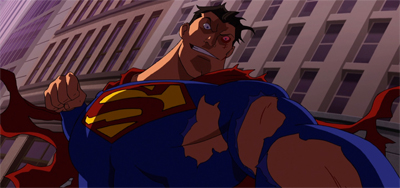
Superman has struggled with his pop culture credibility for quite some time now. The character is seen as too old-fashioned or outdated to really resonate in the modern world, standing for an overly simplistic and unquestioning moral philosophy which doesn’t take into account the nuances of current realities. Superman vs. The Elite, adapted from Joe Kelly’s What’s so Funny About Truth, Justice & the American Way?, represents an attempt to counter this opinion of Superman as a character. Unfortunately, it never really does so be convincing us that the character is still relevant. Instead, it creates a bunch of convenient straw men to oppose our hero, and never allows him to win on his own terms.

Beware the Superman...

Beware the Superman…

Continue reading

Non-Review Review: Dead Man Down

This is intriguing. Dead Man Down feels like a blend of a European revenge thriller with a more straight-forward American crime film. Director  Niels Arden Oplev has established his credibility with his work on the original version of The Girl With the Dragon Tattoo, even it I am less fond of the film than most. His first America film is an interesting experiment, even if Oplev can’t quite pull it off as seamlessly as the material requires.

Dead Man Down buckles a bit under the weight of two sets of genre requirements. It is by turns quiet, withdrawn and introspective, but also loud, overwhelming and exposition-filled. These two facets of the film – feeling like the demands of a European film against an American mainstream release – seem to be at war with one another. The result is something that is more interesting than entirely satisfying.

They do make a bloody mess...

They do make a bloody mess…

Continue reading

The Spirit Archives, Vol. 14 (Review/Retrospective)

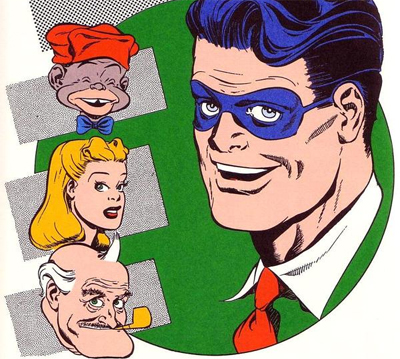
The Spirit Archives, Vol. 14 finds Will Eisner back in full swing. The Spirit is truly firing on all cylinders, after taking about a year just to get everything lined up after the creator returned from military service. The success of this volume isn’t so much that Eisner is doing anything especially new or innovative. Rather, it seems like The Spirit has made a note of the aspects of the strip that work and has decided to concentrate on those stronger elements. This six-month stretch on newspaper strips doesn’t necessarily contain a record-breaking number of stand-out stories, but there are far fewer duds that we’ve seen before. There’s still a couple of Ebony-centred stories, but they’re few and far between. The other annoying kid sidekicks are mostly demoted to black-and-white one-line “P.S.” strips at the bottom of the page, and don’t intrude on the narrative.

The Spirit Archives, Vol. 14 isn’t so much about doing things better, as doing them more consistently.

Getting into the Spirit of things…

Continue reading

The Spirit Archives, Vol. 3 (Review/Retrospective)

Join us the December as we take a dive into the weird and wonderful Will Eisner Spirit Archives, the DC collections of the comic strip that helped define the medium.

At this point The Spirit had survived a year. That first year had seen Eisner establish the strip, lay down many of the rules that would define the comic for the rest of its impressive twelve-year run as a regular fixture in the Sunday papers. This third volume is hardly the most essential in the twenty-six volume set, but there’s a sense of confidence in the stories the Eisner is telling and how he is telling them. The strip arguably wouldn’t hit its stride until after Eisner left for the war, and came back with a broader range of experience, but one can see the roots of that later success even in these (relatively) early adventures.

We'll always have Damascus...

We’ll always have Damascus…

Continue reading

The Spirit Archives, Vol. 2 (Review/Retrospective)

Join us the December as we take a dive into the weird and wonderful Will Eisner Spirit Archives, the DC collections of the comic strip that helped define the medium.

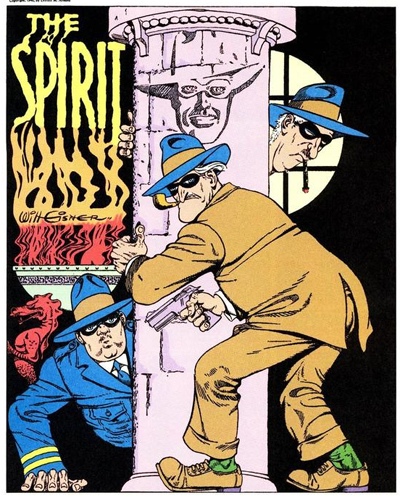
With this second collection of six months worth of strips, we can see Eisner’s vision of The Spirit really cement itself, as well as the true beginnings of the more experimental work that the writer and artist would do with the newspaper strip. While a lot of people would argue that Eisner truly hit his stride in the postwar era of The Spirit, I think we can see him beginning to truly hone his craft here, and can get a sense of an artist slowly testing the horizons of an eight-page newspaper comic strip. It might not be his best work on the title, but it’s still fascinating stuff.

Accept no substitutes…

Continue reading

Non-Review Review: Red Riding – The Year of Our Lord 1980

Talk to someone else!

There is no one else, they’re all %$#!ing dead!

– BJ and Hunter

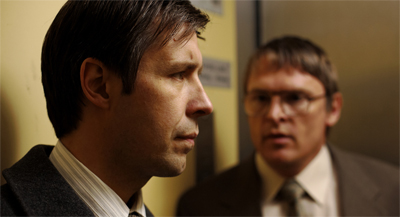
Red Riding: 1980 isn’t quite as strong as its direct predecessor. In fact, it’s probably the weakest of the films in the trilogy. There are quite a few reasons for this, but that doesn’t mean that it isn’t worth watching. For all its flaws as part of a continuing narrative, Red Riding: 1980 is still a fascinating tale of police corruption, and arguably the movie of the trilogy that works best as a standalone feature. Or, at least, better than it does as one connected narrative. Red Riding: 1974 depends on Red Riding: 1983 for an ending, and Red Riding: 1983 depends on Red Riding: 1974 for a beginning. Red Riding: 1980 sits in the middle, and serves as something of an example of the type of endemic corruption that has taken root in this version of Yorkshire.

Hunter on the prowl…

Continue reading

Non-Review Review: Red Riding – The Year of Our Lord 1974

This is the North. We do what we want.

– Craven explains how things work to Eddie

Red Riding is certainly an ambitious effort. David Peace wrote four books exploring violence and corruption in Yorkshire, centring around the morbid history of brutality in the North. Occupying a strange ethereal realm between fact and fiction, sometimes those crimes are fictionalised, but sometimes real murders and murderers intersect. The child murders of this first instalment, Red Riding: 1974, evoke the infamous Moors murders in Manchester during the sixties, while the arrest of an innocent party calls to mind the case of Stefan Kiszko. Adapting the series of four books into a trilogy of films, Red Ridingmakes for a fascinating – if gloomy – exploration of the darker pages in the region’s cultural history.

He’s gone far (Gar)field…

Continue reading

Non-Review Review: Super

Super is pretty much one joke, extended over a movie runtime. It’s a funny joke, and it’s told well by a great cast and a witty director, but it feels a little stretched, even at under a hundred minutes. It also suffered a bit from being released in the same year as Kick-Ass, a movie that dealt with similar themes in a much more compelling manner, but Super remains an interesting examination of geek power fantasy, and some of the more sinister undertones of the conventional superhero narrative.

Not so super, hero…

Continue reading