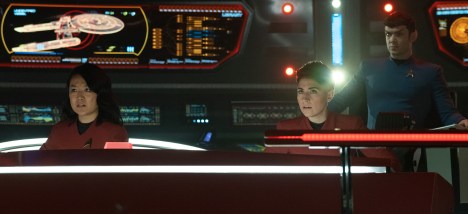
I published a new piece at The Escapist earlier this week. We’re doing a series of recaps and reviews of Star Trek: Strange New Worlds, which is streaming weekly on Paramount+. So we thought we’d take a look at the second season premiere.
There is a fascinating recurring emphasis on the idea of performance within Strange New Worlds. In particular, the idea of performing Star Trek. It is not enough for Strange New Worlds to be Star Trek, or even to engage in the familiar Star Trek tropes. The show has to constantly remind and reassure viewers that it is Star Trek. This is distracting and ultimately undermines the series, which seems to spend more time asserting that it is Star Trek than it does actually being Star Trek.
You can read the piece here, or click the picture below.
I’m thrilled to be launching movie and television reviews on The Escapist. Over the coming weeks and months, I will be joining a set of contributors in adding these reviews to the channel. For the moment, I’m honoured to contribute a five-minute film review of The Flash, which was released in cinemas this weekend.
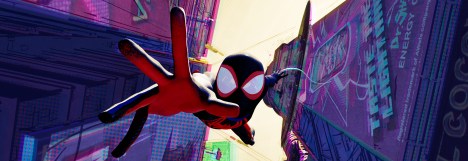
I published a new In the Frame piece at The Escapist this evening. With the release of Spider-Man: Across the Spider-Verse, it seemed like a good opportunity to delve into what the movie is about, particularly its relationship to other recent superhero movies.
After all, what is the point of superhero movies? What are they about? What purpose do they serve? In recent years, the superhero genre has come to be shaped by the language of militarism and law enforcement, treating superheroes as cops and soldiers who just happen to wear masks. Across the Spider-Verse is a film largely about grappling with the legacy of that trend, in which the central villains are “an elite strike team” of “all the best Spider-People” whose job it is to maintain the status quo, no matter how many innocent people suffer to maintain the established order.
You can read the piece here, or click the picture below.
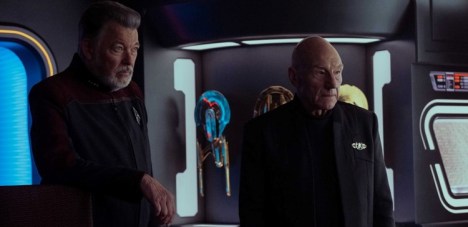
I am doing weekly reviews of Star Trek: Picard at The Escapist. They’ll be dropping every Thursday morning while the show is on, looking at the third season as the show progresses. This week, the premiere.
The third season of Picard is a staggering work of fan service nostalgia, a collection of imagery and iconography that the audience recognises, with little to tie it together beyond assumed familiarity. Part of what is so interesting about the series is that it seems to understand this. Picard is largely built around justifying that nostalgia, to itself and its audience, as if trying to desperately reassure viewers that it’s fine to give up the future and retreat into the comforts of an illusory past.
You can read the piece here, or click the picture below.
I published a new In the Frame piece at The Escapist this evening. With the upcoming release of Ant-Man and the Wasp: Quantumania, it seemed like a good opportunity to take a look back at Ant-Man and Ant-Man and the Wasp, and the way in which these films – for better and worse – feel like the statistical mean of the Marvel Cinematic Universe.
Part of what in interesting about the Ant-Man movies is how little they actually adapt from the source comics, largely marginalising characters like Hank Pym and Janet Van Dyne in favour of porting over out-of-continuity characters like Hope van Dyne. They deliberately structure themselves to avoid key character and plot beats from the comic book franchise, and so offer the purest distillation of the adaptation storytelling of the comic book film franchise. The Ant-Man franchise is the Marvel Studios franchise that feels most generic, most cribbed together using the studio’s narrative shorthand.
You can read the piece here, or click the picture below.
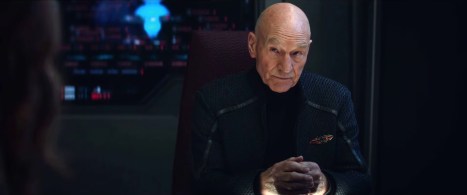
I am doing weekly reviews of Star Trek: Picard at The Escapist. They’ll be dropping every Thursday morning while the show is on, looking at the third season as the show progresses. To start with, though, a look at the season as a whole.
The end of the second season of Picard effectively wrote out the bulk of the show’s new cast members, explicitly to make room for a nostalgic revival of Star Trek: The Next Generation, featuring cast members thirty years removed from that series. The result is as pandering and condescending as one might expect, suffering from many of the same fundamental issues of the first two seasons, stripping out anything distinctive or unique and replacing it with a shallow petina of nostalgia. It’s cynical, it’s hollow and it speaks to a fundamental emptiness with so much modern pop culture.
You can read the piece here, or click the picture below.
I published a new piece at The Escapist last weekend. Since James Gunn and Peter Safran have taken over the running of the DCEU, they have made a number of dramatic cuts and decisions, including the reporting scrapping of the company’s Wonder Woman and Aquaman franchises. There is some suggestion that the entire primary cast of the shared universe is gone, and that the team is starting over to rebuild a new shared universe from scratch.
It is a bold decision, and one that sidesteps a fairly obvious question: why are DC so excited for a shared universe? After all, it was the company’s over-enthusiastic pursuit of that ideal that left their continuity feeling like a mess in the first place. For all the success of the Marvel Cinematic Universe, shared universes are not easy to build, and DC has enjoyed a surprising amount of success with standalone projects like The Batman and Joker. Why is the company throwing everything away to try a strategy that already failed for them, and is showing signs of wearing off for their main competitor?
You can read the piece here, or click the picture below.
I am doing weekly reviews of Willow at The Escapist. They’ll be dropping every Wednesday evening while the show is on, looking at the legacy sequel as it progresses from one episode to the next.
Willow is very obviously a show steeped in the fantasy and the blockbusters of the eighties, reflecting the originl film on which it is based. However, the show is rooted much more film in that era than it might appear. As the show approaches its middle point, it becomes clear that showrunner Jonathan Kasdan has built Willow as an extended metaphor for familial dissolution, tapping into the themes of divorce and separation that permeated so much pop culture during the decade.
You can read the piece here, or click the picture below.
We’re thrilled to be launching a fortnightly video companion piece to In the Frame at The Escapist. The video will typically launch every second Monday, and be released on the magazine’s YouTube channel. And the video will typically be separate from the written content. This is kinda cool, because we’re helping relaunch the magazine’s film content – so if you can throw a subscription our way, it would mean a lot.
This week, we took a look at The Rings of Power, the prequel series to The Lord of the Rings. In particular, the way that it is built around so many mystery boxes. It’s a problem facing a lot of modern franchise media, where these shows attempt to keep audiences hooked by building elaborate mystery boxes around established lore. The mystery box was a problem for early serialized television at the turn of the millennium, and it is a shame to see it return in the streaming age of franchise media, where the answer is always nostalgia.
I published a new piece at The Escapist last week. We’re doing a series of recaps and reviews of Star Trek: Lower Decks, which is streaming weekly on Paramount+ in the States and on Amazon Prime in the United Kingdom. The penultimate episode of the third season released last week, and it seemed like a good opportunity to take a look at the series.
With the end of the third season fast approaching, there is an interesting shift taking place in Lower Decks. The animated show is built around Star Trek fan services, driven and shaped by continuity references to earlier shows in the franchise, particularly those from the nineties. As the seasonw raps up, it is interesting to see Lower Decks embrace the idea of continuity itself. Trusted Sources is an episode that explores evolving Star Trek continuity from the early episodes of Star Trek: The Next Generation to the final sweeping epic of Star Trek: Deep Space Nine, and finds continuity within Lower Decks.
You can read the piece here, or click the picture below.

















 the m0vie blog