• Following Us

  • Categories

  • Check out the Archives


  • Awards & Nominations

Non-Review Review: Mike and Dave Need Wedding Dates

There is something subversive lurking at the heart of Mike and Dave Need Wedding Dates.

The film’s single best gag comes very early in the film, putting a wry twist on audience expectations. The movie’s opening credits feature the eponymous characters at a number of family occasions; birthday parties, weddings. Like any pair of overgrown manchildren, Mike and Dave imagine themselves to the be the life of the party. And, for the length of the opening credits, the audience is invited to see them in that manner. Their dance moves look impressive. Their costumes are fabulous. They brought their own fireworks. These guys, they know how to party.

More like "Wedding Crushers", am I right?

More like “Wedding Crushers”, am I right?

In another comedy about arrested masculine development, that would be the end of it. The credits would establish the pair as the life and soul of any social gathering and maybe need to learn to balance that with some maturity. It is to the credit of Mike and Dave Need Weeding Dates that the film returns to that montage quite quickly. Insisting that the boys behave themselves at their sisters’ wedding, the duo object and insist that they are the party. “We thought you might say that,” remarks their father, reaching for the home media system.

The film then proceeds to demonstrate what happened directly after the impressive shots from the opening credits. There is devastation. There is catastrophe. There are broken bodies. Dave protests that this is not at all representative, and demands that their father edit back in the “epic tracking shots” that showcase how cool they are. It is the movie’s strongest moment, a skilful subversion of a comedy standard that suggests Mike and Dave Need Wedding Dates might have a much better sense of irony than its two lead characters.

Mike and Dave need to have a long conversation about the direction their life has taken.

Mike and Dave need to have a long conversation about the direction their life has taken.

Continue reading

Non-Review Review: Daddy’s Home

Daddy’s Home is fairly mediocre comedy, despite the promise. In some respects, the film recalls very successful Will Ferrell vehicles. The premise of the film is fairly solid, with father and step-father competing with one another for the love of their children; it loosely resembles a middle-aged version of the awkward immaturity that made Step-Brothers such fun. The film features the unlikely comedic team of Will Ferrell and Mark Wahlberg, two actors who had played very well off one another in The Other Guys.

The problem is simply one of calibration. Daddy’s Home struggles to pitch itself at the right level, never finding the right balance between sincere and cynical. It seems trite to complain that the protagonists of a modern comedy are unlikable or unsympathetic, but Daddy’s Home never feels like it finds an emotional core. This is not a fatal flaw of itself, but it becomes a problem when Daddy’s Home cannot supply a steady stream of laughs.

daddyshome Continue reading

The X-Files – Lord of the Flies (Review)

This December, we’re taking a trip back in time to review the ninth season of The X-Files.

Lord of the Flies is an interesting episode, but not a good one.

After 4-D worked so hard to offer a glimpse of what The X-Files could or should look like in December 2001, Lord of the Flies feels like a step backwards. It is a regression, and not just because it awkwardly transitions Scully back into the role of lead character or because it returns to the comedy stylings largely eschewed by the eighth season. Lord of the Flies feels like a script that could have been written for the show in its third or fourth seasons, returning to the well-tapped reservoir of teen angst that has sustained quite a few episodes at this point.

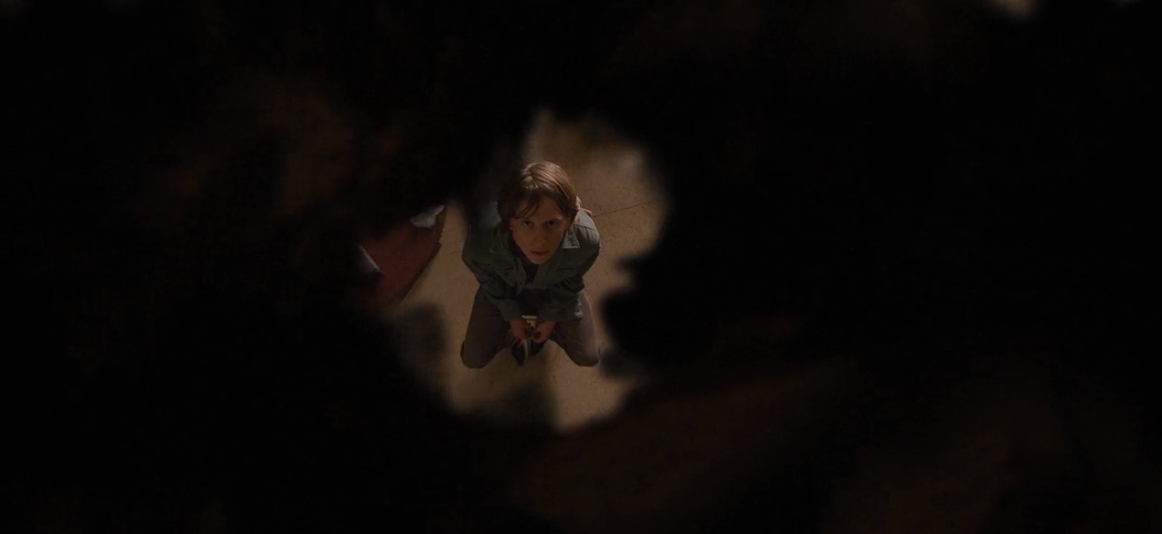
Flies by...

Flies by…

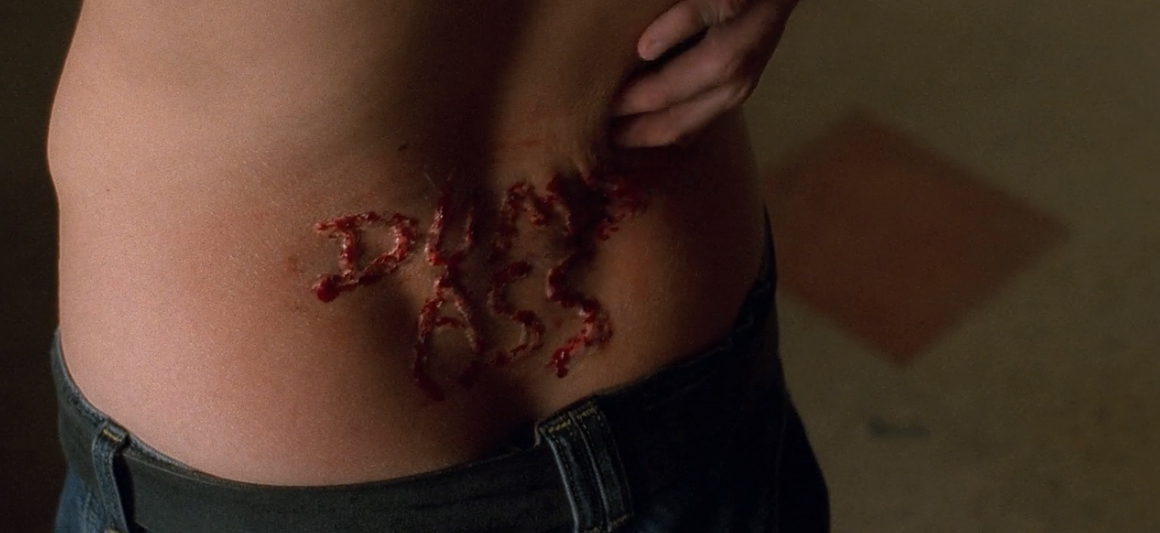
Only a handful of elements serve to mark Lord of the Flies as a piece twenty-first century television. While Scully gets to play action hero at the climax, Mulder is gone; Doggett and Reyes do a lot of the generic detective work across the hour, even if little of their personalities gets to shine through. More than that, Aaron Paul and Jane Lynch pop up in supporting roles that nod towards the various futures of network television. In particular, Paul appears in a home-made stunt show called “Dumb Ass”, an obvious (and shallow) parody of Jackass.

However, Lord of the Flies is not particularly interested in any of these newer elements. The script very clearly wants to hark backwards, towards a past that is no longer easily accessible.

Somewhere, Scully is jealous...

Somewhere, Scully is jealous…

Continue reading

Non-Review Review: Trainwreck

Trainwreck is a refreshing romantic comedy, a collaboration that plays to the strengths of both lead and writer Amy Schumer and director Judd Apatow. The comedy follows a young woman who learnt from an early age (through inappropriate doll metaphors) that “monogamy doesn’t work.” Amy is very much a female version of the arrested adolescent character that Apatow helped to popularise in mainstream American comedy, the immature adult who has yet to face any real personal or professional responsibility.

In some respects, Trainwreck is a continuation of a comedy trend that began with Bridesmaids, realising that male characters did not hold a monopoly on emotional disaster zones. Female characters are just as likely to exercise poor judgment and make questionable personal decisions. If Apatow figured out how to keep the romantic comedy fresh by tweaking the mental age and emotional stability of the male lead, then his collaboration with Schumer does something similar by swapping the gender dynamics.

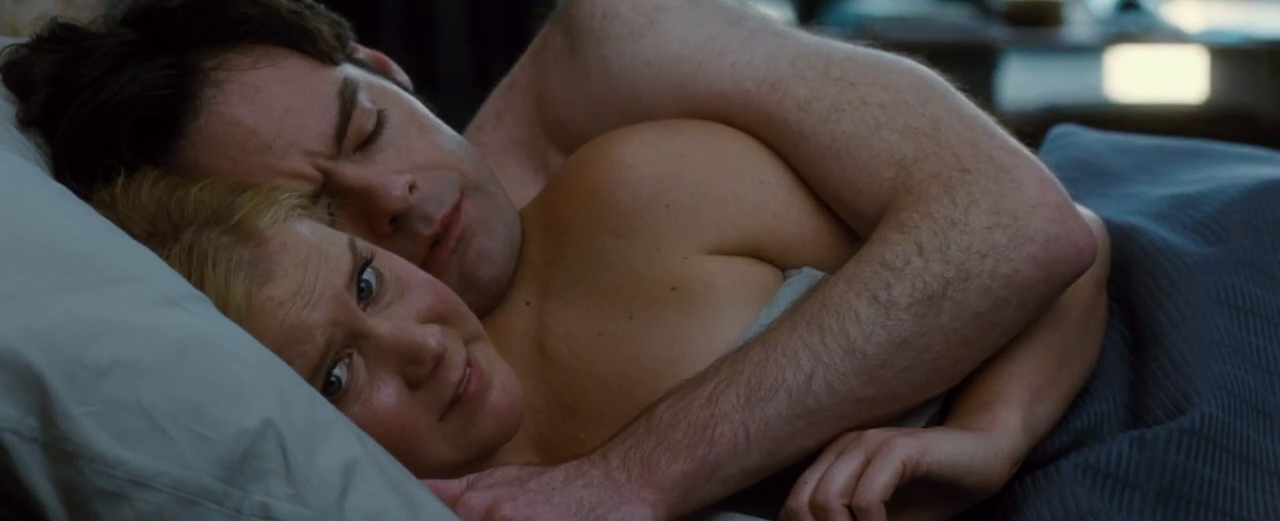
Hold me.

Hold me.

The basic character and emotional arcs have not changed. After all, the romantic comedy can really only have one of two outcomes; they live happily ever after, or they don’t. Trainwreck charts the same course as The 40-Year Old Virgin or Knocked Up, which basically followed the same arcs as When Harry Met Sally or Sleepless in Seattle. For all the novelty of swapping the gender roles in the Apatowian comedy, Trainwreck is not particularly subversive or deconstructive.

Rather, Trainwreck is a stellar execution of a very traditional form. It is not a comedy that defies conventions or upsets expectations; it hits virtually every major beat that story like this can be expected to hit. It benefits from a rather wonderful collaboration of a writer (and actress) with a sharp eye for millennial humour working alongside a director who understands the mechanics of the genre intuitively. Trainwreck is perhaps the best mainstream romantic comedy that Hollywood has produced in quite some time.

Everything is on track...

Everything is on track…

Continue reading

The X-Files – Dreamland I (Review)

This July, we’re taking a trip back in time to review the sixth season of The X-Files and the third (and final) season of Millennium.

It occasionally seems like the sixth season of The X-Files is having something approaching a midlife crisis.

It has gone through a fairly massive change in routine and lifestyle; the show recently pulled up sticks and moved to Los Angeles. It has gotten a lot more ostentatious; it looks to be spending a lot more money than it was before, and it is hanging around with a whole new caliber of guest star. It has reinvented itself completely; no longer the brooding and atmospheric show it once was, it is now downright goofy and silly. Old acquaintances would be forgiven if they had trouble recognising the show. And it’s perfectly understandable.

Back to back...

Back to back…

This is the sixth season. Dreamland I is the one-hundred-and-twenty-first episode of The X-Files. The show is well past what Chris Carter had originally planned, and well past just about any measure of success. Most shows are lucky to reach a sixth season, let alone come into the sixth season off the back of a summer film and with a great deal of security about the future. David Duchovny, Gillian Anderson and Chris Carter were all committed through to the end of the seventh season. There was even talk of a sequel to The X-Files: Fight the Future being released in 2000.

Dreamland I and Dreamland II just externalise that midlife crisis, using the classic “freaky friday” body swap set up putting Fox Mulder in a dead-end job with a family that hates him as Morris Fletcher tries to help the FBI agent grow up just a little bit.

"Yep. It's a little... out there."

“Yep. It’s a little… out there.”

Continue reading

The X-Files – Triangle (Review)

This July, we’re taking a trip back in time to review the sixth season of The X-Files and the third (and final) season of Millennium.

There are a lot of reasons to celebrate Triangle.

The episode gets a lot of attention for its wonderful use of long tracking shots. According to Chris Carter’s commentary, there are only twenty-four individual shots stitched together to produce the forty-five-minute episode. Considering the amount of split-screen action at the climax, that is not a lot. Triangle is an artistic tour de force for writer and director Chris Carter. The success that both Birdman and True Detective enjoyed in 2014 due to their extended takes suggests that Carter was significantly ahead of the curve.

Dragging up the past...

Dragging up the past…

There are other aspects to note. Triangle also ushers in a new mood and tone for the sixth season of The X-Files. The show had moved to Los Angeles, and would struggle with how to retain its identity in the new (and bright) surroundings of California. The Beginning and Drive had both answered the question in their own way, but Triangle ushers in a whole new approach to storytelling. Triangle is the first of a series of light and breezy episodes in the early stretch of the sixth season where The X-Files almost turns into a paranormal sitcom.

However, there is one other reason to celebrate Triangle. It is an extended forty-five minute pun on the word “ship.”

Cigarette-Smoking Nazi...

Cigarette-Smoking Nazi…

Continue reading

Millennium – … Thirteen Years Later (Review)

This July, we’re taking a trip back in time to review the sixth season of The X-Files and the third (and final) season of Millennium.

… Thirteen Years Later is infamously silly. That may not be such a bad thing.

There are a lot of details that would seem to weigh against … Thirteen Years Later. It is the show’s first attempt at comedy since Darin Morgan left the staff at the end of the second season; any episode will suffer in comparison to Jose Chung’s “Doomsday Defense” or Somehow, Satan Got Behind Me. It is an episode built around a guest appearance from the rock band KISS to promote the release of their latest album, Psycho Circus. It is also an attempt to do wry self-aware meta-commentary and Hollywood satire, which could easily become indulgent.

KISS was 'ere...

KISS was ‘ere…

To be quite frank, … Thirteen Years Later doesn’t really work. It is messy and convoluted. A lot of the gags are obvious, and a lot of its satire of Hollywood feels somewhat stock. The framing device builds to a pretty lame (and entirely predictable) punchline. Some of the best gags in … Thirteen Years Later are shamelessly poached from better second season episodes – the idea of Frank Black in Hawaiian shirt comes from Jose Chung’s “Doomsday Defense” while the idea of Frank Black critiquing serial killer movies was hilarious in Midnight of the Century.

However, in spite of all that, … Thirteen Years Later has an energy and momentum that is sorely missing from much of the season around it. The third season has seen a return to the mood and aesthetic of the first season, which occasionally wallowed in gloom and self-importance. … Thirteen Years Later completely skewers that sense of self-importance. Its best jokes seem to be affectionate jabs at Millennium itself, demonstrating that the show still has a great sense of humour; even if it has gotten quite effective at hiding it.

The camera never lies...

The camera never lies…

Continue reading

Non-Review Review: Spy

Spy is broad, but it is funny. It might just be the best collaboration between director Paul Feig and actress Melissa McCarthy.

Feig reteams with McCarthy following on from the critical and commercial successes of Bridesmaids and The Heat. Both films were frequently cited as leading a new wave in female-led comedy, proving that audiences and critics would respond to classic comedy movie tropes executed with a largely female cast. Although Spy features an ensemble that is more gender-balanced, it remains a feminist comedy. Feig’s screenplay is never heavy-handed in its gender politics, but it wryly aware of how its female characters are wading into a traditionally masculine space.

I spy a winner...

I spy a winner…

Continue reading

Non-Review Review: Big Game

Big Game is a rather unlikely combination. Jalmari Helander’s comedy action movie plays as a cocktail of Airforce One and E.T., a coming of age film blended with a old-fashioned action adventure film. It is a combination that works surprisingly well, allowing Big Game to be both playful and charming. Big Game feels like an homage to classic eighties and nineties cinema – the emotional beats are broad, the action is absurd, the irony is layered on pretty heavy. Big Game is always wry and self-aware, but never quite breaks character.

It is a potent mixture, and one that manages to hold itself together remarkably well across the film’s ninety-minute runtime. Big Game never takes itself too seriously, providing a light and exciting action adventure treat.

“I’m king… er… leader of the free world!”

Continue reading

Star Trek: Enterprise – Precious Cargo (Review)

Next year, Star Trek is fifty years old. We have some special stuff planned for that, but – in the meantime – we’re reviewing all of Star Trek: Enterprise this year as something of a prequel to that anniversary. This April, we’re doing the second season. Check back daily for the latest review.

Precious Cargo is a disaster. It is a spectacularly terrible piece of television. It is the kind of episode that fans point towards when they want to belittle or diminish Star Trek: Enterprise.

To be fair, it isn’t as if the show has the monopoly on bad episodes of the franchise. After all, the original Star Trek gave us And The Children Shall Lead, The Way to Eden and The Apple. Star Trek: The Next Generation gave us Code of Honour, Angel One, The Child and Up the Long Ladder. Star Trek: Deep Space Nine produced Let He Who Is Without Sin, Profit and Lace and The Emperor’s New Cloak. Star Trek: Voyager is responsible for Fair Haven and Spirit Folk. When you produce twenty-something episodes of television a year, terrible episodes happen.

We are Trip, of Bored...

We are Trip, of Bored…

Indeed, they will keep happening. Precious Cargo cannot even make an indisputable claim to being the weakest story of the troubled second season. There are fans who will argue that A Night in Sickbay or Bounty deserve that accolade. Nevertheless, it seems like everyone is agreed that Precious Cargo is a disaster from start to finish. It is a collection of pulpy science-fiction clichés that feels overly familiar, a lazy comedy without any solid jokes and a complete lack of chemistry between the two leads.

Precious Cargo is a spectacular misfire, an ill-judged and poorly-constructed addition to the franchise.

"Wait, another Trip comedy episode?"

“Wait, another Trip comedy episode?”

Continue reading